
Poor sleep probably can make you more vulnerable during a GI outbreak, including a norovirus outbreak. The honest version is narrower than the headline version: no controlled human study has deliberately exposed sleep-deprived people to norovirus and measured who gets sick. But the evidence we do have is not hand-wavy. In human viral challenge studies, people sleeping under roughly 6–7 hours before exposure were substantially more likely to become clinically ill. In adolescent data, short sleep was linked specifically with gastroenteritis. In animal models, sleep deprivation disturbed intestinal barrier function and gut microbiota — exactly the kind of defenses an enteric virus has to get past.
That distinction matters during the 2025–2026 norovirus season. CDC NoroSTAT data show 1,287 reported norovirus outbreaks from August 2025 through June 2026, which is enough reason to take the usual advice seriously: wash hands with soap and water, disinfect contaminated surfaces, isolate when sick, and avoid preparing food for others while symptomatic and shortly after.[1] What gets much less attention is that the people trying hardest to prevent spread — parents, caregivers, roommates, travelers, shift workers, health care staff — are often also the people sleeping worst.
What the Human Infection Studies Actually Show
The strongest evidence that sleep changes infection risk comes from controlled viral challenge studies. These are not surveys asking people whether they felt run down. Researchers measured sleep before exposure, then deliberately exposed healthy volunteers to a respiratory virus under controlled conditions and tracked who developed clinical illness.
In a 2009 study of 153 healthy adults, Cohen and colleagues found that people who slept less than 7 hours were more likely to develop a clinical cold after rhinovirus exposure than those who slept 8 hours or more. The reported relative risk for sleeping less than 7 hours was 2.94, after adjustment for factors including prechallenge antibody level, demographics, season, body mass, socioeconomic status, psychological variables, and health practices.[2]
A later study by Prather and colleagues strengthened the point because it used wrist actigraphy, an objective sleep measure, rather than relying only on self-report. In that study, adults who slept less than 6 hours were more likely to develop a cold after experimental viral exposure; the odds ratio was 4.24 compared with those sleeping more than 7 hours.[3]
These studies are often flattened into the phrase “sleep boosts immunity,” which is too vague to be useful. The important thing is more concrete: sleep duration before exposure predicted whether exposure turned into clinical illness. That is the causal spine of the argument. It does not prove the same effect size for norovirus, and it does not say that a single good night prevents infection. It does show that sleep is not merely how you feel after exposure; it can be part of the body’s condition going into exposure.
The GI Evidence Is Thinner, but It Points in the Same Direction
The obvious objection is that colds are respiratory infections, while norovirus is an enteric infection. That objection is fair. A rhinovirus challenge study should not be casually relabeled as a norovirus study. The better question is whether any human evidence connects short sleep with gastrointestinal illness at all.
One useful bridge is a study of 1,634 adolescents that examined sleep patterns and common illnesses. In that research, shorter sleep duration was associated with increased risk of gastroenteritis, not only respiratory illness.[4] The study does not solve the norovirus question. The illness data were self-reported, the participants were adolescents, and “gastroenteritis” is a category with multiple possible causes. Still, it moves the discussion closer to the right organ system.
For a household dealing with norovirus exposure, that is the relevant standard of evidence: not proof that sleep deprivation causes norovirus infection in humans, but a pattern consistent enough to take seriously. We have controlled human evidence that short sleep increases susceptibility to experimentally delivered viruses. We have GI-adjacent human evidence linking short sleep with gastroenteritis. The remaining question is whether biology offers a plausible route from sleep loss to weaker gut defense.
Why Sleep Loss Could Matter for an Enteric Virus
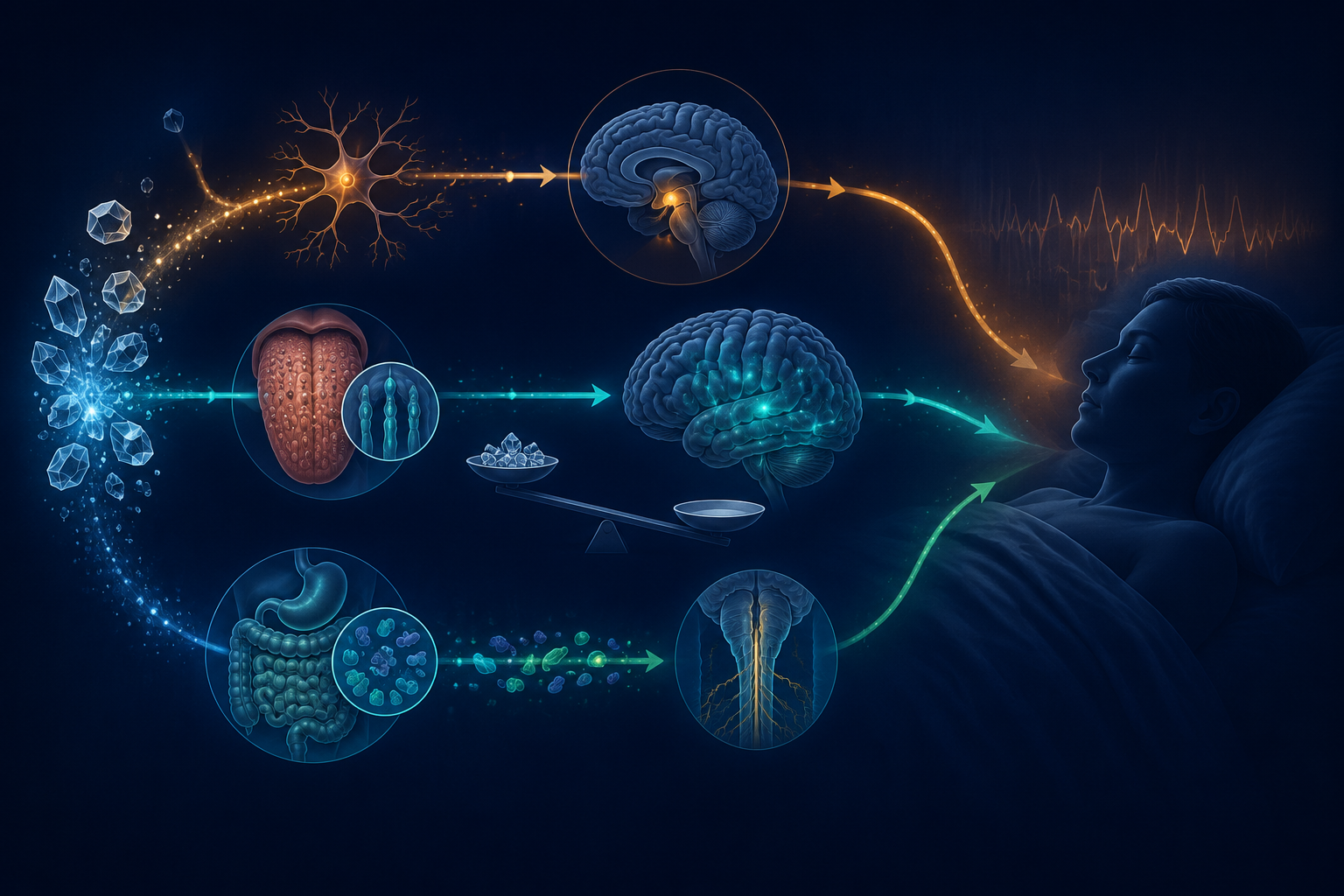
Norovirus is transmitted through contaminated hands, surfaces, food, water, and close contact. Once swallowed, it has to interact with the gut environment. That makes intestinal defense more than a side issue. The immune system, the gut barrier, and the microbial environment are all part of the terrain between exposure and illness.
Sleep and immunity are tightly linked rather than casually associated. A 2021 review describes multiple immune changes related to sleep loss, including reduced natural killer cell activity, shifts in cytokine patterns, impaired antigen presentation, and bidirectional signaling between sleep regulation and immune activity.[5] Those mechanisms do not belong only to colds. They are part of the general machinery that helps the body recognize pathogens, mount early responses, and coordinate adaptive immunity.
Adaptive immune memory is also sleep-sensitive. Besedovsky and colleagues reviewed evidence that sleep supports the formation and maintenance of immunological memory, including T-cell and B-cell responses.[6] That does not mean sleeping well makes someone immune to reinfection. It does mean that sleep is involved in the same immune learning processes people depend on after prior exposures and infections.
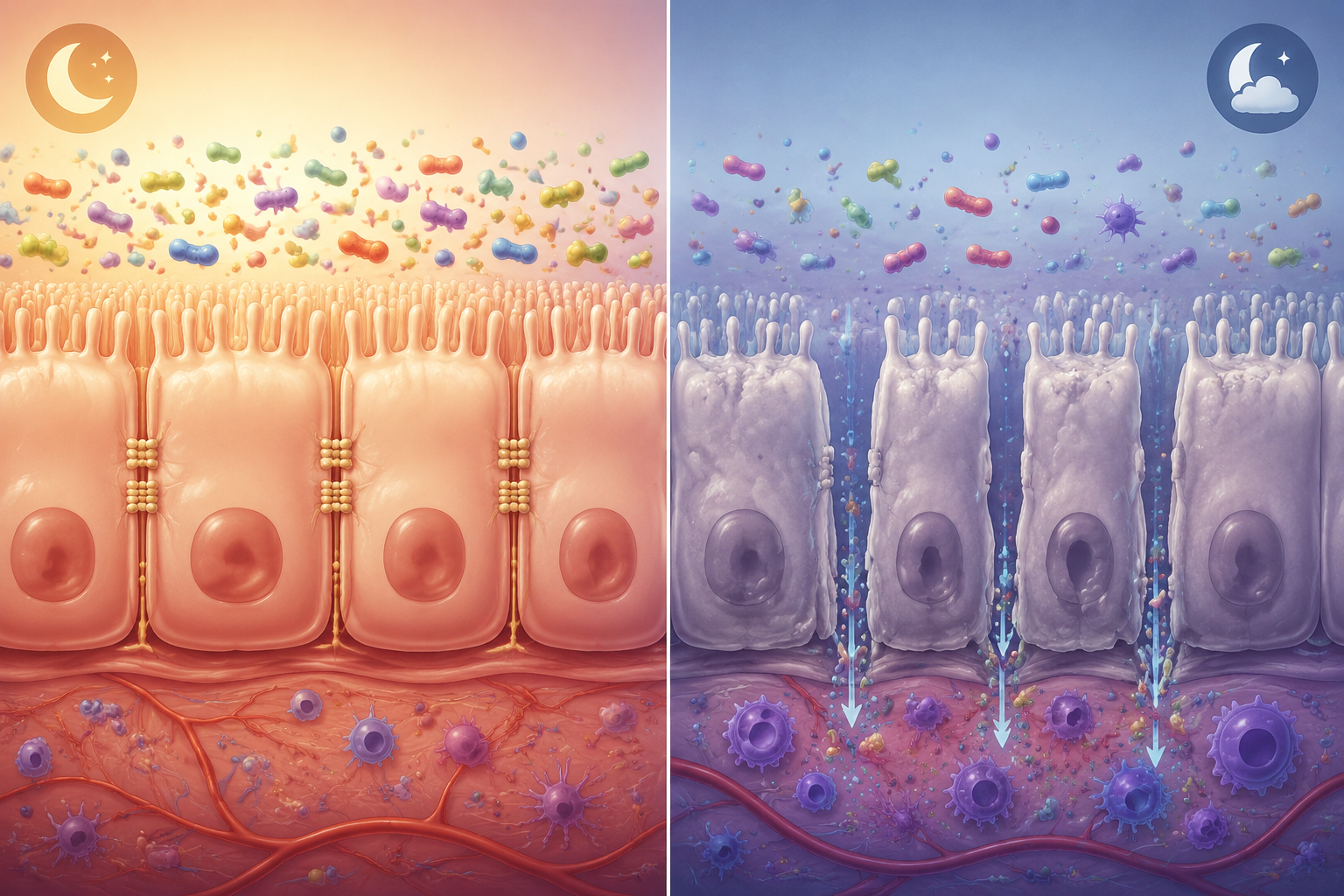
The gut-specific animal evidence adds another layer. In a mouse model, Gao and colleagues reported that sleep deprivation compromised intestinal barrier integrity and implicated disrupted melatonin signaling in that effect.[7] This is mechanistically relevant because an intact intestinal barrier helps regulate what crosses from the gut lumen into underlying tissue. It is not a human norovirus result, and mice are not small humans. But it gives a plausible biological route by which sleep loss could make the gut less resilient during exposure to an enteric pathogen.
Another mouse study found that chronic sleep disruption altered gut microbiota and was associated with systemic and adipose tissue inflammation and insulin resistance.[8] That study should not be stretched into a claim that a changed microbiome causes norovirus infection. Its value is more limited and still useful: repeated sleep disruption can disturb the gut ecosystem and inflammatory tone in ways that make “sleep quality” biologically relevant to GI vulnerability.
This is also where melatonin is sometimes dragged into the conversation too quickly. The mouse barrier study involved melatonin signaling, but that is not the same as evidence that taking melatonin prevents norovirus. Melatonin may be relevant to circadian timing and gut barrier biology; it is not a norovirus prophylactic. If someone is considering melatonin or other sleep aids during an outbreak, the better question is safety, timing, dose reliability, next-day impairment, and whether the sleep problem is short-term stress or a persistent disorder — not whether a pill can stand in for outbreak control.
What This Means During a Norovirus Outbreak
Sleep belongs in outbreak prevention as an additional layer, not as a replacement for hygiene. Norovirus can spread efficiently even in careful households, and the practical controls still come first: soap-and-water handwashing, bathroom and high-touch surface disinfection, laundry precautions, isolation where possible, and keeping sick people away from food preparation.
The sleep layer is about reducing avoidable vulnerability before and during exposure. In a crowded home, that may mean protecting the sleep of the person doing most of the cleaning and caregiving, not pretending everyone can achieve perfect rest while someone is vomiting in the next room. The goal is to stop treating sleep as optional just because the other prevention tasks are more visible.
| Outbreak situation | Sleep-focused prevention move |
|---|---|
| A household member is sick overnight | Rotate caregiving if possible so one person is not losing multiple full nights of sleep. |
| A parent or roommate is cleaning contaminated surfaces | Protect a recovery sleep window afterward instead of assigning that person every early-morning task too. |
| Travel disrupts routine during a surge | Prioritize a consistent sleep opportunity and reduce late-night alcohol, heavy meals, and schedule drift. |
| Anxiety about infection keeps someone awake | Use a short wind-down routine and move outbreak logistics earlier in the evening when possible. |
| Shift work or caregiving makes 8 hours unrealistic | Aim to reduce the depth and duration of sleep restriction rather than treating the week as a lost cause. |
The most useful threshold from the human challenge evidence is not a magic number, but it is hard to ignore the pattern around short sleep. In Cohen’s study, risk was higher below 7 hours; in Prather’s, risk was higher below 6 hours.[2][3] For outbreak planning, routinely sleeping under 6 hours is the clearest red flag. Aiming for at least 7 hours when circumstances allow is a reasonable prevention target, especially before travel, gatherings, caregiving stretches, or known household exposure.
A restrained sleep plan is enough
Outbreak sleep hygiene does not need to become a performance project. The basics are still the ones most likely to survive contact with real life: set a protected sleep window, keep the room dark and cool enough, avoid late caffeine, reduce alcohol when infection risk is high, and move disinfecting plans or travel logistics out of the final minutes before bed. If nausea, vomiting, diarrhea, fever, dehydration risk, or severe anxiety is already present, sleep advice is secondary to medical judgment and infection-control guidance.
For short-term insomnia during an outbreak, over-the-counter sleep aids can create their own problems, including next-day grogginess and interactions with other medications. They may help some people in specific circumstances, but they are not a prevention strategy by themselves. The safer framing is to treat sleep support as a way to preserve normal defenses while the proven controls — handwashing, cleaning, isolation, and food-safety precautions — do their more direct work.
The Boundary of the Claim
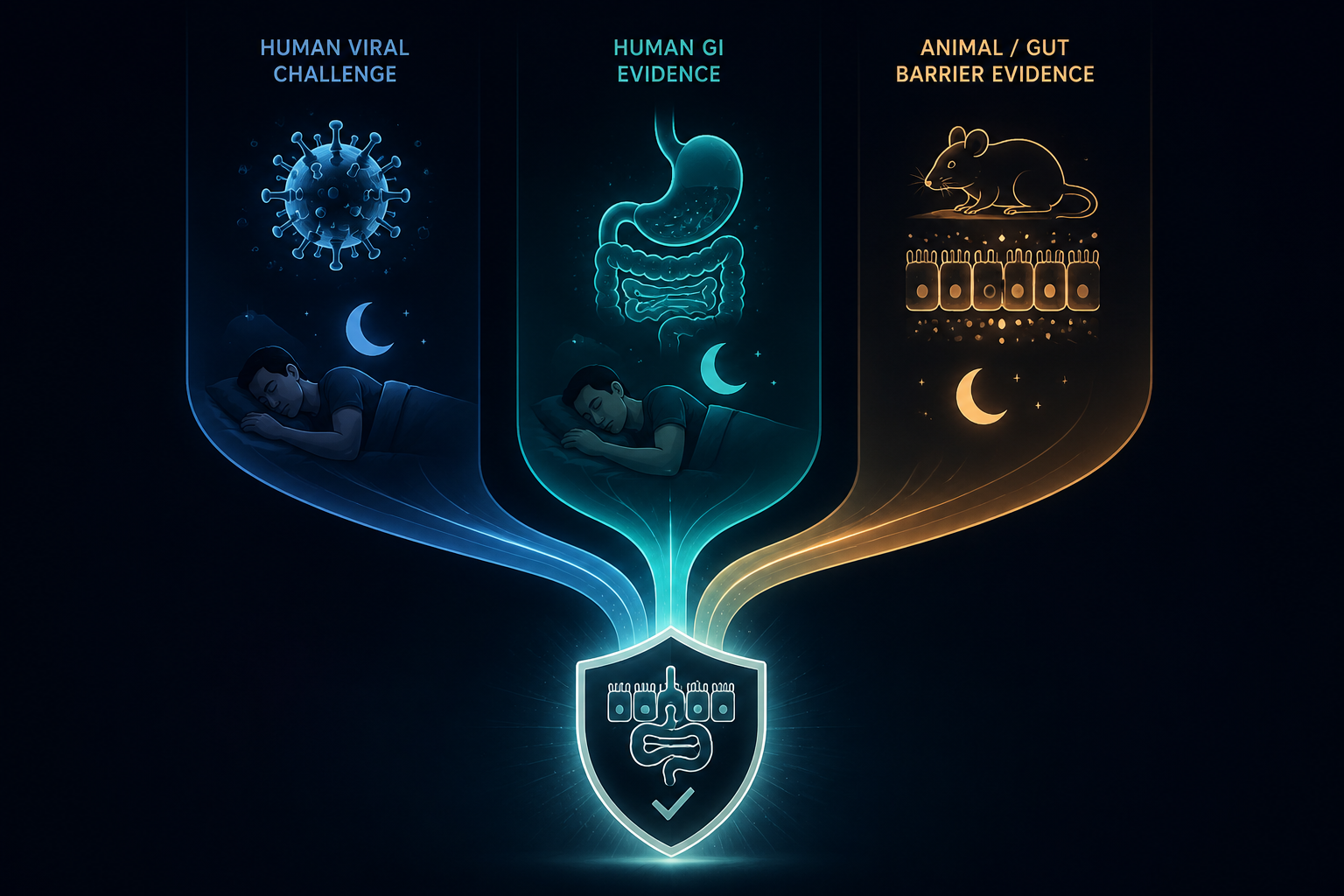
The strongest claim is not that good sleep has been proven to prevent norovirus. It has not. The strongest claim is that short sleep has been shown in human viral challenge studies to increase susceptibility to clinical illness, that GI-adjacent human data point in the same direction, and that gut-barrier animal models make the mechanism plausible.
That is enough to change the prevention conversation. Sleep is not a shield, and getting sick during a highly transmissible outbreak is not a personal failure. But routinely short sleep is a modifiable vulnerability. For the person trying to keep a household functioning through norovirus exposure, sleep hygiene deserves a place beside the unglamorous measures already on the checklist — not because it replaces them, but because it supports the defenses norovirus has to get past.
References
- Norovirus Outbreaks Reported to NoroSTAT, CaliciNet, and NoroSurv. CDC.
- Sleep Habits and Susceptibility to the Common Cold. Archives of Internal Medicine. 2009.
- Behaviorally Assessed Sleep and Susceptibility to the Common Cold. Sleep. 2015.
- Sleep Patterns Are Associated With Common Illness in Adolescents. Journal of Sleep Research. 2014.
- The Role of Sleep in Immune System and Its Relevance in COVID-19. International Journal of Molecular Sciences. 2021.
- Sleep and Immune Function. Pflugers Archiv - European Journal of Physiology. 2019.
- Sleep Deprivation Induces Intestinal Barrier Dysfunction in Mice via Suppressing Melatonin Production. 2019.
- Chronic Sleep Disruption Alters Gut Microbiota, Induces Systemic and Adipose Tissue Inflammation and Insulin Resistance in Mice. Scientific Reports. 2016.
Comments
Join the discussion with an anonymous comment.