Sleeping through severe weather is not the same as ignoring it. The goal is to stop acting like the only alarm system in the house. If you build the right stack, radar can help you make the bedtime call, NOAA Weather Radio can wake you if the threat turns real, and your phone can sit in reserve instead of running your night.
The shortest workable plan
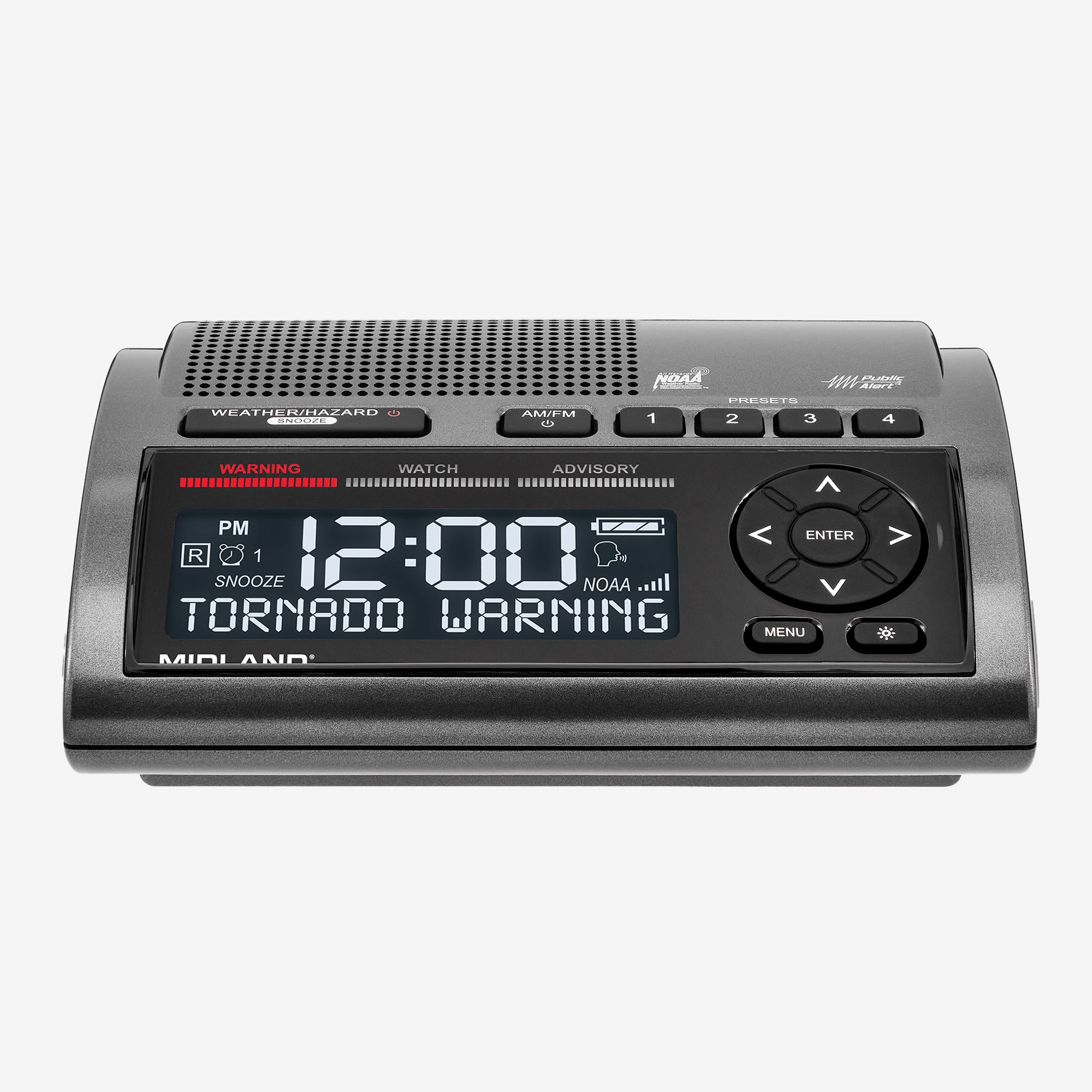
- NOAA Weather Radio with SAME coding is the wake-up layer. It is built to sound an audible alarm for the counties you program, which is why the NWS treats it as the gold standard for severe-weather alerts.[1]
- Wireless Emergency Alerts stay enabled on the phone as a backup. Useful, but not the thing to trust if you are a heavy sleeper.
- Radar apps are for the last check before bed. They help you decide whether to sleep, monitor, or move to shelter instead of refreshing a screen all night.[2][3]
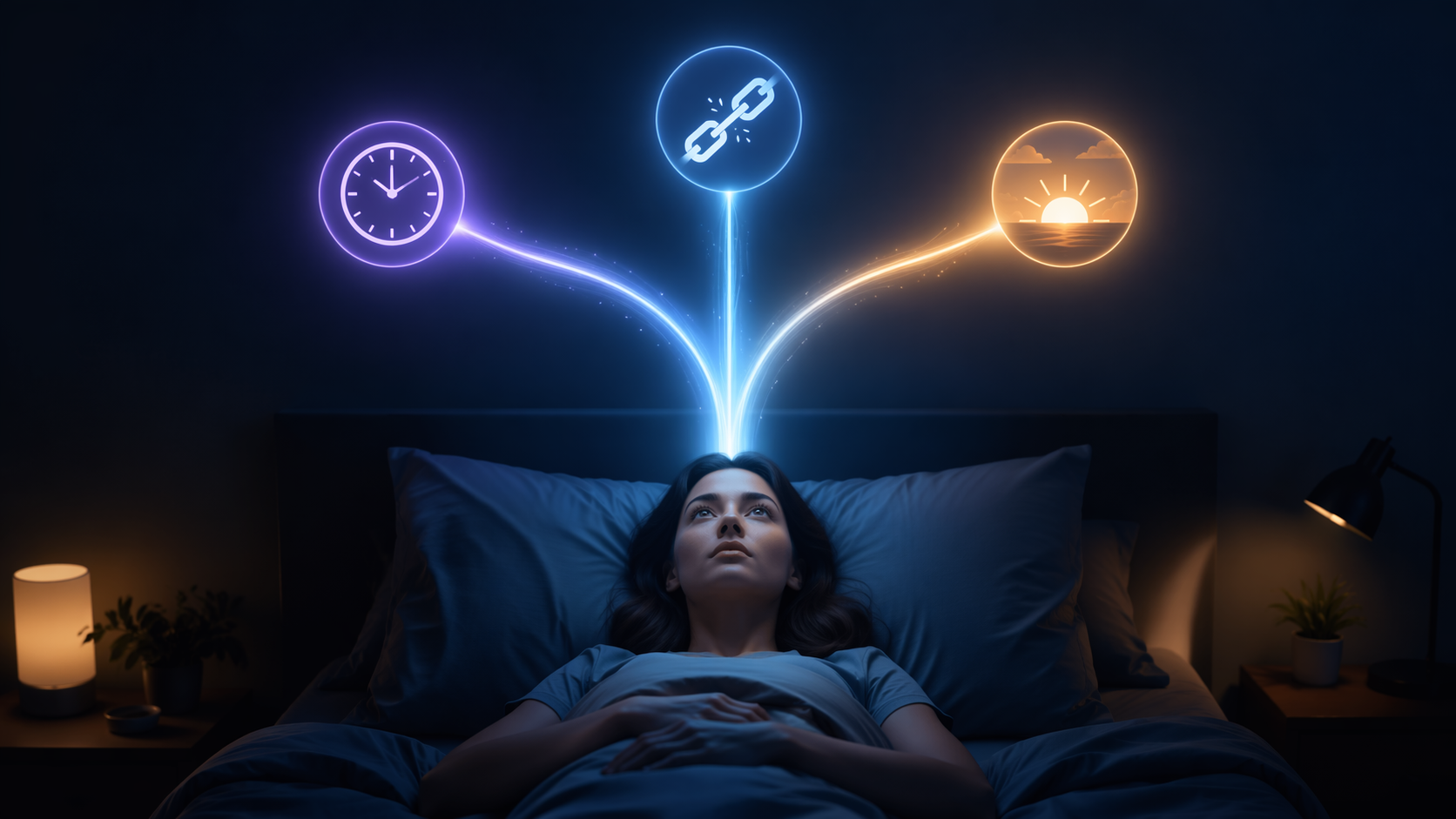
That order matters. Radar lowers uncertainty. The radio takes over vigilance. The phone sits behind both.
Make NOAA Weather Radio do the waking
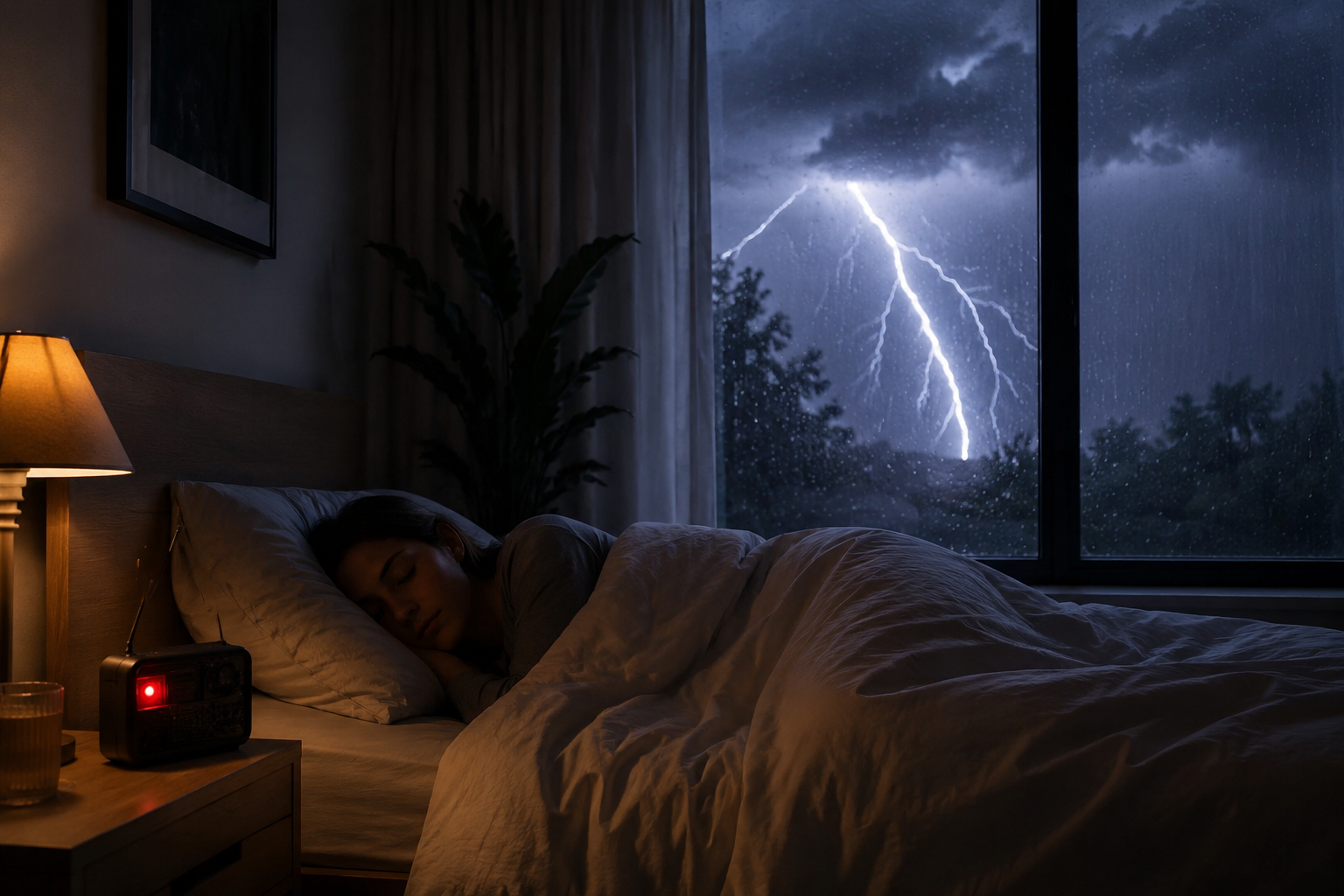
NOAA Weather Radio deserves the most attention because it is the one layer that is supposed to interrupt sleep on purpose. With SAME coding, you program the counties you care about, and the radio sounds when the NWS issues an alert for that area. That county targeting keeps the alarm from becoming background noise and makes it practical to leave on overnight.[1]
- Choose a SAME-capable model.
- Program the counties where you sleep and, if needed, where close family members live.
- Place it where the alarm will be heard from the bedroom, not across the house.
- Test the volume and backup power while you are awake.
Use radar to decide before bed
Radar is the pre-bed layer, not the wake-up layer. The NWS guidance on storm anxiety points people toward radar tracking because seeing where the storm is headed can replace open-ended worry with a decision: go to sleep, keep monitoring, or start a more serious plan.[2] That is the useful part. You are not trying to predict the entire night. You are trying to stop checking every ten minutes.
The NWS alert app directory includes options such as Storm Shield, MyRadar, and Red Cross Emergency.[3] The best app is the one you will actually open once, read, and close.
- Open a radar app once, then close it after you get the answer.
- Look for whether the line of storms is actually headed toward your county, not just whether the map looks busy.
- If the threat is still ambiguous, choose an app that lets you set specific alerts rather than leaving you to babysit it manually.[3]
Treat phone alerts as backup, not assurance
Wireless Emergency Alerts still belong in the stack because they add another official alert path, but they should not be the thing you count on to rouse a heavy sleeper. Phone alerts are easy to miss once you are asleep, especially if the room is noisy or your phone is not right by the bed. If the alert does come through, act on it; if it never arrives, the radio should still cover you.
Why the night matters
The seriousness after dark is not imaginary. Fox Weather, citing published research, says nighttime tornadoes are more than twice as likely to be fatal as daytime tornadoes, roughly 1 in 20 versus 1 in 50.[4] That does not mean every nighttime storm is a crisis. It does mean that bedtime is the right time to set up the alarm system, not the time to decide whether you need one.
That is also why "just stay awake" is a bad trade. AASM reports that stress, anxiety, and depression disrupt sleep for a majority of Americans, with 68% of adults in its survey saying those conditions affect their sleep.[5] A night spent half-awake, checking radar and second-guessing every rumble, is not better awareness. It is less rest and worse judgment.
A workable nighttime plan is simple: check radar once, let NOAA Weather Radio take over as the primary alarm, keep phone alerts as a secondary layer, and go to bed knowing that if the warning changes, the system is set to wake you on purpose. That is the point of the setup: not emotional calm, just a real trigger that interrupts sleep when action is needed and leaves you alone when it is not.
References
- NOAA Weather Radio All Hazards — National Weather Service
- Storm Stress and Anxiety — National Weather Service
- NWS Alert App Directory — National Weather Service
- Nighttime Tornadoes: How You Stay Safe — Fox Weather
- Stress, Anxiety, Depression and Sleep — American Academy of Sleep Medicine
Comments
Join the discussion with an anonymous comment.