
Tonight is not the night to chase perfect sleep. If you are trying to sleep during Tropical Storm Bertha on the Gulf Coast, the job is to get a few usable hours while the storm is still active, the power may be unstable, and the plan can change again when the next alert comes through. Coverage on July 20 put Bertha at about 40 mph sustained winds, with 2-8 inches of rain possible, and the track is still a moving target.[1][2]
The realistic win is broken sleep, not a clean eight-hour stretch. A practical target is 3-5 hours of interrupted sleep, which is enough to matter without pretending the night is normal.[5] This is the 2026 storm, not the 2020 Tropical Storm Bertha, and that distinction matters because the live weather, advisories, and risks are different.
Make the room safe first
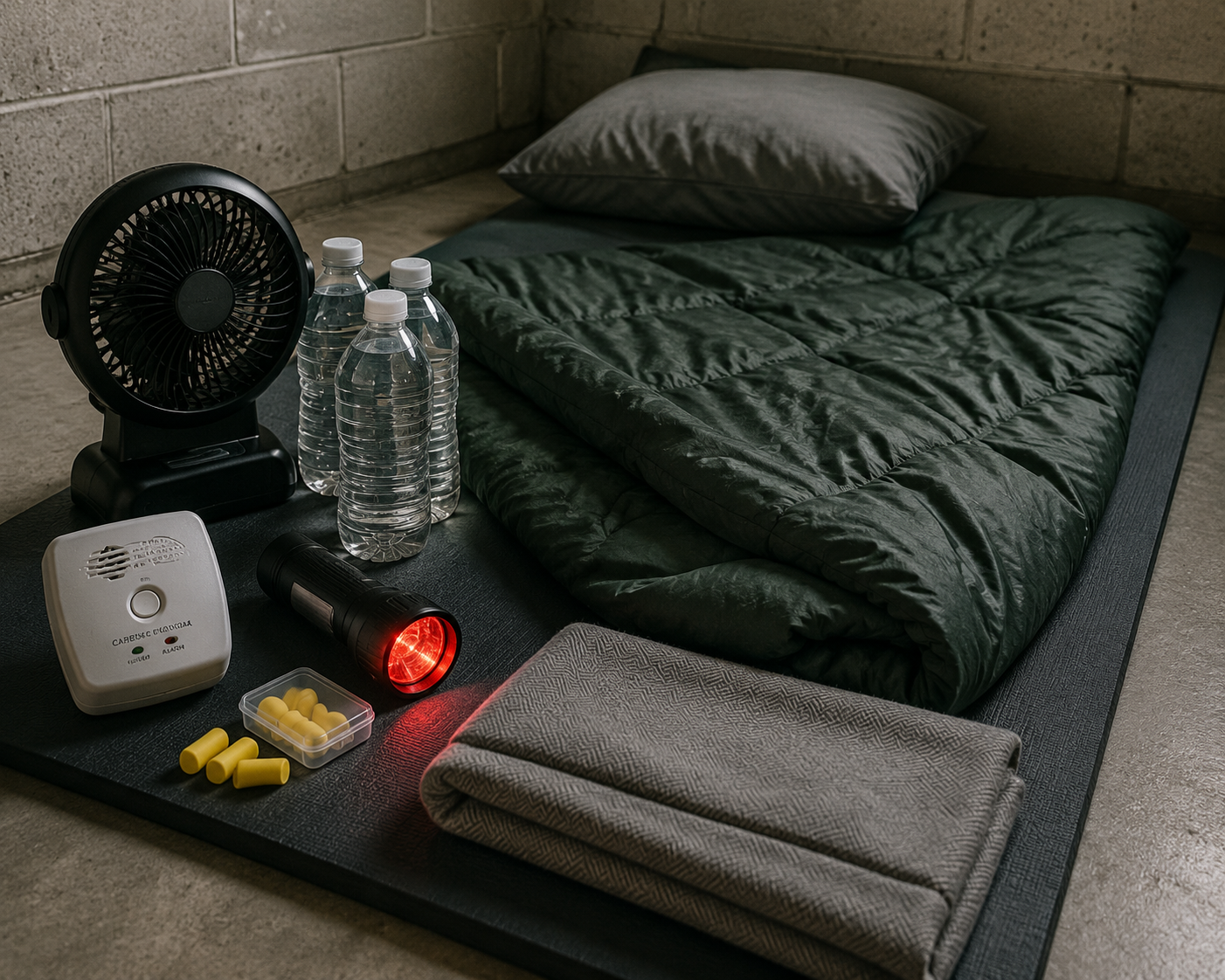
Move into an interior room with no windows if you can. If a generator is running, keep it at least 20 feet from the house so exhaust cannot drift back in, and do not place it near windows, doors, or vents. Check that a battery-powered carbon monoxide detector is working before you settle in, and skip candles entirely. Use a flashlight or other battery light instead.[3]
- Choose the most interior, windowless space you have.
- Keep the generator outside and away from openings.
- Put the CO detector where you can hear it and check it before sleep.
- Leave candles out of the equation.
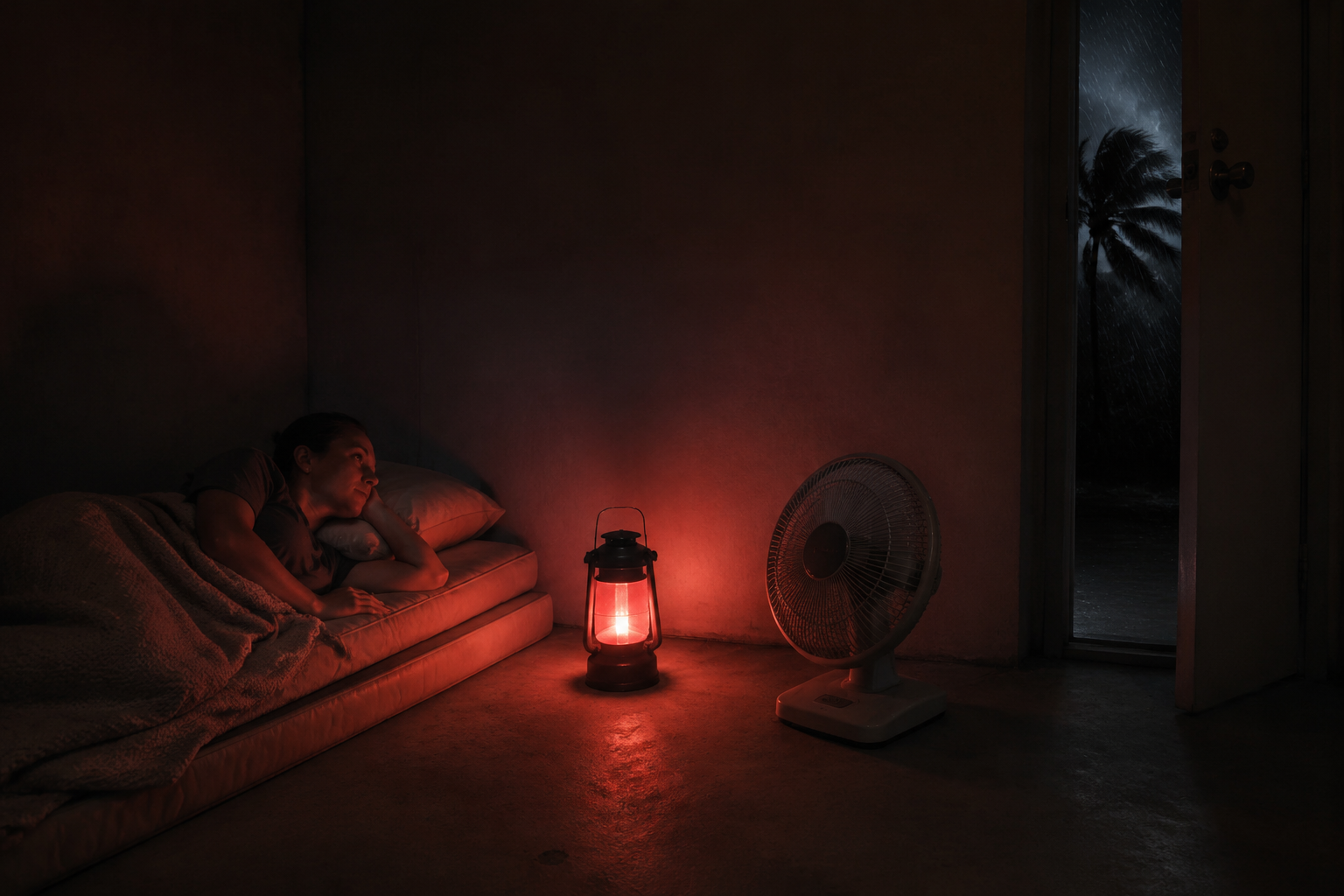
That setup is the load-bearing part of the night. Once the room is safe, the goal shifts to removing the things that keep the body too alert to drift off. For a broader look at why storms keep sleep so light, see Why You Can't Sleep During Storms (It's Not the Noise).
Quiet and cool what you can
Wind, rain, and loose debris can turn a house into a drum. Earplugs, a battery-powered white-noise device, or even a fan can take the edge off the sound without pretending the storm is gone. Keep the light dim and warm or red rather than bright white so the room does not feel fully daytime. The goal is not silence; it is less stimulation.
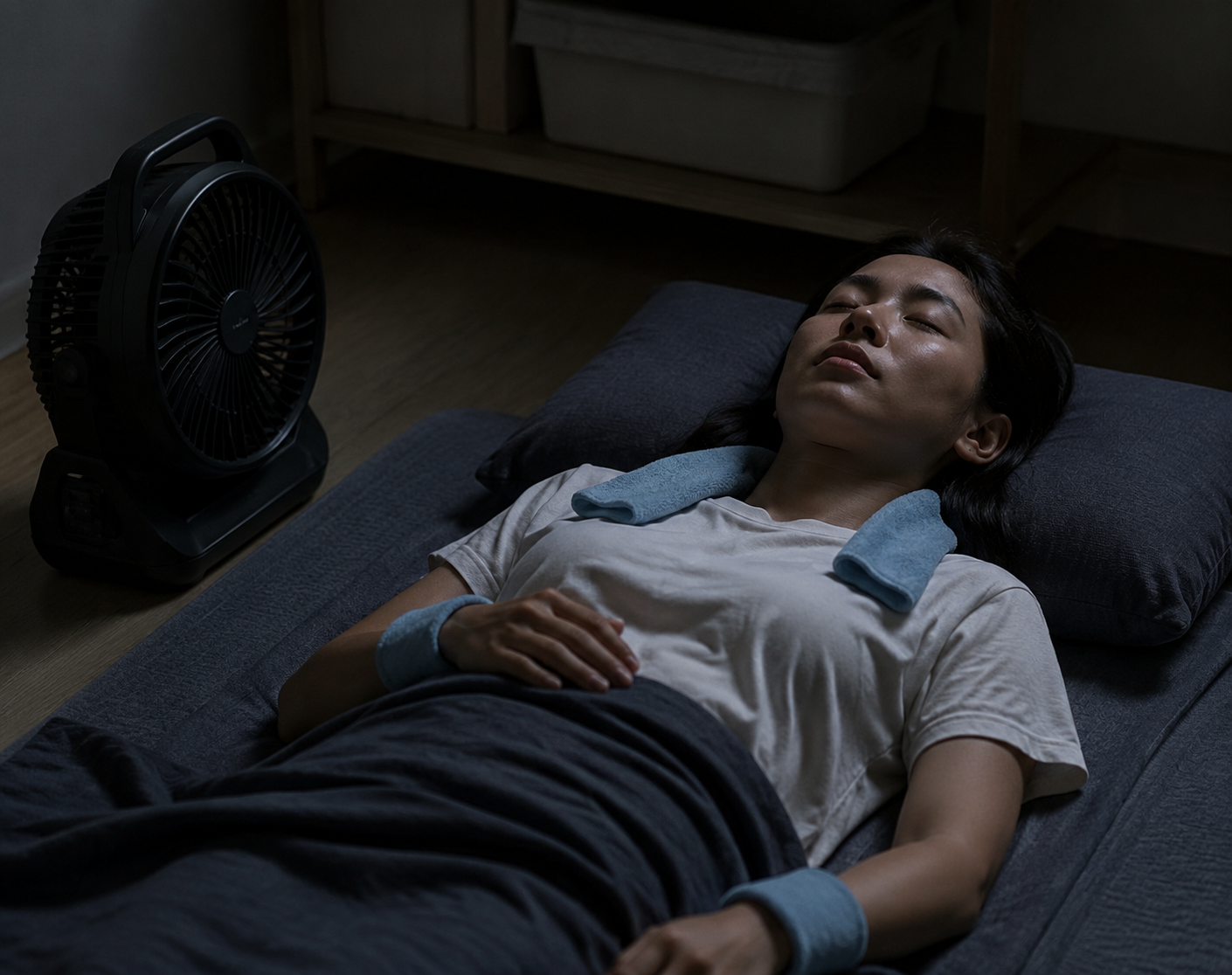
Heat is the other thing that keeps the body from settling. Aim a battery fan across the room or across your body, not straight into your face. A damp towel on the neck or wrist can help more than trying to fight the whole room at once. If you have a choice of floors, sleep on the lowest one; one bedding guide says the difference can run 10-15 F during an outage.[4]
Settle the mind after the room is handled
Once the room is safe, quieter, and as cool as it is going to get, then it makes sense to lower the mind a notch. A few rounds of 4-7-8 breathing, a page of worry notes, and a hard limit on news and social media can keep the night from turning into constant alert-checking. If another adult is with you, shift-sleeping is often better than both people staying half-awake all night.
If you want the longer version of the pieces at work here, see Tropical Storm Sleep Tips for Noise, Heat, and Anxiety, How Storms Affect Sleep Depends on Your Physiology, and Why Hurricane Anxiety Wrecks Your Sleep and What Actually Works.
That is the point of the night: make the room safe, quiet it, cool it, and then give the body the best shot at a few broken hours. If Bertha changes course or the generator setup is wrong, safety wins and sleep waits. If you get 3-5 hours tonight, that is a workable result, not a failure.[5]
References
- Tropical Storm Bertha forecast coverage, Tallahassee Democrat, July 20, 2026.
- Tropical Storm Bertha forecast coverage, USA Today, July 20, 2026.
- Generator and carbon monoxide safety guidance, Centers for Disease Control and Prevention.
- Floor temperature difference guidance during outages, Nest Bedding.
- Broken sleep during active storms guidance, Amerisleep.

Comments
Join the discussion with an anonymous comment.