
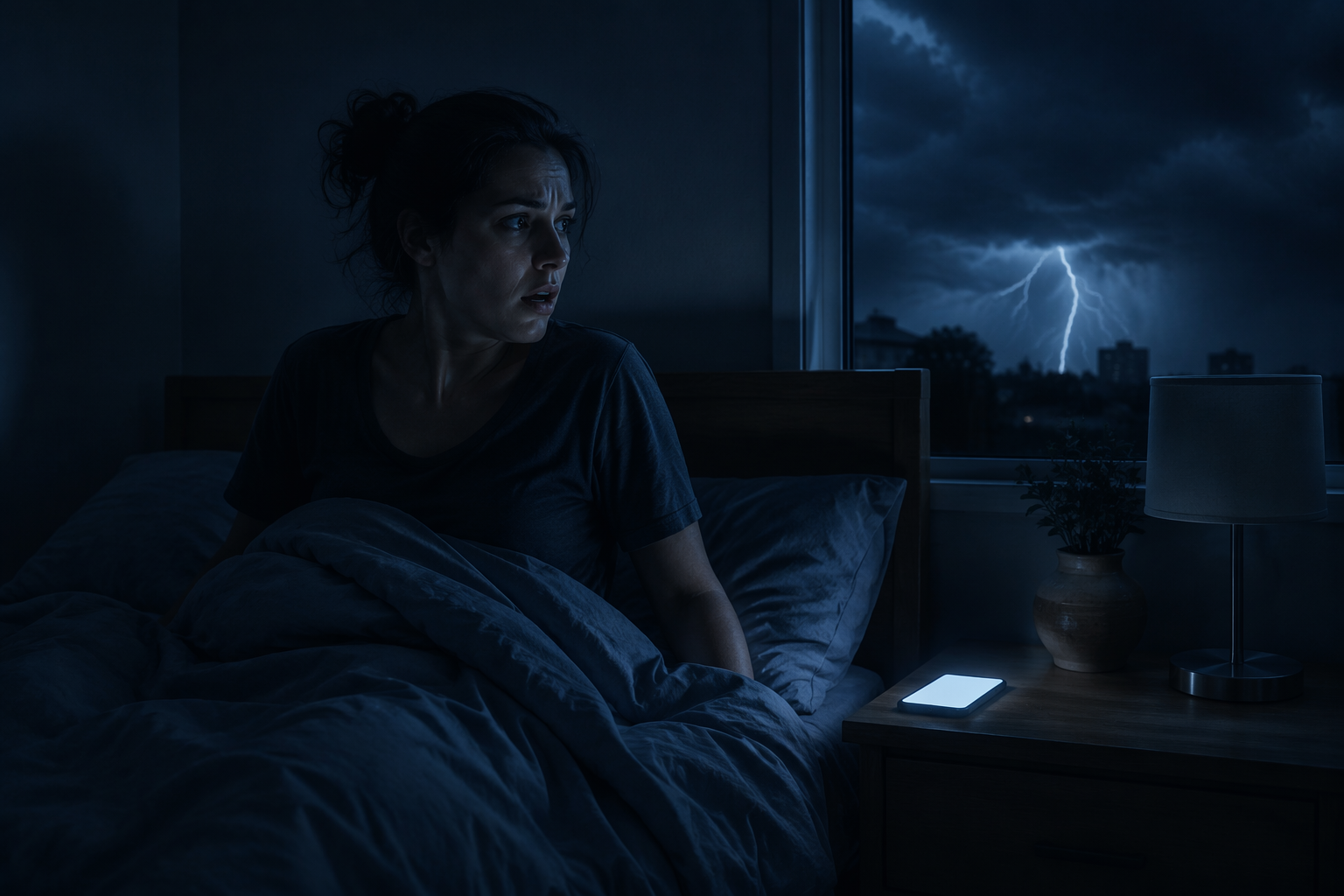
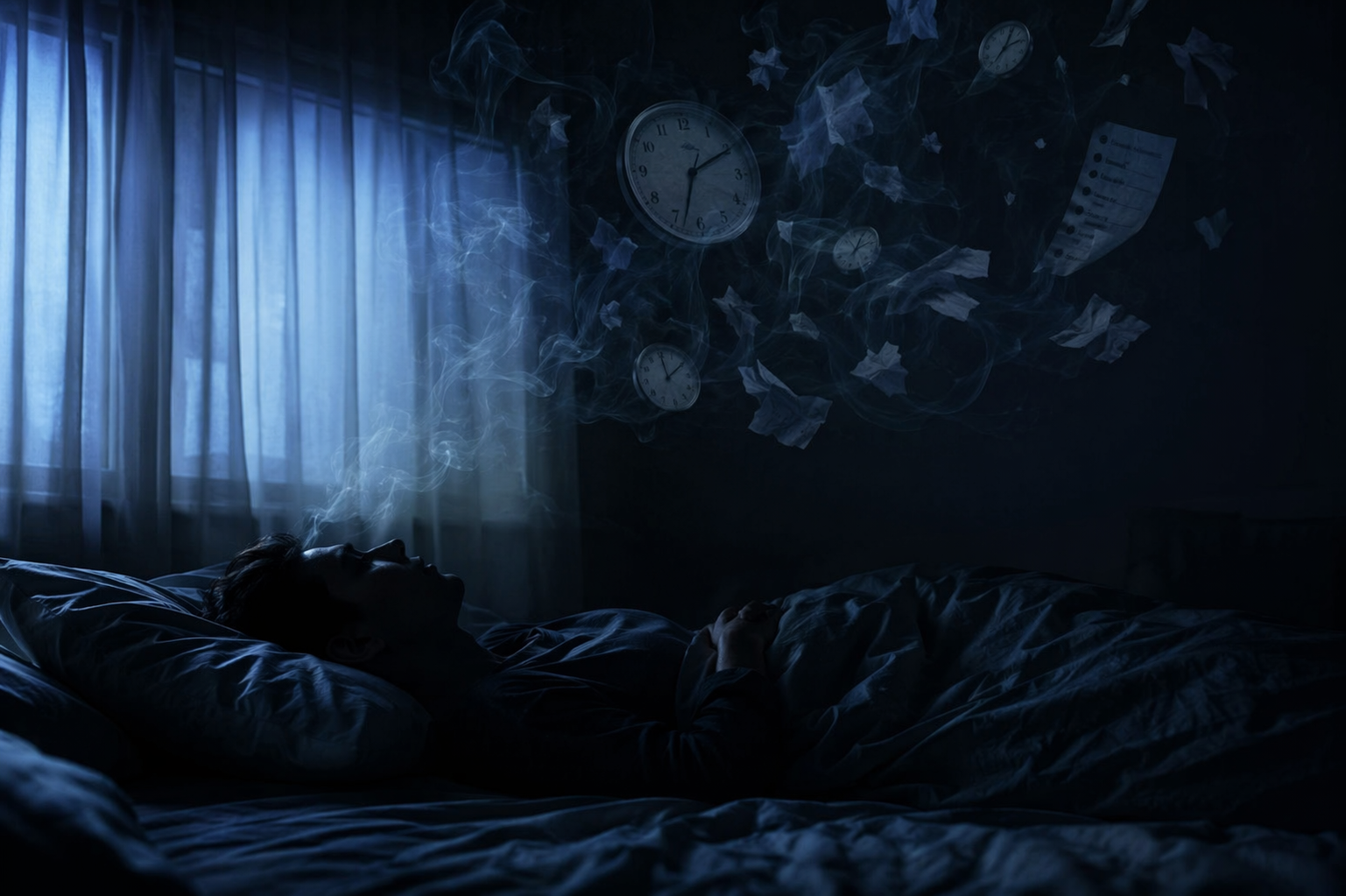
The phone does not sound like information at 2:17 a.m. It sounds like impact. One moment the room is dark and ordinary; the next, the alert tone is cutting through sleep, the screen is bright, and your body is already moving before you have read the warning. By the time you understand that the thunderstorm threat is serious but not immediately at your door, your heart may still be hammering as if the decision has already been made for you.
That is the part most casual advice misses. Thunderstorm alert sleep disruption is not simply a problem of being annoyed by a loud phone. The alert arrives into a sleeping nervous system that can detect sound and mobilize fast, but cannot yet use daytime reasoning to soften the meaning of the sound. The body reacts first. Interpretation comes later.
The same alarm is not the same event at night
The cleanest evidence for this comes from a sleep-lab study by Hall and colleagues, published in 2016. The researchers studied 16 healthy men with a mean age of 25 and exposed them to the same emergency alarm under two conditions: during sleep and while awake. The alarm was not a thunderstorm-specific warning, and the lab was not a bedroom during severe weather. Still, the study is unusually useful because it isolates the question that matters here: what happens when an emergency alarm reaches the body at night rather than during waking hours? [1]
The difference was not subtle. In the nighttime alarm condition, heart rate rose from a pre-alarm baseline of about 59 beats per minute to a peak of 122 beats per minute. Cortisol, a hormone central to the stress response, rose to 11.48 ng/mL in the night-alarm group compared with 8.73 ng/mL in controls. When the same alarm occurred during the day, the researchers did not find a measurable cortisol response. [1]
That pattern matters more than the exact numbers, because the study was small and narrow. Sixteen young healthy men in a controlled lab cannot represent every older adult, child, woman, shift worker, trauma survivor, light sleeper, or person already under stress during storm season. The alarm was generic, not a Wireless Emergency Alert for a severe thunderstorm. But the directional finding is hard to brush off: an emergency alarm during sleep recruited a hormonal stress response that the same alarm during waking hours did not. [1]
The sleeping brain keeps listening, but it is not negotiating
Sleep is not a total shutdown. The auditory system still monitors the environment because missing a meaningful sound can be dangerous. A smoke alarm, a child crying, breaking glass, a siren, or a phone warning tone can still break through. That vigilance is protective. It is also why an alert can feel as if it has bypassed the calmer parts of the mind.
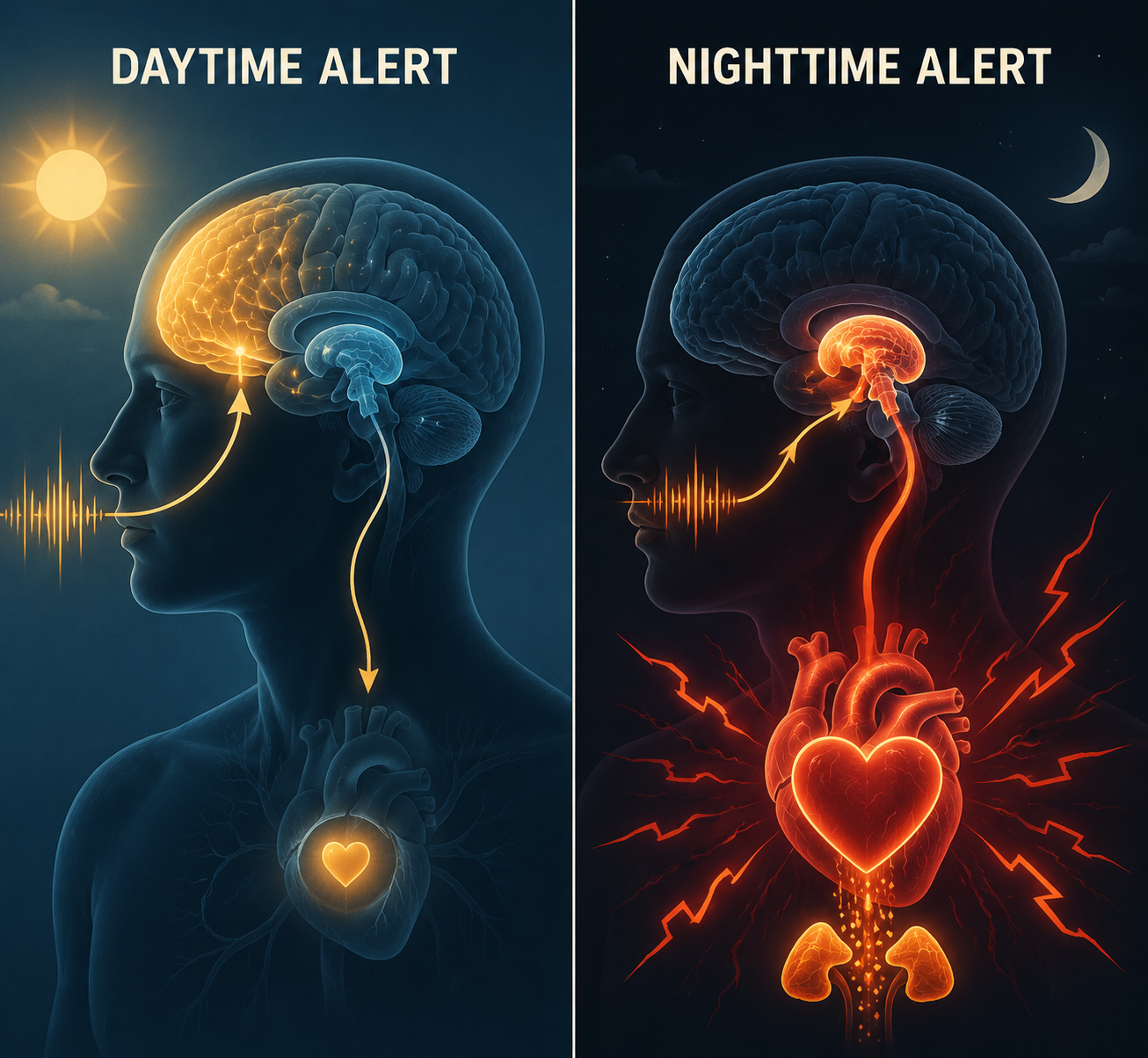
During the day, an alert enters a brain that is already awake. You can read the message, look at the radar, check the county named in the warning, notice whether the wind has changed, and decide what action is appropriate. That does not make the warning pleasant, but it gives the prefrontal, interpretive parts of the brain a chance to participate early. The sound can be placed into context.
At night, the order is different. The alarm first has to wake you. Before you have identified the source, read the text, or understood whether the storm is five miles away or already overhead, the body has treated the sound as urgent. The heart-rate surge seen in the Hall study is a marker of that rapid autonomic arousal: blood flow, attention, and motor readiness are being shifted toward immediate response. [1]
This is why the command to “just ignore it” is so poorly matched to the biology. Ignoring is a waking act. It requires recognition, appraisal, confidence, and inhibition. A sleeping person awakened by an emergency tone is not starting from that place. The first response is closer to mobilization than evaluation.
Why the body stays awake after the danger feels understood
The most frustrating part often comes after the practical part is over. You read the alert. You confirm the warning area. Maybe you move to a safer room for a while, or maybe the worst of the storm passes north of you. The phone is silent again. The house is quieter. Nothing else needs to be done. And yet sleep will not return.
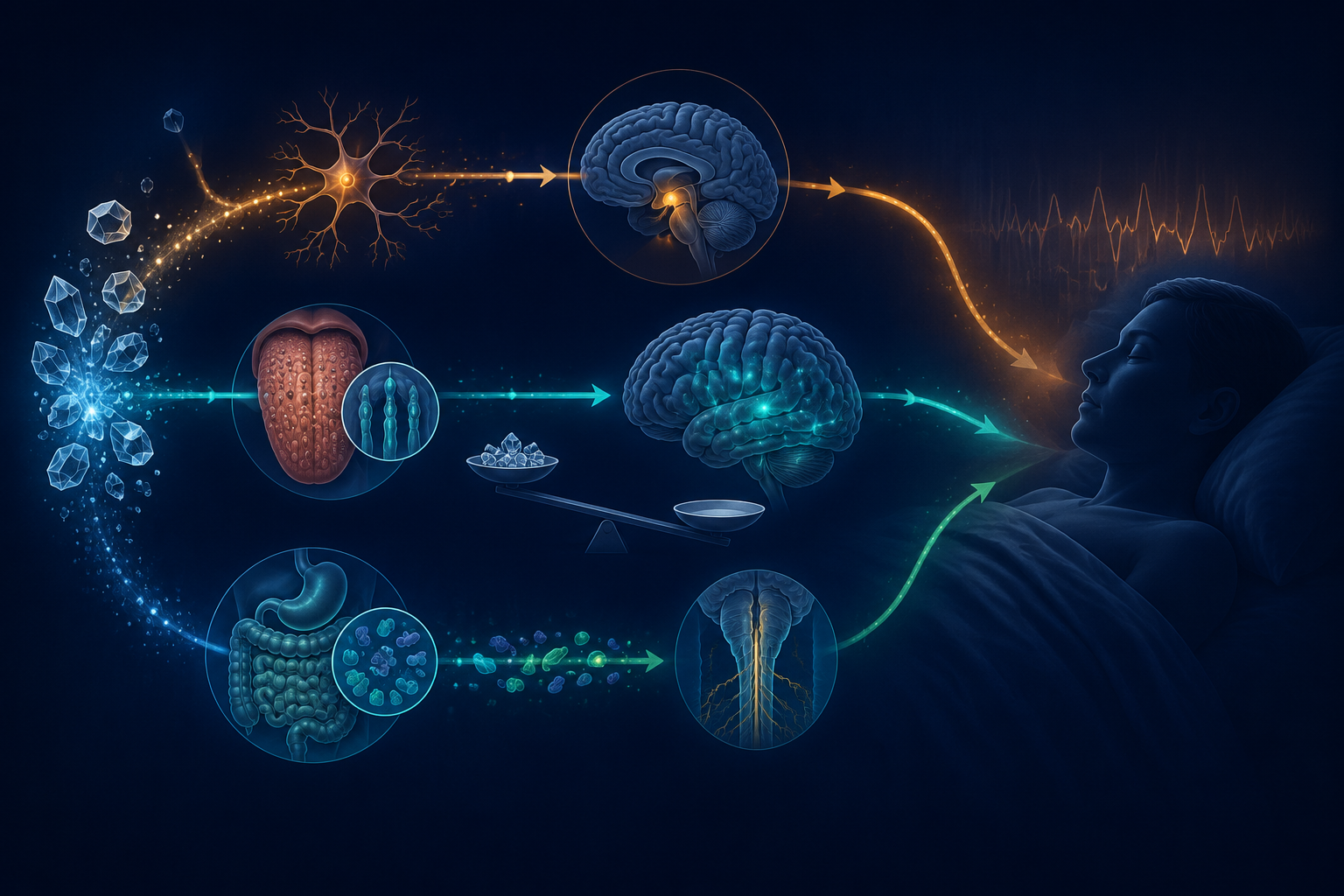
Cortisol helps explain why. The Hall study found that nighttime emergency alarms activated the hypothalamic-pituitary-adrenal axis, often shortened to the HPA axis. This is the body’s stress-response pathway: the brain detects threat, signals through hormonal channels, and helps mobilize the body for action. In a real emergency, that is useful. If the alert means you need to get out of bed, gather children, move away from windows, or take shelter, a sluggish body would be the bigger problem. [1]
But the same chemistry that supports action is hostile to sleep onset. Cortisol is not a sleep-promoting signal. When it remains elevated after the alarm, the body is not simply waiting for you to develop a better attitude about the storm. It is still in a state shaped for vigilance. The available evidence supports the narrower conclusion that cortisol elevation can persist for hours after the alarm; it does not give a precise recovery clock for every sleeper or every storm night. That uncertainty is important, because people differ. The useful point is not that everyone will be awake for the same amount of time. It is that wakefulness after the alert can be physiological, not merely psychological. [1]
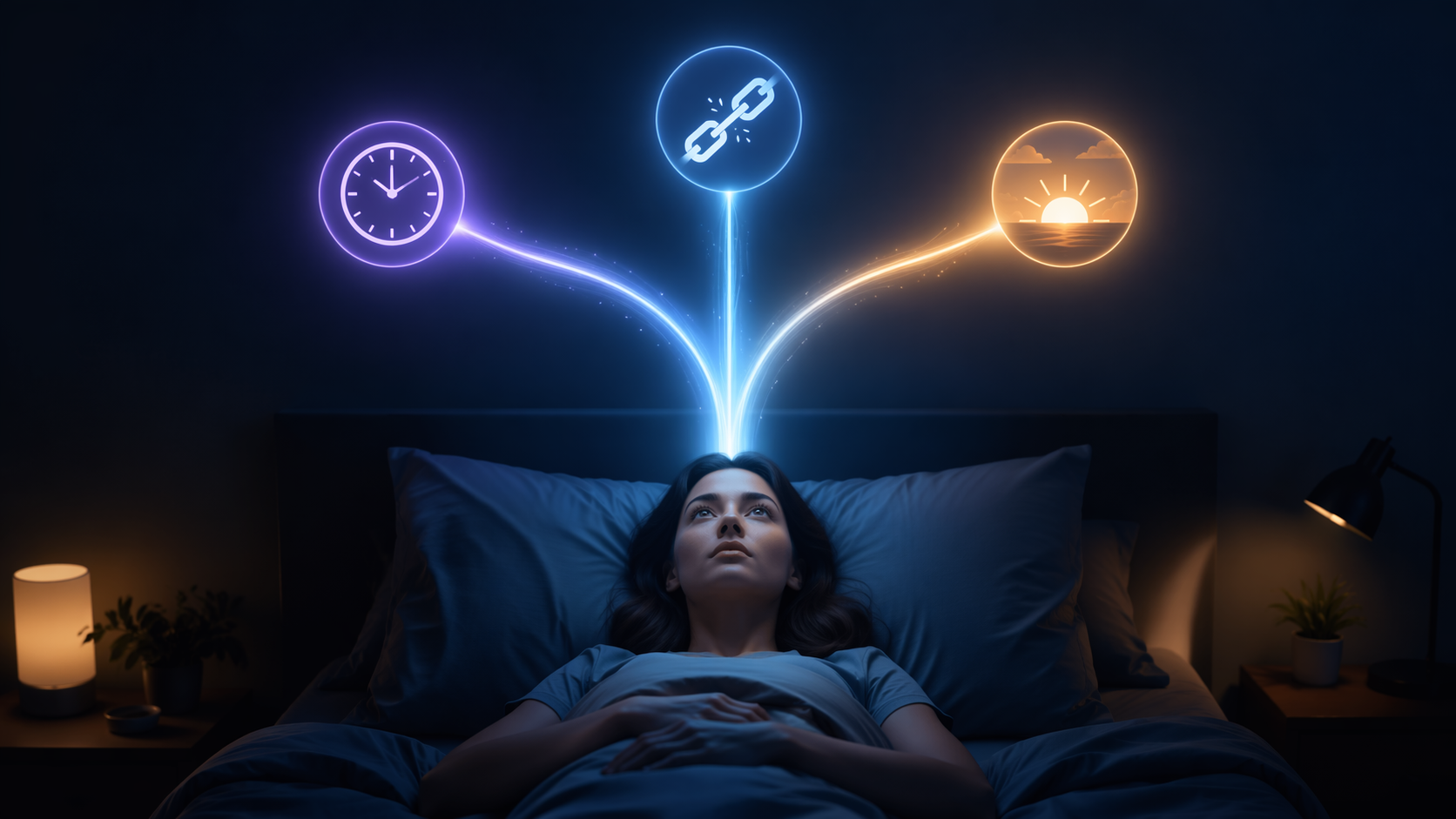
That distinction changes how the experience should be interpreted. If you are lying there with your heart rate slowly settling, replaying the alert tone, listening for thunder, and feeling oddly charged even after deciding the immediate risk is manageable, that does not mean you failed to calm down correctly. It may mean the alarm did what it was built to do: it forced an emergency state onto a sleeping body. The cost is that the emergency state does not disappear the instant the message has been understood.
Thunderstorms add a second layer of uncertainty
The sleep-lab evidence does not prove that thunderstorm alerts have a unique hormonal signature compared with every other emergency alarm. It was not designed to do that. What thunderstorms add is a familiar real-world setting in which the alarm rarely arrives alone. The phone may wake you first, but thunder, wind, rain against windows, flickering power, and the possibility of changing warnings can keep feeding the sense that the environment still needs monitoring.
This is where nighttime reasoning is especially fragile. During the day, checking conditions can be a bounded task: read the warning, look outside, decide what to do. At night, each new sound can feel like an update. A louder gust can restart the body’s alertness. A pause in the rain can feel suspicious rather than calming. The mind may be trying to close the episode, while the sensory system keeps reopening it.
The result is not the same as ordinary insomnia, even though it can turn into a long wakeful stretch. Ordinary wakefulness often begins with thought. A nighttime emergency alert often begins with a body event: sound, startle, pulse, orientation, threat search. Thought then attaches itself to a state that is already underway.
Not every weather notification carries the same safety meaning
It is worth separating ordinary weather-app notifications from government emergency alerts, because the safety tradeoff is not trivial. The National Weather Service describes Wireless Emergency Alerts as messages sent for certain imminent threats, including tornado, flash flood, hurricane, and extreme wind warnings. These are not the same as a routine forecast nudge or a general heads-up that storms may occur later. [2]
That distinction does not make the sleep disruption smaller. It explains why the dilemma is so uncomfortable. A person can make the responsible choice to keep emergency alerts available overnight and still experience the alert as a severe physiological intrusion. The fact that an alert may be justified does not make the nervous system’s reaction easy to absorb.
When alerts become something people want to escape
There is also a broader warning problem here, though it should not swallow the sleep question. Sutton and Wood’s 2025 work on Wireless Emergency Alerts describes warning fatigue as a cycle in which frequent alerts contribute to mental strain, desensitization, and, for some people, opting out or disabling alerts entirely. Their framework comes from interview and survey material, not from a sleep-lab experiment, so it should not be treated as a measured physiological pathway. Still, it names the behavioral risk that follows from repeated high-intensity interruptions. [3]
Nighttime storm alerts may be especially vulnerable to that resentment because they impose a cost immediately. The person does not merely receive information. They lose sleep, feel shaken, and may spend the next day foggy or irritable. If that happens often enough, the temptation is predictable: reduce the noise, silence the phone, turn off categories, escape the next jolt. The research does not prove that cortisol spikes directly cause people to disable alerts, but the practical tension is obvious. A warning system that protects people also has to live with the burden it places on them.
That is why minimizing the experience is counterproductive. Telling someone that an alert was “just a sound” or that they should have gone back to sleep misses the mechanism and may worsen the very fatigue emergency systems need to avoid. A better starting point is to acknowledge that the alert did not merely wake the person. It recruited the body’s emergency physiology before the person had a fair chance to interpret the threat.
What the nighttime alert proves about sleep
The sleeping brain is selective, not absent. It protects sleep by filtering much of the ordinary world, but it also preserves enough vigilance to detect signals that may matter. Emergency alert tones exploit that vigilance by design. They are supposed to break through. When they do, especially during a thunderstorm, the body may treat the first seconds as a mobilization problem rather than an information problem.
The Hall study gives that private, post-midnight experience a measurable shape: a large heart-rate surge, HPA-axis activation, and cortisol elevation after a nighttime alarm, with no comparable cortisol response to the same alarm during the day. Its limits are real, but its central lesson fits the lived pattern many people recognize. The alert feels disproportionate because it reaches the body before conscious interpretation can soften it. Once that system is active, sleep is not something the body simply resumes on command. [1]
References
- The acute physiological stress response to an emergency alarm and mobilization during the day and at night, PMC/NCBI, 2016
- Wireless Emergency Alerts, NOAA/National Weather Service
- Opting Out: Over‐Alerting and Warning Fatigue in the Era of Wireless Emergency Alerts, Journal of Contingencies and Crisis Management, Wiley, 2025
Comments
Join the discussion with an anonymous comment.