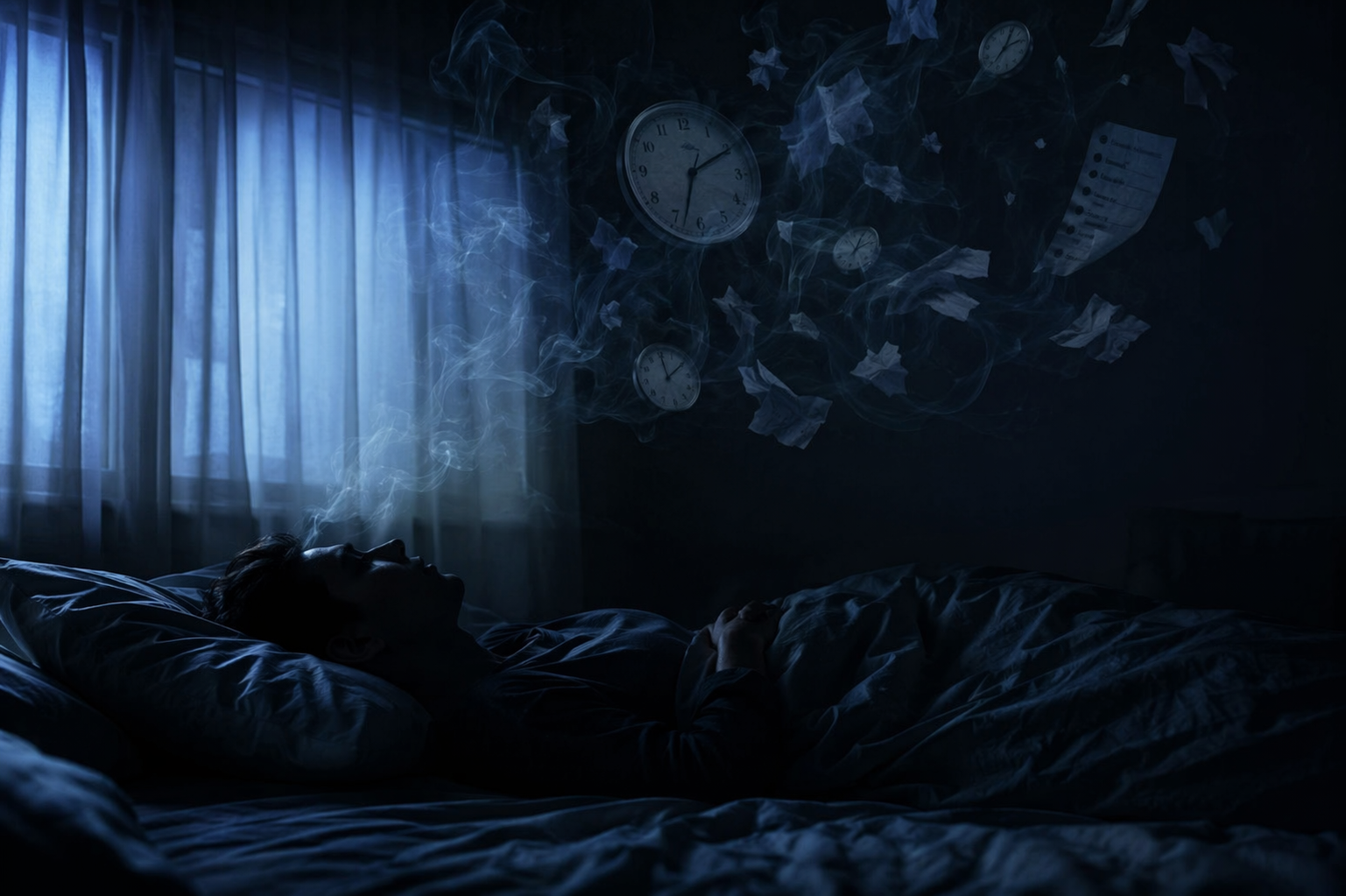
The frightening part is not always the tornado warning itself. It is the moment after it: the phone screaming on the nightstand, the weather radio blaring from the hallway, or a siren rising somewhere outside, while the person who thought they were the responsible one either does not wake up or wakes into a room that feels unreal.
That failure feels personal because emergencies are usually described as tests of readiness. But sleeping through a tornado warning is not simply a “heavy sleeper” problem. It is a collision between warning design and a brain state that was never built for instant executive function at 3 a.m.
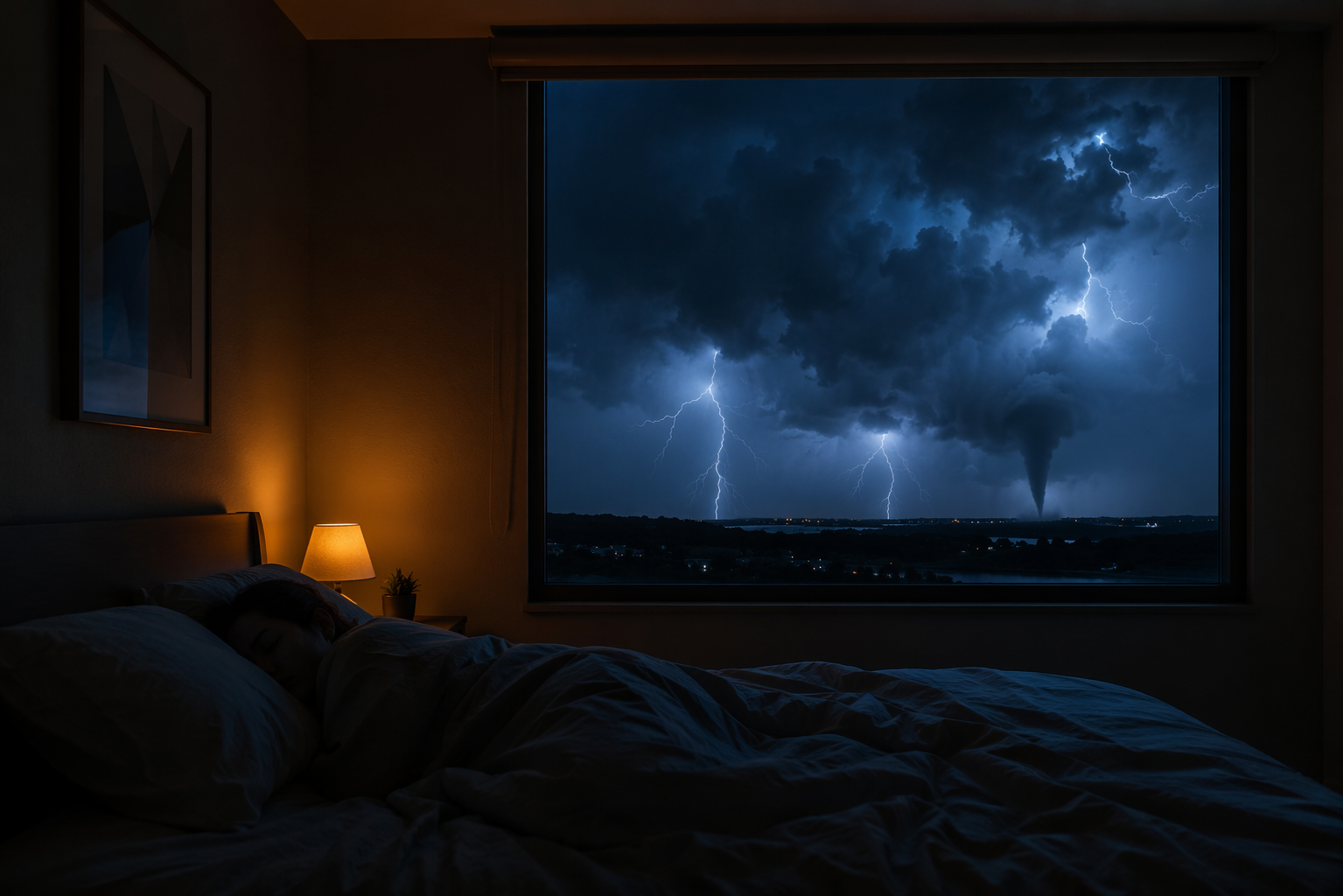
The stakes are not theoretical. Ashley and colleagues’ tornado fatality analysis, summarized by Weather.com, found that nocturnal tornadoes accounted for 27% of tornadoes but 39% of tornado fatalities in the 1950–2005 dataset, with a particularly high nighttime share in the corridor from Oklahoma toward West Virginia.[1] That dataset is older than the 2026 alert environment, so it should not be treated as a live risk calculator for every county. It still captures the core asymmetry: nighttime warnings arrive when people are least able to receive, interpret, and act on them.
Outdoor warning sirens do not solve that mismatch. The National Weather Service’s siren FAQ states plainly that outdoor warning sirens are designed to alert people outdoors and are not intended to wake people inside homes.[2] If a household’s tornado plan quietly depends on an outdoor siren cutting through walls, closed windows, air conditioning, a fan, and deep sleep, the plan has a weak link before the storm even arrives.
Why the Warning Can Reach Your Ears Before It Reaches Your Judgment
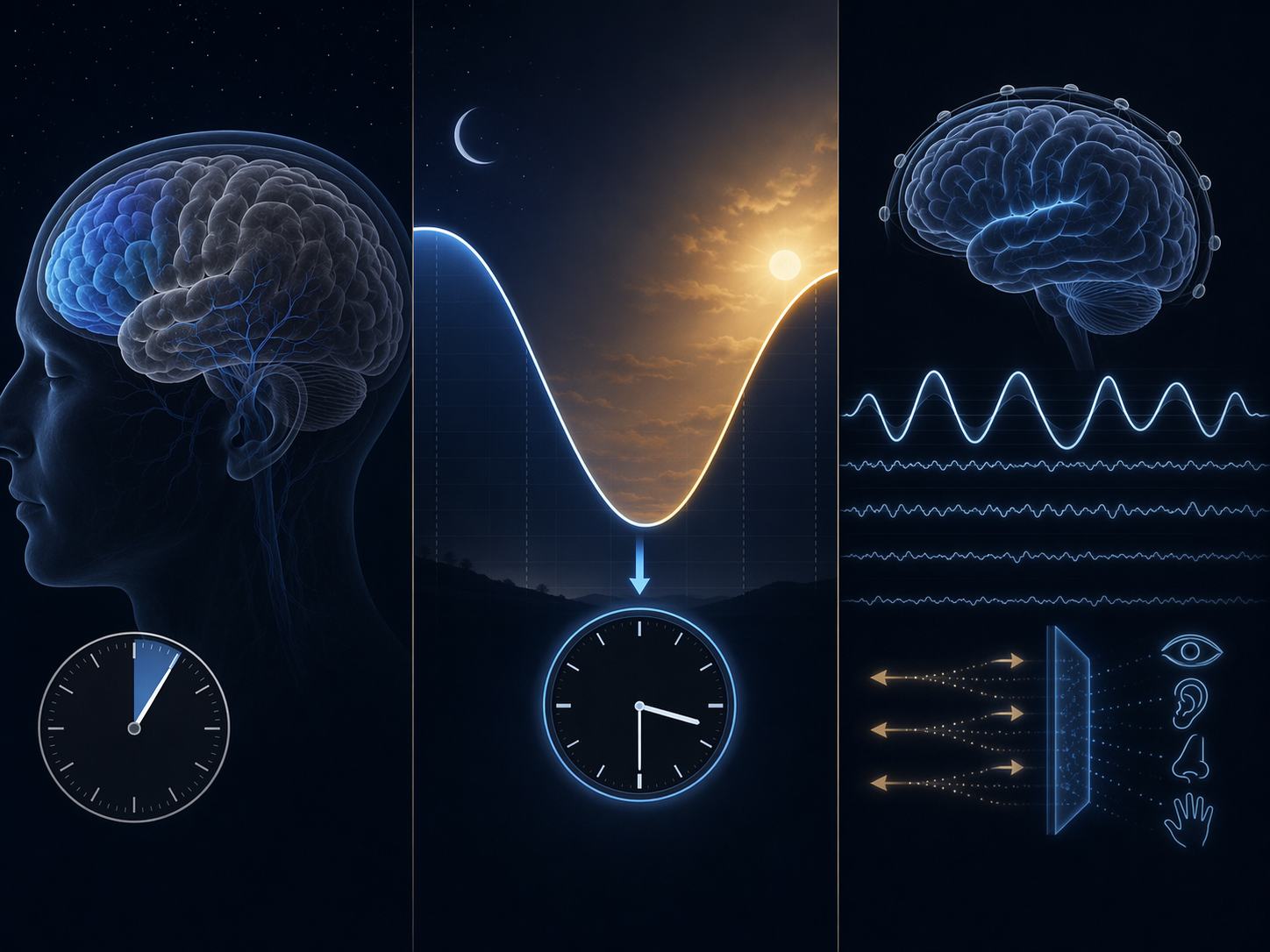
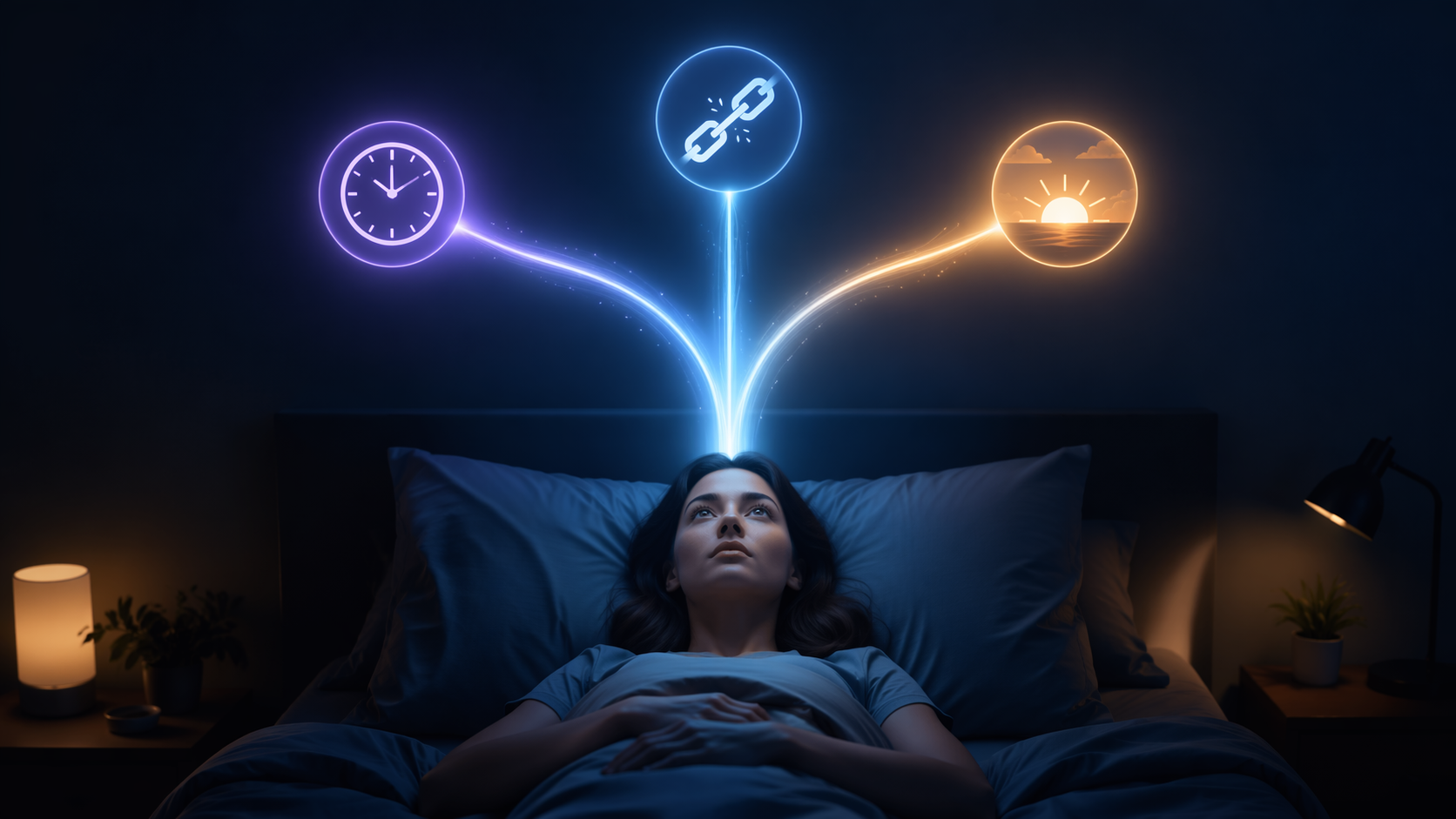
A tornado warning at night is not competing with ordinary distraction. It is competing with sleep inertia, circadian timing, and sometimes N3 deep sleep. Those are different barriers, and lumping them together as “I sleep too hard” hides what each one does.
Sleep Inertia: Awake Enough to Stand, Not Awake Enough to Decide
Sleep inertia is the groggy, slowed, error-prone state after awakening. It is why a person can silence an alarm, stare at a warning, and still not assemble the next action in time. In Trotti’s review of sleep inertia research, performance impairment after waking can last from minutes to longer periods depending on timing, prior sleep, and sleep stage; foundational PET work by Balkin and colleagues found that blood flow in the prefrontal cortex may take about 5–30 minutes to normalize after sudden awakening.[3]
That prefrontal detail matters because tornado response is not just hearing a sound. It asks for sequencing: identify the alert, judge whether it applies to your location, wake other people, grab shoes or a flashlight, move to the shelter area, and avoid doing something stupid on the way. The same adult who can perform those steps cleanly at 8 p.m. may be temporarily bad at them at 3:12 a.m., even after opening their eyes.
This is the failure mode people often misread afterward. “I heard it, but I didn’t react” sounds like denial or irresponsibility. Mechanistically, it can be a brain still restoring the systems needed for working memory, inhibition, and judgment. The warning may have arrived; the competent version of the responder may not have arrived yet.
Circadian Nadir: The Same Alarm Is Harder at the Wrong Biological Time
Timing adds another layer. The biological night includes a circadian low point near the core body temperature minimum, often called the circadian nadir. In forced-desynchrony work summarized in the sleep inertia literature, cognitive performance after awakening is especially poor when awakening occurs near that low point.[3]
That is why “I wake up to my work alarm every morning” is not a reliable test. A 6:45 a.m. alarm after a predictable sleep schedule is not the same problem as a violent alert during the biological night. The sound may be similar. The brain receiving it is not.
The household pattern can be unfair here. One person becomes the unofficial emergency manager because they are the lighter sleeper, the weather-aware one, or the adult who installed the apps. But at the circadian nadir, that person is also working through the same biology. A plan that depends on one sleepy person making several fresh decisions under time pressure deserves suspicion.
N3 Deep Sleep: The Alert May Not Break Through Cleanly
N3 sleep, often called deep sleep or slow-wave sleep, brings reduced responsiveness to the outside world. That does not mean no sound can wake you. It means the threshold for effective arousal is higher, and the transition from sleep to useful action can be rougher. In a study of children awakened from N3 sleep, reaction time was impaired after awakening, showing how deep sleep can degrade immediate responsiveness rather than merely delay eye opening.[4]
Consumer wearables make this more confusing than they should. A watch may label part of the night as “deep sleep,” but it is not reading your brain the way a sleep lab does. It estimates sleep stages from signals such as movement and heart-rate patterns. That can be useful for broad sleep tracking, but it should not be treated as a reliable tornado-warning readiness meter. If you want the longer version of that distinction, the site’s explainer on deep sleep vs. REM tracker meaning covers why stage labels from wearables need caution.
For tornado warnings, the practical takeaway is narrow: if an alert arrives while you are in a deeper, less responsive sleep state, the first barrier may be sensory. If it succeeds in waking you, the second barrier may be cognitive. Good planning has to account for both.
Tips That Match the Failure Mode
The useful question is not “How do I become instantly alert?” Most people cannot promise that. The better question is: what can be set up before bed so the first safe actions happen while alertness is still catching up?
| Barrier | What goes wrong | Countermeasure that fits |
|---|---|---|
| Alert does not wake you indoors | Outdoor sirens and distant sounds may not penetrate the sleep environment | Layer indoor alerts near sleepers, with more than one alert path |
| You wake but cannot think clearly | Sleep inertia slows judgment and sequencing | Pre-decide the first minute and rehearse it |
| The warning arrives during the biological night | Circadian timing worsens post-awakening performance | Avoid plans that require fresh interpretation at 3 a.m. |
| You wake from deep sleep | Sensory awareness and reaction may be reduced | Use alerts that are loud, close, redundant, and assigned to specific people |
Put the Alert Where Sleep Actually Happens
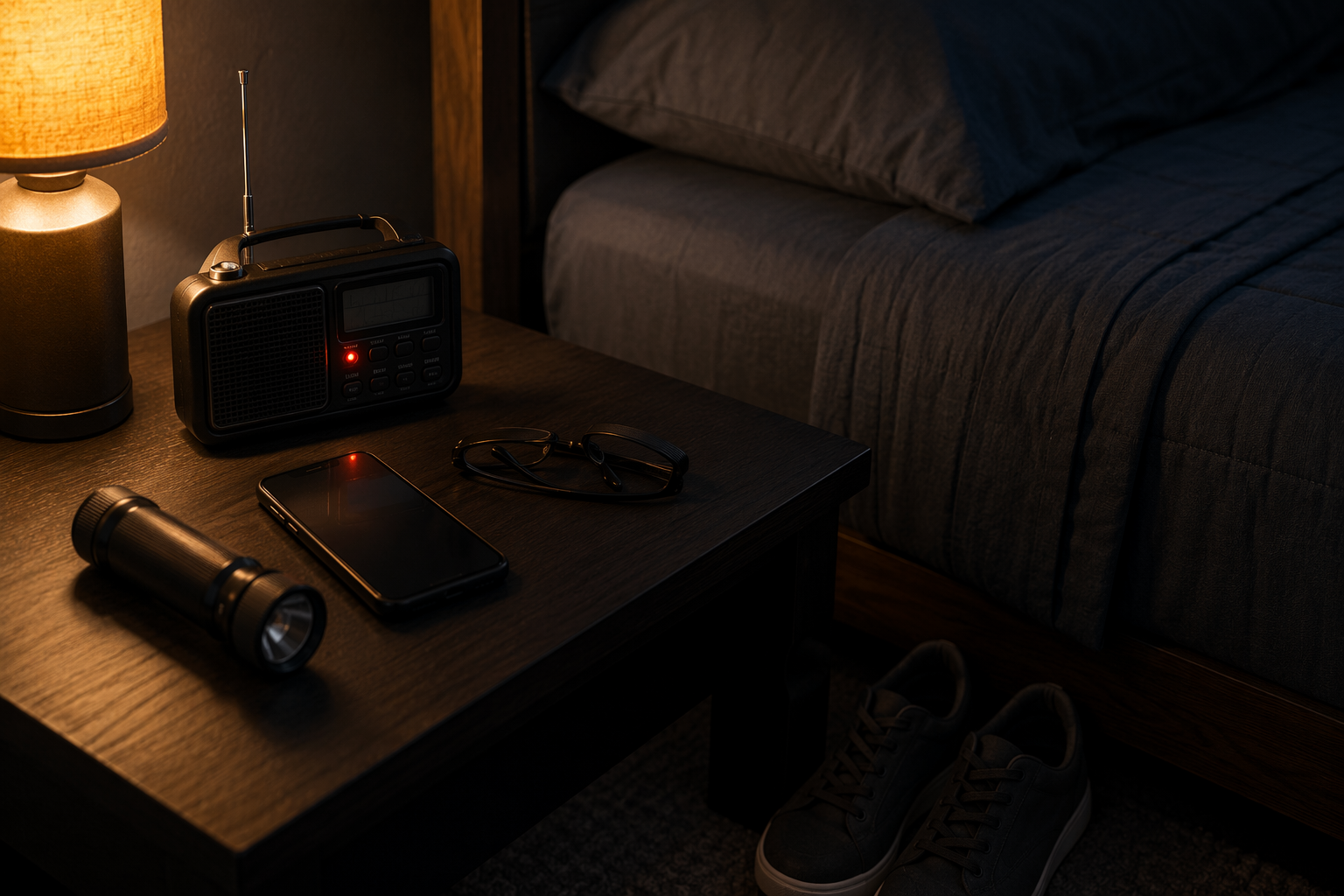
A siren outside is a community signal, not a bedside neurotechnology. For sleeping people indoors, use indoor alert sources: a weather radio with tone alert, phone alerts that are allowed to break through Do Not Disturb, and a placement strategy that assumes doors may be closed and fans may be running. The device that matters is the one close enough and configured enough to wake the actual sleeper.
This is also where normal sleep advice collides with storm reality. Keeping phones out of the bedroom can help some people protect sleep from light, scrolling, and notifications, but severe-weather alerting may require an exception. The cleaner compromise is not a glowing, tempting phone in hand. It is a configured alert device across the room or on a bedside table, with nonessential notifications silenced and emergency alerts preserved. That technology-sleep tension is real; the broader tradeoff is discussed in the site’s guide to how technology affects sleep.
Design the First Minute Before the First Warning
The strongest countermeasure is not cleverness after waking. It is removing the need for cleverness. Before bed during a severe-weather setup, the first minute should already be assigned.
- One alert source is close enough to wake the responsible adult, and a second source exists in case the first fails.
- The shelter location is already chosen, not debated after the warning.
- Shoes, flashlight, glasses, medications, and keys are placed where they can be grabbed without searching.
- Each sleeper has a wake-up assignment: who wakes children, who assists an older adult, who brings pets if that can be done without delay.
- The first spoken instruction is simple and rehearsed, such as “Tornado warning. Shoes. Hallway now.”
That last point sounds almost too plain until you imagine the real scene: an alert sound, a dark room, another adult asking what is happening, a child crying, a dog under the bed, a radar map that may or may not load. Sleep inertia turns optional decisions into hazards. A rehearsed script is not theatrical; it is a way to keep language from becoming another task.
Use Caffeine Gum as a Targeted Tool, Not a Magic Wake-Up Plan
Caffeine gum has a specific appeal in this problem: it can be used immediately after waking, and buccal absorption can act faster than waiting for coffee. Newman and colleagues reported that caffeinated chewing gum reduced sleep inertia effects in their study.[5] That makes it plausible as a tool for the groggy adult who has already awakened and needs to keep functioning.
The evidence should stay in its lane. A caffeine gum study is not a guarantee that someone will wake to the warning in the first place, nor is it a universal protocol for people with caffeine sensitivity, pregnancy considerations, heart rhythm concerns, panic symptoms, or medication interactions. It belongs in the kit only after the larger response design is solved: alerts, assignments, shelter route, and first-minute behavior.
This is a good example of why evidence strength matters. A promising countermeasure can be reasonable without being definitive. The site’s sleep tips evidence tiers framework is useful here: caffeine gum is more than folklore, but it should not outrank preparation that removes decisions from the impaired window.
Be Careful With Gentler Wake-Up Devices
Dawn simulators and gradual-light alarms are interesting because they try to change the awakening transition rather than merely make a louder noise. Thompson and colleagues reported preliminary support for dawn simulation reducing sleep inertia in a modest study.[6] That is worth knowing, especially for ordinary morning waking.
A tornado warning is a different use case. A gradual wake-up system may help some awakenings feel less brutal, but severe weather does not wait for a graceful transition. If a dawn simulator is part of a bedroom setup, it should be treated as a supplement to alerting, not the primary safety layer. The warning device still needs to be immediate, loud enough, and configured to override normal sleep-protection settings.
The Household Plan Should Assume Somebody Will Be Slow
A realistic nighttime tornado plan does not shame the person who wakes confused. It designs around that confusion. The goal is to make the first safe move easier than the first wrong move.
Start with the shelter decision. If the safest available place is an interior bathroom, hallway, basement, or storm shelter, that choice should be settled before the warning. Do not make the sleepy brain compare rooms. Do not make it decide whether this warning is “serious enough” after the phone has already gone off. If the alert says tornado warning for your location, the script begins.
Then reduce movement friction. Shoes prevent one of the common nighttime delays: stepping into broken glass, debris, wet flooring, or outdoor shelter paths barefoot. A flashlight prevents the phone from becoming both map, light, alert source, and distraction. Glasses matter because blurry vision turns every task into a puzzle. None of these items is dramatic; that is the point. They keep the early response from depending on a fully online prefrontal cortex.
Finally, rehearse the handoff between people. If one adult is the usual alert monitor, another adult still needs a job. If children are involved, they should know the destination in ordinary language. If someone has limited mobility, the route needs to be cleared before storms arrive. If pets are part of the plan, decide in advance what is reasonable and what is not, because the middle of a warning is a bad time to discover that the cat has more influence over the household than the radar.
This is where many “sleeping through tornado warning tips” lists become too neat. Buying another device may help, but the fragile part is often the transition from alarm to action. The plan should be judged by whether a half-awake person can carry it out, not by whether it sounds sensible at the kitchen table.
A Better Standard Than Instantly Alert
Nighttime warning failure is physiologically predictable. Outdoor sirens are not designed to wake indoor sleepers. Nocturnal tornadoes have carried a disproportionate fatality burden in historical data. Sleep inertia, circadian timing, and deep sleep can all interfere with the chain from sound to judgment to movement.
That does not make the problem hopeless. It changes the standard. Success is not waking up sharp, calm, and impressive. Success is having a layered system that expects the waking brain to be slow: indoor alerts close to sleepers, redundant warning paths, assigned roles, a fixed shelter route, essential items staged, and optional tools like caffeine gum used only as support.
The first safe actions need to happen before full alertness returns. That is the honest design target.
References
- Nighttime Tornadoes More Than Twice As Likely To Be Deadly, Weather.com.
- Outdoor Warning Sirens Frequently Asked Questions, National Weather Service.
- Waking up is the hardest thing I do all day: Sleep inertia and sleep drunkenness, PMC, 2016.
- Effects of sleep inertia on cognition in children, PubMed, 2007.
- Caffeine gum minimizes sleep inertia, Perceptual and Motor Skills, 2013.
- The effects of dawn simulation on markers of sleep inertia and post-waking performance in humans, Chronobiology International, 2014.
Comments
Join the discussion with an anonymous comment.