
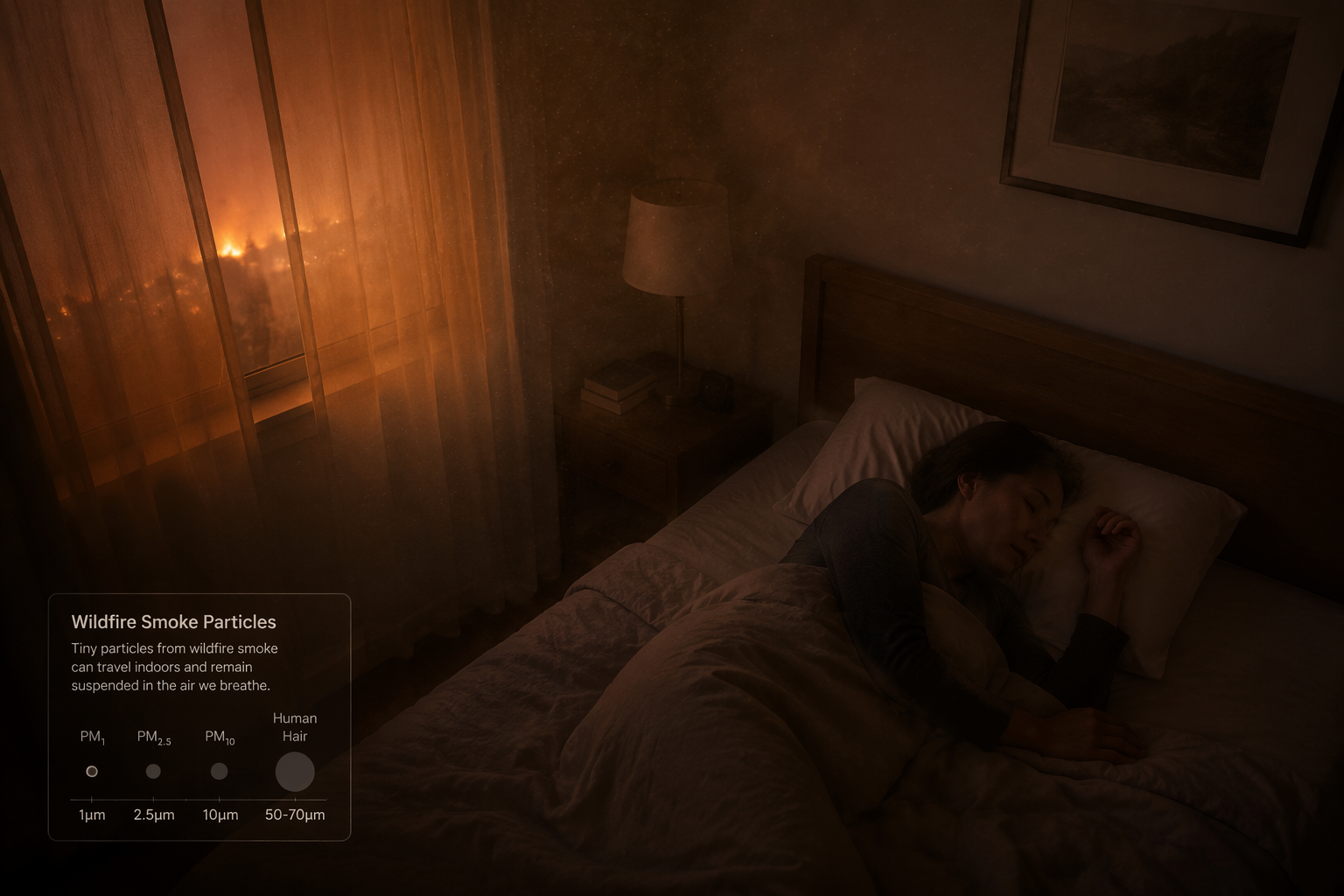
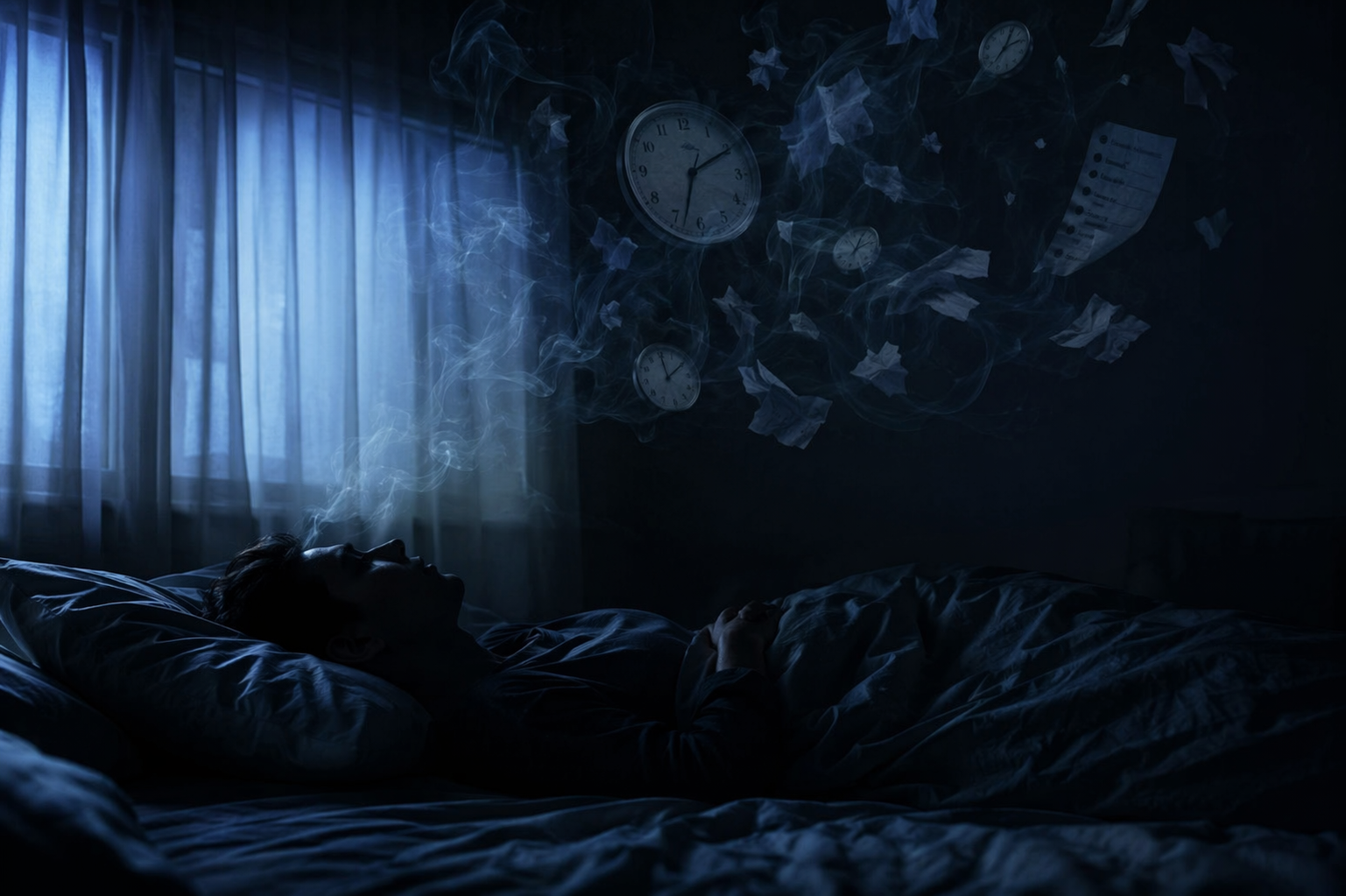
The confusing part of smoke-season sleep is not always the falling asleep. A person can avoid outdoor exercise, seal the windows, run the purifier, spend eight hours in bed, and still wake as if the night never settled into sleep. The wildfire smoke effect on sleep quality often feels disproportionate to the visible exposure: a dry throat, a pulse that will not quite slow down, more brief awakenings, and a morning sense that the body stayed on watch.
That complaint points beyond comfort. Sleep quality depends on architecture: how much time the brain spends in REM sleep, how stable NREM sleep remains, how often wakefulness intrudes, and whether the cardiovascular system shifts into the quieter parasympathetic state that normally accompanies sleep. Smoke can interfere with that architecture through more than one route.
The Rare Study That Looked Directly At Smoke And Sleep Architecture
The strongest direct sleep-architecture evidence now comes from an EPA-funded animal study published in 2025 in Particle and Fibre Toxicology. In that experiment, rats received a single one-hour exposure to controlled eucalyptus smoke. Afterward, researchers observed reduced REM sleep duration, disrupted NREM sleep, and increased wake duration, with effects persisting for hours after the smoke exposure ended.[1]
That is a narrow finding, and it should stay narrow: rats are not humans, eucalyptus smoke in a controlled exposure chamber is not the full mess of a neighborhood smoke event, and an animal model cannot tell a smoke-exposed adult exactly what happened in their bedroom last night. But the study matters because it measured the thing people are often trying to describe. It did not only ask whether smoke made breathing uncomfortable. It showed that biomass smoke inhalation could shift the distribution of sleep and wake states after a short exposure.[1]
REM and NREM are not decorative sleep labels. REM sleep is tied to vivid dreaming and several forms of emotional and cognitive processing. NREM sleep includes the deeper stages people often mean when they say they slept “hard.” Wake duration inside the intended sleep period is one of the reasons a night can be long enough on the clock but still feel thin. A smoke exposure that reduces REM, destabilizes NREM, and increases wakefulness is not just making sleep unpleasant; it is changing the night’s structure.
The same study also measured heart rate variability, or HRV, which gives a window into autonomic regulation. That matters because smoke-season insomnia is often described in cardiovascular language: heart pounding, pulse elevated, body unable to downshift. In the animal data, sleep disruption and autonomic disturbance belong in the same conversation rather than in separate boxes.[1]
Three Pathways Can Converge On The Same Broken Night
Wildfire smoke is not a single irritant. It is a shifting mixture of gases and particles from burned vegetation, buildings, vehicles, plastics, and soil. Stanford researchers have described wildfire smoke as approximately 10 times more toxic than fossil fuel air pollution, a comparison that raises the stakes even if the exact toxicity depends on what burned and how exposure is measured.[2]
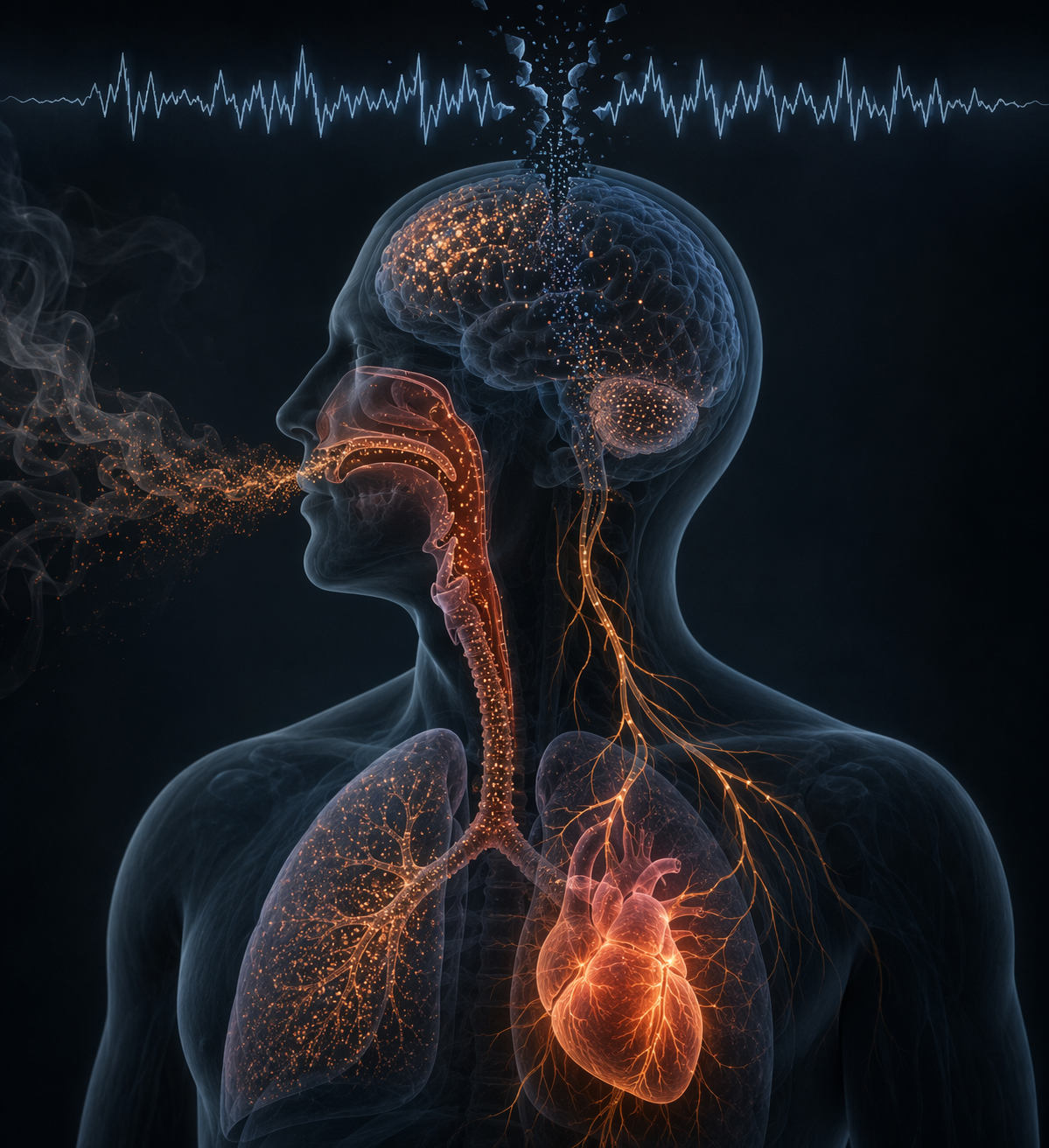
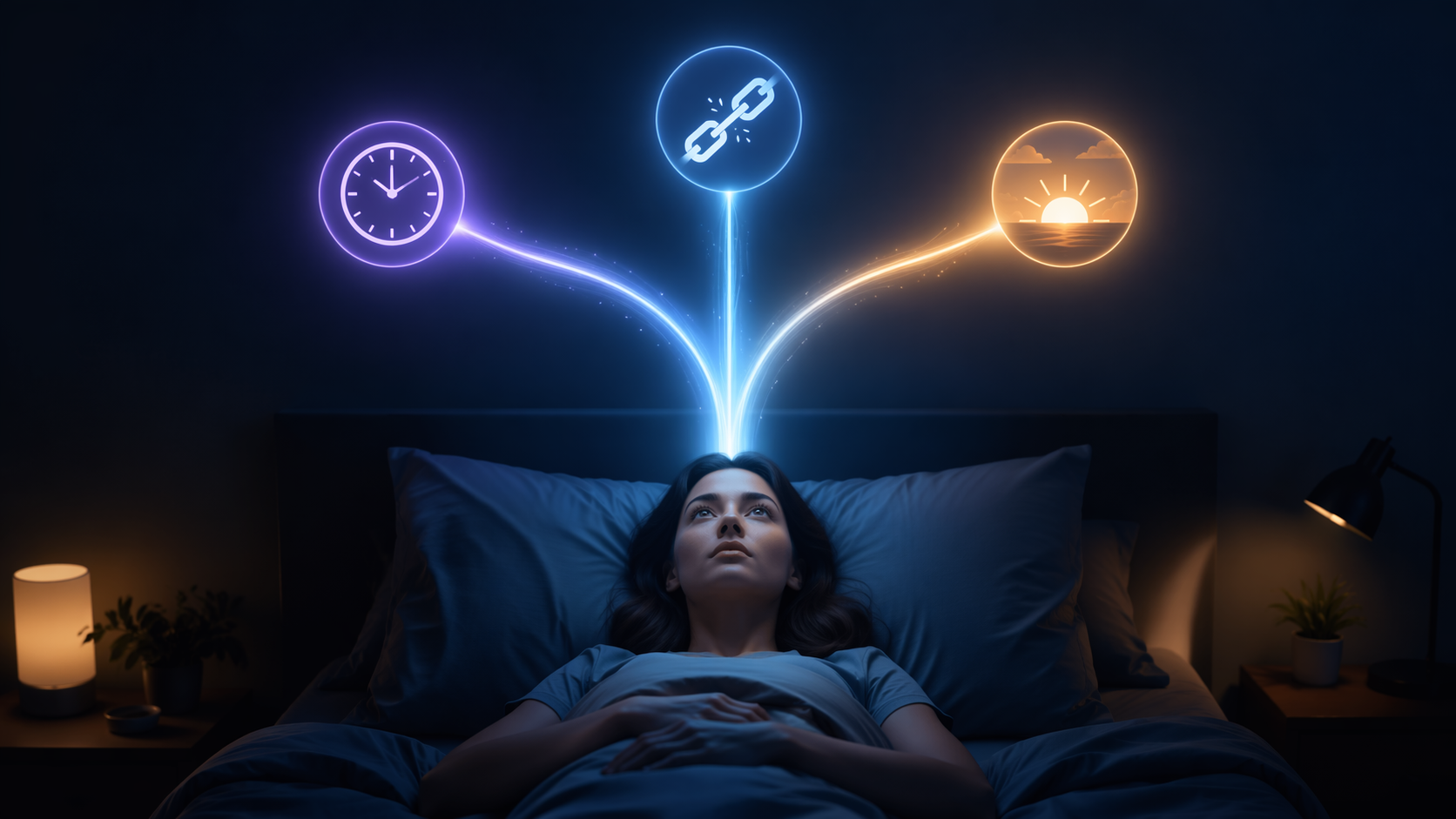
For sleep, three pathways are especially useful: inflamed airways increase breathing resistance, ultrafine particles may affect sleep-regulating regions of the central nervous system, and sympathetic nervous system activation keeps the body physiologically aroused when it should be settling. No single human study has proven all three pathways operating together during a wildfire smoke night. The better reading is that separate lines of evidence point toward a converging model.
Airway Inflammation Raises The Work Of Breathing
The airway pathway is the easiest to feel. Smoke irritates the nose, throat, and lower airways. Tissues swell. Mucus production can increase. Nasal passages narrow. The throat becomes more reactive. Even without diagnosed sleep apnea, a sleeper may have to pull air through a more resistant airway.
That extra resistance matters most during sleep because muscle tone changes across the night. The airway is already more vulnerable to narrowing when the body relaxes. Add smoke-related inflammation, and a person may snore more, wake with a dry mouth, breathe through the mouth after nasal obstruction, or experience brief arousals that are too short to remember clearly in the morning.
This is where “I slept eight hours” becomes an incomplete measurement. If breathing repeatedly becomes harder, the brain may lighten sleep to restore airflow. The sleeper may not fully wake each time, but the architecture can still fragment. The consequence is not simply congestion; it is the conversion of stable sleep into lighter, more interrupted sleep.
Ultrafine Particles May Reach Sleep-Regulating Brain Regions
The central nervous system pathway is more compelling and also easier to overstate. The Sleep Foundation’s explanation of wildfire smoke and sleep notes that ultrafine PM2.5 particles can penetrate the central nervous system and reach regions including the frontal cortex and cerebellum, both relevant to sleep regulation.[3]
That does not mean every smoky night produces a mapped, clinically proven brain injury pathway in humans. The available material supports a more cautious claim: smoke particles are small enough to raise concern beyond the lungs, and secondary explanations identify plausible access to brain regions involved in sleep regulation.[3]
The distinction matters. A sleeper does not need to be told that the brain has definitely been “poisoned” into insomnia. The useful point is more precise: sleep is centrally regulated, and wildfire smoke exposure is not confined to the upper airway. If particles and inflammatory signals affect systems that help govern sleep state transitions, then lighter sleep and altered REM or NREM timing become biologically plausible rather than mysterious.
This is also why the 2025 animal study is so important. It did not prove the full human CNS pathway, but it did show altered sleep architecture after a short biomass smoke exposure. The brain-level explanation helps make sense of the finding; it should not be mistaken for the same level of direct proof.[1][3]
Sympathetic Activation Keeps The Body From Downshifting
The autonomic pathway may be the one many smoke-exposed sleepers recognize first. Normal sleep asks the cardiovascular system to soften its output. Parasympathetic activity rises, sympathetic drive falls, heart rate generally slows, and blood pressure usually drops compared with waking levels. Smoke inhalation pushes in the opposite direction by increasing sympathetic nervous system tone, elevating nighttime heart rate and blood pressure, and disturbing the physiology that supports consolidated sleep.[1]
This is not the same as saying the whole problem is anxiety. Anxiety can certainly worsen a smoky night, especially when the sky has looked wrong all day and evacuation alerts are not hypothetical. But sympathetic activation is also a biological response to inhaled pollution. The heart may be responding to inflammatory and toxic stress, not merely to a worried thought.
HRV is useful here because it reflects the balance and flexibility of autonomic control. In broad terms, healthier sleep is associated with a body that can shift into a more parasympathetic, restorative mode. When smoke exposure is associated with autonomic disturbance, the sleeper may spend more of the night physiologically guarded: heart rate higher, blood vessels under more pressure, arousals more likely, and deeper sleep harder to maintain.[1]
This pathway also explains why the wake-ups can feel abrupt. A person may not remember coughing. They may not remember a long episode of breathlessness. They may simply surface at 2:40 a.m. with the pulse already elevated. The remembered event is the awakening; the underlying event may be autonomic arousal layered on airway irritation and sleep-state instability.
Why The Combination Matters For Cardiovascular Risk
The deeper concern is not only that smoke makes a night feel bad. Smoke exposure and fragmented sleep both place demands on cardiovascular regulation. When they arrive together, the same person may be dealing with inhaled toxic stress, airway resistance, sympathetic activation, reduced sleep continuity, and less overnight recovery.
A 2023 study in Frontiers in Environmental Health examined wildfire-related smoke inhalation in sleep-disrupted rats and found worsened cardiovascular risk, which is the right kind of evidence for this later turn in the argument: still animal evidence, still not a direct population estimate for humans, but directly concerned with the combined burden of smoke exposure and disrupted sleep.[4]
That combination is easy to underestimate because both pieces can be normalized separately. Smoke season becomes “just bad air.” A broken night becomes “just poor sleep.” Put together, they describe a body that may be absorbing particle exposure while losing some of the nightly cardiovascular quieting that sleep is supposed to provide.
For a broader overview of symptoms and basic protective steps, the existing guide to why wildfire smoke disrupts your sleep is the better entry point. The narrower question here is what smoke is doing inside the sleeping body.
The calibration matters. The strongest direct sleep-architecture evidence here is still from rats. The central nervous system pathway is supported by secondary explanation, not a definitive human sleep-lab map. The three-pathway model synthesizes evidence rather than resting on one perfect study. That is exactly why smoke-season sleep disruption deserves attention: the pathways do not have to be identical to converge on the same broken night.
References
- EPA-funded animal study on biomass smoke inhalation and sleep architecture, Particle and Fibre Toxicology, 2025.
- Assessing wildfire health risks, Stanford, January 2025.
- Wildfire Smoke and Sleep, Sleep Foundation.
- Wildfire-related smoke inhalation worsens cardiovascular risk in sleep-disrupted rats, Frontiers in Environmental Health, 2023.


Comments
Join the discussion with an anonymous comment.