
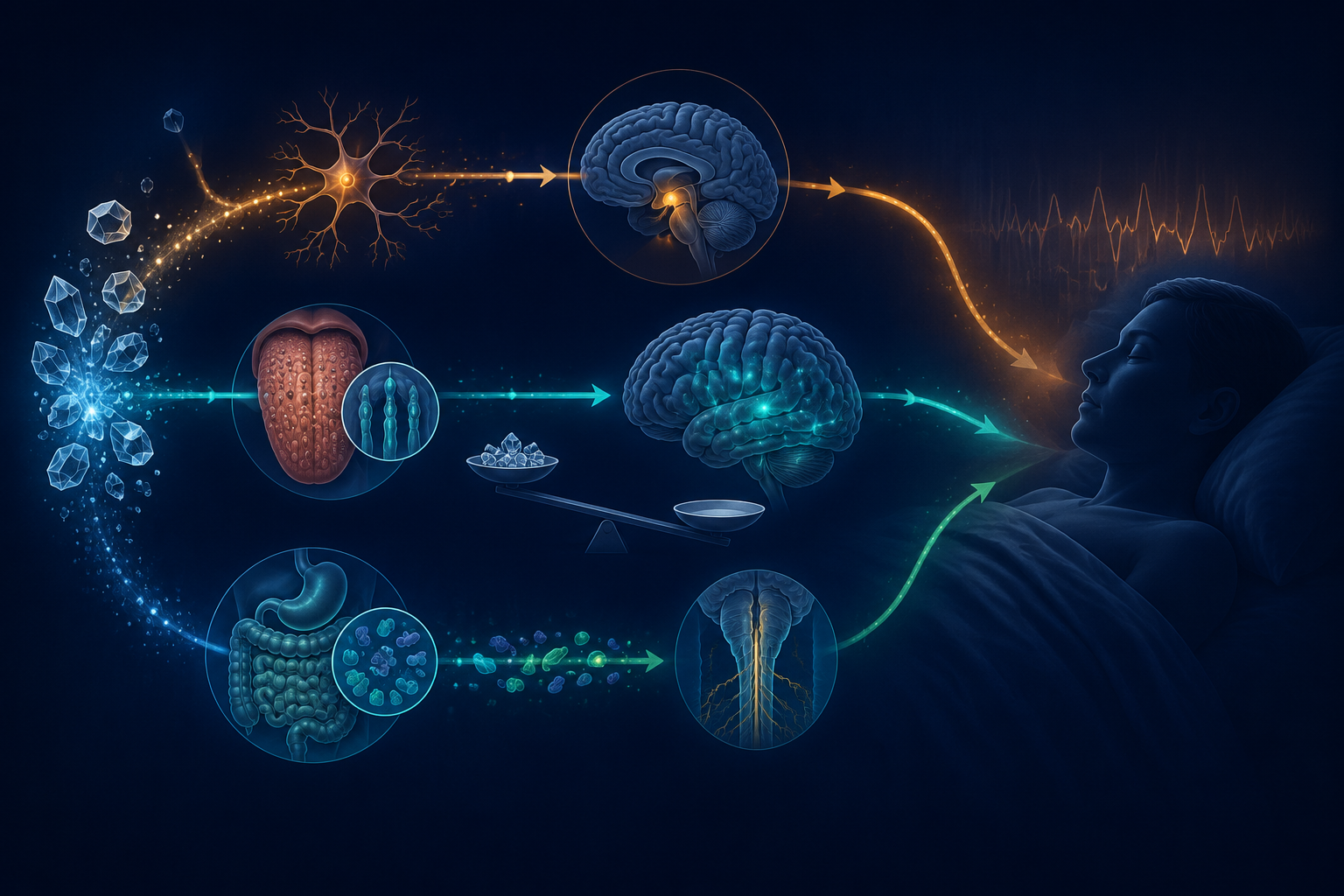
The replay usually starts after the lights are out: the payment date, the balance, the forgiveness notice that changed again, the default risk you have been trying not to open. That is not just overthinking. Student loan cancellation stress and sleep problems often follow a stress-before-bed cascade, where the mind keeps re-checking an unresolved debt threat while the body stays in alert mode.
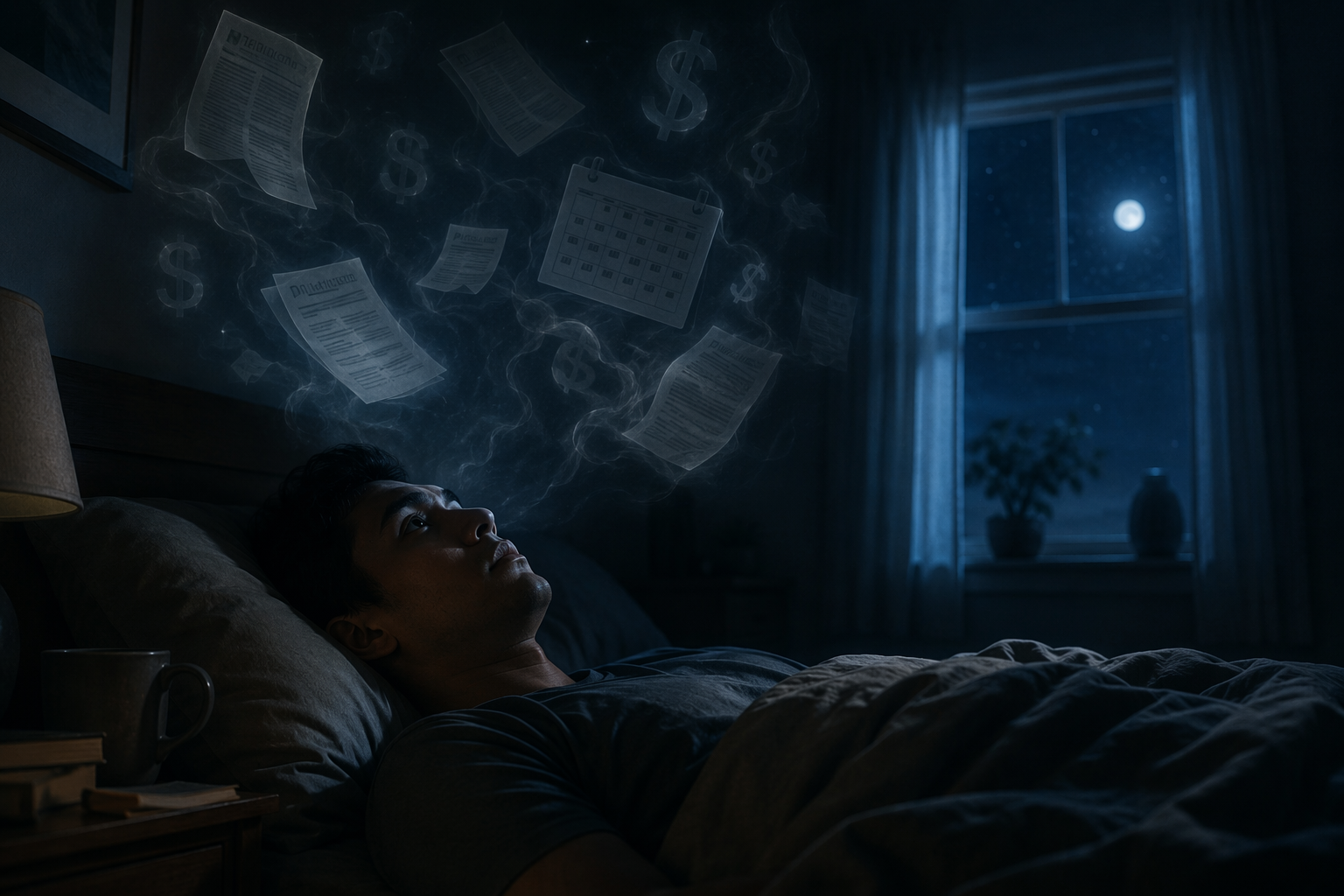
Rice researchers mapped that pattern more cleanly than most money-stress coverage does. In Brossoit et al.'s 2025 study, economic stress predicted stress-before-bed behaviors, and those behaviors predicted more insomnia symptoms, lower sleep satisfaction, and greater sleep-related daytime impairment.[1] The study was not a student-loan sample, so it works best as a mechanism bridge rather than a borrower count, but the bridge matters: once the stress reaches bedtime, sleep gets hit in a predictable way.
A second study shows why sleep is not just a side effect hanging off the problem. In a 2021 mediation analysis with N=1,280, Du et al. found that poor sleep quality completely mediated the relationship between financial stress and unhealthy dietary behaviors.[2] In other words, the sleep disruption sat in the middle of the chain, carrying the damage forward instead of merely appearing alongside it.

Student loans make the loop more stubborn because the threat is not only financial. Repayment rules shift, forgiveness can pause or restart, and cancellation uncertainty behaves like a suspended loss that never quite resolves. Lindgren et al. found that student debt was uniquely and positively linked to stress, and the relationship was stronger when borrowers saw their socioeconomic position as unstable.[3] That is the part generic money-stress articles often miss: the debt is not just a bill, it is a recurring signal that the future may not hold still.
Why this keeps coming back now
The current debt picture is not calming anyone down. Total student debt reached $1.863 trillion in 2026, up 3.17% year over year, with 8.8 million borrowers in default and 3.62 million newly defaulted between January 2025 and January 2026.[4] Those numbers do not prove insomnia by themselves, but they explain why this stress keeps re-entering the room at night instead of staying in the daytime where spreadsheets live.
Sleep loss at this level is not a niche complaint. In a CDC Preventing Chronic Disease study of college students, 26.4% met criteria for clinical insomnia, and depression was associated with 9.54 times higher odds of insomnia.[5] That study is not borrower-specific, which is why it should be used as a severity check rather than a direct estimate of student-loan risk.
The broader survey data are less rigorous, but they still point in the same direction. In an ELVTR survey reported by NBC Bay Area, 54% of borrowers said their mental health struggles were directly debt-related, 20% specifically cited insomnia, 56% anxiety, and 32% depression.[6] BadCredit.org also reported state-level variation, with 28% of Hawaii residents and 26% of West Virginia residents saying debt caused insomnia, though the exact question wording was not fully available.[7] Those are directional signals, not final verdicts.
How to break the loop tonight
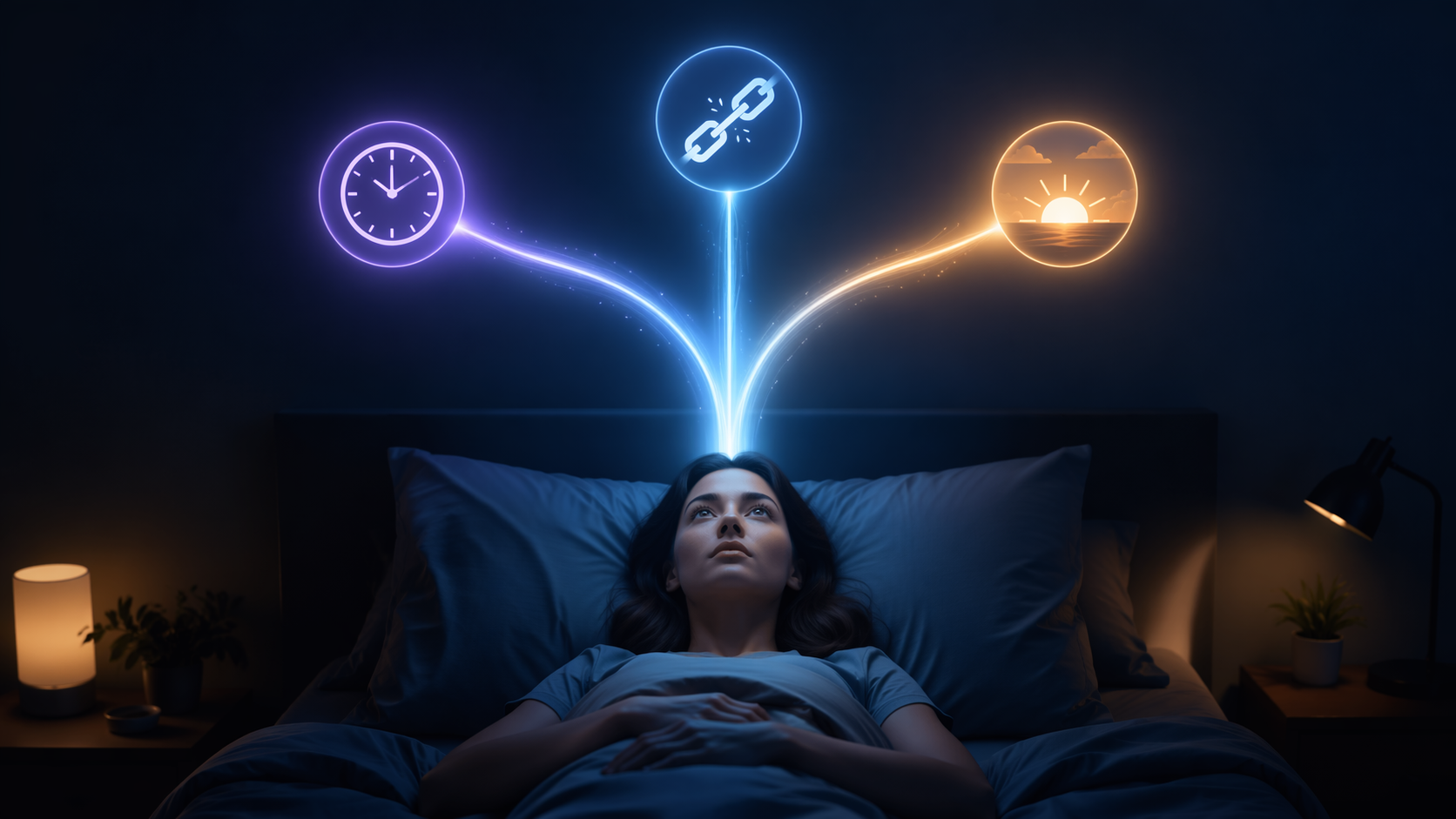
- Set a financial cutoff. Pick one earlier time for checking balances, payment portals, or forgiveness updates, then stop bringing new loan information into the bedroom.
- Write the next action, not the whole plan. One line is enough: the form to open, the office to call, the due date that actually matters. A container helps the brain stop treating the problem as unfinished all night.
- Move the worry out of bed. If the loop is still running after lights out, get up briefly and sit somewhere dim until the body cools off.
- Protect the last 30 minutes. Keep loan emails, repayment calculators, and policy news out of the final stretch before sleep. The goal is to reduce arousal, not to force reassurance.
- If the feeling shifts from rumination into panic-level arousal, a guide to nocturnal panic attacks vs. sleep anxiety can help sort that out; if the issue is short-term symptom relief, the best OTC sleep aid for anxiety depends on the symptom pattern.
The debt may stay unresolved tonight, but sleep can still be protected. The immediate target is to interrupt the arousal chain before bed so the bedroom does not become a place for more loan checking.
References
- Losing sleep over money: Rice study reveals how financial stress follows workers to bed — Rice News, 2025
- Du et al. (2021) mediation study on financial stress, sleep quality, and unhealthy dietary behaviors — PubMed Central, 2021
- Lindgren et al. (2022) student-debt stress study — PubMed Central, 2022
- Student debt default crisis fact sheet — Education Data Initiative and Protect Borrowers, 2026
- Mbous et al. (2022) insomnia study — CDC Preventing Chronic Disease, 2022
- ELVTR survey on debt-related mental health — NBC Bay Area
- BadCredit.org debt-induced insomnia study — BadCredit.org
Comments
Join the discussion with an anonymous comment.