
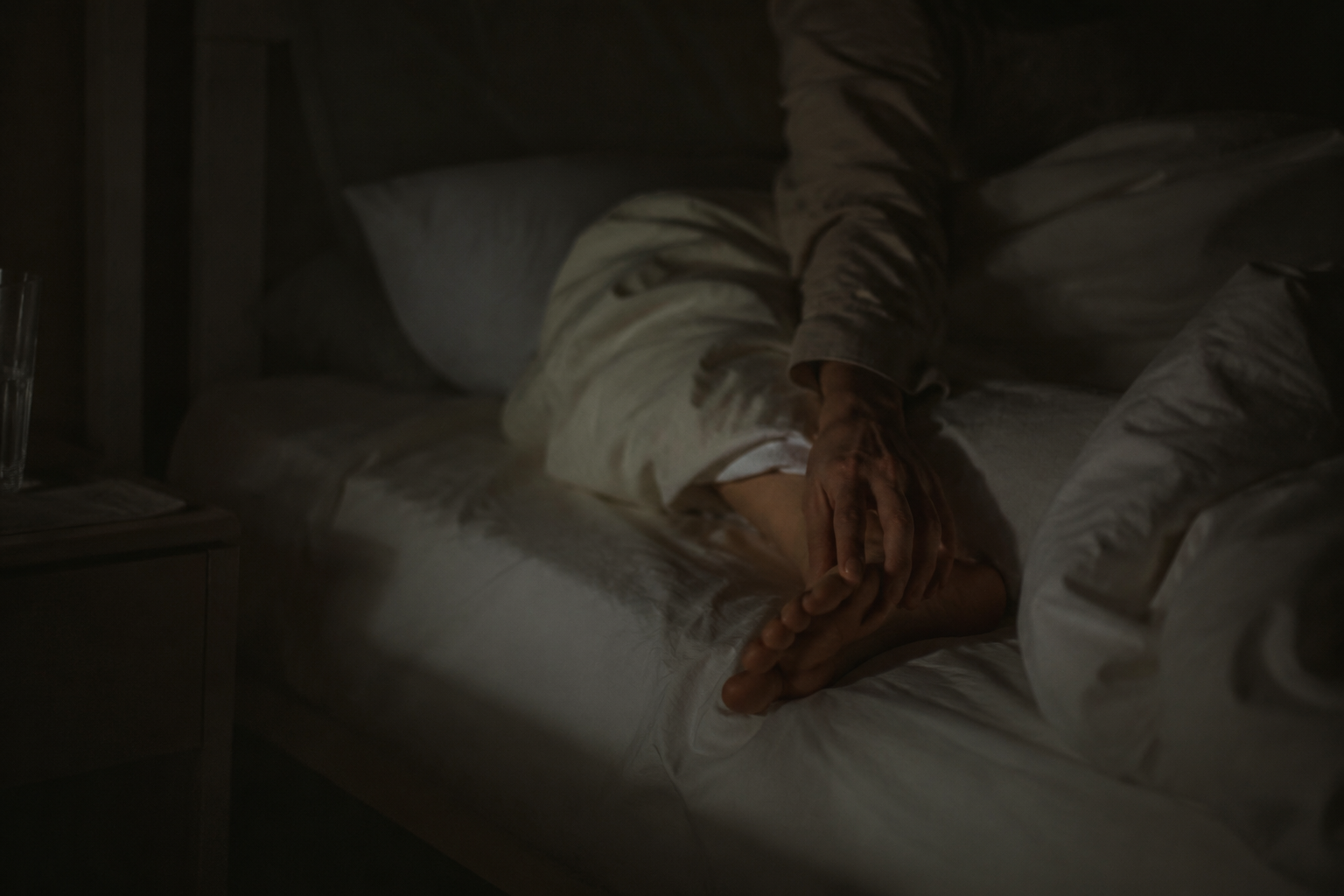
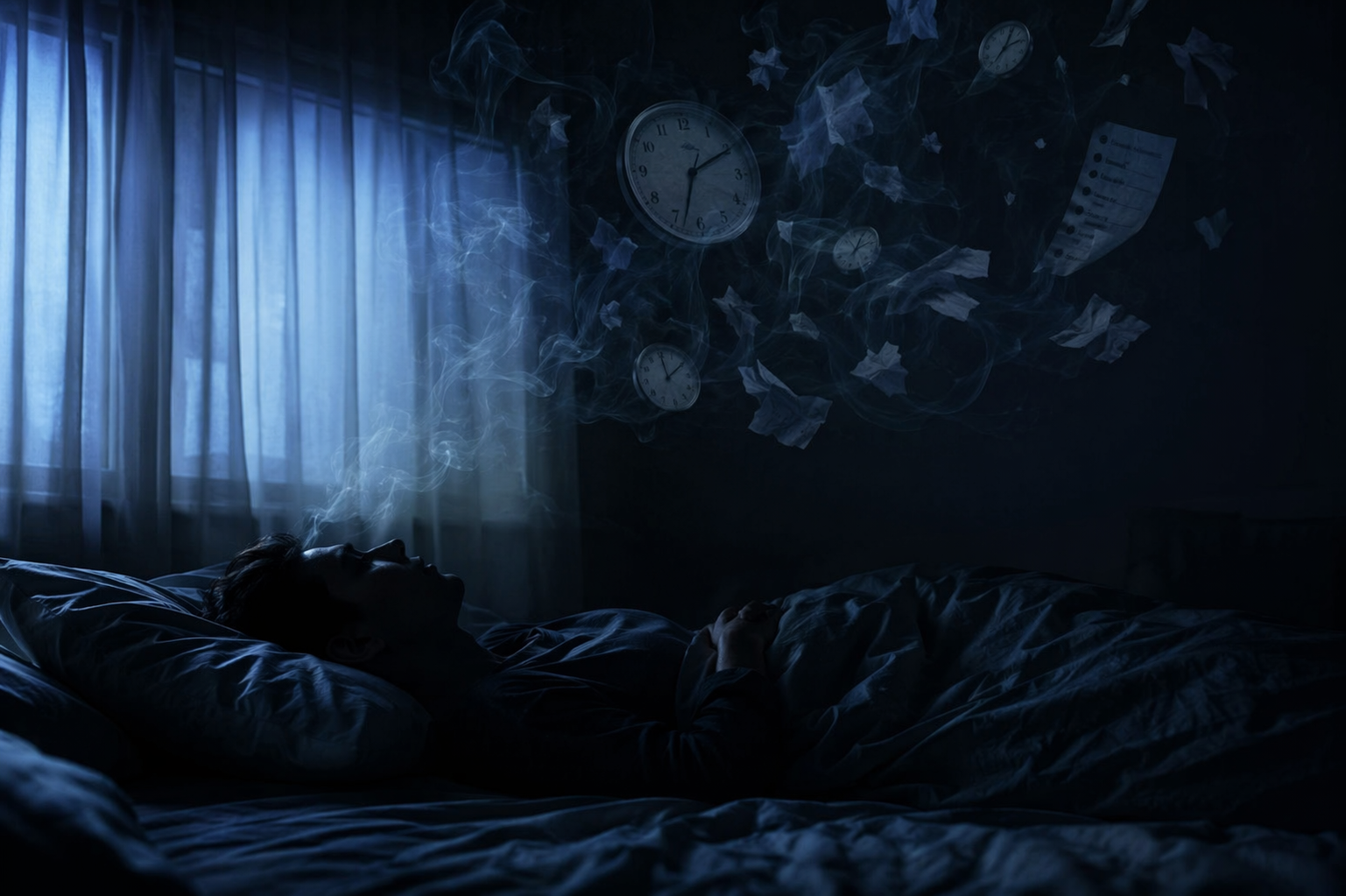
The cruel part of foot pain affecting sleep quality at night is how often it waits until the rest of you has finally gone still. During the day, you may have limped through errands, changed shoes, rubbed the arch, or promised yourself you would deal with it later. Then the lights go out, the room quiets, and the foot seems to take up the whole bed.
That pattern is not imaginary, and it is not rare. In a study of people with chronic foot and ankle conditions, 76.2% had poor sleep quality on the Pittsburgh Sleep Quality Index, and 81% of those patients directly attributed their sleep trouble to foot pain [1]. The study population was not the general public; these were foot and ankle patients being evaluated in a clinical setting. Still, the finding matters because it documents what many people describe only after several bad nights: the foot is not just sore, it is interrupting sleep.
A commercial survey gives a wider, less clinical snapshot. KURU’s 2025 Foot Pain Trends Report, based on 2,000 respondents, reported that 81% of Americans experience foot pain, 63% had it within the past year, 28% said their pain peaked at night, and 40% said it peaked in the evening [2]. Because the report comes from a footwear company, it should not carry the weight of peer-reviewed clinical research. It is useful here mostly as everyday color: many people notice the same late-day and nighttime pattern.
Why the Foot Gets Louder When the Room Gets Quiet
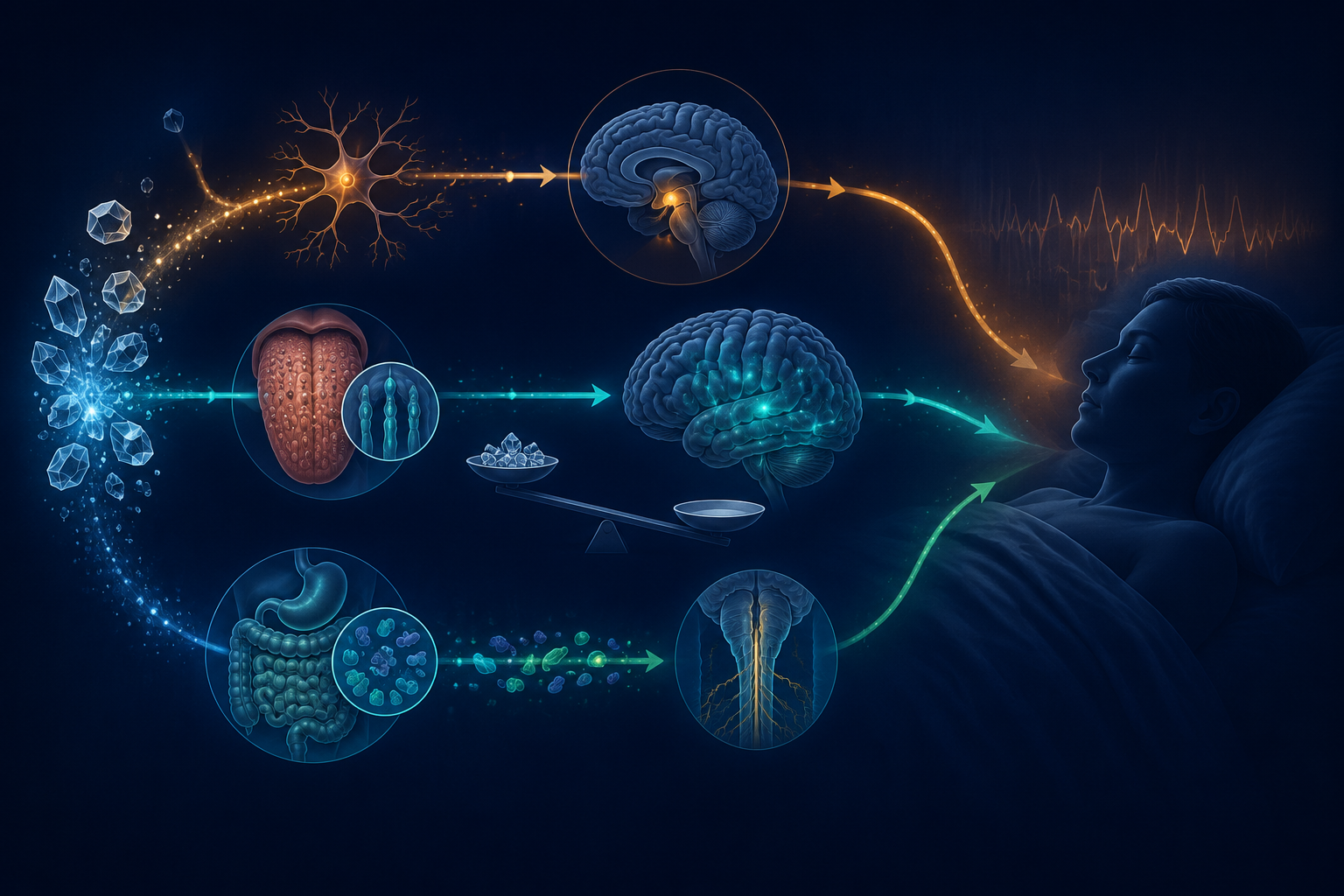
Night does not create every foot problem from scratch. A strained plantar fascia, irritated joint, compressed nerve, inflamed tendon, or circulation issue may be present all day. What changes at night is how much of that signal reaches conscious attention, how the nervous system filters it, and how prepared the body is to dampen pain.
Immobility can open the pain gate
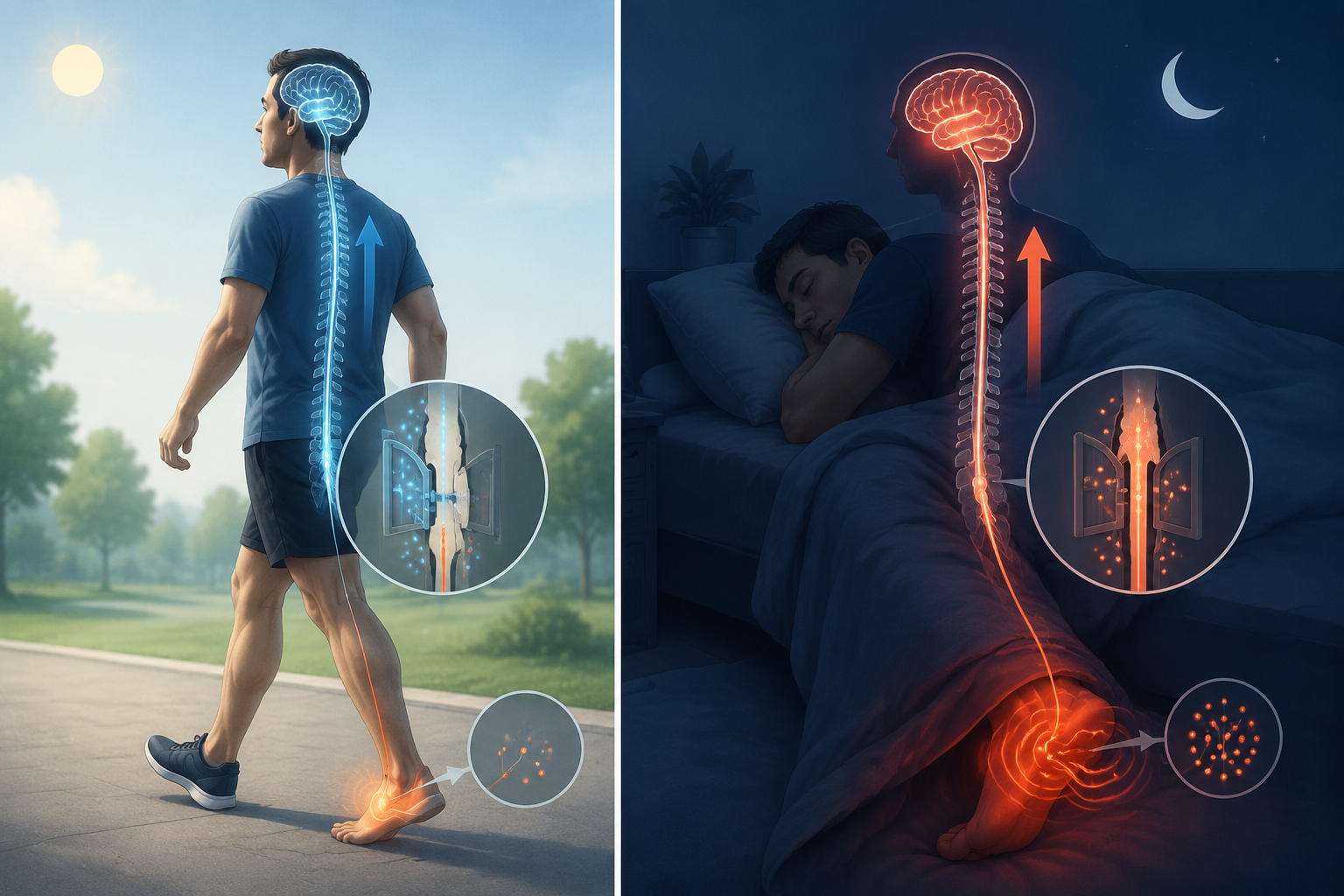
One useful way to understand nighttime pain is gate control theory. Pain signals traveling from the foot do not simply move up the nervous system like water through a pipe. At the level of the spinal cord, other sensory input can help inhibit or “close” the gate on pain signals. Movement, pressure, muscle activity, and changing contact with the floor all add competing input during the day.
When you lie still, that competing input drops. A foot that was sending a manageable signal while you were walking, shifting weight, or flexing your ankle may feel sharper once the body is quiet. Mass General Brigham uses this gate-control explanation to describe why neuropathy symptoms often intensify at night: daytime movement provides input that can help dampen nerve pain, while nighttime stillness leaves the pain signal less opposed [3].
This does not mean you should pace the hallway all night. It means the worsening pain is not proof that you are exaggerating. The same foot can hurt differently depending on how much sensory traffic the nervous system is receiving from the rest of the body.
Circadian biology changes pain suppression
Pain also has a body-clock component. Cleveland Clinic describes nighttime pain intensification as partly related to circadian rhythm, including lower levels of cortisol and other pain-suppressing processes during evening and nighttime hours [4]. Cortisol is often discussed only as a “stress hormone,” but it also participates in inflammation and immune regulation. When its daily rhythm drops, some inflammatory or irritated tissues may feel less buffered.
This helps explain why arthritis, gout flares, tendon irritation, and plantar fascia pain may seem less negotiable at night. The foot problem is still local, but the body’s pain-modulating background has changed. For a person lying awake at 2:00 a.m., that distinction matters: the pain is being processed through a nervous system and hormonal rhythm that are different from the ones carrying you through the afternoon.
For a deeper look at the body-clock side of sleep and symptom timing, see circadian rhythm mechanisms.
The brain loses its daytime competition
A third mechanism is simpler and just as real: attention. During the day, the brain is busy sorting conversation, screens, balance, traffic, meals, work, and the constant small corrections of standing and walking. At night, those signals thin out. Cleveland Clinic also points to the loss of daytime distraction as one reason pain feels worse when people are trying to sleep [4].
That is not the same as saying the pain is psychological. Attention is part of pain processing. If a smoke alarm sounds in a crowded cafeteria, it competes with a hundred other noises. If it sounds in a quiet room, it owns the room. The alarm did not become fake because the room became quiet.
The Pattern Matters More Than the Perfect Nighttime Trick
Once nighttime mechanisms make the pain louder, the next question is what kind of signal is being amplified. A heel that screams during the first steps after rest is different from toes that burn under the blanket. A stiff, swollen joint is different from tingling that travels through the sole. Management depends on that distinction.
Mechanical pain: heel, arch, joint, and load-related patterns
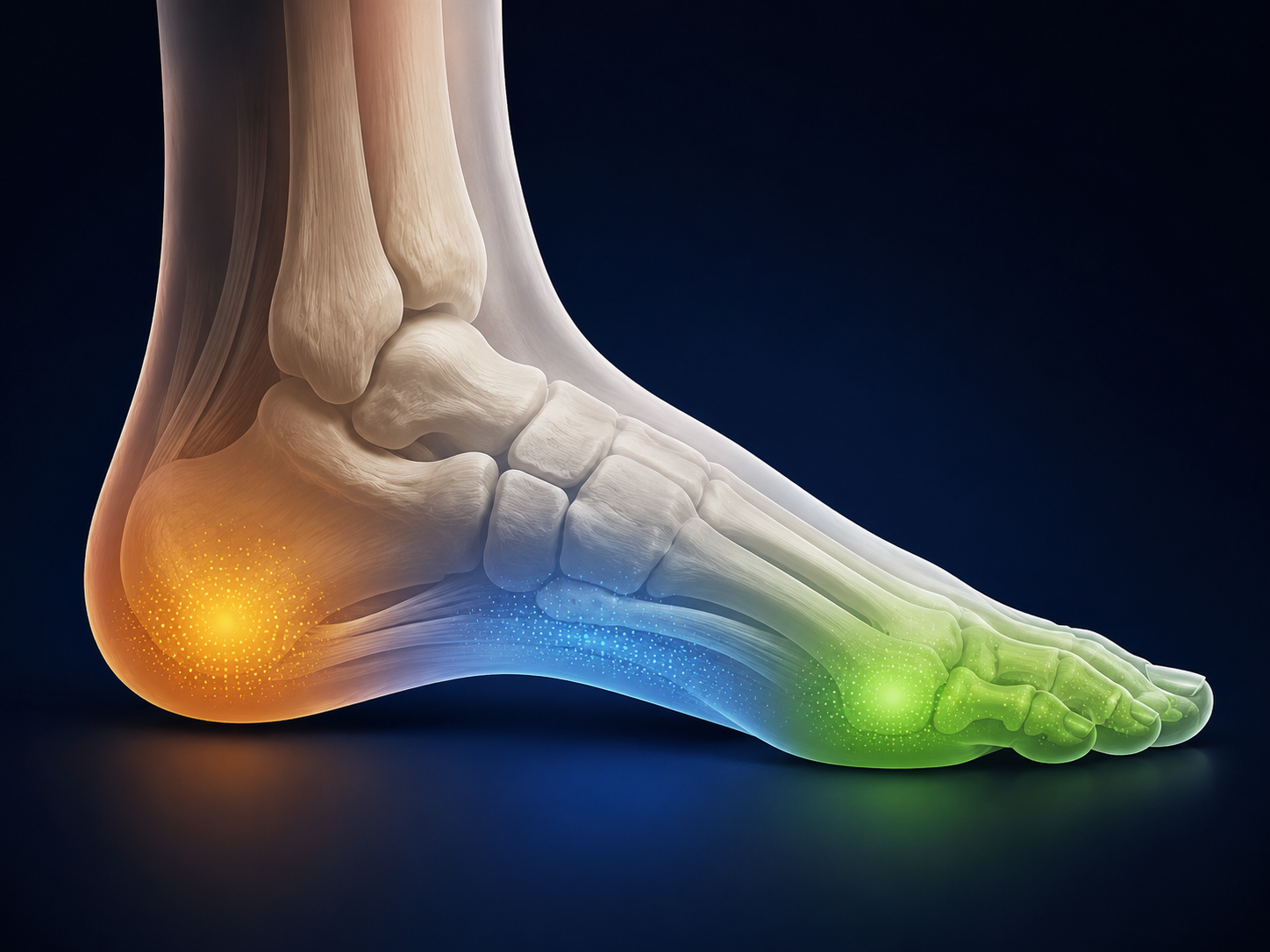
Mechanical foot pain usually has a relationship to load, position, stiffness, or tissue strain. Plantar fasciitis is a common example: pain often centers near the heel or arch and can be especially sharp with the first steps after rest. Arthritis may feel deeper in a joint, with stiffness, swelling, or aching that changes with activity and inflammation. Gout, when present, is often more abrupt and inflamed, commonly involving a hot, swollen, very tender joint.
Night can worsen these conditions because the foot is held still for hours. The plantar fascia may tighten. An arthritic joint may stiffen. Inflammatory pain may be less buffered by the body’s nighttime hormonal rhythm. If the pain is most noticeable after rest, with first steps, or around a specific joint or tendon, it helps to think mechanically before reaching for a nerve-pain explanation.
For plantar fasciitis, night splints are one foot-specific intervention with a clear mechanical rationale: they hold the foot in a position that keeps the plantar fascia from shortening overnight. Yale Medicine describes night splints as a treatment that may bring relief within days, while noting that consistent use for 2 to 4 weeks is often needed [5]. That is not a promise that a splint fixes every heel pain. It is a reason to match the tool to the pattern: heel or arch pain that tightens during rest is not managed the same way as burning nerve pain.
Neuropathic pain: burning, tingling, electric, or crawling sensations
Neuropathic foot pain behaves differently. People often describe burning, pins and needles, numbness with pain, electric shocks, crawling sensations, or pain from contact that should not hurt. Peripheral neuropathy can affect both feet, while nerve entrapment conditions such as tarsal tunnel syndrome may follow a more local path through the ankle, arch, heel, or sole.
The gate-control explanation becomes especially useful here. When daytime motion and sensory input fade, nerve symptoms may move to the foreground. Mass General Brigham notes that warmth and soft socks may help some people with neuropathy at night, while also warning that temperature sensitivity varies and that people with reduced sensation need to avoid burns or unsafe heat exposure [3].
This is where “try better shoes” starts to feel too thin. Shoes matter during weight-bearing hours, but neuropathic pain at rest may need evaluation for causes such as diabetes, vitamin deficiencies, medication effects, nerve compression, alcohol-related nerve injury, autoimmune disease, or other medical conditions. Gotham Footcare frames pain at rest as a possible sign that a foot condition has moved beyond early irritation, sometimes involving nerve involvement or structural damage [6]. That point should be treated as a reason to pay attention, not as a diagnosis you can make from bed.
Diabetes deserves specific mention because neuropathic pain can affect more than sensation. The American Diabetes Association’s 2025 Standards of Care notes that neuropathic pain can affect sleep, mobility, and mood in people with diabetes [7]. A review of neuropathic pain and sleep also describes a bidirectional relationship, with neuropathic pain disturbing sleep and disturbed sleep worsening pain experience [8].
Circulation and position: when lying down changes the signal
Some nighttime foot discomfort is strongly positional. Elevation may ease swelling-related aching for one person and aggravate another person’s symptoms if arterial circulation is limited. A pillow under the knees may reduce nerve tension from the low back or sciatic pathway for some people, while leg elevation can help certain circulation-related or swelling-related discomforts, according to Hinge Health’s positioning guidance [9].
The practical question is not “Which pillow arrangement is best for foot pain?” It is what the position does to your symptoms. Does dangling the foot over the side of the bed relieve pain? Does elevation reduce throbbing and swelling? Does bending the knee soften a nerve-like pull? Those observations are worth bringing to a clinician, especially if pain is new, worsening, one-sided, associated with color change, wounds, marked swelling, numbness, weakness, fever, or chest symptoms.
A Quick Way to Sort What You Are Feeling
| Nighttime pattern | More suggestive of | What to notice |
|---|---|---|
| Sharp heel or arch pain after rest, especially with first steps | Plantar fascia or other mechanical soft-tissue irritation | Whether gentle ankle movement, supportive positioning, or a night splint changes the morning pain |
| Deep aching, stiffness, swelling, or warmth around a joint | Arthritis, gout, or inflammatory joint pain | Whether the joint is visibly swollen, hot, red, or increasingly limited |
| Burning, tingling, electric shocks, numbness with pain, or painful sensitivity to sheets | Peripheral neuropathy or nerve entrapment such as tarsal tunnel syndrome | Whether symptoms follow a nerve-like path, affect both feet, or come with numbness or weakness |
| Throbbing, heaviness, swelling, color change, or symptoms that shift with elevation or dangling | Circulatory, swelling-related, or positional contributors | Whether changing leg position reliably relieves or worsens the pain |
This table is not a diagnostic tool. It is a way to stop treating every bad night as the same problem. The person with plantar fasciitis may need to keep the fascia from tightening overnight. The person with neuropathy may need safer temperature comfort, medication review, glucose evaluation, or nerve testing. The person with swelling may need a circulation and vascular conversation, not another arch stretch.
Poor Sleep Can Feed Tomorrow’s Pain
After enough nights, the problem stops being only “my foot hurts, so I cannot sleep.” The sleep loss itself can make pain easier to trigger the next day. That is the part many people miss, and it is why protecting sleep is not a soft add-on to treating foot pain.
The SCOPE trial followed 250 chronic pain patients and found a bidirectional relationship between sleep and pain. Changes in sleep predicted later pain changes more strongly, with a path coefficient of .29 and p<.001, than pain predicted later sleep changes, with a path coefficient of .15 and p<.05 [10]. The trial was not limited to foot-pain patients, so it should not be overstated as proof about plantar fasciitis or neuropathy specifically. It does support a broader chronic-pain point that matters at the bedside: a bad night can make the nervous system more pain-sensitive tomorrow.
The same study also describes the broader burden of sleep complaints among people with chronic pain, noting that up to 89% report sleep complaints and 53% meet clinical insomnia criteria [10]. For the larger sleep-pain framework beyond the foot, see how chronic pain and sleep quality feed each other.
This is also where insomnia care can become relevant. If foot pain has trained the bed into a place of bracing, clock-watching, and waiting for the next jolt, then treating the foot alone may not fully reset sleep. Cognitive behavioral therapy for insomnia is designed for persistent insomnia patterns, including the learned arousal that can build around the bed. If that part sounds familiar, CBT-I for persistent insomnia symptoms is the more appropriate next read than another list of bedtime products.
What Is Reasonable to Try Tonight, and What Should Not Wait
For a familiar, non-emergency pain pattern, the goal tonight is to reduce amplification without pretending the underlying problem has been solved. Gentle ankle range of motion before bed may give the nervous system some movement input. A plantar fasciitis pattern may respond to a properly fitted night splint. Neuropathic burning may feel better with soft socks or a warmer room, as long as heat exposure is safe and sensation is intact. Swelling-related aching may need elevation; nerve tension from the back or leg may respond better to knee support than to foot massage.
General sleep conditions still matter, but they are supporting actors. A cool, dark, predictable sleep environment will not decompress a nerve or calm a gout flare, yet it can reduce the extra load placed on an already sensitized nervous system. For the basics, use sleep hygiene fundamentals as background rather than as a substitute for foot evaluation.
Clinical evaluation is more urgent when pain is new, severe, rapidly worsening, present at rest, associated with trauma, accompanied by numbness or weakness, linked with an open sore or infection signs, or paired with major swelling, color change, coldness, or loss of pulses. People with diabetes, known circulation problems, immune suppression, or unexplained neuropathy symptoms should be slower to reassure themselves and quicker to ask for care.
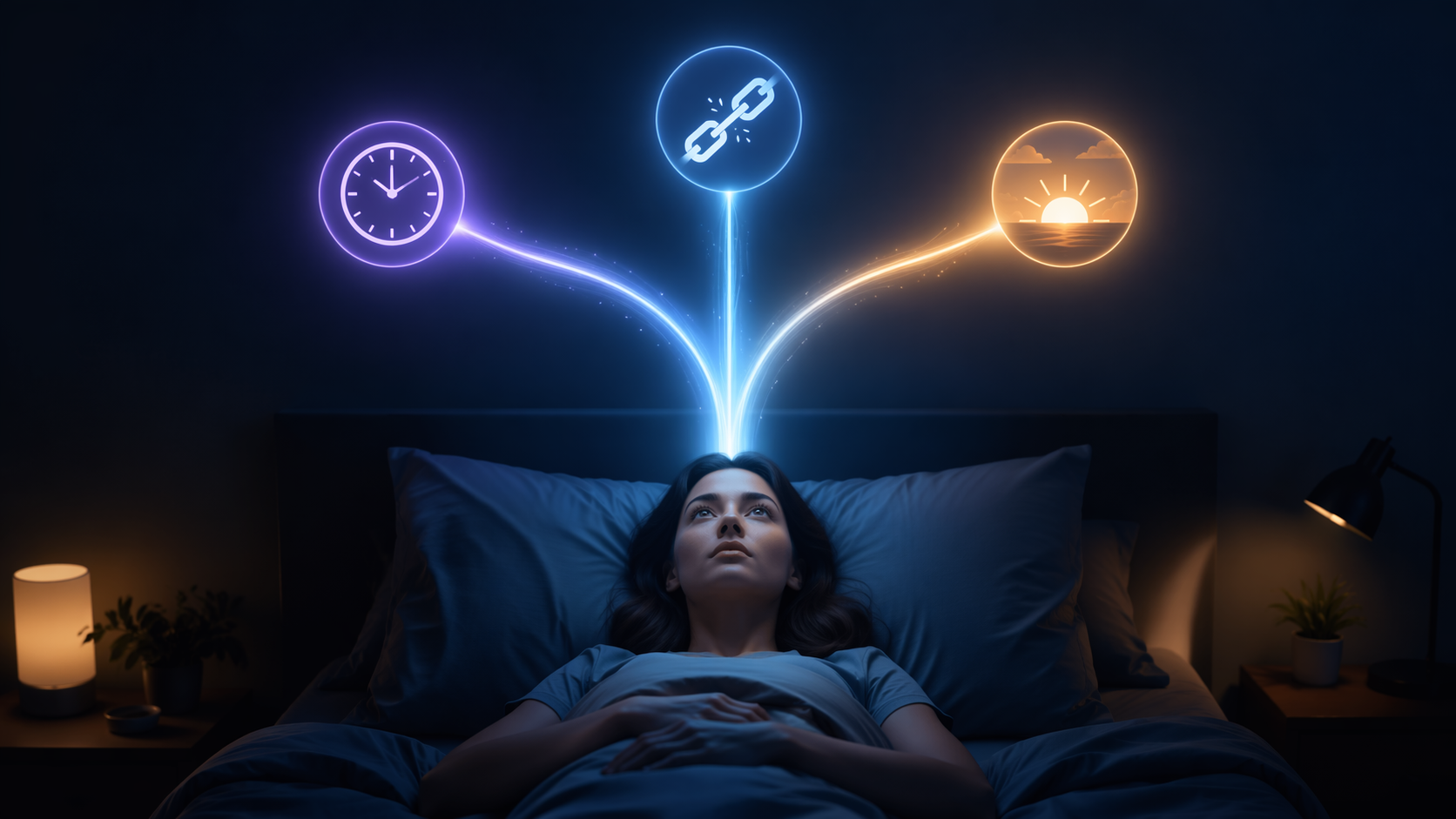
Nighttime foot pain is not “all in your head.” It is processed through spinal gating, circadian biology, attention, sleep loss, and the specific tissue or nerve that is sending the signal. Breaking the cycle usually means doing two jobs at once: protect sleep enough to lower next-day pain sensitivity, and identify whether the foot pain is mechanical, neuropathic, inflammatory, or circulatory enough to need targeted treatment.
References
- High Prevalence of Poor Sleep Quality in Chronic Foot and Ankle Conditions, PMC, 2019.
- 2025 Foot Pain Trends Report, KURU, 2025.
- Why Is Neuropathy Worse at Night?, Mass General Brigham, 2025.
- Why Is Pain Worse at Night?, Cleveland Clinic, 2020.
- Plantar Fasciitis, Yale Medicine, 2024.
- Why Foot Pain at Night Should Not Be Ignored, Gotham Footcare, 2026.
- Standards of Care in Diabetes—2025, American Diabetes Association, 2025.
- Neuropathic Pain and Sleep: A Review, PMC.
- How to Sleep With Sciatica, Hinge Health, 2024.
- Pain and Sleep: A Bidirectional Relationship?, PMC, 2015.

Comments
Join the discussion with an anonymous comment.