
After the House passage, the first thing many parents picture is not a slogan about extra evening light. It is a winter school morning: a child in a coat at a bus stop before sunrise, a tired teen staring at a dark road, and a parent trying to turn a body clock that is already behind schedule into something usable before first bell.
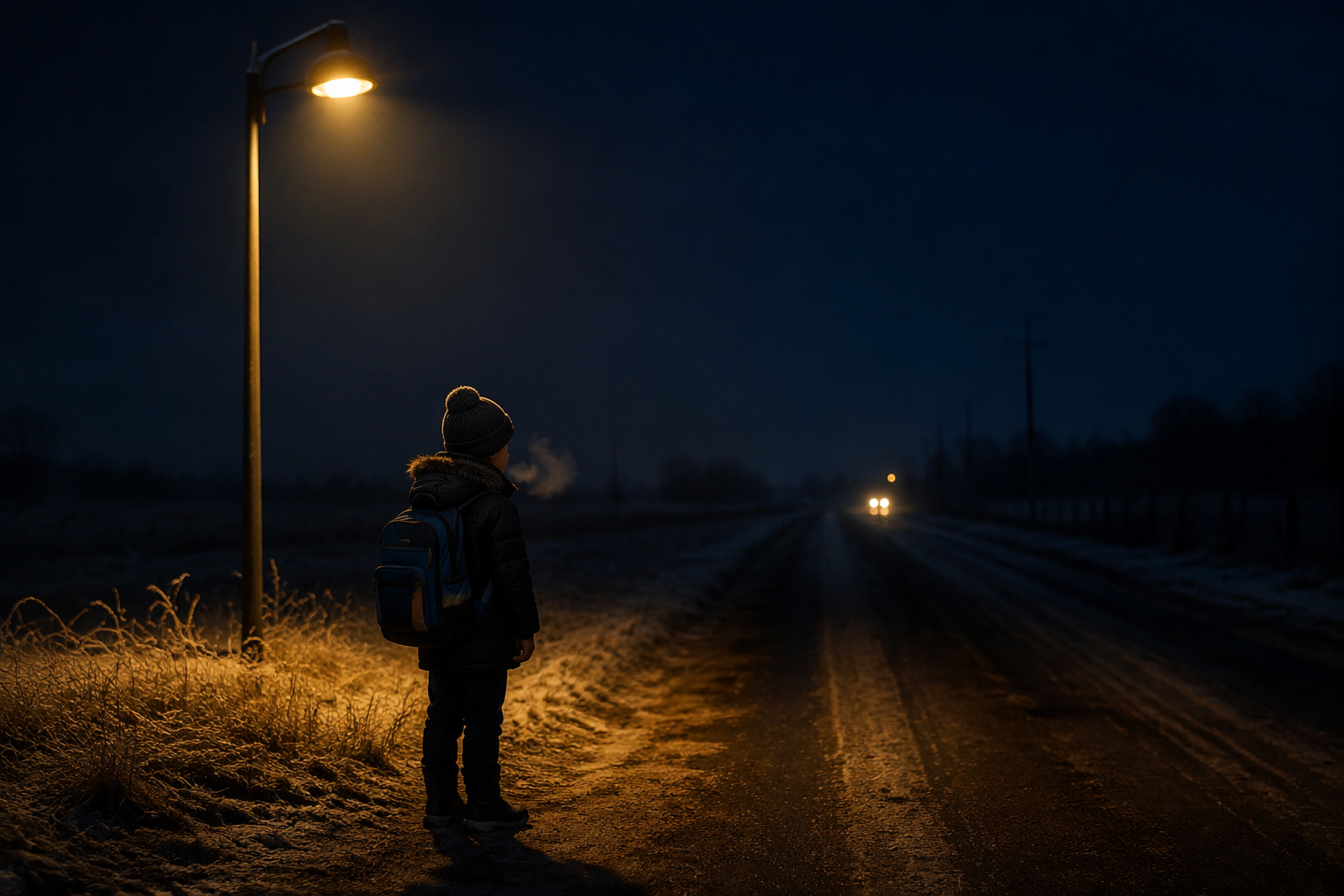
The school morning gets pushed into the dark
Permanent daylight saving time would move sunrise later all year, which is exactly the wrong direction for children who have to get up, dress, eat, and travel while it is still dark. The first problem is not abstract time theory. It is that morning light is one of the main cues that tells the brain to wake up, and taking that cue away makes the whole routine harder.
The sleep penalty is not guesswork. In an AASM study, teens lost an average of 32 minutes of sleep per night after the daylight saving time change [1]. That is already a meaningful cut to a group that tends to run short on sleep. Making daylight saving time permanent would not remove that mismatch; it would extend it into every winter morning instead of letting the clock eventually move back.
The AASM's position statement backs permanent standard time rather than permanent daylight saving time, because the body clock does not fully adjust to daylight saving time even after months [2]. That point matters for families because it rejects a comforting myth: that the body simply gets used to whatever the clock says. In practice, the mismatch keeps showing up as sleep loss, grogginess, and mornings that feel earlier than they should.
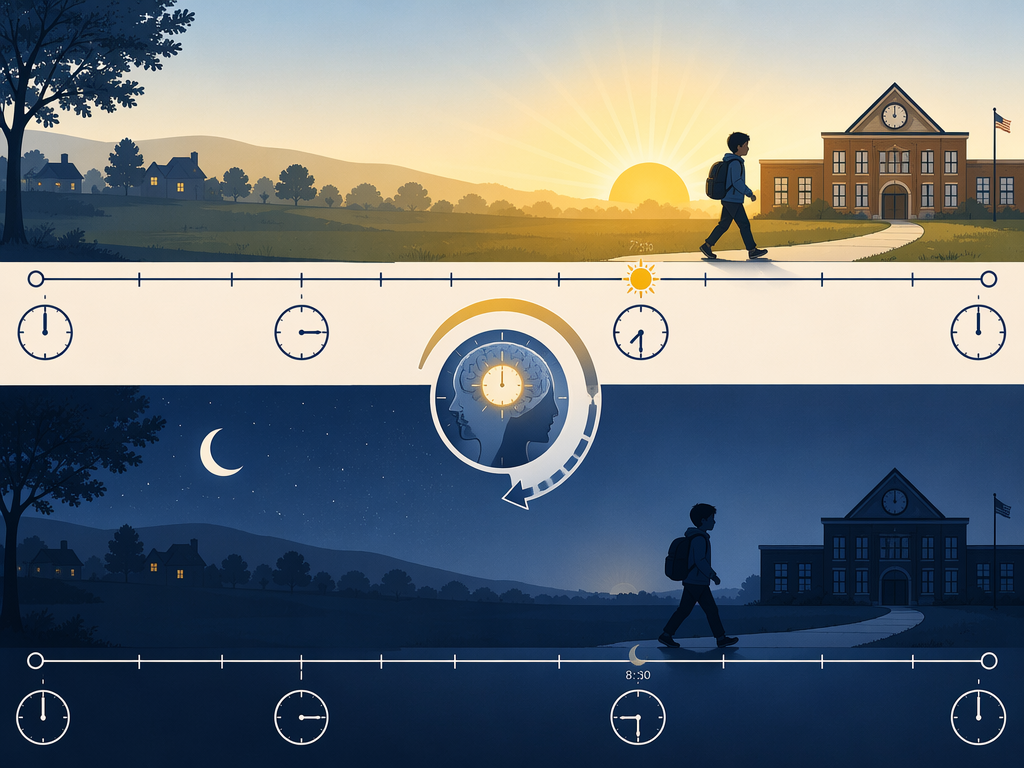
Why the body clock does not simply catch up
The issue is not only that clocks change. It is that children and teens have to live inside a schedule that asks them to wake before their biology is ready. Morning light usually helps pull sleep and alertness into alignment; permanent DST delays that cue, so the family starts the day with less help from the environment and more strain on willpower.
That is why this debate is better understood through circadian alignment than through clock-branding. If you want the mechanics laid out in everyday language, our guide to circadian hygiene explains why timing matters, and the article on delayed sleep phase syndrome shows what happens when a sleep schedule runs persistently late.
Dark mornings turn into a safety problem
For children, the hazard is not just feeling tired in class. It is the walk or bus stop in darkness, the crossing by a roadside, the moment when drivers and pedestrians are both trying to do too much before dawn. Save Standard Time cites data showing that 70% of pedestrian deaths occur in darkness and that 20% of pedestrians killed are children [4]. Those figures are not a perfect one-to-one forecast of what any one bill would do, but they make the direction of risk hard to miss.
The historical warning is just as important. In 1974, the move to permanent daylight saving time collapsed within a year: public support fell from 79% to 42% after one winter, and one account says 8 children were killed in Florida in a single month [3][4]. That last figure should be treated cautiously because the documentation is thin, but the broader lesson is not in doubt. When winter mornings stay dark, the public notices quickly, and families feel the cost first.
Why standard time fits children better
Permanent standard time is the cleaner match for school mornings because it brings sunrise earlier, not later. It gives children a better shot at waking with daylight, reduces the amount of the commute that happens in darkness, and lines up more closely with the biological clock that governs alertness. That is also why the AASM-backed Sunshine for Our Kids Act has drawn attention as the pediatric health alternative [6].
There is a broader health argument here too. A Stanford-led 2025 study modeled potential national effects and estimated that permanent standard time could reduce obesity by 2.6 million cases and stroke by 300,000 cases [5]. The modeling has been disputed by some critics, so it should not carry the whole case by itself. Still, it points in the same direction as the sleep research: the clock setting that keeps mornings closer to sunrise is the one that better fits human biology.
For families who cannot control the clock, the practical response stays modest and familiar: protect a consistent bedtime, keep the last hour before sleep dim and quiet, and get as much morning light as possible once the day starts. The sleep hygiene fundamentals guide covers the routine side of that work.
For children, the question is not whether an extra hour of evening light sounds pleasant. It is whether the clock makes the morning safer, sleep more recoverable, and school starts less punishing. On that test, permanent standard time makes sense; permanent daylight saving time hardens the worst part of winter mornings into policy.
References
- “Study Shows That Teens Lose Sleep After Change to Daylight Saving Time,” AASM
- “Daylight Saving Time and Sleep: The American Academy of Sleep Medicine Position Statement,” PMC
- “Sunshine Protection Act,” Wikipedia
- “Safety,” Save Standard Time
- “Permanent standard time would reduce obesity and stroke, Stanford study says,” Stanford Medicine
- “AASM Sunshine for Our Kids Act: Permanent Standard Time,” AASM


Comments
Join the discussion with an anonymous comment.