
The usual summer advice sounds like a tug-of-war: set the thermostat higher to cut cooling costs, but keep the bedroom cool if you want decent sleep. For someone trying to lower an AC bill and improve sleep quality, that can feel like being asked to choose between the utility bill and the next morning.
The better answer is not one magic temperature. It is a temperature schedule. Keep the house warmer when no one is trying to sleep, then cool the sleep space before bedtime and hold it there overnight. In many homes, that means something like 78°F during peak afternoon or away hours, then a programmed drop toward about 72°F beginning roughly 30 minutes before bed. The exact number can move, but the rhythm matters: warmer by day, cooler when the body is preparing for sleep.
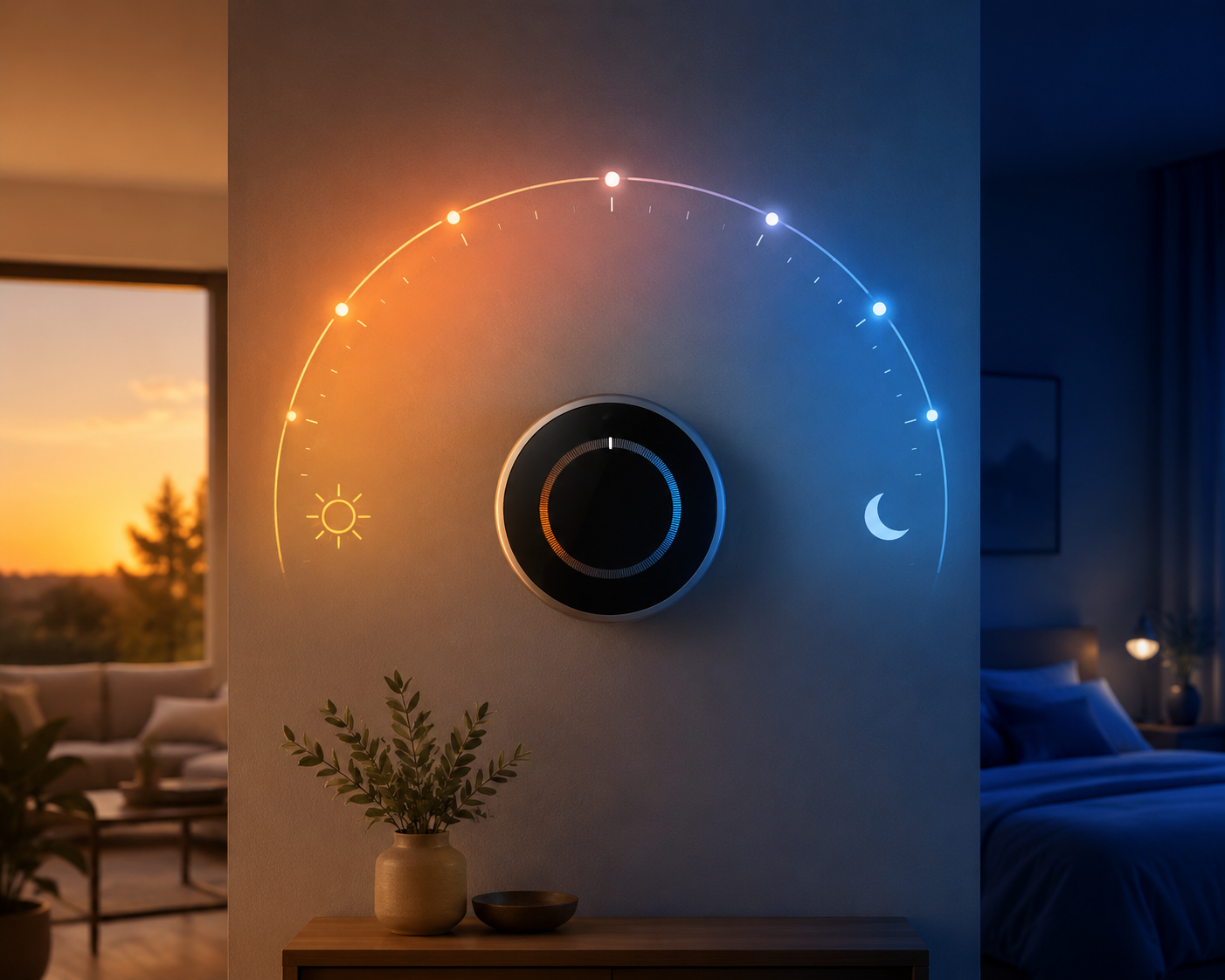
The Conflict Is Mostly About Timing
A cool bedroom is useful at night because sleep is tied to a natural drop in core body temperature. A cold house all afternoon is often just expensive. Treating those as the same problem is where many thermostat plans go wrong.
The sleep side of the issue is not imaginary. In a study of 10,903 person-nights among community-dwelling older adults in Boston, sleep efficiency fell by 5–10% as bedroom temperature rose from 77°F to 86°F, and total sleep time fell by about 60 minutes across that range.[1] That study was in older adults with a mean age of 79, so it should not be stretched into a universal ideal temperature for every sleeper. But it makes the direction of the problem hard to ignore: hot bedrooms can carry a real sleep cost.
The energy side is just as real. Cooling a whole house to a sleep-friendly temperature for hours before anyone gets into bed asks the AC to solve the wrong problem at the wrong time. The practical move is to separate daytime comfort from nighttime sleep support.
A Thermostat Schedule You Can Program Tonight
For a central AC home with a programmable or smart thermostat, start with a simple test schedule rather than chasing a perfect number. Use it for several nights, then adjust by one or two degrees based on sleep comfort, humidity, bedding, and how hard the system has to work.
| Time window | Starting setting | What it is doing |
|---|---|---|
| Afternoon or away hours | About 78°F | Reduces unnecessary whole-house cooling when sleep comfort is not the goal |
| About 30 minutes before bedtime | Begin cooling toward about 72°F | Lets the bedroom arrive cooler as the body is already moving toward sleep |
| Sleep period | Hold near the coolest comfortable sleep setting | Supports sleep without requiring an all-day low setting |
| Morning | Let the temperature rise again | Avoids paying for a nighttime setting after the sleep window ends |
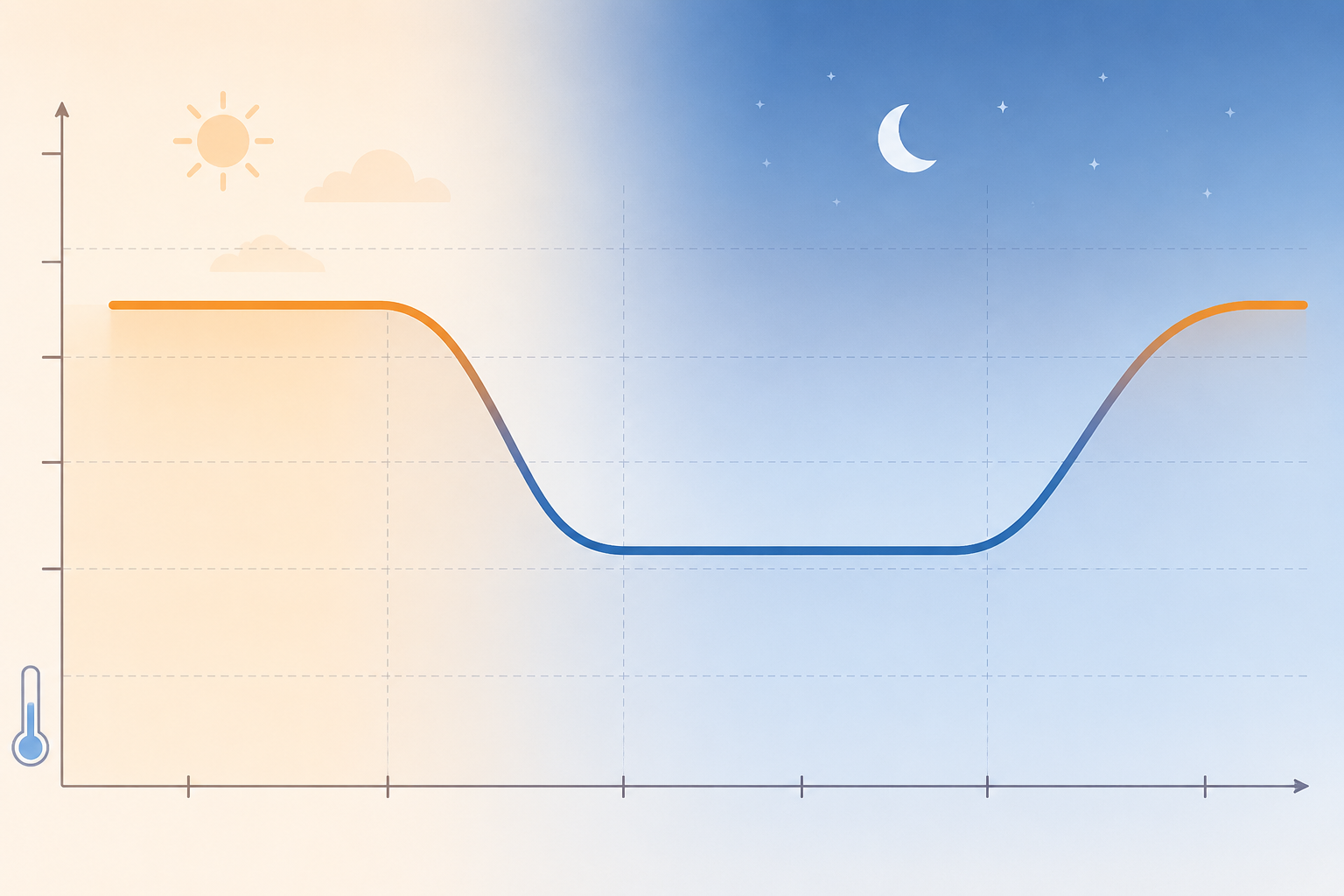
That 72°F bedtime target is not a commandment. A light sleeper in a humid upstairs bedroom may need a lower setting. Someone using a ceiling fan, breathable bedding, and a dry climate may sleep well a little warmer. Older adults, people with medical conditions, infants, and anyone who is heat-sensitive should treat comfort and safety as the boundary, not the bill.
The important part is that the lower setting belongs to the sleep window. If the house sits at 72°F from lunch through midnight, the schedule has lost its point. If it stays at 78°F until you are already overheated in bed, the schedule has also failed. The cooldown has to start early enough for the bedroom, not just the hallway thermostat, to change.
Why the Nighttime Drop Helps Sleep
Sleep onset is easier when the body can shed heat. As evening progresses, core temperature normally declines. A cooler bedroom does not knock you out by itself; it makes it easier for that internal cooling process to continue instead of forcing the body to fight a warm room, heavy bedding, and trapped humidity.
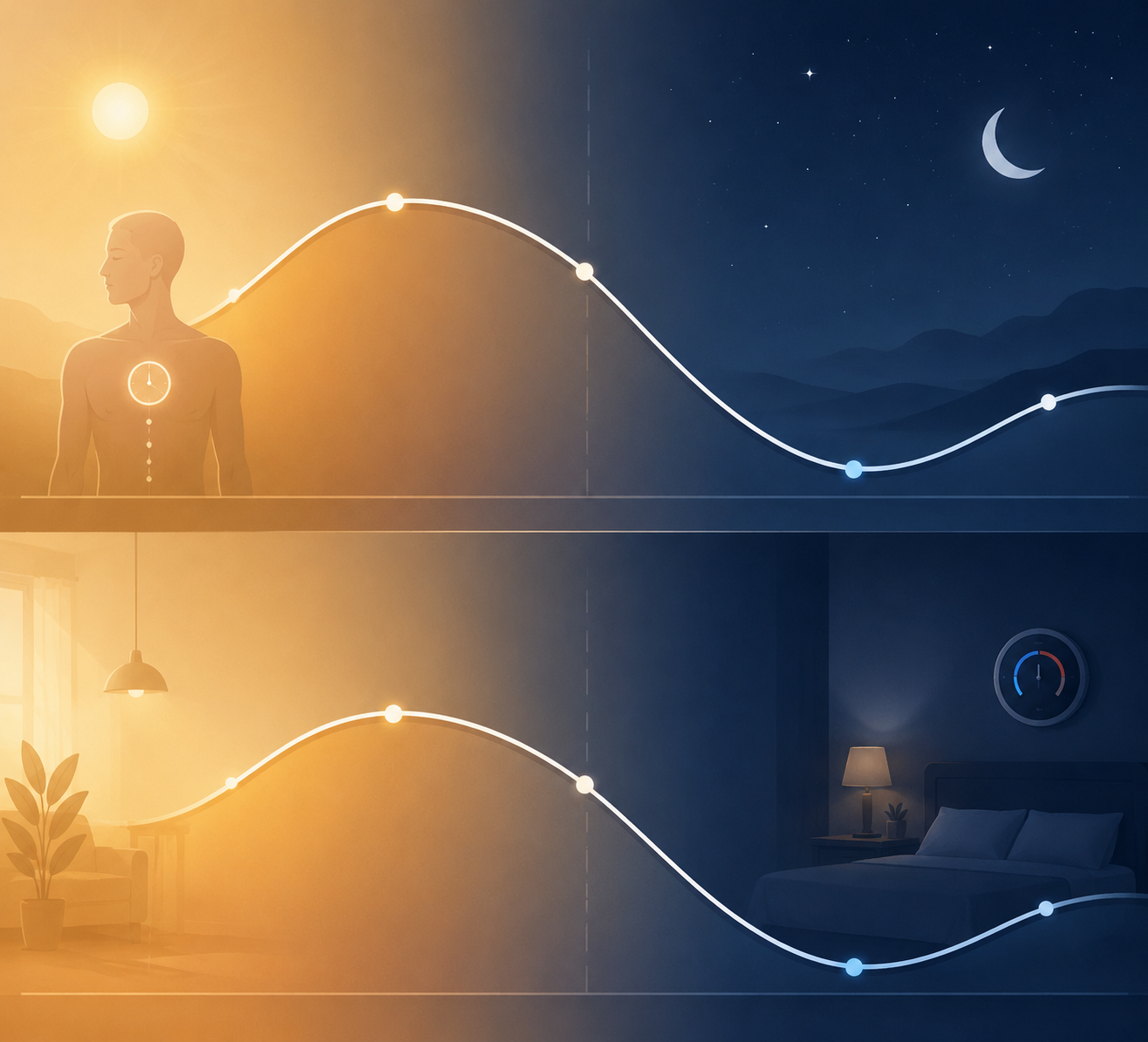
This is why static thermostat advice is often clumsy. A single setting ignores the fact that the body has a day-night rhythm. During the afternoon, a low thermostat setting mainly buys general comfort. Near bedtime, the same drop can become a sleep cue because it arrives when the body is already moving in that direction.
The older-adult temperature data are especially useful here because they show what happens when nights stay warm rather than merely uncomfortable: participants spent a smaller share of time in bed asleep and slept less overall.[1] That does not prove that everyone needs the same bedroom temperature. It does argue against dismissing nighttime heat as a minor nuisance.
Use Fans for People, Not Empty Rooms
A fan can make the schedule more forgiving because moving air changes how warm the room feels on skin. Energy guidance commonly treats ceiling fans as a way to raise the thermostat setpoint by about 4°F without reducing perceived comfort, but only when someone is actually in the room.[2]
That last clause matters. Fans cool people, not rooms. Leaving a ceiling fan running in an empty bedroom does not pre-cool the mattress or lower the air temperature in a useful way. It only uses electricity. Turn the fan on when the room is occupied, aim for airflow across the bed, and turn it off when you leave.
The cost difference is also why fans are worth using carefully. Hunter Fan reports a ceiling fan on high at about 18 watts, with an estimated operating cost around $0.008 per hour, compared with central AC at roughly 2,000–5,000 watts and about $0.24–$0.60 per hour.[2] Those are not your exact bill, but they show the scale: a fan is a comfort tool; the AC is the expensive temperature machine.
Smart Thermostats Help Most When They Remove the Decision
A smart thermostat is not required for this plan, but scheduling is. The useful feature is not novelty; it is adherence. If the thermostat automatically eases up during the afternoon and starts cooling before bed, the plan does not depend on remembering it after dinner.
ENERGY STAR estimates that a smart thermostat alone can reduce heating and cooling bills by about 8%, or roughly $50 per year.[3] That is a broad estimate, not a guarantee for one house. Savings depend on climate, insulation, HVAC efficiency, local electricity prices, occupancy patterns, and whether the schedule is actually used.
Bigger savings usually come when the thermostat is not asked to compensate for a leaky building. EDF notes that pairing smart controls with air sealing and insulation can produce much larger heating and cooling savings, in the 20–50% range.[4] That belongs in the expectation-setting column: thermostat timing is useful, but a poorly sealed attic or sun-baked upstairs bedroom can still overpower a tidy schedule.
If You Have a Manual Thermostat
Use a shorter version. Raise the setting during the afternoon or when you leave, lower it when you start your bedtime routine, and use a fan once you are in the room. If you tend to forget the evening change, pair it with an existing cue: brushing teeth, closing blinds, feeding pets, or setting the coffee maker. Manual plans work when the cue is boring enough to survive real life.
The Warm Shower Detail People Often Get Backward
A warm bath or shower 30–60 minutes before bed can fit neatly with the thermostat cooldown. Passive body heating encourages blood vessels near the skin to widen; afterward, the body can release heat, and the resulting core temperature drop can help signal sleep onset.[5]
The counterintuitive part is that an icy shower right before bed may not help. Cold exposure can trigger vasoconstriction, narrowing blood vessels and trapping heat rather than helping the body unload it. If the goal is sleep onset, warm-then-cool usually makes more sense than shocking the body cold and climbing straight into bed.
This does not need to become an elaborate ritual. Start the thermostat cooldown, take a warm shower, put on lighter sleepwear, and let the bedroom be cooler when you arrive. The pieces are small, but they are all pointing in the same direction.
How to Adjust the Schedule Without Chasing Perfection
After three to five nights, adjust the schedule based on what actually happened. Do not judge it after one odd night with late caffeine, a storm, a sick child, or a different bedtime. Look for patterns: waking hot at 2 a.m., needing a blanket at 5 a.m., the AC running hard for hours, or the bedroom never reaching the target before sleep.
- If you fall asleep hot, start the cooldown earlier or lower the bedtime target slightly.
- If you wake chilled before morning, raise the overnight setting by 1–2°F or use a lighter fan speed.
- If the AC struggles to reach the target, check whether the bedroom is upstairs, sun-exposed, poorly sealed, or blocked from airflow.
- If the bill is still high, make sure the daytime setting is actually warmer and that fans are not running in empty rooms.
- If humidity is the main problem, comfort may not track neatly with temperature; a slightly warmer but drier room can feel better than a colder damp one.
The familiar 60–67°F bedroom range is sometimes useful as a reference point, but many homes cannot reach it affordably in summer, and many adults do not need to start there. A realistic schedule that you will actually run beats an ideal number that makes the AC grind all day or gets abandoned after one bill.
What This Plan Can and Cannot Promise
A nighttime cooldown can support sleep while reducing unnecessary daytime cooling. That is the useful promise. It is not a promise that every home will save the same amount, or that every sleeper will feel best at 72°F.
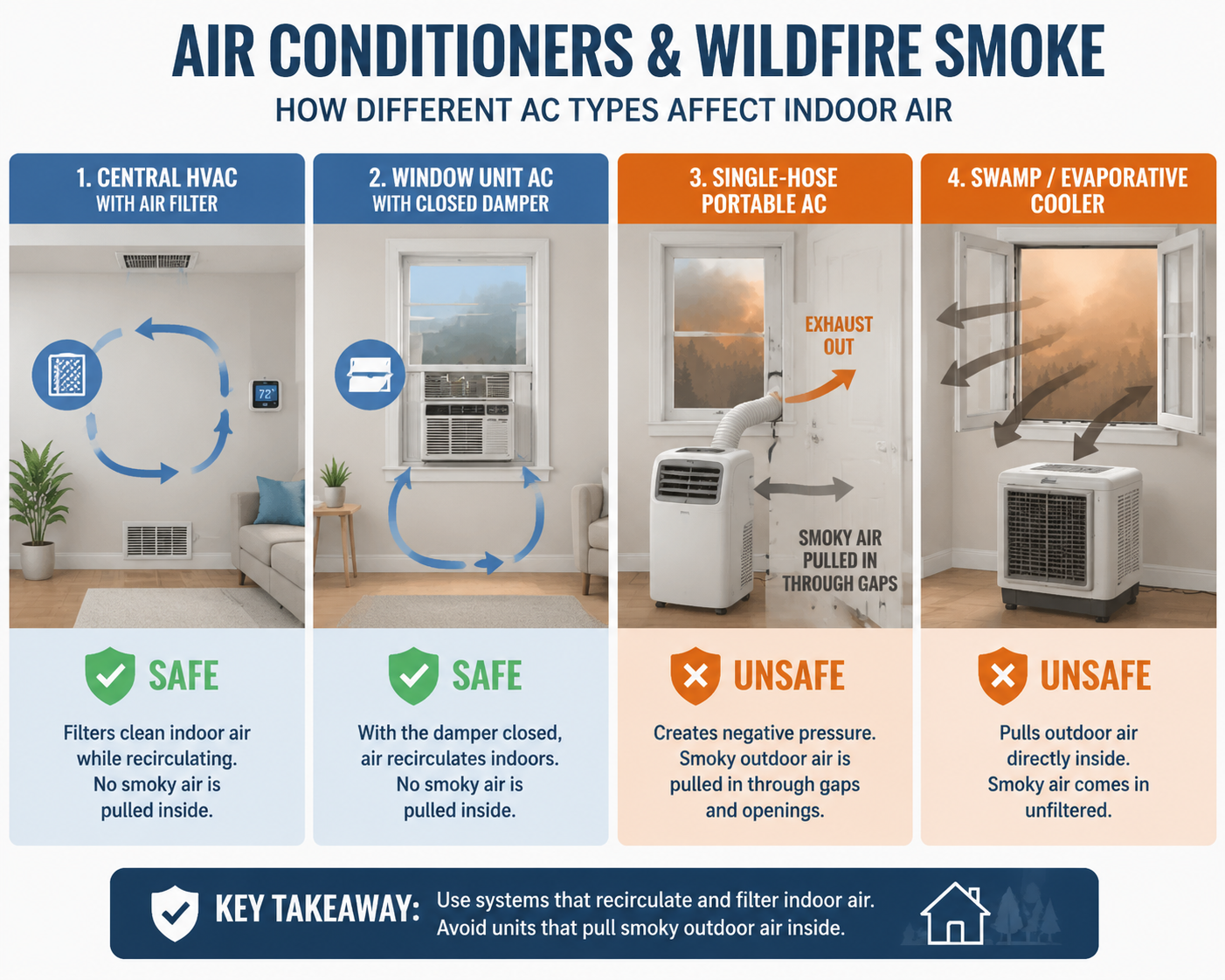
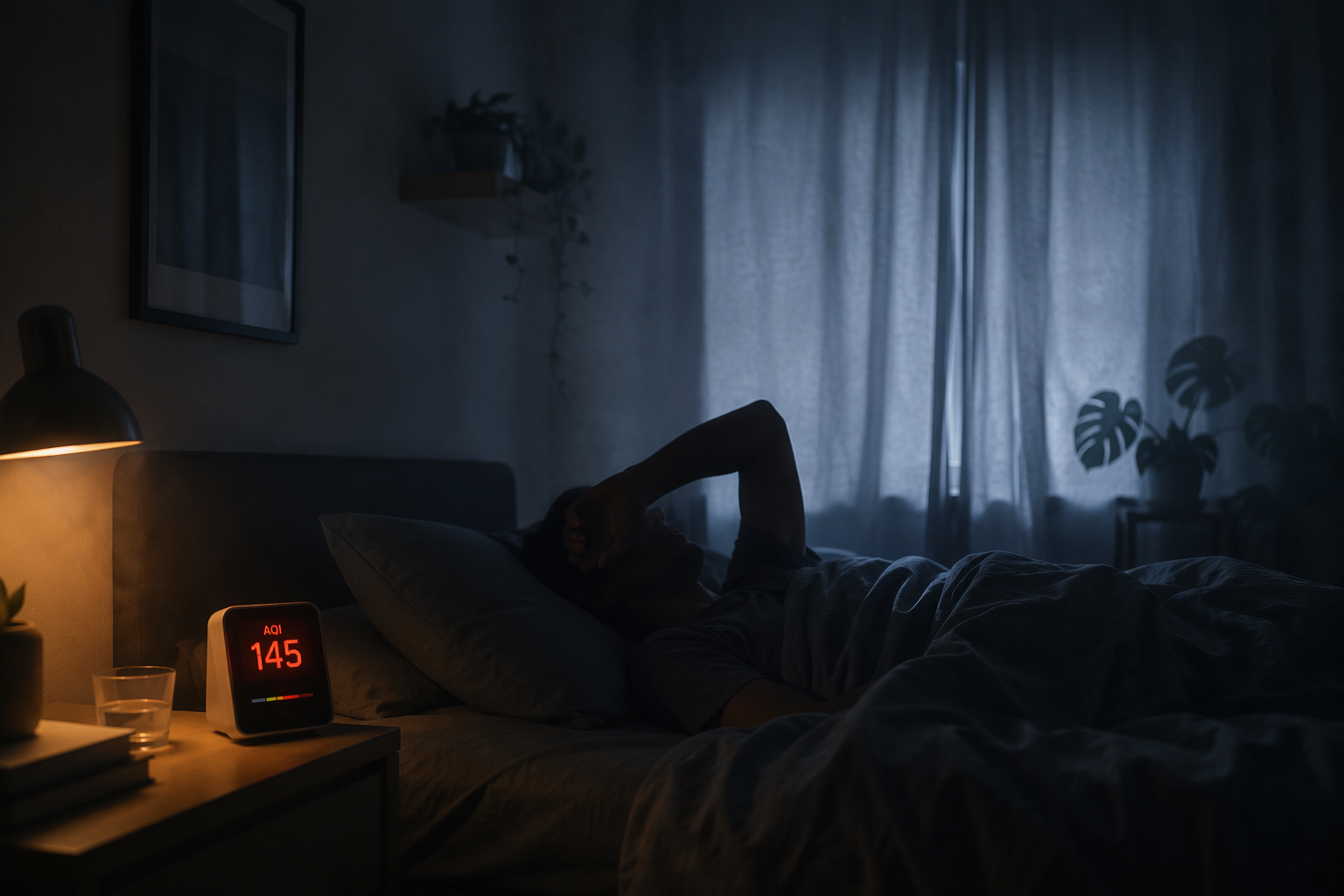
The result depends on the house, the HVAC system, the climate, the bedroom, and the people sleeping in it. A shaded single-story home in a dry climate behaves differently from a humid upstairs apartment. A newer efficient system behaves differently from an older unit that short-cycles or struggles during heat waves. During wildfire smoke events or poor outdoor air conditions, ventilation choices may also need to change.
Still, the first test is simple: stop treating the thermostat as a single all-day opinion. Give it a day-night rhythm. Keep the house warmer when sleep is not the task, cool the bedroom before sleep begins, use fans only where people are, and review the pattern after several nights. That is where lower AC bills and better sleep stop being opposing goals and become a scheduling problem you can actually work with.
References
- Nighttime Ambient Temperature and Sleep in Community-Dwelling Older Adults, PMC, 2023.
- Ceiling Fans vs AC: Do They Actually Save Money?, Hunter Fan.
- Smart Thermostats FAQ, ENERGY STAR.
- 5 ways to stay cool and save on your electric bill this summer, EDF.
- The Ideal Temperature to Set Your Thermostat at Night, According to Experts, Real Simple.




Comments
Join the discussion with an anonymous comment.