
The first seconds after a tornado warning wakes you are not calm seconds. The sound cuts into sleep before you have a usable story for it. Your hand reaches for the phone, your chest is already pounding, and only then do you start trying to answer the practical questions: where is the storm, is this my county, do I need shoes, are the children awake, where is the safest interior room?
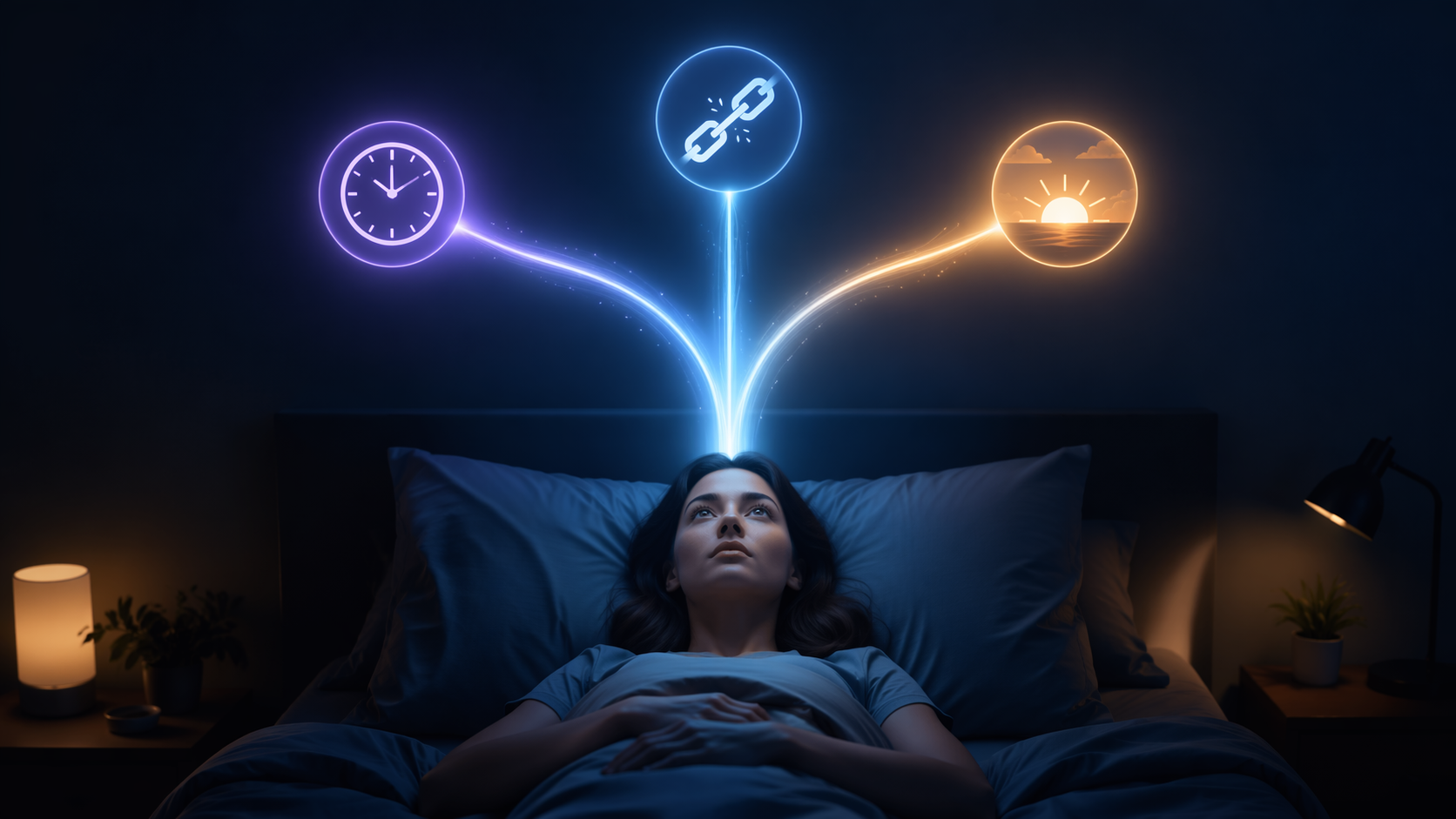
That order matters. When a tornado warning arrives at night, the body often mobilizes before the mind can contextualize the threat. The auditory system can still register sound during sleep, but the waking, reasoning parts of the brain are not fully online at the moment the alarm breaks through. The result is a stress response that can feel embarrassingly oversized after the radar clears or the warning expires. It is not just “being startled.” It is a sleep-interrupted emergency response.
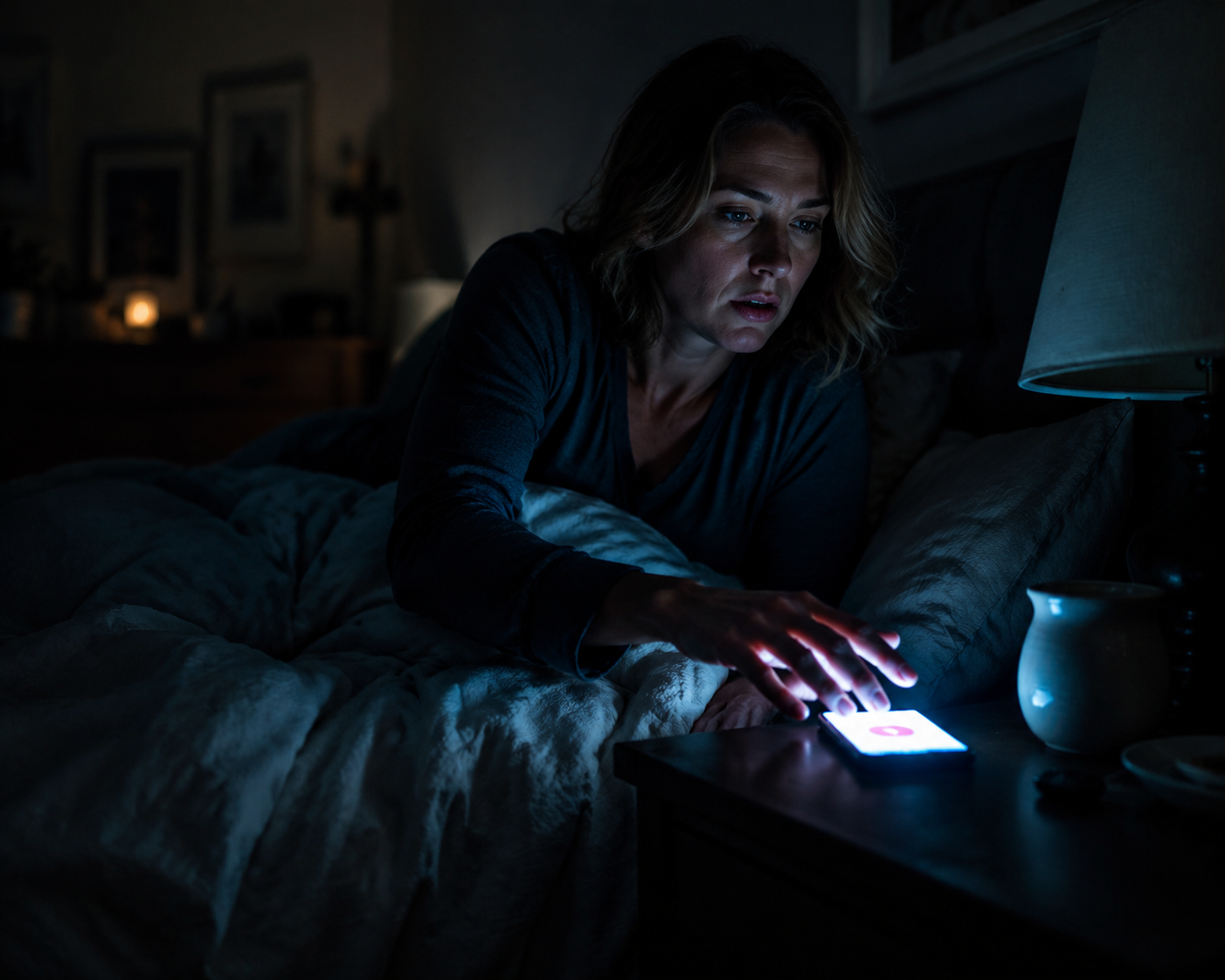
The Alarm Hits a Brain That Has Not Finished Waking
During the day, an emergency alert lands inside a brain that is already doing context work. You can look out the window, remember where you are, compare the warning area with your location, decide whether the siren is for you, and move toward shelter with at least some sense of sequence.
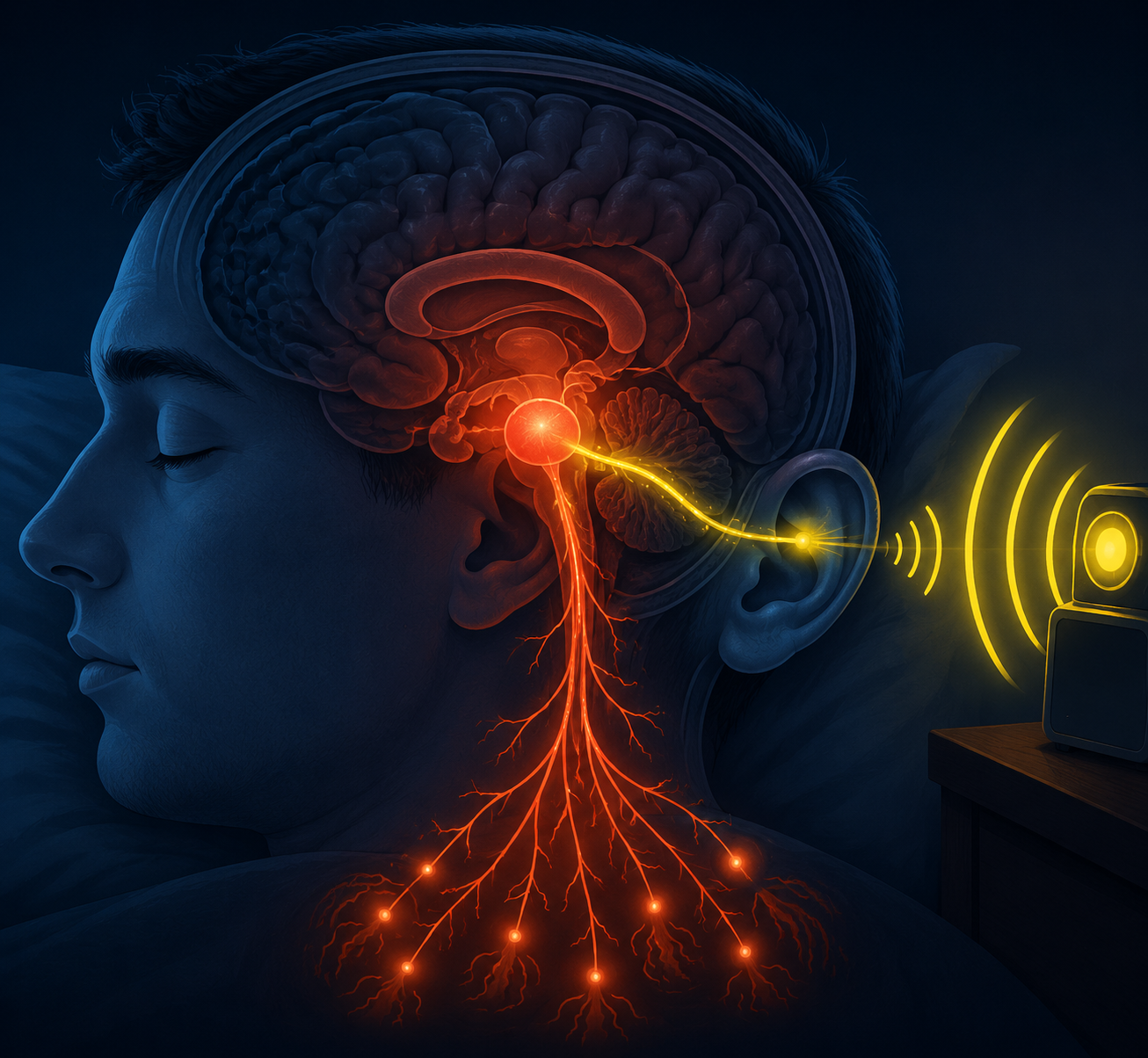
At night, the signal arrives into a different system. The sleeping brain is still monitoring the environment, but the prefrontal cortex—the region involved in reasoning, risk assessment, and putting stimuli into context—is suppressed during sleep. In the discussion of their emergency-alarm study, Hall and colleagues describe this as one reason an alarm during sleep may be experienced as more unpredictable and uncontrollable than the same alarm during waking hours.[1]
The amygdala, which helps detect threat, does not wait politely for a full weather briefing. A loud alert, a siren, or a severe-weather notification can be treated first as urgency and only later as information. That is why the first 90 seconds can feel so physically absolute: the body has already begun preparing for action while the mind is still assembling the scene.
Two Stress Systems Turn On
The pounding heart and the long, wired aftermath come from related but different stress systems. The first is the sympathetic nervous system, the fast pathway that helps the body mobilize. It increases heart rate, shifts blood flow toward muscles, sharpens arousal, and prepares you to move. This is the part many people notice immediately: the chest jump, the shaky hands, the sudden heat, the sense that the room has become too bright and too urgent.
The second is the hypothalamic-pituitary-adrenal axis, often shortened to the HPA axis. This pathway is slower. It involves hormonal signaling and cortisol release. Cortisol is not simply a “bad stress chemical”; it helps the body respond to challenge. But when it rises after a nighttime alarm, it can help explain why returning to sleep is difficult even after you have confirmed that the immediate danger has passed.
This distinction matters because people often judge themselves by the clock. The warning ended. The radar moved on. Everyone else went back to bed. So why is the body still acting as if something is happening? The answer may be that one stress system reacted quickly, and another kept the body activated well after the first decision was over.
What the Emergency-Alarm Experiment Shows
The clearest experimental evidence comes from a 2016 study by Hall and colleagues on emergency alarms and mobilization during the day and at night. The study did not use tornado warnings. It studied healthy young male firefighters, average age 25 with a standard deviation of 4 years, in a controlled laboratory setting. Participants were exposed to an emergency station alarm either during the day or when awakened at night.[1]
Those limits are important. A fire-station alarm in a lab is not the same as a real tornado warning at home, with children in other rooms, a county map on a phone, wind outside, and a personal memory of storms. The study also does not tell us how older adults, women, children, people with medical conditions, or people with prior disaster trauma would respond. Still, it gives unusually useful measurements for the basic sleep-to-alarm problem: what changes when an emergency sound interrupts sleep instead of reaching an already-awake person?
The heart-rate difference was large. When participants were awakened at night by the alarm, their heart rate increased by about 56 beats per minute on average. When they heard the same kind of alarm during the day, the average increase was about 38 beats per minute.[1]
That finding gives a measurable shape to the bedside experience. If your heart seems to leap rather than merely speed up, the night itself may be part of the reason. The same emergency signal can produce a stronger cardiovascular response when it breaks into sleep than when it arrives during waking consciousness.
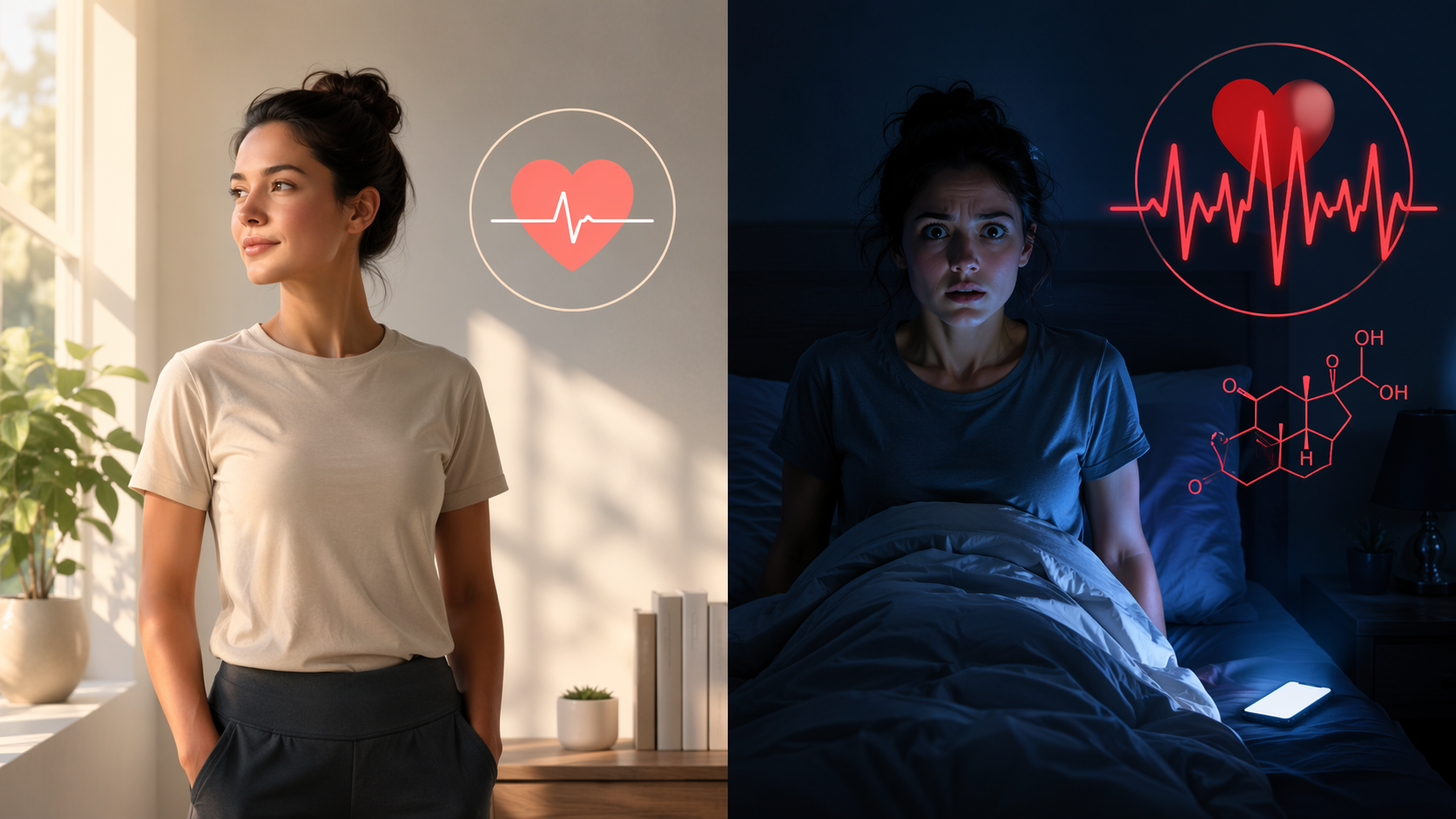
Why the Flooded Feeling Can Outlast the Warning
The cortisol results are even more revealing. In the Hall study, salivary cortisol remained significantly elevated for up to two hours after the nighttime alarm. After the daytime alarm, the researchers did not find a significant cortisol increase.[1]
That day-versus-night contrast is the part worth sitting with. The alarm was urgent in both conditions. The participants still had to respond. But the HPA-axis response—the slower hormonal stress response—appeared after the nighttime awakening and not after the daytime alarm.[1]
For someone woken by a tornado warning, this helps explain the specific frustration of the aftermath. The body may not settle just because the decision tree is complete. You may have already checked the warning, moved to shelter, waited it out, and returned to bed. Yet a cortisol response can keep the system alert, watchful, and resistant to sleep long after the phone stops buzzing.
The study does not prove that every tornado warning produces a two-hour cortisol elevation in every sleeper. It does support a narrower and more useful conclusion: emergency alarms that wake people from sleep can produce a stronger physiological stress response than similar alarms heard during the day, including a nighttime cortisol response that may persist for up to two hours in the measured study conditions.[1]
Night Makes the Threat Feel Less Controllable
A tornado warning at night is not automatically more dangerous for every individual in every location, but it often feels less controllable in the body. Darkness reduces immediate environmental information. Sleep inertia slows clear thinking. The alert may be loud, compressed, and impersonal. A person wakes into consequence before orientation.
The sleeping brain has not yet rebuilt the ordinary frame that helps sort threat from instruction. During waking hours, the alert can be interpreted as a signal to gather information and act. During sleep, the first meaning may be simpler and harsher: danger now. The body mobilizes around that meaning before the person can refine it.
This is one reason generic advice about “not overreacting” misses the mechanism. The reaction is not built from a fully awake appraisal of probability. It begins in a transition state, when sound has entered awareness but context has not yet caught up. The feeling of alarm can therefore be stronger than the later facts seem to justify.
When Past Storms Make the Alarm Heavier
For some people, the phone alert is not only an alert. It is a reminder. Prior frightening weather experiences can condition the body to treat severe-weather cues as triggers, so the warning may activate fear linked to an earlier storm as well as concern about the current one. UAB Medicine describes storm anxiety during tornado season in this context, including how past experiences can intensify present reactions.[2]
Nashville Psych makes a similar point about weather-related anxiety: storms and storm warnings can become associated with earlier distress, making the current cue feel emotionally loaded before a person has finished evaluating the current risk.[3]
That does not mean every intense nighttime reaction is trauma. The Hall study shows that sleep interruption alone can strengthen the stress response.[1] Prior storm trauma is better understood as an amplifier. It can add memory, anticipation, and conditioned fear on top of the already powerful sleep-to-alarm physiology.
Why One Bad Night Can Make the Next Alert Harder
Tornado season can create a rough loop for sleep. One warning wakes you. The stress response keeps you up. The next day is shortened, foggier, and more emotionally raw. Then the next severe-weather setup arrives, and the brain has less sleep recovery behind it.
This matters because sleep loss can increase emotional reactivity. An article on emergency alerts and news notifications in The Conversation cites research finding that a single night of sleep deprivation can increase amygdala reactivity by about 60% when responding to negative emotional stimuli.[4]
That statistic is not tornado-specific, and it should not be stretched into a claim that every sleep-deprived person will panic during the next warning. It does help explain why repeated nighttime disruptions can make severe-weather season feel cumulative. The brain asked to evaluate threat after poor sleep may be working with a more reactive alarm system.
Weather Fear Is Real, but This Is Not Only Anxiety
Weather-related fear has its own clinical and public-health context. The National Weather Service discusses storm anxiety as a real concern for people who become distressed by severe-weather threats.[5] Cleveland Clinic describes lilapsophobia as an intense fear of tornadoes or hurricanes.[6]
Those frames can be useful, especially for people whose fear begins long before storms arrive or interferes with ordinary life. But the nighttime tornado-warning response deserves a more precise explanation than “you have anxiety.” A person can do the correct safety behavior, respond appropriately to a real warning, and still experience a body that stays activated after the situation is over.
The distinction is protective. Turning off life-safety alerts is not a reasonable solution for many people in tornado-prone regions. The goal is not to shame the sleeper for reacting, or to pretend the warning was trivial because the worst did not happen. The goal is to understand why the reaction can be so forceful when sleep is interrupted by emergency information.
What Your Body Is Doing After the Warning Ends
If you are still awake 45 minutes after the warning expired, the most accurate explanation may be physiological rather than moral. Your sympathetic nervous system may have surged quickly when the alarm broke into sleep. Your HPA axis may have added a slower cortisol response. Your brain may have received the signal before it had enough context to soften the threat. If previous storms frightened you, the alert may also have carried old fear into the new moment.
None of that means the next nighttime warning will be easy to sleep through. It should not be easy in the sense of careless; warnings exist so people can act. But the lingering wired feeling is not a character flaw, and it is not proof that you failed to “calm down.” It is a predictable response to being pulled from sleep into possible danger, with reduced context at the front end and measurable stress-system activation afterward.
References
- The acute physiological stress response to an emergency alarm and mobilization during the day and at night — PMC, 2016
- Understanding and managing storm anxiety during tornado season — UAB Medicine
- Finding Calm in the Storm: How to Cope with Weather-Related Anxiety — Nashville Psych
- Emergency alerts and news notifications can make us stressed and anxious. Here’s what you can do to cope — The Conversation
- Storm Anxiety — National Weather Service
- Lilapsophobia — Cleveland Clinic
Comments
Join the discussion with an anonymous comment.