
If an MLS game is on tonight, the sleep problem is not theoretical. The 2026 MLS schedule regularly includes 7:30 p.m., 8:30 p.m., 9:30 p.m., and 10:30 p.m. ET kickoff windows, which means a West Coast match can push an East Coast viewer past midnight before the final whistle, stoppage time, a little postgame checking, and the walk from couch to bed have even begun.[1]
That is the real MLS games tonight sleep impact: not that one match destroys your sleep, but that the game lands inside the exact part of the evening when your body is supposed to be powering down. You are looking at a bright screen, reacting to a live result, and staying warm and alert at the hour when sleep needs dim light, lower arousal, and a small drop in core temperature.
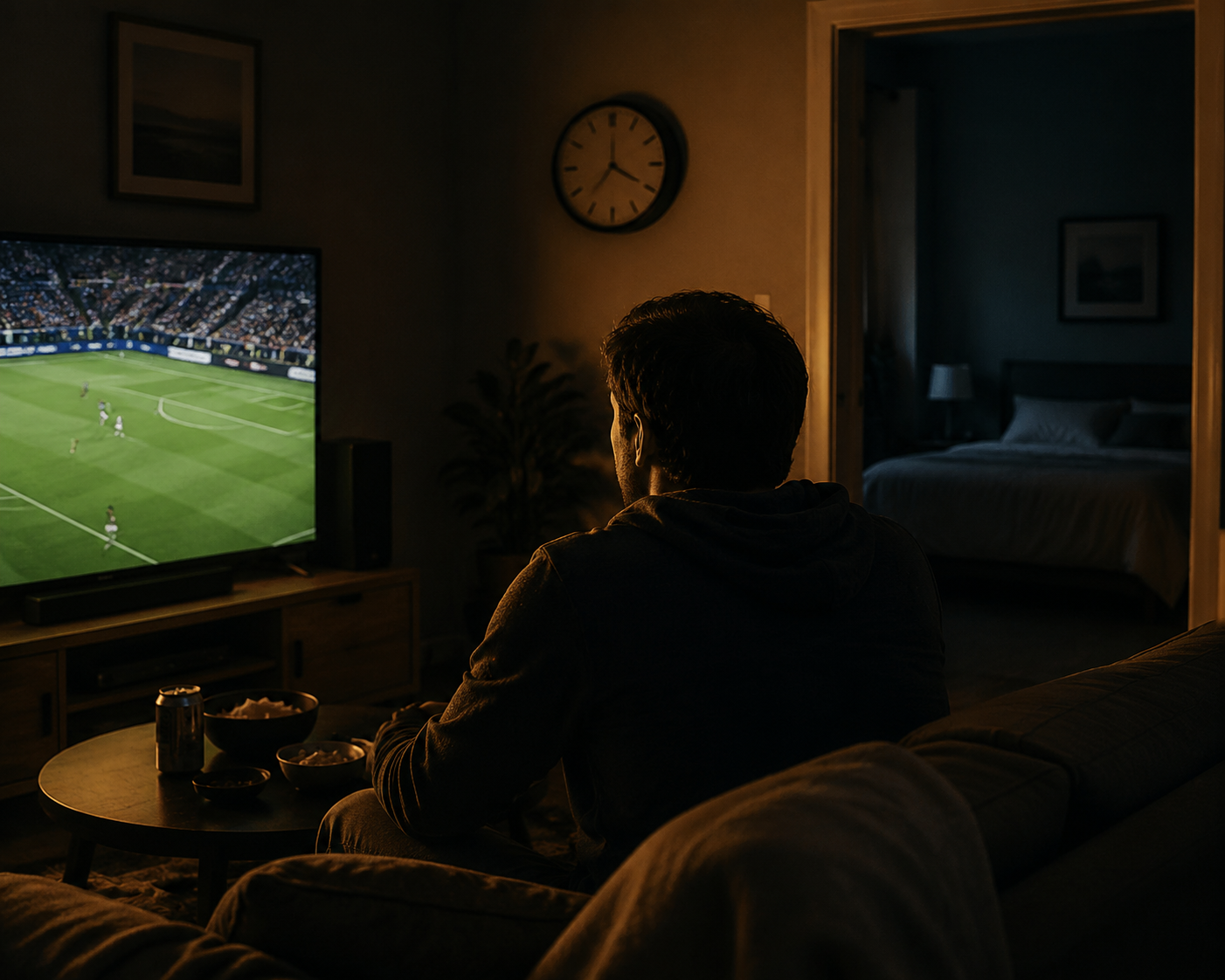
The answer is not to pretend you will become the person who turns off a tied match in the 82nd minute. Watch the game. Then treat the next 30 minutes like part of the event, not like empty time where highlights, group texts, and one more clip are allowed to eat the rest of the night.
Why a Late Match Leaves You Tired but Wired
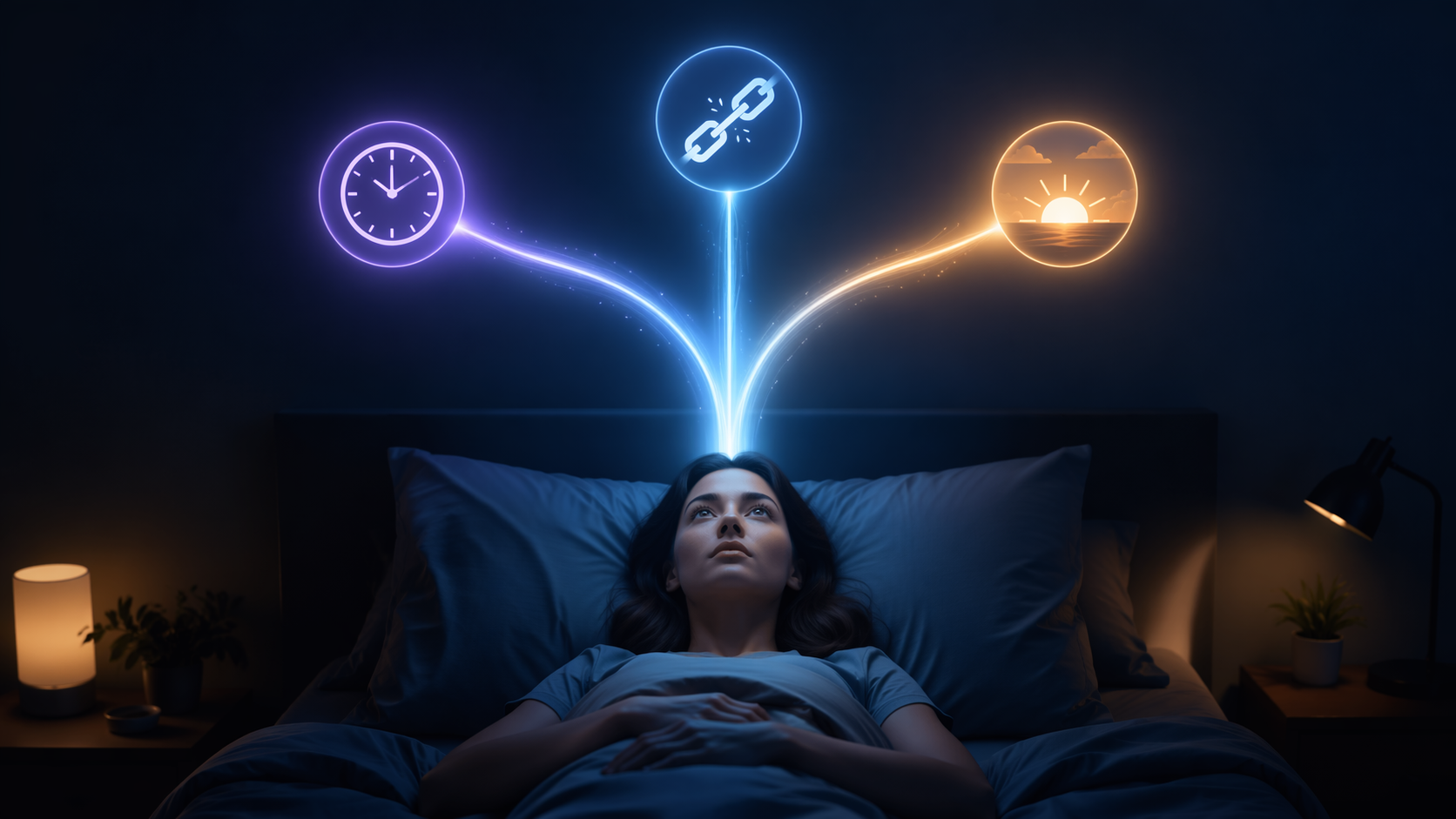
Late sports viewing hits sleep from three directions at once. The first is light. The National Sleep Foundation reports that 58% of American adults use screens within an hour of bedtime, so MLS does not create a rare bad habit; it drops a live, emotionally loaded screen into a window where many people are already vulnerable.[2]
The second is arousal. Research on hockey spectators cited by Time found that live sports viewing increased heart rate by 75% while watching on TV and 110% while watching in person.[3] That study was not about MLS, so the exact percentages should not be treated as universal. Still, anyone who has watched a late penalty decision knows the body is not filing the event under “relaxing seated leisure.”
The third is temperature. Sleep onset is easier when the body can move toward its normal nighttime cooling pattern, including roughly a 1–2°F drop in core temperature. A tense finish, a warm room, alcohol, heavy food, and a glowing phone all make that transition clumsier.
Blue light deserves attention, but it should not swallow the whole conversation. Harvard Health describes blue light in the 380–495 nm range as especially relevant to melatonin suppression.[4] A Sleep Science study also found smartphone screen time explained 12.7% of variance in sleep quality scores, but that result came from 242 young Pakistani medical students, not middle-aged MLS viewers watching a television from the couch.[5] Useful signal, limited reach.
There is also fan lore around lost sleep. A Wetten.com survey reported by Yahoo Sports said 26% of American sports fans lose an average of 62 minutes of sleep over their team’s performance, based on a survey of 3,000 fans.[6] Colorful, yes; not strong enough to carry the argument, because the methodology was not independently verified. The stronger case is physiological and boring in the best way: light, arousal, and heat are all pointing the wrong direction.
The 30-Minute Post-Game Wind-Down
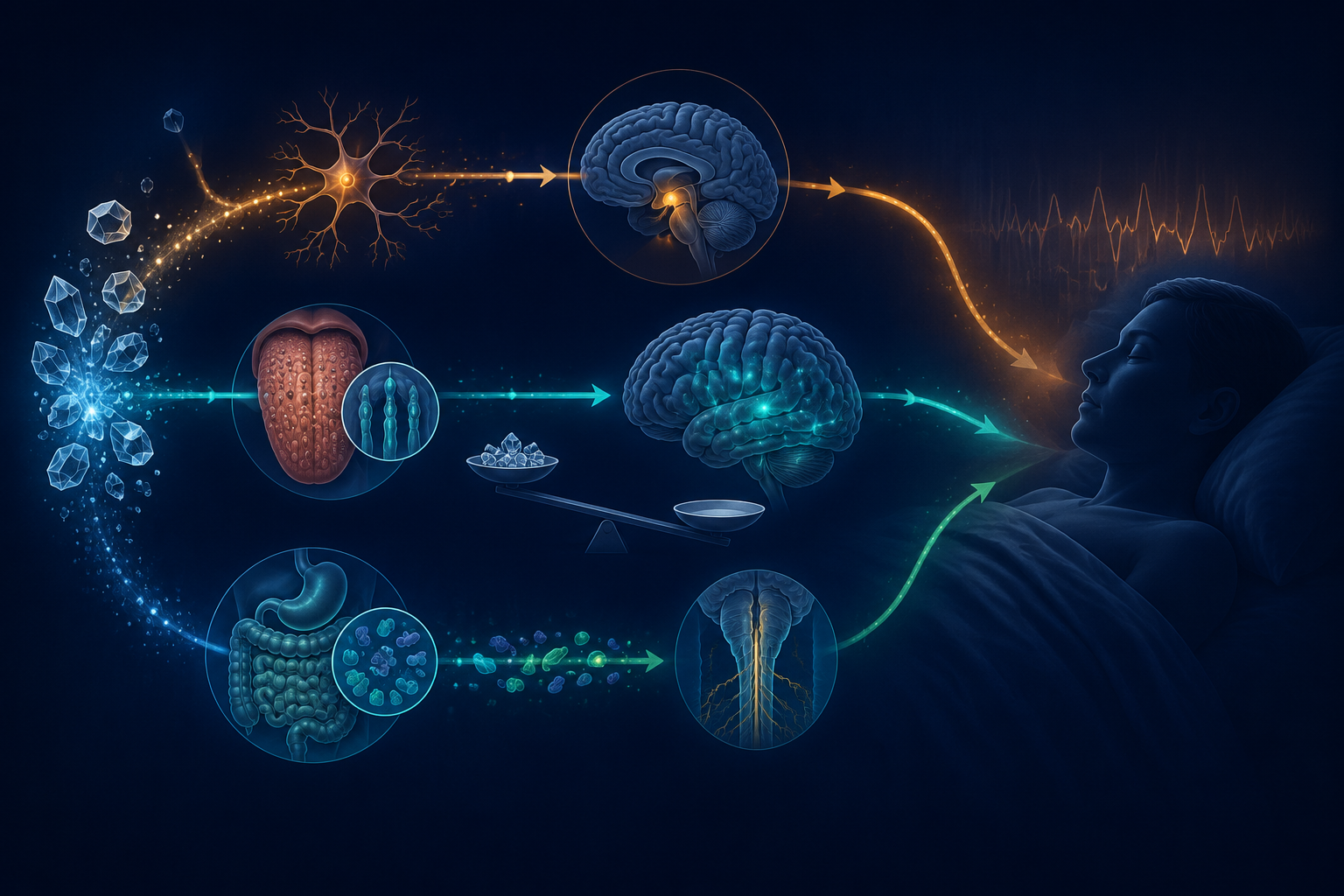
Start this at the final whistle, not after the press conference, not after the second replay angle, and definitely not after social media has convinced you that the referee, the manager, and three strangers with flag emojis all require your attention. The goal is to reverse the three problems the match just created: light exposure, sympathetic arousal, and delayed cooling.
| Minute | What to do | What it targets |
|---|---|---|
| 0 | Turn off the TV and put the phone away | Light and mental reactivation |
| 0–5 | Set the bedroom to 68°F or below | Body cooling |
| 5–15 | Take a cool shower or a brief cool rinse | Cooling and downshifting |
| 15–25 | Do breathing or progressive muscle relaxation | Sympathetic arousal |
| 25–30 | Get into bed without highlights, alcohol, or heavy food | Relapse prevention |
0 minutes: make the final whistle final
When the match ends, end the screen session. This is the hinge point. Turning off the TV but opening your phone for highlights, player ratings, reactions, and “just one” group text keeps the same sleep-disrupting loop alive: light in the eyes, new emotional inputs, and fresh reasons to stay awake.
If the group chat matters, send one closing message before the game ends or immediately after: “I’m out after the whistle. Morning comes early.” It sounds ridiculous until it works. The point is not moral discipline; it is removing negotiation from the most negotiable part of the night.
0–5 minutes: make the bedroom cooler than the living room
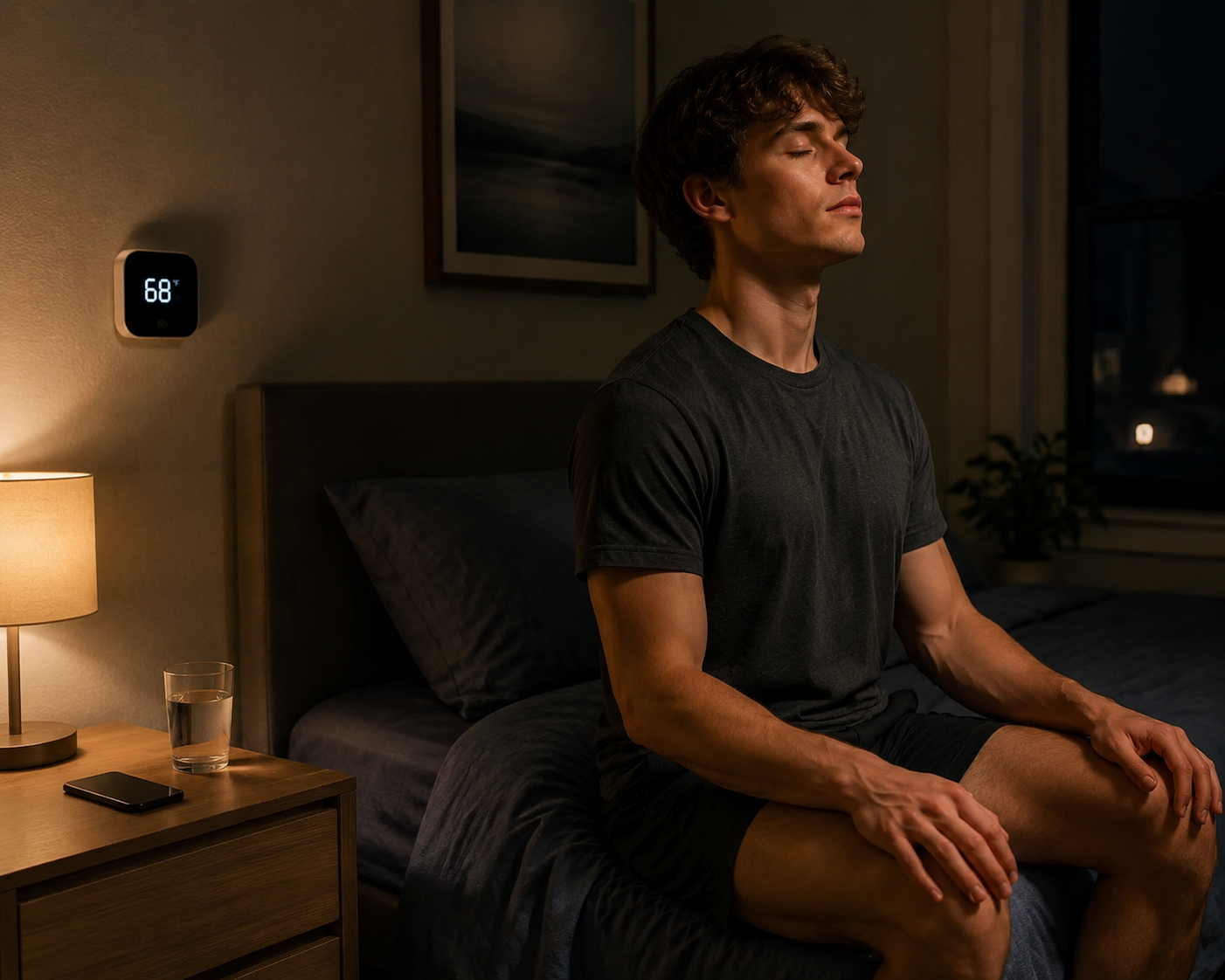
Set the bedroom to 68°F or below before you start wandering around. If the room is already cool, leave it alone. If it is warm, adjust it immediately, because the body does not fall asleep by winning an argument with a stuffy room.
This step matters because the couch phase of a match often keeps people physically comfortable in the wrong direction: blanket, snacks, warm room, tense muscles, maybe a drink. A cooler bedroom gives your body a clearer thermal cue that the night is changing.
5–15 minutes: use water as a reset
Take a cool shower, or keep it simpler with a cool rinse on your face, neck, hands, and lower legs. Do not turn this into a punishment ritual. You are not trying to prove toughness; you are trying to help your body stop acting as if a late corner kick is still incoming.
A full shower helps some people because it creates a clean break between match mode and bed mode. A rinse is better if a shower wakes you up, if the house is asleep, or if you are too tired to make one more production out of the evening.
15–25 minutes: give your nervous system something boring to do
Spend 5–10 minutes on slow breathing or progressive muscle relaxation. That is enough. You do not need a perfect meditation session, a new app, or a voice telling you to imagine a meadow while you are still annoyed about stoppage time.
- Breathing option: inhale gently, exhale longer than you inhale, and keep repeating until your shoulders drop.
- Muscle option: tense and release one area at a time, starting with your feet and moving upward.
- Attention option: when your mind returns to the match, label it “game,” then go back to the next breath or muscle group.
The value here is not spiritual elegance. It is giving the sympathetic system fewer reasons to keep the engine running. The body often follows repetition better than it follows a lecture.
25–30 minutes: do not reopen the match
The last five minutes are where many people lose the whole protocol. No highlight reels. No tactical recap. No social scroll. No checking whether other fans agree with your completely reasonable opinion. Those inputs restart the same arousal loop you just spent 25 minutes unwinding.
Skip alcohol as a sleep tool. It may make sleep onset feel easier, but it can disrupt REM sleep later in the night. Skip heavy food too, especially if the game already pushed dinner late. Water is fine. A small, familiar snack is fine if hunger will keep you awake. The standard is simple: nothing that asks your body to digest, debate, or metabolize its way through the next hour.
Where Melatonin Fits, and Where It Does Not
Melatonin is sometimes useful for timing, but it should not be the first fix for late MLS nights. The cleaner first move is behavioral: stop light exposure, cool down, and lower arousal. If you are considering it anyway, treat it as a specific tool rather than a nightly rescue button.
For a deeper look at when it may or may not make sense, read what to know about melatonin gummies and melatonin label accuracy. If the problem is broader than late games, the better starting point may be matching an OTC sleep aid to the sleep problem instead of guessing in the aisle at midnight.
The Morning After a 10:30 p.m. ET Kickoff
If the match ran late and sleep was shorter than planned, do not try to fix it by sleeping wildly off-schedule the next morning if you have any control over it. Keep your wake time as consistent as your life allows, get morning light soon after waking, and let the day tell your circadian rhythm that it is daytime.
If you need a nap, keep it short enough that it does not steal from the next night: under 90 minutes and before 3 p.m. is the safer lane. For a fuller recovery plan after a rough night or a string of them, use this research-based guide to recovering sleep debt.
None of this makes a midnight finish identical to an early bedtime. It just keeps the game from spilling into the next hour, then the next morning, then the next night. MLS nights are sleep-hostile by timing and physiology, but they are not hopeless when the final whistle is also the start of a deliberate landing.
References
- MLS Schedule, MLSSoccer.com.
- Screen Use Disrupts Precious Sleep Time, National Sleep Foundation.
- Watching Sports Can Be Bad for Your Heart, Time, 2017.
- Blue light has a dark side, Harvard Health Publishing.
- The association between smartphone screen time and sleep quality among medical students, Sleep Science, 2021.
- Wetten.com fan sleep survey, Yahoo Sports / Wetten.com.
Comments
Join the discussion with an anonymous comment.