
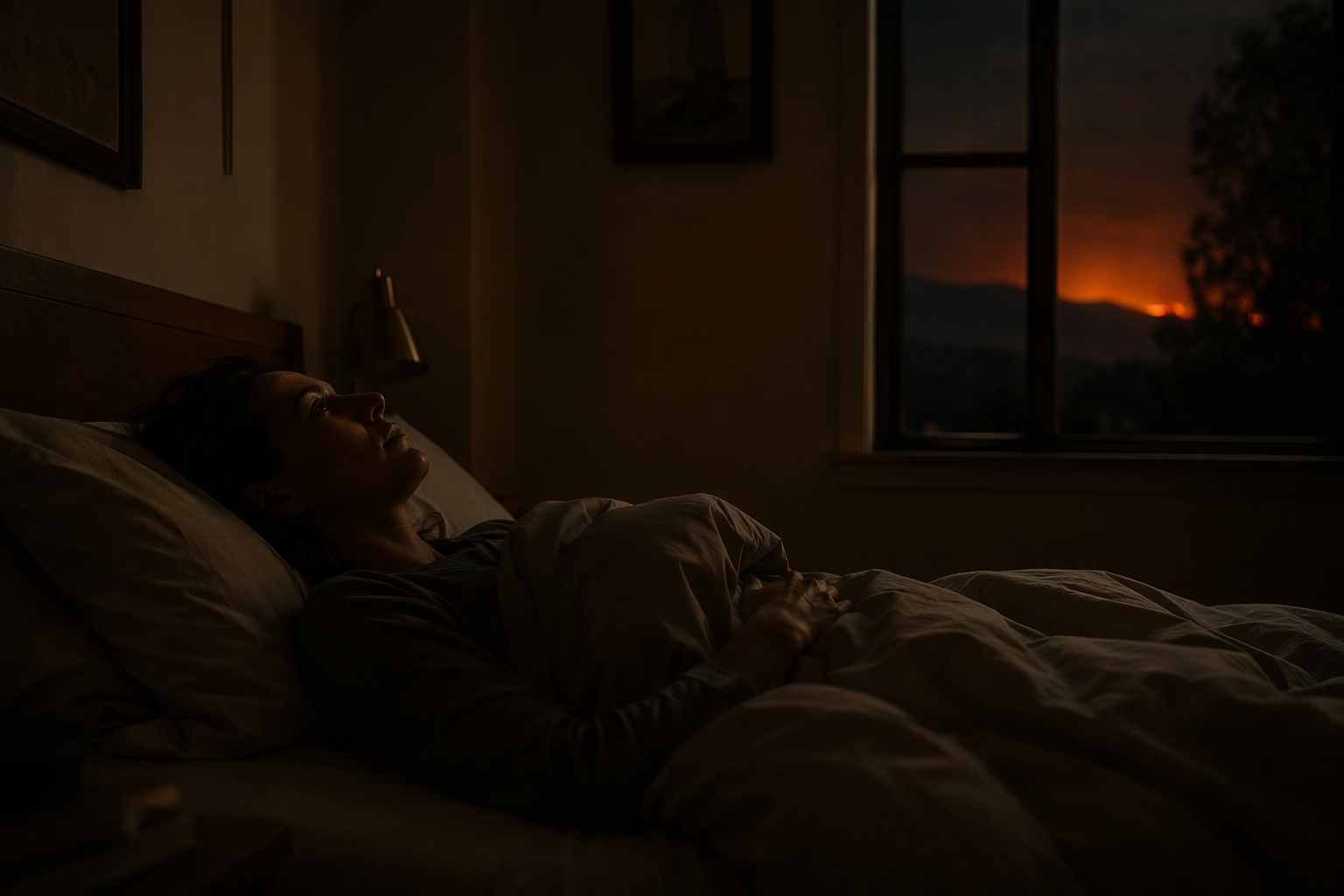
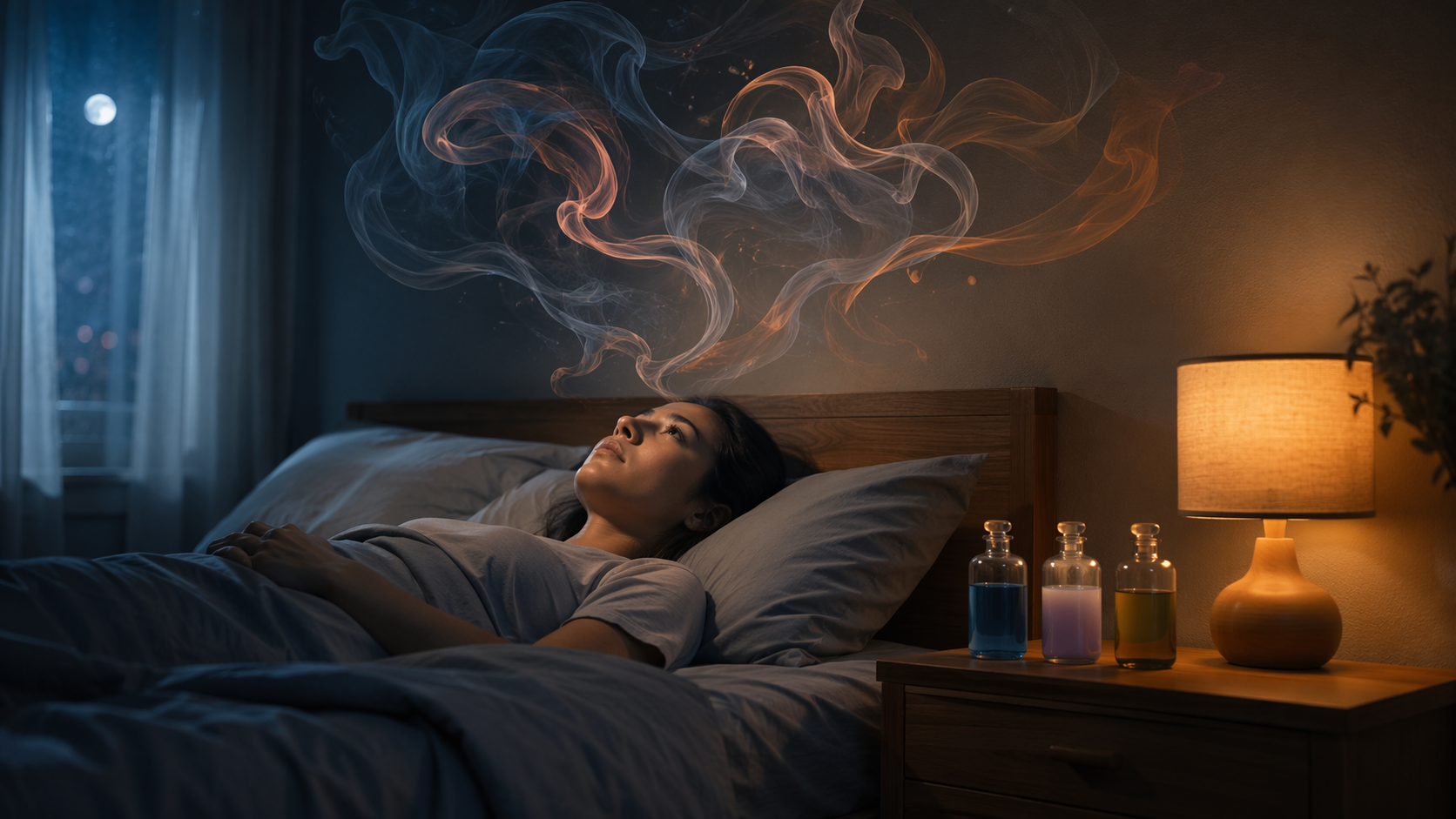
The smoke can be gone and the bedroom can still feel unsafe. That is one of the quieter ways wildfire smoke affects sleep quality: not only by irritating the lungs, throat, nose, or eyes, but by leaving the nervous system on watch after the visible danger has moved on. A person may stop smelling smoke and still wake at every wind shift, check alerts in the dark, or dream the evacuation again.
There is a direct physical route from smoke to poor sleep, and it matters. Fine particulate matter can worsen breathing comfort, congestion, coughing, and nighttime irritation. That is the other side of the problem. This article follows the route that is easier to miss: the trauma, stress, and mental-health pathway that can keep insomnia and nightmares going after the air looks clear.
When wildfire sleep problems are not just about the air
The strongest sleep-specific evidence comes from a 2021 systematic review of wildfire survivors. It found insomnia in 63% to 72.5% of survivors, compared with a general-population insomnia estimate of about 30% cited in the review. Nightmares were reported in 33.3% to 46.5% of survivors.[1]
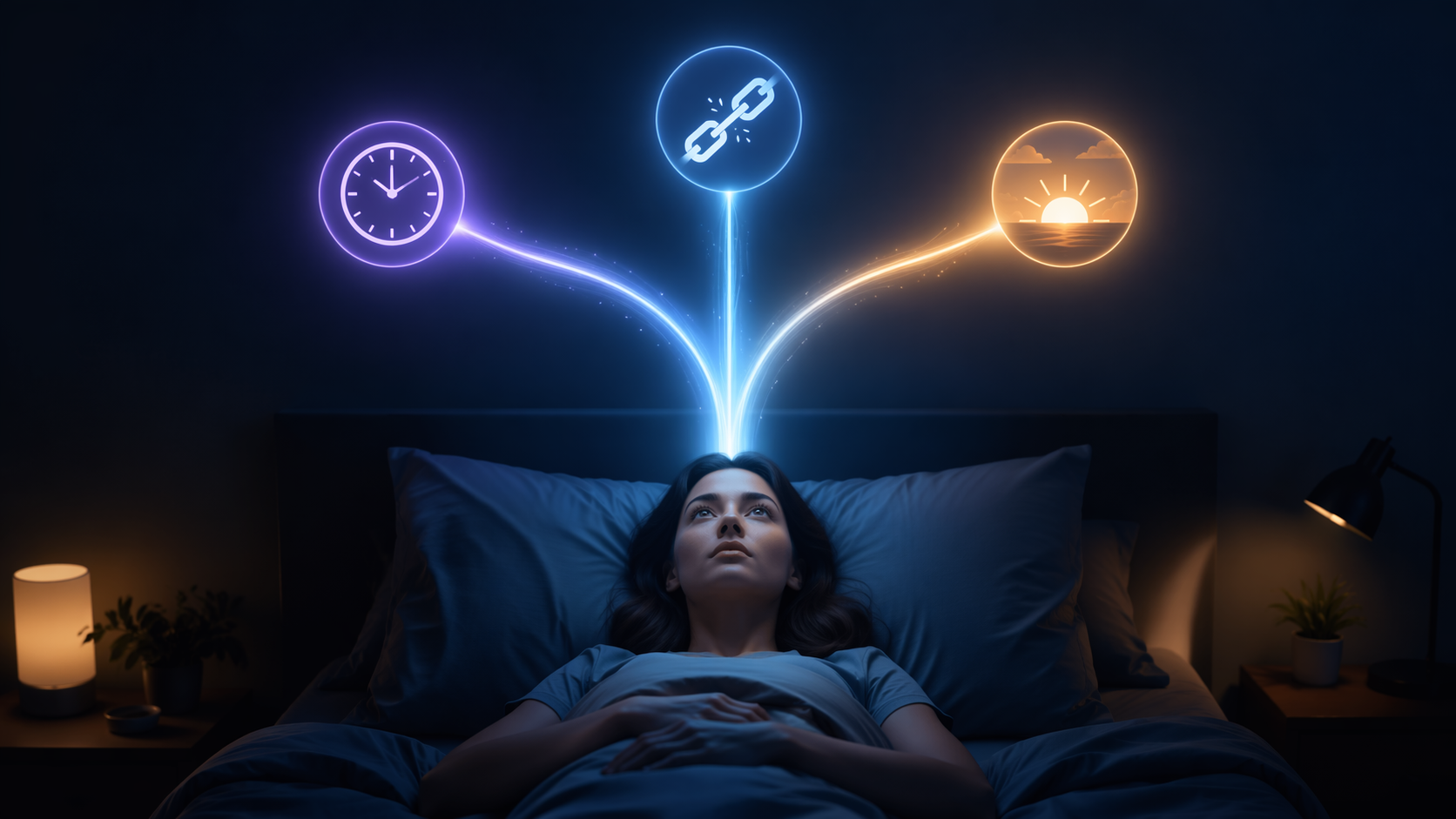
Those numbers do not simply say that smoke season is uncomfortable. They describe a different scale of sleep disturbance among people who have lived through wildfire threat or loss. Insomnia at that level suggests that bedtime has become linked with vigilance: listening for sirens, scanning for smoke, waiting for a phone alert, or bracing for the next evacuation warning.
Nightmares tell a related but more specific story. Bad dreams after a disaster can be part of ordinary stress, especially in the first days or weeks. But when nightmares repeat, intensify, or come with daytime fear, avoidance, jumpiness, or intrusive memories, they are no longer just a rough night. They may be one sleep expression of a trauma response.
The review has limits worth keeping in view. It included only five studies, all published before 2021, and the available samples leaned heavily toward Australian wildfire contexts.[1] That does not make the findings irrelevant to the Western U.S. or Canada, but it does mean the exact percentages should not be treated as universal rates for every smoke season, community, or fire event.
Threat and loss can change the sleep pattern
A useful clue in the review is that sleep problems did not appear as a flat, one-size-fits-all reaction. In children, insomnia varied with the severity of property loss. Among children in a high-loss group, insomnia was reported in 69.2% at 6 weeks and rose to 84.6% at 10 weeks. In a low-loss group, the figures were 33.3% at 6 weeks and 44.4% at 10 weeks.[1]
That pattern matters because it points beyond smoke exposure alone. If the bedroom air were the whole explanation, the severity of loss would be less informative. Instead, the numbers suggest that sleep tracks what the fire did to safety, home, family routines, and the child’s sense of what can happen next.
Adults can carry a version of the same burden. A home does not have to burn for the body to learn the shape of threat. Repeated evacuation warnings, days of orange light, financial uncertainty, caring for children or older relatives, and the knowledge that fire season will come again can all turn nighttime into the hour when the mind starts running its checks.
PTSD makes the sleep connection harder to dismiss
The review also found a close link between post-traumatic stress disorder and sleep disturbance. Among people diagnosed with PTSD, 79.1% also had insomnia. Nightmares were present in 46.5% of those with PTSD, compared with 12.3% of those without PTSD.[1]
That does not mean every wildfire-related sleep problem is PTSD. It does mean persistent insomnia and nightmares deserve more respect than the phrase “bad sleep habits” allows. If a person lies awake because the body is rehearsing escape, or wakes from dreams that replay smoke, flames, separation, or loss, the sleep problem is bound up with threat memory.
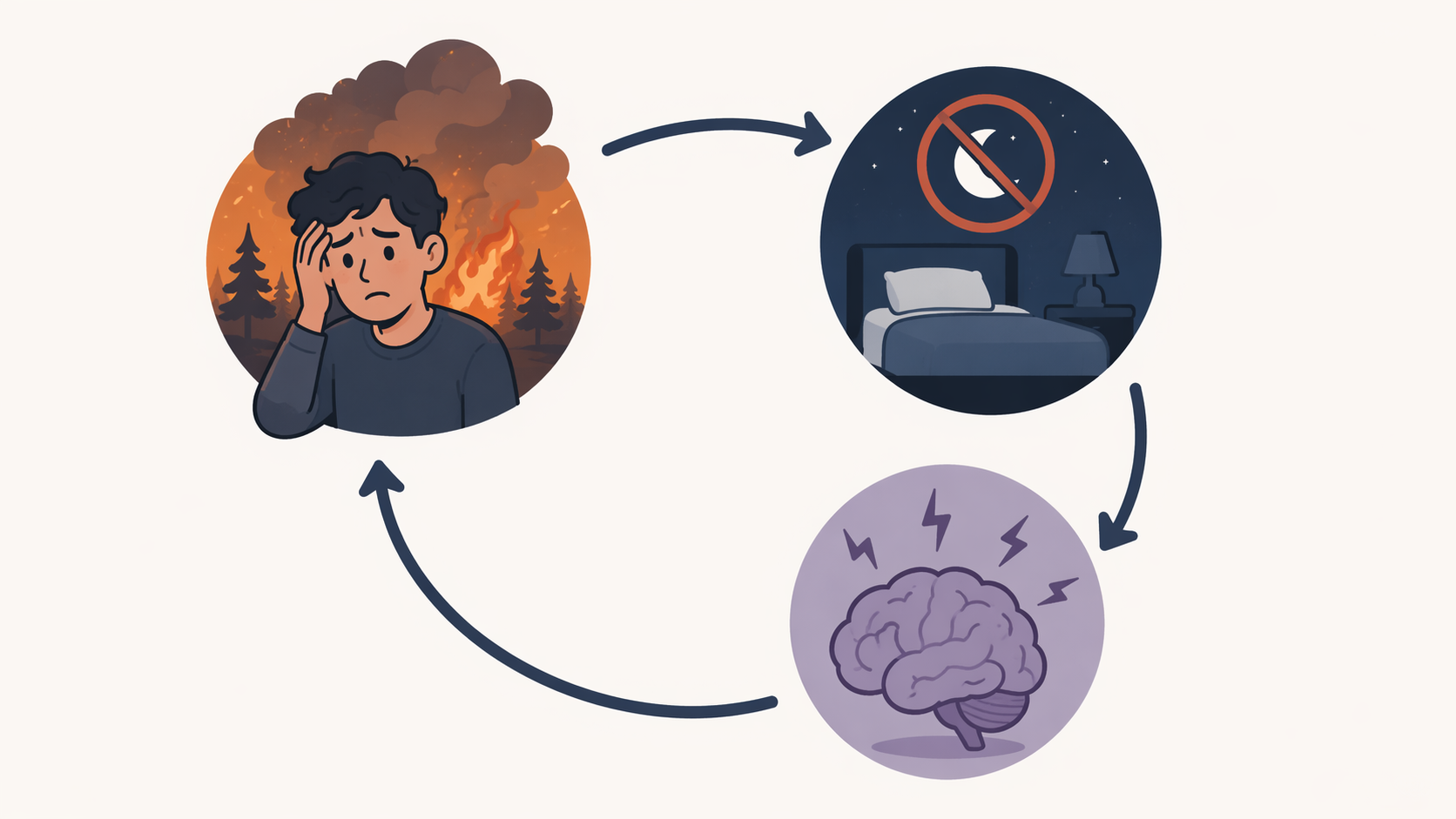
This is also why the problem can build on itself. Poor sleep can make post-traumatic symptoms harder to regulate the next day. Post-traumatic symptoms can then make the next night more fragmented, more watchful, or more dream-heavy. The review describes this bidirectional relationship between sleep and mental health after wildfires, where each side can worsen the other over time.[1]
Smoke season adds chronic stress, not only a single bad night
A single smoky night can disrupt sleep through discomfort. A season of smoke can do something broader. It can teach the body that ordinary evening cues are no longer neutral: a red sunset, the smell of distant burning, a weather app notification, the sound of wind against the window. These cues may arrive before any immediate danger, but the nervous system may treat them as warnings.
This is where the distinction between physiological and psychological pathways becomes useful, even though real life rarely separates them cleanly. Smoke may irritate the airway and make sleep lighter. At the same time, the meaning of smoke may activate fear, grief, anger, or helplessness. A person can be coughing and remembering. A child can be congested and afraid. A parent can be filtering indoor air and mentally packing the car.
The practical consequence is that clearing the air may not clear the sleep problem right away. Air quality improvement can remove one burden while leaving another intact: the learned expectation that night is when danger announces itself.
What newer smoke research adds, and what it does not prove
More recent evidence strengthens the mental-health side of the wildfire smoke story, though it should not be stretched beyond what it measured. A 2025 Harvard T.H. Chan School of Public Health report on a JAMA Network Open study found that a 10 μg/m³ increase in wildfire-specific PM2.5 was associated with increased emergency department visits for depression, anxiety, and mood disorders.[2]
The same report noted that risk was highest among women, children, Black and Hispanic individuals, and Medicaid enrollees.[2] That uneven distribution matters because wildfire sleep disruption is not experienced on equal ground. People with fewer resources, more caregiving demands, higher exposure, less control over housing, or less access to care may have fewer ways to reduce the stress load that follows smoke.
The Harvard-linked findings do not directly prove that wildfire-specific PM2.5 causes insomnia or nightmares. Sleep was not the outcome in that report. What the evidence does support is a narrower and still important point: wildfire smoke exposure is associated with worsening mental-health conditions, and those conditions are closely tied to sleep in the wildfire survivor literature.[1][2]
How to read your own symptoms without flattening them
It is tempting to sort symptoms into clean boxes: smoke problem, anxiety problem, trauma problem. Most people living through wildfire seasons do not get that clarity. The more useful question is what seems to be keeping sleep disrupted now.
- If sleep worsens mainly when air quality is poor, coughing, congestion, chest tightness, or eye and throat irritation may be carrying much of the load.
- If sleep remains disturbed after the air improves, especially with alert-checking, fear of sleeping too deeply, or a sense that the bedroom is not safe, stress and threat vigilance may be involved.
- If nightmares replay the fire, evacuation, loss, or separation, the sleep problem may be connected to trauma memory rather than ordinary restlessness.
- If poor sleep is paired with worsening anxiety, low mood, irritability, avoidance, or intrusive memories, the sleep issue may be part of a broader mental-health pattern.
None of these signs is a diagnosis. They are reasons to stop treating the problem as a simple failure to relax. A person who cannot sleep after wildfire exposure may need cleaner air, yes. They may also need help lowering a nervous system that has learned to stay ready.
When the sleep problem deserves trauma-informed care
General sleep advice can still help at the edges: keeping a steadier wake time, reducing overnight alert-checking when it is safe to do so, limiting news exposure close to bed, and making an evacuation plan during the day rather than mentally building one at 2 a.m. But advice like that is too small when insomnia or nightmares are being fed by traumatic stress.
Care becomes more urgent when nightmares are frequent, sleep avoidance develops, panic rises at night, or daytime functioning starts to shrink. It also matters when sleep and mental-health symptoms appear to be worsening each other: less sleep leading to more anxiety or intrusive memories, then more anxiety or intrusive memories leading to another broken night.
Persistent insomnia or nightmares after wildfire exposure are not just bad habits, and they are not always ordinary stress that will fade on command once the smoke clears. They may be part of a trauma-related sleep disorder, an anxiety or mood disorder pattern, or a combined smoke-and-stress burden that deserves clinical attention from someone who understands disaster exposure and sleep.
References
- The Impact of Wildfires on Sleep: A Systematic Review, PMC, 2021.
- Exposure to wildfire smoke linked with worsening mental health conditions, Harvard T.H. Chan School of Public Health, 2025.

Comments
Join the discussion with an anonymous comment.