
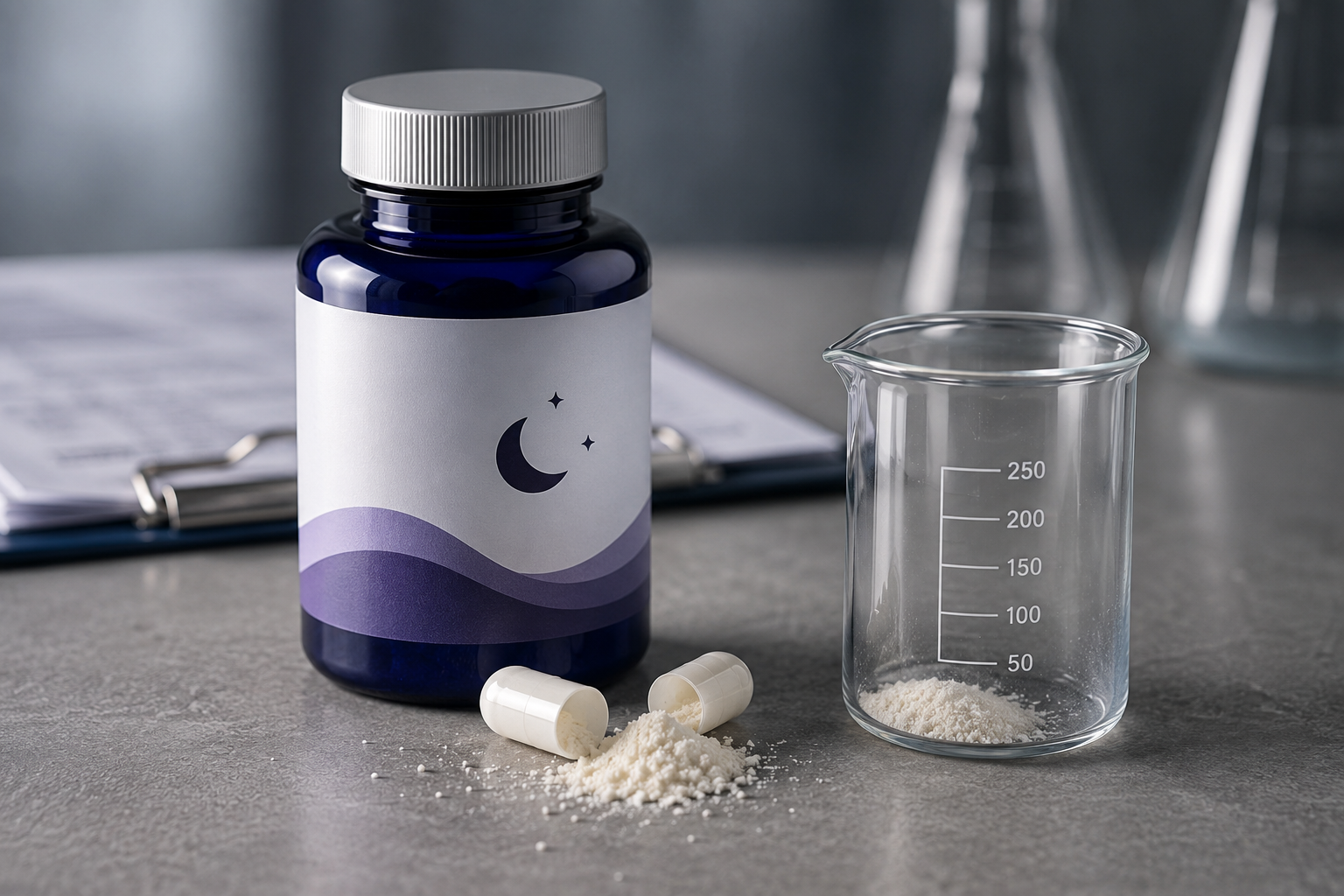
A search for unisom sleep aid can land you in a small but important product-name trap: Unisom is not one ingredient. This article is about Unisom SleepTabs, the tablets that contain doxylamine succinate 25 mg. It is not about Unisom SleepGels or SleepMelts, which use diphenhydramine instead.

For the right adult in the right situation, doxylamine can be a useful over-the-counter sleep aid. The label directions are narrow: adults and children 12 years and older take one 25 mg tablet 30 minutes before bedtime, with no more than one dose in 24 hours, and do not use it for more than two weeks unless directed by a doctor.[1] That is already most of the safety story. This is a short-term tool for occasional sleeplessness, not a nightly plan for ongoing insomnia.
The other half of the story is who should not treat it casually. Doxylamine is a first-generation antihistamine with sedating and anticholinergic effects. Those effects explain why it can make someone sleepy, but also why it can leave someone groggy, dry-mouthed, constipated, dizzy, or more vulnerable to confusion and falls in older age.[2]
The Short Answer
| Question | Practical answer |
|---|---|
| What ingredient is this about? | Doxylamine succinate 25 mg in Unisom SleepTabs, not diphenhydramine-based Unisom products. |
| What is it best suited for? | Occasional short-term sleeplessness in adults who can safely take sedating antihistamines. |
| How is it taken? | One 25 mg tablet 30 minutes before bedtime; no more than one dose per 24 hours.[1] |
| How long can it be used without medical advice? | The label says not to use for more than two weeks unless directed by a doctor.[1] |
| Who should be especially cautious? | Adults 65 and older, people with glaucoma, enlarged prostate, breathing problems such as asthma or COPD, and anyone taking other sedating or anticholinergic medicines.[2][3] |
| What if insomnia is persistent? | That points away from repeat OTC use and toward medical evaluation and insomnia treatment such as CBT-I. |
“Over the counter” means the drug is available without a prescription under applicable nonprescription-drug rules; it does not mean it is free of meaningful pharmacology. If that distinction feels fuzzy in the pharmacy aisle, this OTC sleep-aid regulatory explainer is worth reading alongside the product label.
Why Doxylamine Can Make You Sleepy
Doxylamine is a first-generation H1 antihistamine. Unlike some newer allergy medicines, it crosses the blood-brain barrier and blocks histamine activity at central H1 receptors. Histamine is one of the brain’s wake-promoting signals, so blocking those receptors can produce sedation.[2]

That mechanism is also why this does not feel like a gentle nudge for everyone. Doxylamine is not correcting the reason you are awake; it is dampening a wakefulness pathway. If the problem is a rough travel night, acute stress, a noisy week, or a temporary schedule disruption, that may be enough. If the problem is chronic insomnia, pain, untreated sleep apnea, restless legs, anxiety, depression, medication timing, alcohol use, or another medical driver, sedation may only cover the signal for a night.
The timing also matters. The SleepTabs label directs a dose 30 minutes before bedtime.[1] That is not a promise that every person will fall asleep in exactly that window; it is the use instruction for a sedating antihistamine. People often get into trouble when they take it too late, repeat a dose during the night, or forget that a drug taken for sleep can still be active when the alarm goes off.
The Half-Life Explains the Morning After
Doxylamine’s half-life is about 10 hours in adults, and reported as longer in older adults, roughly 12 to 15 hours.[2] A half-life is the time it takes for the amount of drug in the body to fall by about half. So if you take doxylamine at 11 p.m., it is not surprising if you still feel some effect the next morning.
This is the part that gets lost when sleep aids are judged only by whether they “worked.” A longer effect can help some people stay asleep, but it also raises the chance of next-day drowsiness, slower reaction time, dizziness, or a foggy start. That tradeoff is not a character flaw in the person taking it. It is built into the pharmacology.
The practical consequence is simple: do not take it unless you can devote a full night to sleep, do not combine it with alcohol or other sedating products unless a clinician has specifically cleared that combination, and be careful with driving or other tasks that require alertness the next morning. The label also tells people to avoid alcoholic drinks and to ask a doctor or pharmacist before use if they are taking sedatives or tranquilizers.[1]
What the Evidence Can and Cannot Promise
Unisom’s marketing has used a “fall asleep 33% faster” claim from a placebo-controlled study, but that should be read as a brand claim, not as a broad independent verdict on doxylamine for everyone with insomnia. Independent clinical data on doxylamine for insomnia is limited, and major sleep-medicine discussions of OTC antihistamines remain cautious because evidence for sustained benefit is thin while side effects are real.[4][5]
There is also a guideline nuance worth preserving. The American Academy of Sleep Medicine guideline is commonly summarized as not recommending OTC antihistamines for insomnia, but the specific recommendation in that guideline addresses diphenhydramine rather than naming doxylamine in the same way. That is not a secret endorsement of doxylamine. It means the strongest statement the evidence supports is narrower: doxylamine has a plausible sedating mechanism and an OTC label for occasional sleeplessness, but it does not have a robust independent trial base that makes it a good chronic-insomnia treatment.
A fair expectation is therefore modest. Doxylamine may help a suitable adult get through an occasional bad patch. It should not be treated as proof that the underlying sleep problem has been solved, especially if the same problem keeps returning.
How to Use Unisom SleepTabs Within the Label
- Use the doxylamine product only if the package says Unisom SleepTabs and lists doxylamine succinate 25 mg as the active ingredient.
- Take one 25 mg tablet 30 minutes before bedtime.[1]
- Do not take more than one dose in 24 hours.[1]
- Do not use it for more than two weeks unless directed by a doctor.[1]
- Do not use it in children under 12 years old.[1]
That two-week boundary is not decorative label language. If you are using a sleep aid night after night, the question has changed from “Can I get through tonight?” to “Why is sleep repeatedly not happening?” For a closer look at that line, see Can You Take Unisom SleepTabs Every Night?.
Who Should Avoid It or Ask First
The people most likely to be harmed by doxylamine are not necessarily the people most likely to notice the risk on the front of the box. The concern is anticholinergic burden: doxylamine can block acetylcholine-related activity as well as histamine-related activity, which is why side effects can include dry mouth, constipation, blurred vision, urinary problems, dizziness, and confusion.[2][3]
Adults 65 and older
Adults 65 and older deserve a much stricter threshold. The 2023 American Geriatrics Society Beers Criteria lists first-generation antihistamines as potentially inappropriate for older adults because of anticholinergic effects and risks such as confusion, dry mouth, constipation, and falls.[2] Doxylamine’s longer half-life in older adults makes the morning-after problem more predictable, not less.[2]
That does not mean every older adult who has ever taken a sedating antihistamine has been harmed. It means this is the wrong category to normalize as a casual sleep solution in later life. If you are choosing for yourself or helping a parent choose, start with the older-adult safety question, not the strongest-sounding product. This guide to sleep supplements and older-adult safety may help frame that conversation.
Glaucoma, enlarged prostate, and urination problems
The SleepTabs label tells people to ask a doctor before use if they have glaucoma or trouble urinating due to an enlarged prostate gland.[1] This is not fine print for rare edge cases. Anticholinergic effects can worsen narrow-angle glaucoma risk and urinary retention problems, so the same drug effect that dries the mouth can matter much more in the eyes and bladder.
Asthma, COPD, emphysema, or chronic bronchitis
The label also says to ask a doctor before use if you have a breathing problem such as emphysema or chronic bronchitis.[1] Cleveland Clinic similarly lists asthma and COPD among conditions that should be discussed before taking doxylamine.[3] The concern is not that every person with asthma will have a severe reaction; it is that sedating, drying medicines can be a poor fit for people with respiratory disease unless a clinician has looked at the full picture.
Other sedatives, alcohol, and overlapping sleep products
One of the easiest mistakes is stacking products that feel different because the packaging looks different: a nighttime cold medicine, an allergy pill, a sleep gel, a drink, and then a SleepTab. The body does not care that the labels came from different shelves. It sees overlapping sedation and, in some cases, overlapping anticholinergic load.
Before taking Unisom SleepTabs, check whether any other product already contains doxylamine, diphenhydramine, or another sedating antihistamine. The label specifically cautions against alcohol and tells people taking sedatives or tranquilizers to ask a doctor or pharmacist before use.[1]
Doxylamine, Diphenhydramine, Melatonin, or CBT-I?
This is not a contest where the strongest sleep aid wins. The better question is what kind of sleep problem you are trying to route.
- If you are comparing Unisom SleepTabs with diphenhydramine products, the comparison is mostly pharmacologic and safety-based, not based on a clean head-to-head insomnia trial. For that distinction, use this doxylamine vs. diphenhydramine safety comparison.
- If your issue is circadian timing, jet lag, or a shifted sleep schedule, melatonin may be a more relevant discussion than an antihistamine. This adult melatonin guide explains where it fits.
- If insomnia is persistent, conditioned, or tied to worry about sleep itself, cognitive behavioral therapy for insomnia is the better-established treatment path. Start with CBT-I explained.
The key distinction is occasional versus persistent. Occasional sleeplessness can sometimes be handled with a short-term OTC tool. Chronic or recurring insomnia should not be managed by rotating boxes in the sleep-aid aisle.
When a Sleep Aid Is No Longer the Right Question
The Unisom SleepTabs label says to stop use and ask a doctor if sleeplessness persists continuously for more than two weeks.[1] That is the cleanest cutoff a tired person gets, and it is worth taking literally.
You should also move toward evaluation sooner if sleeplessness comes with loud snoring or gasping, morning headaches, restless legs, new or worsening mood symptoms, pain, medication changes, heavy alcohol use, pregnancy, or daytime sleepiness that affects driving or work. Those situations are not failures of willpower, and they are not best solved by increasing antihistamine exposure.
If you are unsure whether your sleep problem has crossed from a bad patch into insomnia disorder territory, this insomnia FAQ gives a more useful starting point than another product comparison.
A Practical Bottom Line
Unisom SleepTabs can be a reasonable short-term option for some adults with occasional sleeplessness when used exactly as labeled: one 25 mg doxylamine succinate tablet 30 minutes before bedtime, no more than once in 24 hours, and not longer than two weeks without medical advice.[1]
Its usefulness comes from the same source as its drawbacks. Doxylamine reaches the brain, blocks central H1 receptors, and has a long enough half-life to make both sleepiness and next-day grogginess understandable.[2] For adults 65 and older, people with glaucoma or prostate-related urination problems, people with certain breathing conditions, and anyone combining sedating medicines, the risk-benefit balance changes quickly.[1][2][3]
If the problem is occasional, simple, and short-lived, Unisom SleepTabs may be a bounded tool. If sleep trouble is persistent, nightly, medically complicated, or happening in an older adult, the better next step is not a stronger OTC habit. It is a different evaluation path.
References
- UNISOM SLEEPTABS, DailyMed
- Doxylamine, StatPearls
- Doxylamine Tablets, Cleveland Clinic
- Are drugstore sleep aids safe?, Harvard Health
- Sleep aids: Understand options, Mayo Clinic


Comments
Join the discussion with an anonymous comment.