
If you woke up after the World Cup final feeling oddly ruined, the kickoff time probably is not the clean explanation. Spain vs. Argentina started at 3pm ET, 8pm BST, 9pm CEST, 12:30am IST, and 4:30am AEST; for the United States, the UK, and much of Europe, that was one of the gentler viewing windows of the whole tournament.[1]
That is what makes the morning-after fatigue so irritating. A lot of people did the sensible thing on final night. They watched at a normal hour, ate at a reasonable time, maybe resisted the extra beer or the post-match doomscroll. Then they still woke up heavy-eyed, foggy, and vaguely betrayed by their own body.
The better place to look is not the final. It is the five weeks that came before it: the “just one more match” nights, the late caffeine, the group chat that stayed alive after full time, the bedtime routine that quietly stopped being a routine at all.
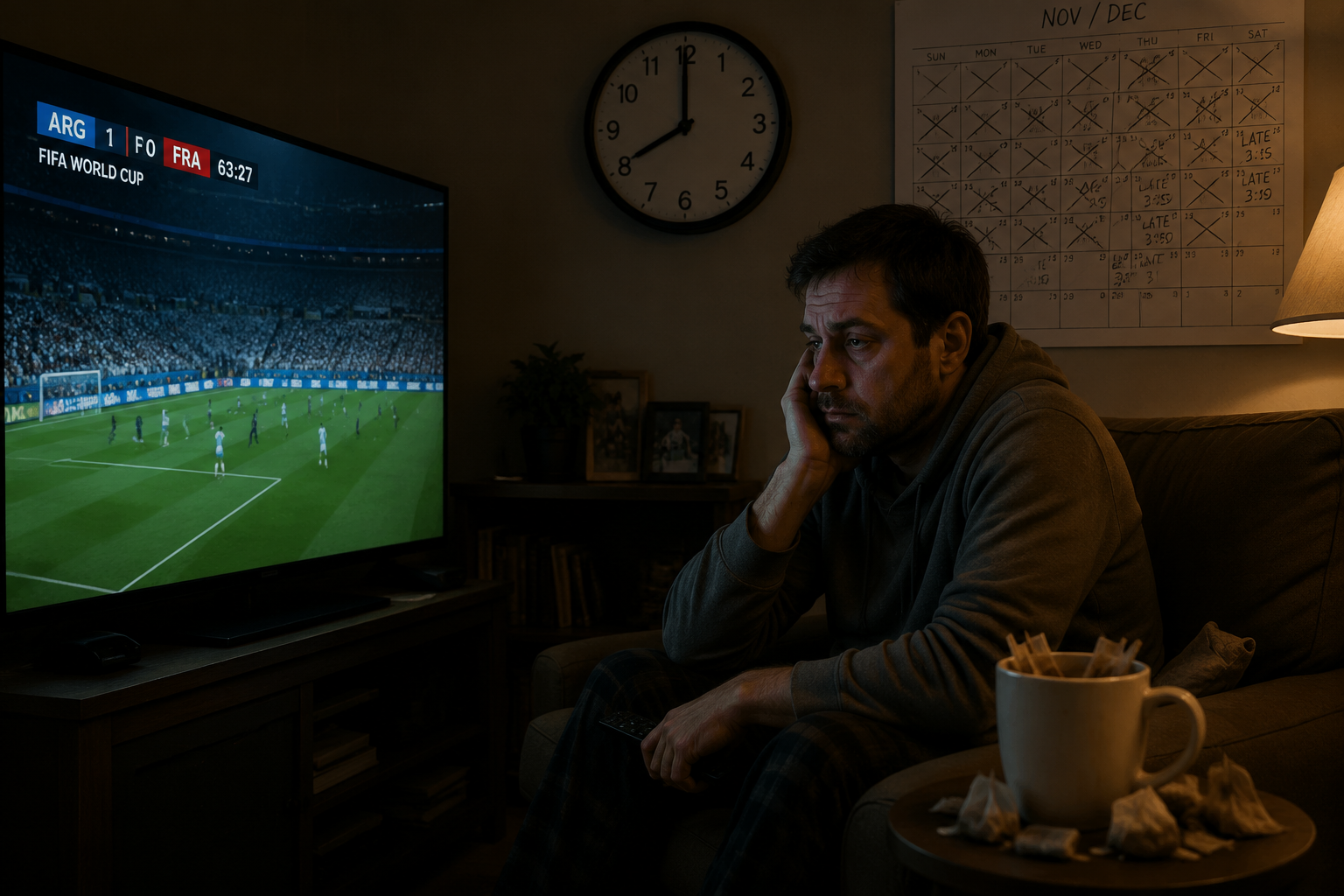
The Final Was Not the Main Sleep Villain
For many Western viewers, the final landed in a forgiving slot. It could still disrupt an evening, especially if the match ran emotionally hot or celebrations carried on, but it did not force most US, UK, or central European fans into the middle-of-the-night bargain that defined so much of the tournament.
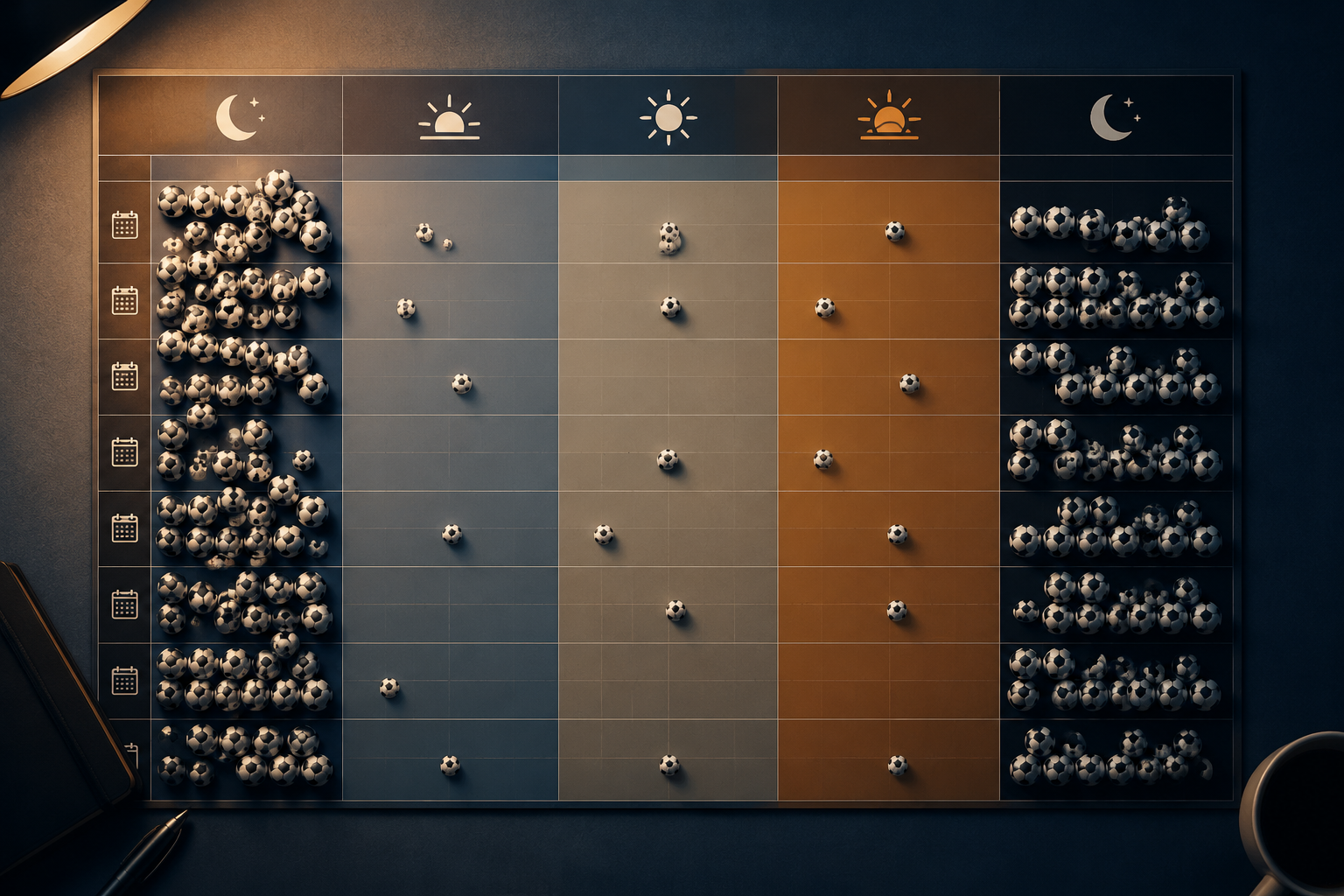
The group stage did that work. BBC Sport reported that 35 of the 72 group-stage matches kicked off between midnight and 5am BST.[2] That is not one bad night. That is a schedule with enough late and early fixtures to keep tugging people out of a stable rhythm before the knockout rounds even started.
LiveScore’s group-stage sleep-loss estimates put a more human shape on it: Algeria fans were estimated to lose 8.25 hours of sleep during the group stage alone, Scotland fans 7.75 hours, and England fans 2.5 hours.[3] Those are not tournament-wide totals, and they do not include whatever happened in the knockout rounds. They are just an early bill.
There was also a theatrical upper limit floating around the tournament: a UK viewer who watched all 104 matches could, in theory, lose up to 275 hours of sleep.[4] That number is useful only if treated as a ceiling, not as a portrait of an ordinary fan. Most people did not watch everything. But the existence of that ceiling says something about the structure: the schedule made sleep disruption available almost every day for anyone determined enough, anxious enough, or loyal enough to keep showing up.
Why You May Have Underestimated the Damage
Sleep debt rarely announces itself honestly. You do not always feel each lost hour as a neat unit of tiredness the next morning. More often, the signs scatter: slower replies, more sugar cravings, a shorter fuse, a commute that feels strangely demanding, a workday held together by caffeine and habit.
That mismatch is the most revealing part of the available sleep-quality evidence. A medRxiv preprint published in 2026, based on viewers of the 2022 World Cup, found that 81.3% of World Cup viewers had clinically poor scores on the Pittsburgh Sleep Quality Index, while only 9% perceived that their sleep had been affected.[5]
That study should be handled carefully. It was not a 2026 World Cup study, and its population and time-zone context may not map perfectly onto US, UK, or European viewers this year. It does not prove that exactly 81.3% of 2026 fans slept poorly. What it does show, usefully and uncomfortably, is that fans can experience measurable sleep disruption while barely recognizing it as sleep disruption at all.[5]
That makes sense if you watched the tournament from inside ordinary life. A late match does not always look like a sleep decision. It looks like staying up with friends. It looks like waiting for the second half because the first was tense. It looks like checking highlights after the final whistle because the group chat is still awake. Then it looks like getting into bed with your nervous system still lit up, as if bedtime were just a location rather than a process.
The Dreams survey added a domestic version of the same story in the UK: fans were estimated to lose 120 million hours of sleep collectively, 1 in 4 couples slept separately during the tournament, and 30% abandoned bedtime routines.[6] The collective number is broad and survey-based, so it should not be mistaken for a medical measurement. The routine detail, though, is hard to shrug off. A tournament does not need to steal whole nights to change how people sleep. It can simply make the normal pre-sleep sequence disappear.
The Problem Was Repetition, Not One Late Night
One late match is usually manageable. You move bedtime, sleep in if life allows, and feel slightly off for a day. The World Cup problem is that the disruption kept returning before sleep had properly stabilized.
The Sleep Charity describes sleep deprivation as affecting immune function, mood, cognition, and reaction times, with effects that compound when the pattern continues.[7] That compounding matters more than the drama of any single kickoff. A fan can lose a modest amount of sleep on Monday, cut the wind-down short on Tuesday, push caffeine too late on Wednesday, nap badly on Thursday, and still tell themselves they are basically fine because no individual choice felt outrageous.
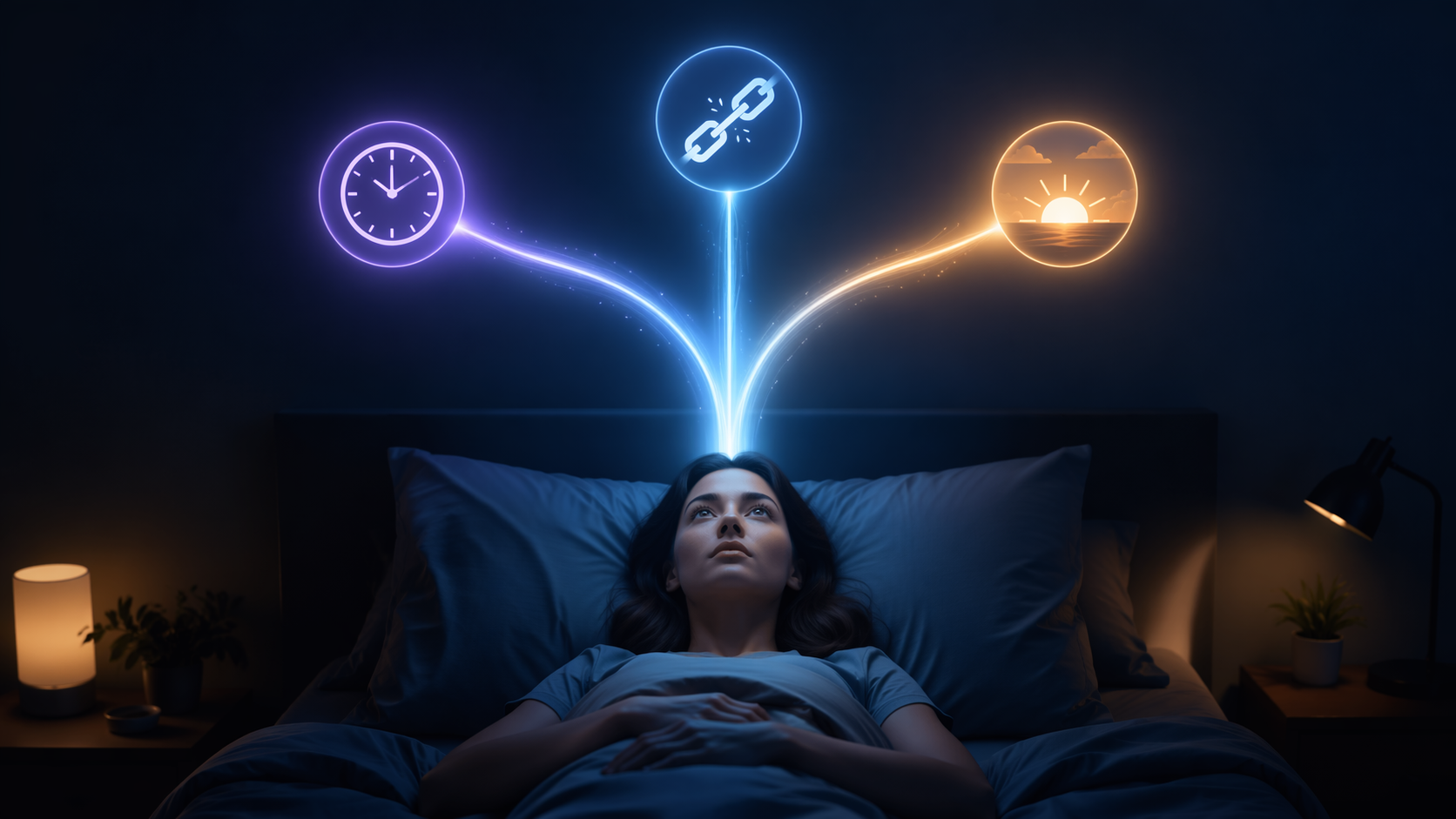
This is why final night can look innocent and still be followed by a lousy morning. The final did not need to be brutal. It only had to arrive after weeks in which your sleep timing, light exposure, food timing, caffeine timing, emotional arousal, and bedtime cues had been repeatedly nudged out of place.
There is also a psychological trap here. Football provides a reason for the disruption, so the disruption feels temporary even while it is happening. You are not “becoming a bad sleeper”; you are watching a tournament. But the body does not score intent. It responds to timing, consistency, stimulation, and recovery.
One Long Sleep-In Will Not Repay Five Weeks
The most tempting post-final plan is also the one most likely to disappoint: sleep as long as possible once, then expect to feel normal. A single long night can help. It just may not be enough if the tournament changed your schedule repeatedly.
Sleep debt recovery is usually a multi-night process because the issue is not only lost time in bed. It is also the stability of the rhythm around sleep. If you want the deeper mechanics, this guide to how many nights it takes to recover sleep debt goes further into why different kinds of sleep loss do not resolve at the same speed.
For the next several days, the goal is boring on purpose: make sleep predictable again.
A Post-Tournament Sleep Reset
Start with timing. Pick a wake time you can actually keep for the next few days, including the weekend if possible, and let bedtime move earlier rather than letting the morning drift later and later. After a tournament, sleeping in for hours can feel medicinal, but it can also keep your body clock loose.
Then rebuild the hour before bed. This is where a lot of fans quietly lost ground: not necessarily in the match itself, but in the missing decompression afterward. Replace the post-match pattern with a repeatable sequence: dimmer lights, no tactical arguments in bed, a low-stimulation activity, and the same basic order each night. For a fuller version, use these sleep hygiene fundamentals and evidence-based bedtime routine as the template rather than trying to improvise while tired.
| Reset move | What it is for |
|---|---|
| Keep a consistent wake time | Re-anchors the body clock after weeks of irregular viewing |
| Move bedtime earlier gradually | Adds recovery sleep without turning mornings chaotic |
| Restore a wind-down routine | Gives the brain a clear transition out of tournament mode |
| Stop caffeine at least six hours before bed | Reduces delayed sleep onset and lighter sleep |
| Use a short early-afternoon nap only when needed | Improves alertness without replacing nighttime recovery |
Caffeine deserves special attention because tournament fatigue often encourages exactly the wrong timing. A coffee in the morning is one thing. A late-afternoon rescue coffee after several short nights can push sleep onset later and reduce sleep quality; the sleep strategy sources place the caution window at six hours before bedtime.[8]
If you are genuinely dragging, use a nap like a tool, not an escape hatch. A 20-minute power nap during the body’s early-afternoon dip, around 1pm to 3pm, can improve alertness without the groggy sleep inertia that comes from longer naps.[9] That narrow use matters. A long late nap after work may feel like relief, but it can steal sleep pressure from the night you are trying to repair.
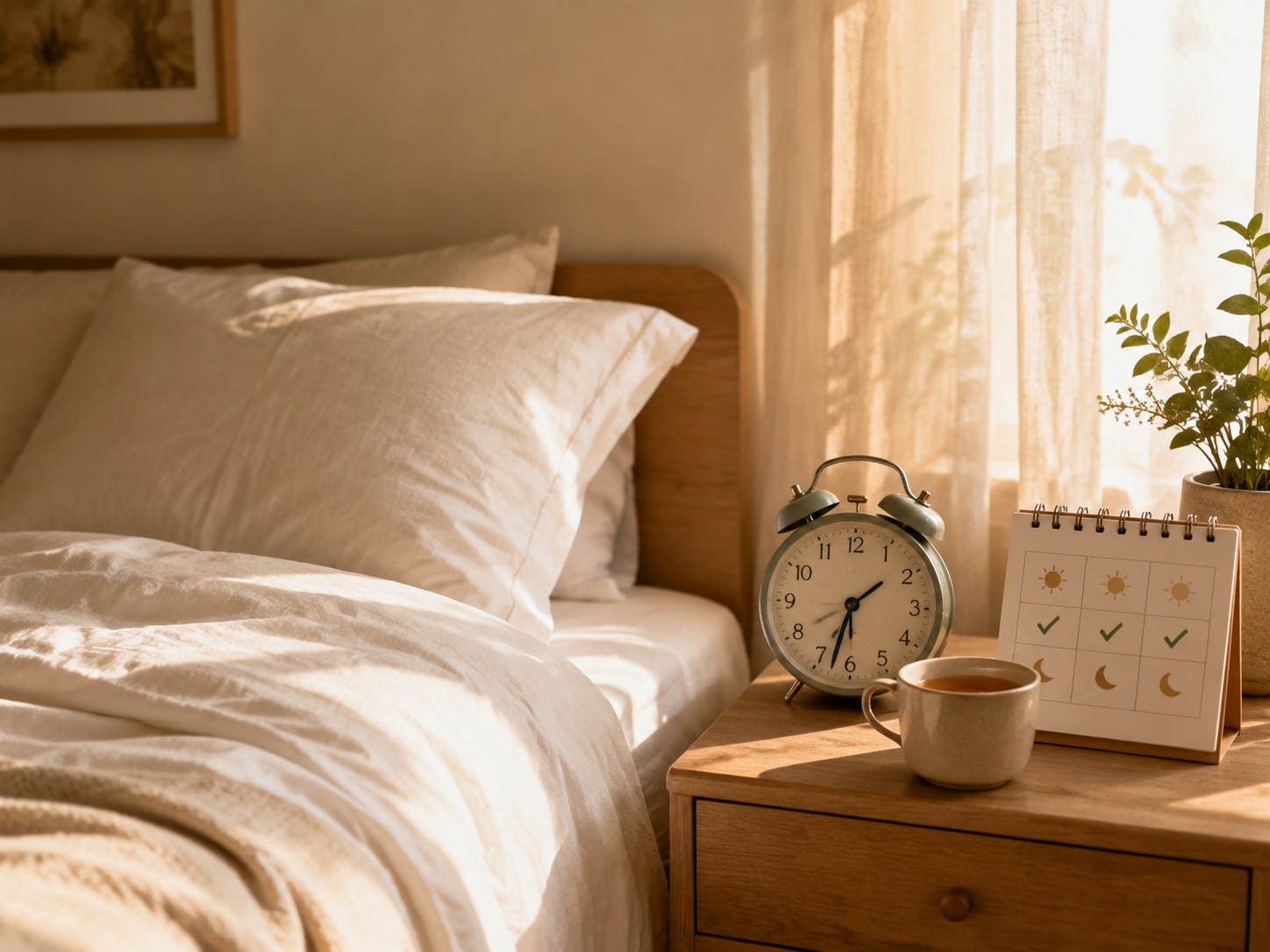
What to Do Differently for the Next Late Match
Split sleep is better treated as a match-day tactic than as a post-tournament cure. If a future kickoff lands deep into the night, a planned earlier sleep block before the match and a second sleep block afterward can be more realistic than pretending you will watch at 2am and still operate normally the next day. Sleep Foundation describes biphasic sleep as a pattern with two sleep periods within a day, and World Cup sleep advice has pointed to this kind of split strategy for late-night viewing.[10][8]
That does not mean split sleep is automatically ideal, or that it suits everyone. It is simply less chaotic than letting a late match erase the night entirely. The key difference is planning. You decide the sleep blocks before the game, not afterward when the adrenaline is high and the group chat has found a second wind.
For right now, though, the task is simpler. Do not keep relitigating the final’s start time as if one kickoff explains everything. For many fans, final night was relatively kind. It just arrived after a tournament that had already trained the body into later nights, thinner routines, badly timed caffeine, and underestimated sleep debt.
If the final looked reasonable on paper and you still feel depleted, that is not mysterious, and it is not weakness. It is the accumulated bill from the nights before. The way out is not one heroic sleep-in; it is several consistent days that give your body the same message again and again: the tournament is over, and sleep is allowed to be ordinary now.
References
- World Cup final start time: Spain vs Argentina, USA Today, July 17, 2026, https://www.usatoday.com/story/sports/soccer/worldcup/2026/07/17/world-cup-final-start-time-spain-vs-argentina/90954113007/
- World Cup 2026 fixture schedule article, BBC Sport, Dec 2025, https://www.bbc.com/sport/football/articles/cy8j5geermdo
- LiveScore World Cup 2026 Group Stage Sleep Loss Table: Which Fans Face the Most Sleepless Nights, LBBOnline, June 2026, https://lbbonline.com/news/LiveScore-World-Cup-2026-Group-Stage-Sleep-Loss-Table-Which-Fans-Face-the-Most-Sleepless-Nights
- The World Cup could make you lose 275 hours of sleep – 5 tips for better sleep after late-night matches, T3, https://www.t3.com/home-living/sleep/the-world-cup-could-make-you-lose-275-hours-of-sleep-5-tips-for-better-sleep-after-late-night-matches
- medRxiv World Cup sleep study, medRxiv, https://www.medrxiv.org/content/10.64898/2026.06.07.26355072v1
- Sleep Well World Cup, Dreams, May 2026, https://www.dreams.co.uk/sleep-matters-club/sleep-well-world-cup
- The World Cup Sleep Tax: How Fans Can Reduce Sleep Deprivation Without Missing Out, The Sleep Charity, https://thesleepcharity.org.uk/the-world-cup-sleep-tax-how-fans-can-reduce-sleep-deprivation-without-missing-out/
- 4 sleep strategies to keep you awake during late-night World Cup matches, GQ, https://www.gq-magazine.co.uk/article/4-sleep-strategies-to-keep-you-awake-during-late-night-world-cup-matches
- Survive late-night World Cup, Good Housekeeping, https://www.goodhousekeeping.com/uk/health/a71533985/survive-late-night-world-cup/
- Biphasic Sleep, Sleep Foundation, https://www.sleepfoundation.org/how-sleep-works/biphasic-sleep
Comments
Join the discussion with an anonymous comment.