
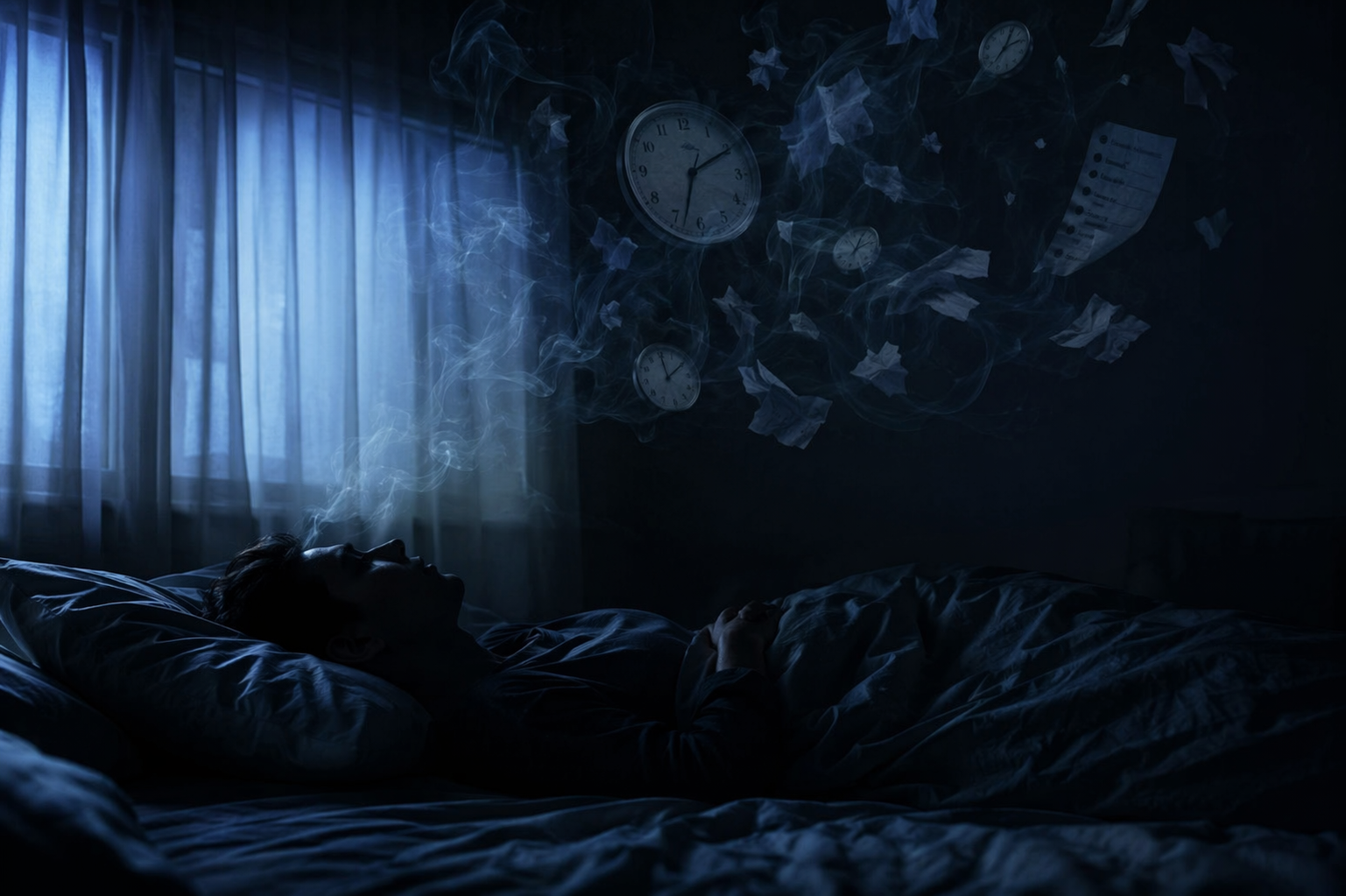
You get back to the hotel after the match with your shirt still damp, your ears still ringing, and your body behaving as if it has another half to play. Downstairs, the street has not agreed that the night is over. A horn goes off, then a chant, then the metallic clatter of someone dragging luggage across tile. The room is too warm. The curtains leak light around the edges. The pillows have the wrong height, the wrong smell, the wrong everything.
That is the actual problem behind most World Cup host-city hotel sleep advice: the hotel room is not merely unfamiliar. During a World Cup, it is unfamiliar inside a city that has been temporarily rewired for noise, heat, late meals, late transit, limited room inventory, and people who are absolutely not trying to help you fall asleep.
The first night in a new place already has a measurable sleep penalty. Research on the “first-night effect” has found that one side of the brain, especially the left hemisphere, can remain more vigilant in unfamiliar surroundings, as if part of the sleeping brain is still keeping watch for danger.[1] That helps explain why a perfectly decent hotel room can still feel wrong at 2 a.m.
The baseline is not great even before tournament conditions enter the room. Dr. Rebecca Robbins and colleagues have reported that only 1 in 3 travelers is satisfied with their sleep on the road.[2] Common hotel sleep complaints include pillow or mattress quality, high room temperature, street noise, and unwanted light from windows.[3] Those are not minor details during a World Cup trip. They are the exact parts of the room most likely to be strained.
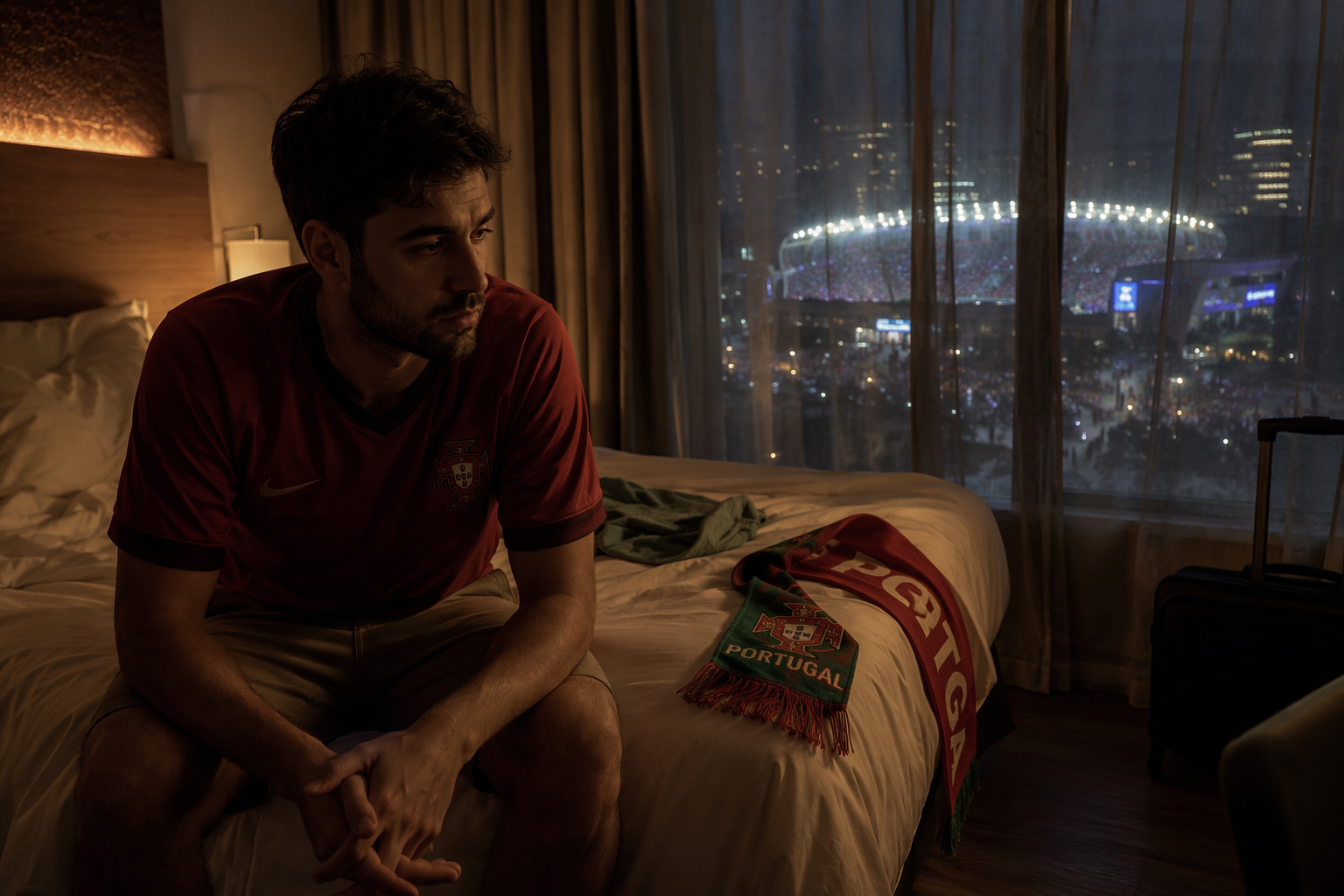
World Cup Noise Is Not Normal Hotel Noise
There is ordinary travel noise: elevators, housekeeping carts, doors that slam because no hotel door has ever learned restraint. Then there is tournament noise.
During the 2026 tournament, Mexico fans gathered outside England’s JW Marriott hotel in Mexico City with loudspeakers, horns, and fireworks ahead of a round-of-16 match.[4] England’s team had reportedly booked 15 different hotels across Mexico City to make it harder for fans to identify the exact location.[4] A traveling fan cannot scatter decoy bookings across a city. But the incident is useful because it makes the scale clear: in a World Cup host city, noise may be intentional, collective, mobile, and timed exactly when you need the street to calm down.
Hotel choice is also constrained. Industry reporting before the tournament pointed to room crunches across host cities, which is the dull but important reason many fans ended up in whatever was still available rather than the quietest building in the quietest neighborhood.[5] So the plan cannot be “book a better hotel” once you are already holding a key card. The plan has to be: reduce the number of ways this specific room can keep you awake.
Before Arrival, Remove Decisions From the Night Itself
The worst time to solve a hotel sleep problem is after a late match, when you are hot, overstimulated, and standing in the dark trying to wedge a towel under a door. Before arrival, the goal is not to create a home bedroom. It is to bring enough familiar cues and backup tools that the room has fewer surprises.
| Pressure point | What to do before arrival | Why it matters |
|---|---|---|
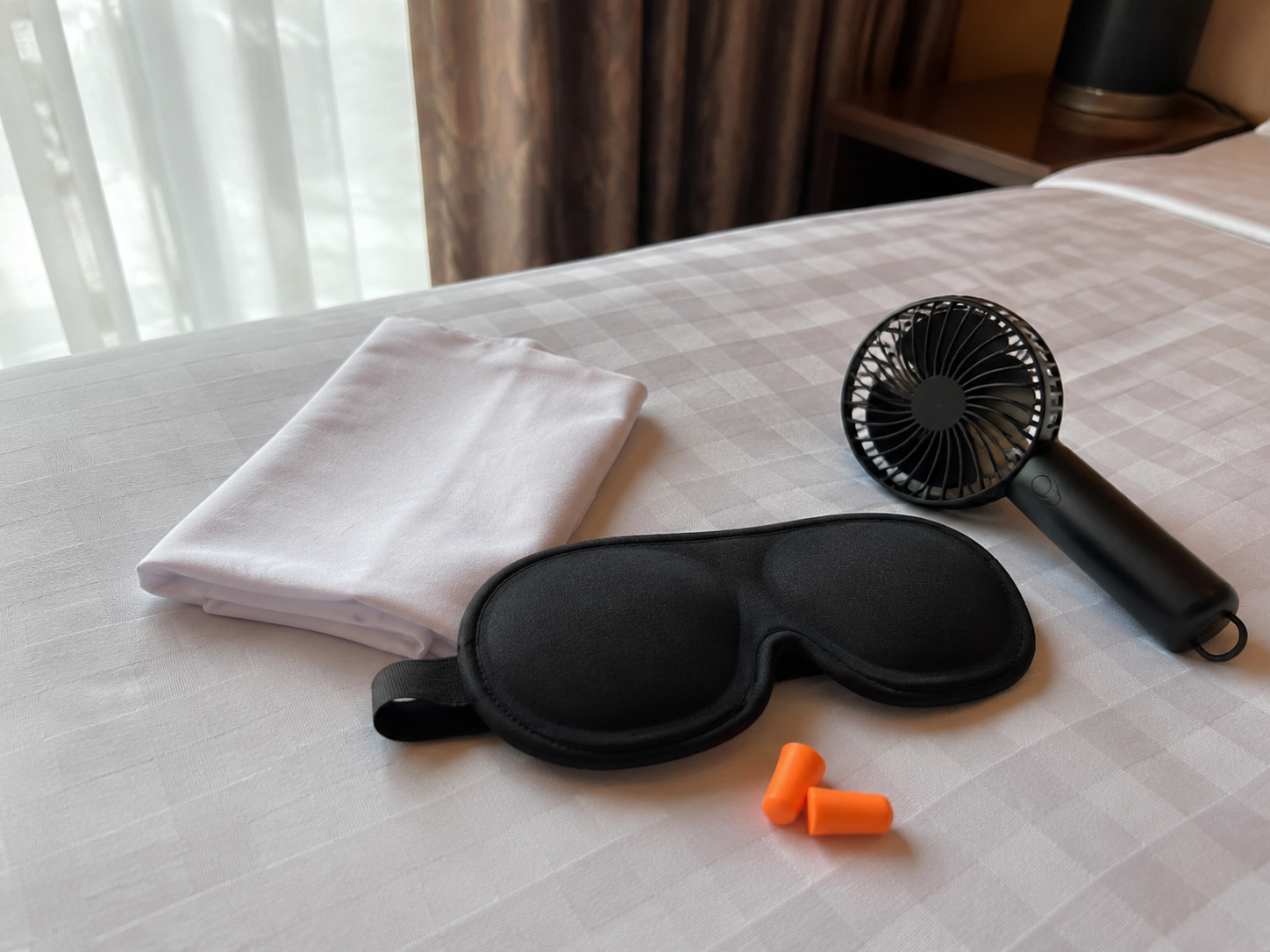
| Unfamiliar bedding | Pack a clean pillowcase from home, or a compact travel pillow if you are sensitive to pillow height. | Pillow complaints are strongly tied to poor hotel sleep. |
| Light leaks | Pack a contoured eye mask that seals around the nose and cheekbones. | Thin curtains and bright city lighting are hard to fix at midnight. |
| Street and hallway noise | Bring earplugs plus a backup sound source, such as a white-noise app or small fan where practical. | Tournament noise can last well beyond normal bedtime. |
| Warm room | Check whether the room has controllable air conditioning; consider a small travel fan if luggage space and hotel rules allow. | Sleep is easier in a cooler room than in a stuffy one. |
| Bad room placement | Message the hotel before arrival and ask for a room away from elevators, ice machines, bars, street-facing lower floors, and connecting doors. | Front desks can sometimes help before the hotel is fully checked in. |
The pillowcase is not sentimental packing. In one hotel-sleep analysis discussed by Frommer’s, guests who complained about pillows were three times more likely to report poor sleep.[6] A familiar pillowcase cannot correct a sagging mattress or a terrible pillow, but it gives your face, smell memory, and skin one thing that does not feel borrowed.
For sound, bring two layers rather than one. Foam earplugs are useful for intermittent hallway noise, but some people dislike the sealed-in feeling or find that plugs make internal sounds more noticeable. A white-noise app or compact fan can mask changes in sound: the elevator ding, the chant that comes in waves, the truck backing up outside at dawn. If you use a fan for both airflow and sound masking, the evidence is more nuanced than fan marketing usually admits; our guide to sleeping with a fan on covers the trade-offs.
Ask for Room Placement Before the Lobby Gets Crowded
A room request works best when it is specific and made early. “Quiet room, please” is too vague in an overbooked host city. Ask for a room away from elevators, vending areas, ice machines, bars, event spaces, street-facing lower floors, and connecting doors. If the hotel has interior-facing rooms, ask whether one is available. If the hotel has rooms above a lobby bar or restaurant, ask not to be placed there.
The request should be polite but not passive. Front desk staff cannot invent empty rooms, and by match night they may be absorbing complaints from half the building. But they often know which floor had the loud group last night, which side faces the fan route, and which rooms sit beside the service elevator. That local knowledge is more useful than a generic star rating.
If you arrive and the room is bad, inspect before unpacking: window direction, curtain coverage, thermostat control, mechanical hum, hallway traffic, connecting door, and distance from elevator. If something is obviously wrong, call immediately. A move is more likely before you have showered, spread gear across the room, and joined the queue of late-night complaints.
Reset the Room Before You Leave for the Match
Do the room reset before the match, not after. After the match you will negotiate poorly with curtains, thermostats, and tiny hotel lamps. Before leaving, turn the room into the place you want to return to.
Temperature
A cool room supports sleep onset. Sleep Foundation places the optimal bedroom temperature range at 60–67°F, while Robbins has cited 65–68°F as a useful hotel-room target.[3][2] In a summer host city, with a room that may have been sitting warm all afternoon, the practical move is to start cooling early.
- Set the thermostat before you leave, if the hotel system allows it.
- Close curtains during the day to reduce solar heat gain.
- Ask the front desk for a fan before other guests do, especially in older hotels with weak climate control.
- Avoid drying wet clothes over vents if it blocks airflow.
- If the room will not cool, prioritize airflow across your body rather than chasing a perfect thermostat number.
Temperature is one of the hotel variables worth being fussy about because heat does not just feel uncomfortable; it keeps the body from dropping toward sleep. For a deeper breakdown of how temperature, light, and noise interact, see our sleep environment optimization guide.
Light
Hotel curtains often fail at the edges and middle seam. Check this while the room is still light enough to fix. Use clips, hangers, or the trouser clamp from the closet to close the center gap. Roll a towel and place it along the bottom of the door if hallway light spills in. Turn alarm clocks away from the bed, cover standby lights, and check whether the bathroom has a motion sensor that will flash on if someone gets up.
The eye mask is the backup, not the whole plan. A good mask helps when the curtains lose, but it works better if the room is already dim. Try it before the trip. A mask that presses on the eyelids, leaks at the nose, or tangles in hair is not going to become charming at 1:40 a.m.
Noise
Listen before you unpack. Stand near the window, then near the door, then near any connecting door. If one sound source is dominant, block or mask that source first. A towel at the door helps with hallway light and may soften some corridor noise. It will not defeat fireworks. Earplugs may help with sharp interruptions. White noise may help with changing noise. If the window seal is poor and the street is roaring, the front desk is still your best tool.
When calling, name the problem plainly: “The room faces active street celebrations and I can hear horns and speakers through the window. Is there any interior-facing room or higher-floor room available?” That gives staff something operational to search for. If no move is available, ask whether they have earplugs, a fan, or another room category opening the next day.
Bedding
Hotel bedding problems split into two types: fixable and not fixable. Pillow height is sometimes fixable with extra pillows, a folded towel, or your own pillowcase over the least offensive option. Mattress quality is less fixable. If the bed sags badly, ask for a room move early. If that fails, use what control remains: stable temperature, darkness, sound masking, and a consistent wind-down routine.
After a Late Match, Cool the Body Before You Argue With the Brain
The post-match problem is not only the clock. It is heat, adrenaline, alcohol for some travelers, late food, crowded transit, and the irresistible urge to replay every chance and call from the match. A fan-zone recap in the room can easily become a second event.
- Start cooling on the way back: loosen layers, drink water, and avoid turning the walk or ride into another loud celebration if sleep matters that night.
- Keep the room dim when you enter. Use one low lamp or the bathroom light with the door cracked instead of every overhead light.
- Take a brief warm shower if it helps you transition, then let the room and airflow cool you afterward.
- Put the phone on a hard stop: check transit, alarms, and essential messages, then stop feeding the match back into your nervous system.
- Eat lightly if you need food, but do not turn the room into a late dinner table unless you have accepted a later sleep time.
- Protect the next available sleep window rather than chasing your normal bedtime.
This is where travel advice often gets too tidy. If kickoff, transit, and celebration have pushed your sleep opportunity shorter, you may not be able to manufacture a full normal night. The useful move is to stop the night from getting worse: cool down, dim down, quiet down, and make the room boring as quickly as you can.
If you crossed time zones for the tournament, do not mix every strategy into one exhausted night. Handle the basics first: morning light exposure, consistent wake time, and sane caffeine timing. For a fuller plan, our guide to preventing jet lag on a new flight route goes deeper.
When the Hotel Cannot Be Fixed
Some rooms are simply bad. The air conditioner rattles but does not cool. The window faces a celebration route. The blackout curtain is more decorative than functional. The mattress has a valley. Preparation helps, but it does not give you building-engineering powers.
In that case, triage. Fix the fastest arousal triggers first: light in your eyes, sudden noise, heat around your body, and phone stimulation. If the room cannot become quiet, make it more constant. If it cannot become cold, make it less stagnant. If the bed cannot become comfortable, make the rest of the room less hostile to sleep.
The next morning, ask again. A room that was impossible to move you into at midnight may open after checkout. Be specific about what failed: street-facing noise, broken temperature control, connecting-door noise, elevator traffic. If the hotel cannot move you, ask for practical supplies rather than compensation first: fan, extra pillows, clips for curtains, earplugs, or maintenance for the thermostat.
The win is not making a World Cup hotel feel like home. The win is making an overloaded, overheated, noisy room less damaging for the hours you do have. That is enough to change the next day: fewer mistakes on transit, less irritability in lines, more patience with the city, and more capacity to enjoy the reason you came.
References
- The 'first-night effect': why it's hard to sleep when you're somewhere new — The Conversation
- The science of getting a good night's sleep in hotels — National Geographic
- How to Get a Good Night's Sleep in a Hotel — Sleep Foundation
- How World Cup teams cope with travel, lack of sleep and accumulated fatigue — The Athletic, June 28, 2026
- World Cup 2026 Poses Hotel Room Crunch Across Host Cities — Hotel News Resource
- How to Sleep Better in a Hotel: Advice from Scientists — Frommer's

Comments
Join the discussion with an anonymous comment.