
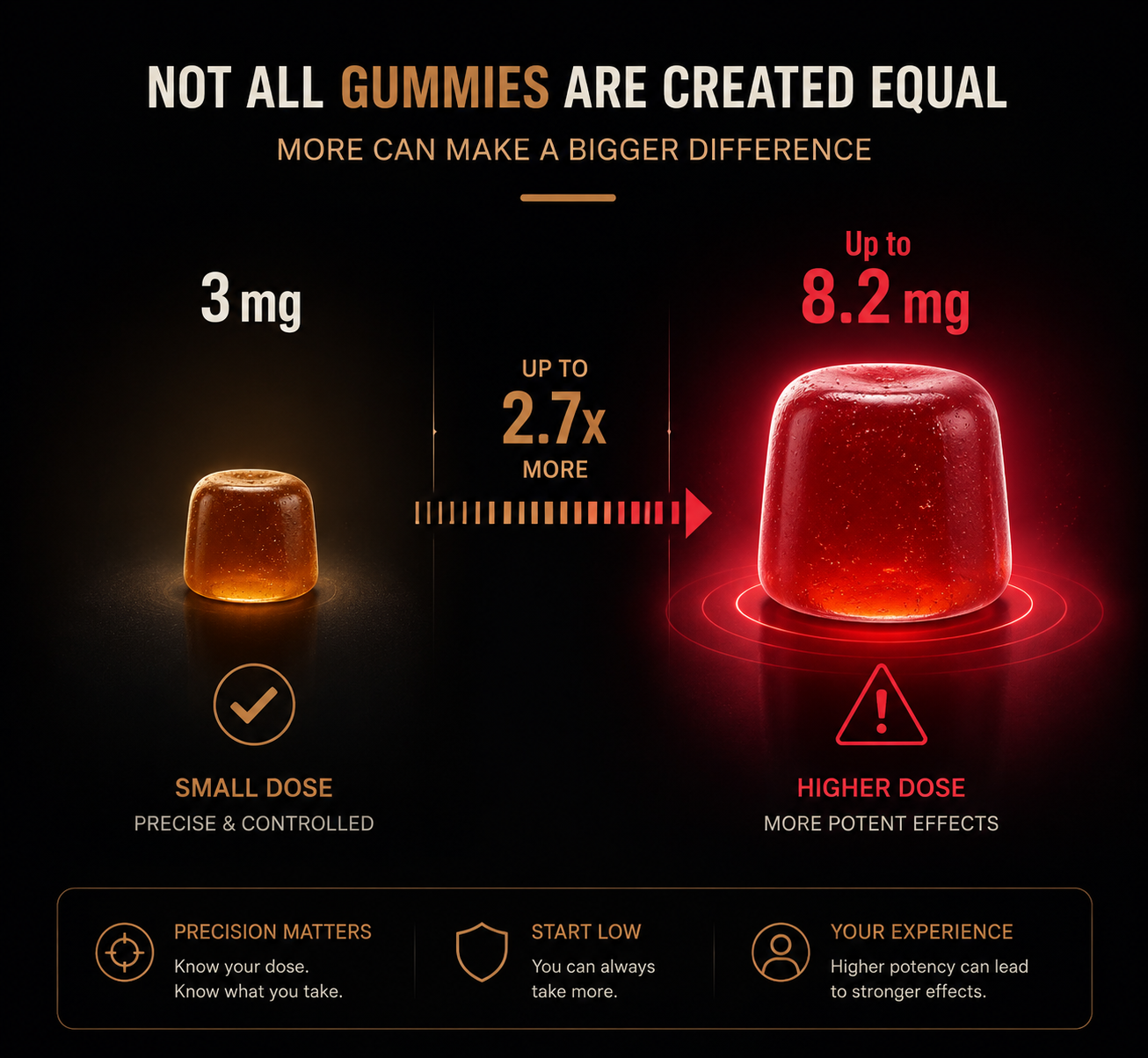
The question with Olly Sleep Gummies is not whether the front of the bottle sounds calming. It is whether a serving labeled as 3 mg of melatonin actually gives you 3 mg. In a proposed class action filed in California, plaintiff-commissioned LC-MS testing allegedly found that Olly melatonin products contained 165% to 274% of their labeled melatonin content. For a product labeled at 3 mg per serving, that would put the real dose somewhere from about 4.95 mg to 8.22 mg if those allegations reflect the gummies a consumer buys. [1]
That is not a tiny rounding error on a Supplement Facts panel. It is the difference between taking the dose you planned and taking a dose that may feel like too much, especially if you are sensitive to melatonin, using other sedating products, or trying to wake up clearly for work, caregiving, or driving.
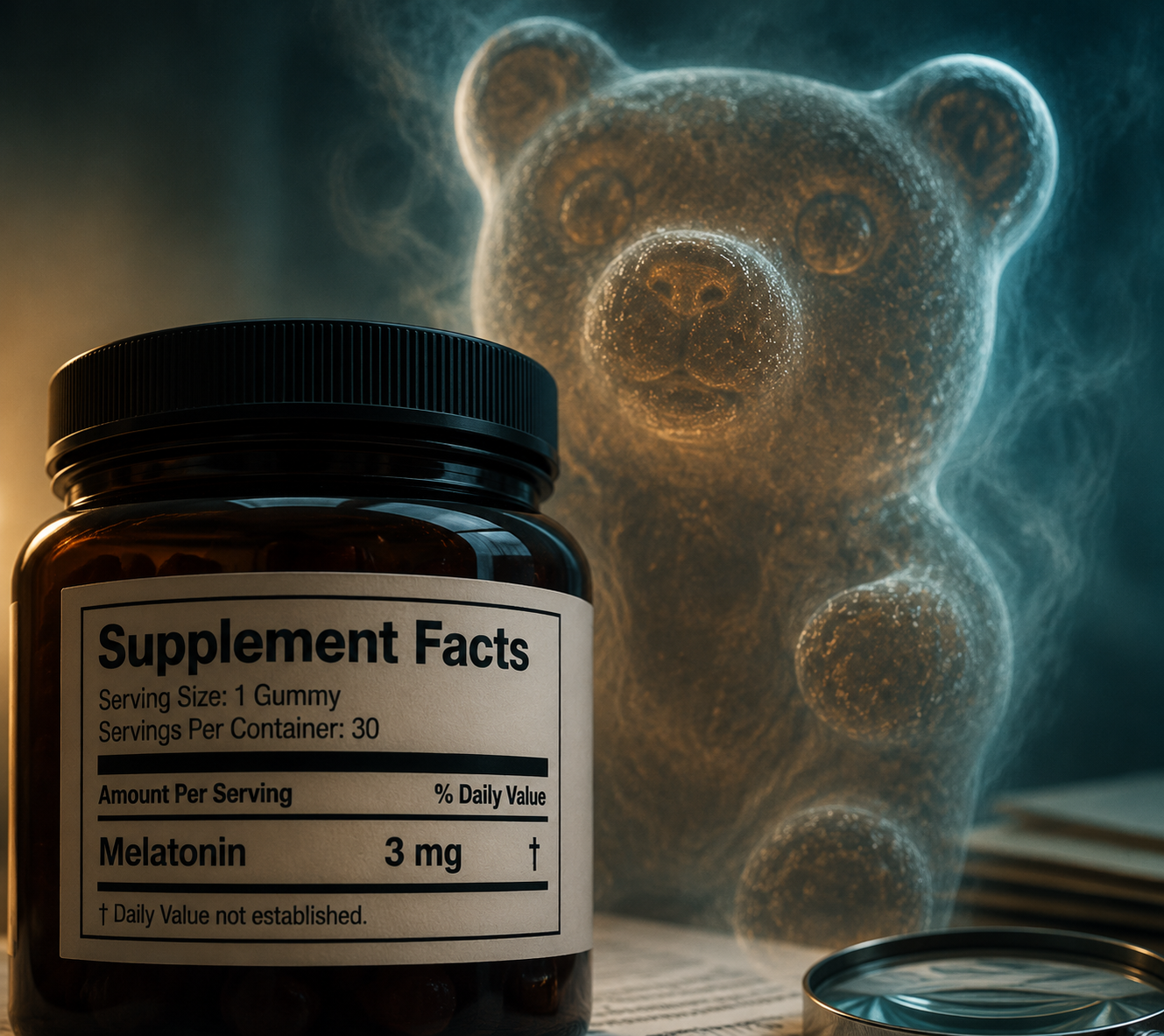
What the Olly lawsuit alleges
The lawsuit, Case 3:22-cv-03760, was filed in June 2022 in California and names several Olly melatonin products, including Olly Sleep, Olly Sleep Extra Strength, Olly Immunity Sleep, and Olly Kids Sleep. The central allegation is straightforward: independent laboratory testing commissioned for the plaintiffs found substantially more melatonin than the labels promised. The reported range across the tested Olly products was 165% to 274% of labeled content. [1]
| Label claim | Alleged tested range | What that could mean for a 3 mg serving |
|---|---|---|
| 100% of label | 3 mg | The dose the consumer expects |
| 165% of label | 4.95 mg | About 2 mg more than expected |
| 274% of label | 8.22 mg | Almost three times the stated dose |
Those numbers matter because many people do not buy melatonin the way they buy a multivitamin. They take it at night, near bedtime, when the intended effect is noticeable. If the dose is higher than expected, the consequence is not an abstract labeling concern. It may show up the next morning as fogginess, dizziness, headache, or daytime drowsiness.
The legal status also matters. A complaint is not a court finding, and plaintiff-commissioned testing is not the same thing as a final judgment or an admission by the company. The lawsuit gives consumers a product-specific reason to look closely at Olly Sleep Gummies, but it does not prove that every bottle on the shelf today contains the same excess amount.
The JAMA study makes this bigger than one brand
The Olly allegations landed in a category that already had a dose-accuracy problem. In a 2023 JAMA research letter, investigators tested 25 melatonin gummy brands sold in the United States. Twenty-two of the 25 products, or 88%, were inaccurately labeled. Actual melatonin content ranged from 74% to 347% of the declared amount, and only 3 products, or 12%, were within 10% of the labeled dose. [2]
That study did not establish that every melatonin gummy is unreliable in every batch. It tested one sample per brand, so it cannot answer whether the same brand would test high, low, or accurate across multiple lots. But it does show that the problem is not implausible, rare, or limited to a fringe corner of the supplement aisle. When a gummy label says 3 mg, the JAMA findings give shoppers a good reason to ask whether that number has been verified beyond the label itself.
The distinction between the two sources is important. The JAMA paper is peer-reviewed category evidence: it tells us that melatonin gummies, as a group, often failed to match their labels in the tested sample. The Olly lawsuit is product-specific evidence: it names Olly products and reports alleged LC-MS results, but those allegations remain unresolved in court. Neither source lets a reader know the exact melatonin content of a specific bottle sitting in a bathroom cabinet tonight.
Why a higher-than-labeled dose can feel different
Melatonin is often sold in soft language: gentle, drug-free, non-habit-forming. Those phrases can make the dose feel less consequential than it is. A gummy may be candy-like, but the intended effect is still pharmacologic: it is meant to shift sleep timing and make sleep more likely.
If someone chooses a 3 mg gummy, they may be trying to stay within a familiar supplement dose. If that same serving delivers closer to 5 mg, the experience can change. If it delivers more than 8 mg, the gap is large enough that a person who followed the label may reasonably wonder why they woke up heavy-headed, dizzy, or sluggish. The point is not that 8 mg is automatically dangerous for every adult. The point is that the consumer did not choose 8 mg.
That distinction becomes especially practical for people who already know they react strongly to sedating products, older adults who are trying to reduce fall or confusion risk, and anyone combining sleep aids. A dose mismatch can also blur the feedback loop. Instead of recognizing an inaccurate product, a user may assume they personally “cannot handle melatonin” or, just as problematically, may keep increasing or combining products because the label no longer feels like a precise guide.
It also helps to reset what melatonin is for. The National Center for Complementary and Integrative Health notes that practice guidelines from the American Academy of Sleep Medicine and the American College of Physicians found insufficient evidence to recommend melatonin for chronic insomnia. [3] That does not make melatonin useless. It means an accurately labeled gummy is still not a substitute for evaluating chronic sleeplessness, medication effects, pain, anxiety, sleep apnea, or an irregular schedule.
For a broader look at adult dose concerns, see Can You Overdose on Melatonin Gummies? What Adults Should Know. If the main issue is choosing a product with stronger label controls, The Best Melatonin for Adults Depends on Label Accuracy is the more useful next read.
The household issue with gummies
The adult dose problem comes first because adults are often the ones buying Olly Sleep Gummies for themselves. But gummies live in households, and the format changes the safety picture. A bottle of chewable, sweet sleep supplements is easier for a child to misunderstand than a blister pack of tablets.
CDC researchers reported 260,435 pediatric melatonin ingestions in the United States from 2012 through 2021, a 530% increase over that period. Of those reported ingestions, 94.3% were unintentional and 83.8% involved children 5 years old or younger. The report also identified 4,097 hospitalizations, 287 ICU admissions, and 2 deaths. [4]
Those data do not mean that a bottle of Olly gummies is inherently unsafe in every home. They do mean storage and packaging deserve more seriousness than the average wellness product receives. If gummies are kept on a nightstand, in a purse, or in a bathroom drawer a child can open, the product format becomes part of the risk.
The supplement industry has responded at least in part. In April 2024, the Council for Responsible Nutrition adopted voluntary melatonin supplement guidelines calling for child-deterrent packaging, cautionary labeling about drowsiness and intermittent use, and an 18-month compliance timeline for member companies. [5] Voluntary guidelines are not the same thing as FDA pre-approval, and the public record does not establish whether every relevant brand has implemented them on the same schedule.
Why the label can be wrong in the first place
Melatonin gummies are sold as dietary supplements in the United States. That category does not go through FDA pre-approval for safety and effectiveness the way drugs do before reaching the market. The label is still supposed to be truthful, and manufacturers are still responsible for quality, but the system leaves much more weight on company controls, post-market enforcement, and independent testing.
That is why third-party testing is more than a badge on a product page. It can be the difference between a label claim that is simply asserted and one that has been checked under a defined program. For melatonin, where a small milligram number can change the next morning, the testing standard should be specific enough to answer the consumer’s actual question: what is in this serving, from this lot, compared with the Supplement Facts panel?
Where Olly's NSF Certification fits
Olly’s own product page states that Olly Sleep is NSF Certified. [6] That matters. NSF is a recognized third-party certification body, and a certification claim should not be brushed aside just because a lawsuit exists. For many supplement shoppers, third-party certification is one of the better signals available.
The unresolved part is how that certification relates to the specific batches and test results cited in the lawsuit. The public materials available here do not clearly show whether the allegedly tested products were covered by the same certification status, whether certification occurred before or after those tests, how often melatonin content was checked, or how much lot-to-lot variation the program would catch. Without that bridge, NSF Certification lowers concern but does not fully answer the batch-level question raised by the complaint.
This is the awkward but honest place to land: the lawsuit allegations are not final legal findings, and the NSF claim is not meaningless reassurance. Both facts can be true at the same time. A careful buyer should not treat Olly Sleep Gummies as proven overdosed in every bottle, but also should not treat “3 mg” as a settled fact simply because it appears on the label.
How to decide whether Olly Sleep Gummies still fit
The most defensible decision depends on how much dose uncertainty you are willing to accept. If you use melatonin occasionally for jet lag, schedule shifts, or another timing problem and you tolerate it well, the unresolved label question may not carry the same weight as it would for someone who wakes up dizzy after small doses.
- Consider a different product if you are unusually sensitive to melatonin or other sedating supplements.
- Be more cautious if the product is for an older adult, especially someone already at risk for falls, confusion, or morning grogginess.
- Avoid casual storage if children are in the home; gummies should be treated as sleep-active supplements, not candy.
- Look for transparent third-party testing that speaks directly to melatonin potency and lot-level quality, not just general wellness language.
- Do not use any gummy as a long-term workaround for chronic insomnia without addressing the underlying sleep problem.
If you want alternatives, start with Finding the Best Gummies for Sleep When Labels Mislead or compare the broader category in The Best Sleep Gummies for Adults Depend on Your Sleep Problem. Readers comparing brands may also want How Accurate Are Nature Made Melatonin Gummies? for another example of how label-accuracy scrutiny applies outside Olly.
If you still choose Olly Sleep Gummies, the cleanest way to describe that choice is not “I am taking 3 mg.” It is “I am taking a gummy labeled 3 mg from a brand with an NSF Certification claim, while accepting that public testing allegations and category research leave uncertainty about the dose in any individual batch.” For some shoppers, that uncertainty is tolerable. For others, especially those buying for sensitive adults, older adults, or homes with young children, it is a good enough reason to choose a product with clearer dose-verification evidence.
References
- Olly Melatonin Supplements Are Overdosed, Class Action Says — ClassAction.org.
- Quantity of Melatonin and CBD in Melatonin Gummies Sold in the US — JAMA, 2023.
- Melatonin: What You Need To Know — National Center for Complementary and Integrative Health.
- Pediatric Melatonin Ingestions — United States, 2012–2021 — CDC MMWR, 2022.
- CRN Adopts New Guidelines for Melatonin Supplements to Promote Responsible Usage — Council for Responsible Nutrition, April 2024.
- Sleep Gummies — Olly.


Comments
Join the discussion with an anonymous comment.