

How Food Affects Sleep: The Neurochemistry of Dietary Interventions
The relationship between what you eat and how you sleep is not a matter of folk wisdom — it is grounded in measurable neurochemistry. Several common foods contain compounds that directly influence the neurotransmitter systems governing sleep onset and maintenance. The core thesis is straightforward: melatonin, tryptophan, magnesium, and certain antioxidants found in whole foods can modulate the sleep-wake cycle, but the evidence for concentrated sources like tart cherry juice and kiwi is considerably stronger than for broad dietary patterns.
Sleep is regulated by two interacting systems: the circadian clock, which governs the timing of sleep, and the homeostatic sleep drive, which builds pressure for sleep throughout the day. Dietary interventions primarily influence the circadian side by providing precursors to melatonin, the hormone that signals darkness to the brain, or by modulating GABA, the primary inhibitory neurotransmitter that calms neural activity. Understanding this mechanism is essential because it explains why food timing matters as much as food choice — a melatonin-rich food eaten at noon will not produce the same effect as one eaten two hours before bed.
For a deeper look at the two-system model of sleep regulation, see our mechanistic guide to the sleep-wake system.

Melatonin-Rich Foods: Tart Cherries, Tomatoes, and Walnuts
Melatonin is the hormone that regulates the sleep-wake cycle by signaling to the brain that it is time to prepare for sleep. While melatonin supplements are widely studied, certain foods contain measurable amounts of naturally occurring melatonin. Among these, tart cherries (Prunus cerasus) have the strongest clinical evidence.
A pilot study by Pigeon and colleagues in 2010 examined the effects of tart cherry juice in 15 older adults with chronic insomnia. Participants who consumed tart cherry juice reported improvements in sleep quality and reductions in insomnia severity. A subsequent randomized controlled trial by Howatson in 2012 with 20 participants found that tart cherry juice concentrate significantly increased total sleep time and sleep efficiency compared to a placebo. The proposed mechanism is the fruit's naturally high melatonin content, though its anti-inflammatory properties may also contribute by reducing pain-related sleep disruption.
Other foods with notable melatonin levels include tomatoes, strawberries, and walnuts. A 2025 review in Sleep Research (Cai et al.) reported that tomato extract significantly increased actual sleep volume and reduced sleep onset latency in patients with primary insomnia. Walnuts are one of the few plant sources that contain melatonin in forms that are bioavailable to humans.
| Food | Key Compound | Evidence Level | Study Details |
|---|---|---|---|
| Tart cherry juice | Melatonin | RCT-supported | Howatson 2012 (n=20): increased total sleep time and sleep efficiency |
| Tart cherry juice | Melatonin | Pilot study | Pigeon 2010 (n=15): improved sleep quality in older adults with chronic insomnia |
| Tomato extract | Melatonin | Clinical trial | Cai 2025 review: increased sleep volume, reduced sleep onset latency |
| Walnuts | Melatonin | Observational | Contains bioavailable melatonin; limited human trial data |
| Strawberries | Melatonin | Observational | Known to have high melatonin levels per Sleep Foundation |
Tryptophan-Containing Foods: Dairy, Poultry, and Seeds
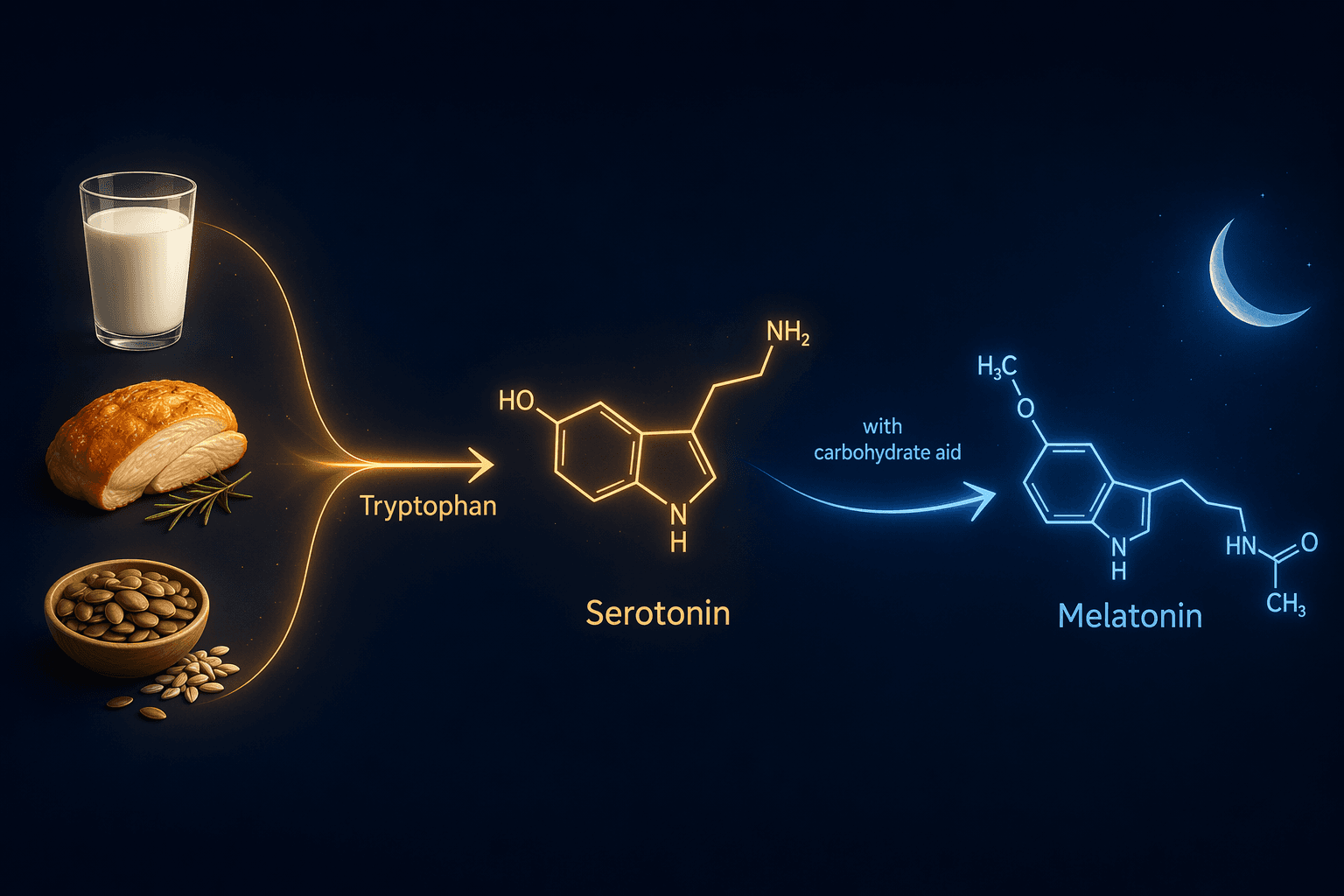
Tryptophan is an essential amino acid that serves as the precursor to serotonin, which is then converted to melatonin. The pathway is well-established in biochemistry, but the practical question is whether eating tryptophan-rich foods can meaningfully raise brain melatonin levels enough to improve sleep.
A 2022 meta-analysis of 18 articles by Sutanto and colleagues found that tryptophan supplementation at doses of 1 gram or more significantly reduced wake after sleep onset. This is a meaningful finding because wake after sleep onset — the amount of time spent awake during the night — is one of the key metrics of sleep continuity and a common complaint among people with insomnia.
However, there is a critical nuance: tryptophan must compete with other large neutral amino acids to cross the blood-brain barrier. Carbohydrate intake facilitates this process by triggering insulin release, which clears competing amino acids from the bloodstream, allowing tryptophan to enter the brain more readily. This is why the classic recommendation of warm milk with a small carbohydrate source — a piece of toast or a few crackers — has a biochemical rationale. The milk provides tryptophan, and the carbohydrate helps it reach the brain.
- Dairy products: Milk, yogurt, and cheese are among the most accessible tryptophan sources.
- Poultry: Turkey and chicken contain high levels of tryptophan, though the amount in a typical serving is below the 1 g threshold used in clinical studies.
- Eggs: Egg whites are a concentrated protein source with a favorable amino acid profile.
- Nuts and seeds: Pumpkin seeds, sesame seeds, and sunflower seeds provide tryptophan along with magnesium.
Magnesium-Rich Foods: Nuts, Seeds, and Leafy Greens
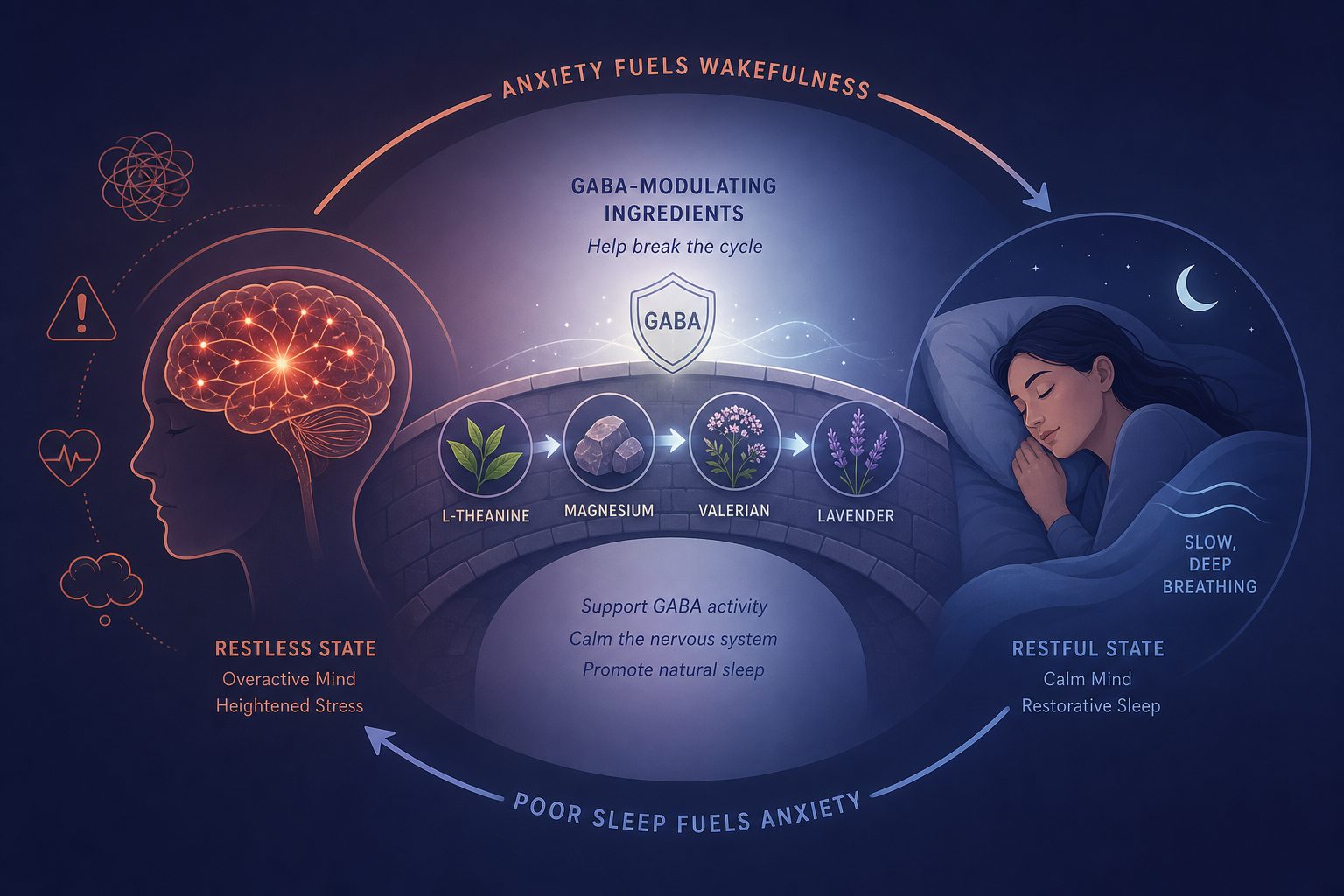
Magnesium plays a role in sleep regulation primarily through its interaction with the GABA receptor system. GABA is the brain's main inhibitory neurotransmitter, and magnesium enhances its activity, producing a calming effect that can facilitate sleep onset. Magnesium also helps regulate the body's stress response system by modulating the hypothalamic-pituitary-adrenal (HPA) axis.
A 2018 longitudinal study by Cao and colleagues examined the relationship between dietary magnesium intake and sleep quality in a large cohort. The study found that higher magnesium intake was associated with better sleep quality, though the effect was modest and the study design could not establish causality. A separate randomized trial by Abbasi in 2012 involving 46 older adults found that 500 mg of magnesium taken daily for 8 weeks significantly increased sleep time and sleep efficiency, and reduced insomnia severity index scores and sleep onset latency.
Food sources of magnesium are abundant and generally well-tolerated:
- Pumpkin seeds: One ounce provides roughly 150 mg of magnesium, making them one of the most concentrated sources.
- Almonds: A one-ounce serving contains about 80 mg of magnesium.
- Spinach: One cup of cooked spinach provides approximately 157 mg of magnesium.
- Black beans: One cup of cooked black beans contains about 120 mg of magnesium.
Dietary Patterns: Mediterranean and DASH Diets
Beyond individual foods, researchers have examined whether overall dietary patterns are associated with sleep quality. The Mediterranean diet — characterized by high intake of fruits, vegetables, whole grains, legumes, nuts, and olive oil, with moderate fish and poultry consumption — has been linked to better sleep outcomes in several observational studies. Similarly, the DASH (Dietary Approaches to Stop Hypertension) diet, which emphasizes fruits, vegetables, low-fat dairy, and limited sodium, has shown associations with improved sleep quality.
The Sleep Foundation notes that both the Mediterranean and DASH diets were linked with potential benefits for sleep, though the evidence comes from small observational studies. The proposed mechanisms include higher intake of anti-inflammatory compounds, better regulation of blood sugar, and higher consumption of sleep-promoting micronutrients like magnesium and potassium.
Kiwi: A Small Fruit With Promising Data
Kiwifruit has attracted research attention as a potential sleep aid due to its unique combination of serotonin, antioxidants, and folate. Serotonin is a direct precursor to melatonin, and the fruit's high antioxidant content may reduce oxidative stress, which has been linked to sleep disruption.
Multiple studies cited by the Sleep Foundation have found that consuming kiwi before bed improves sleep onset, duration, and efficiency. In one study, participants who ate two kiwis one hour before bedtime for four weeks experienced significant improvements in total sleep time and sleep efficiency, along with reductions in the time it took to fall asleep.
| Measure | Reported Improvement | Study Context |
|---|---|---|
| Sleep onset latency | Reduced | Multiple studies cited by Sleep Foundation |
| Total sleep time | Increased | Four-week kiwi consumption protocol |
| Sleep efficiency | Improved | Measured as percentage of time in bed spent asleep |
| Proposed mechanisms | Serotonin, antioxidants, folate | Not yet isolated in controlled trials |
Foods and Timing: What to Eat (and Avoid) Before Bed
The timing of food intake is as important as the choice of food when it comes to sleep. Eating a large meal too close to bedtime can disrupt sleep through multiple mechanisms: digestive activity raises core body temperature, which opposes the natural temperature drop that facilitates sleep onset; blood sugar spikes and subsequent crashes can trigger nighttime awakenings; and lying down shortly after eating increases the risk of acid reflux, which is a common cause of sleep disruption.
General guidelines for pre-bed eating include:
- Finish meals at least 2 hours before bed: This allows sufficient time for initial digestion and avoids the conflict between digestive activity and sleep onset.
- Caffeine cutoff by early afternoon: Caffeine has a half-life of roughly 5 hours, meaning that a 2 PM coffee still leaves about half the caffeine in your system at 7 PM. For people with insomnia, a cutoff of 12 PM or earlier may be necessary.
- Limit alcohol: Alcohol may help with sleep initiation, but it fragments sleep architecture by suppressing REM sleep and increasing nighttime awakenings. Even moderate drinking before bed can reduce sleep quality.
- Avoid high-sugar and high-fat snacks: These can cause blood sugar instability and digestive discomfort that interfere with sleep continuity.

For a comprehensive guide to pre-bed habits, see our evidence-based evening wind-down routine, which covers timing, light exposure, and relaxation techniques alongside dietary considerations.
Cautions: When Food Is Not Enough
Food-based strategies for improving sleep are generally safe, inexpensive, and worth trying for people with mild or occasional sleep difficulties. However, they are not a substitute for first-line treatments for chronic insomnia. The American Academy of Sleep Medicine and the American College of Physicians both recommend cognitive behavioral therapy for insomnia (CBT-I) as the primary treatment for chronic insomnia, not dietary supplements or food-based interventions.
A 2020 systematic review and network meta-analysis of 36 randomized controlled trials found that none of the non-CBT interventions — including melatonin, exercise, and meditative movement — showed superior evidence to CBT-I for treating insomnia. Dietary interventions were not even included in the analysis because the available studies did not meet the inclusion criteria for rigorous clinical trials.



Comments
Join the discussion with an anonymous comment.