
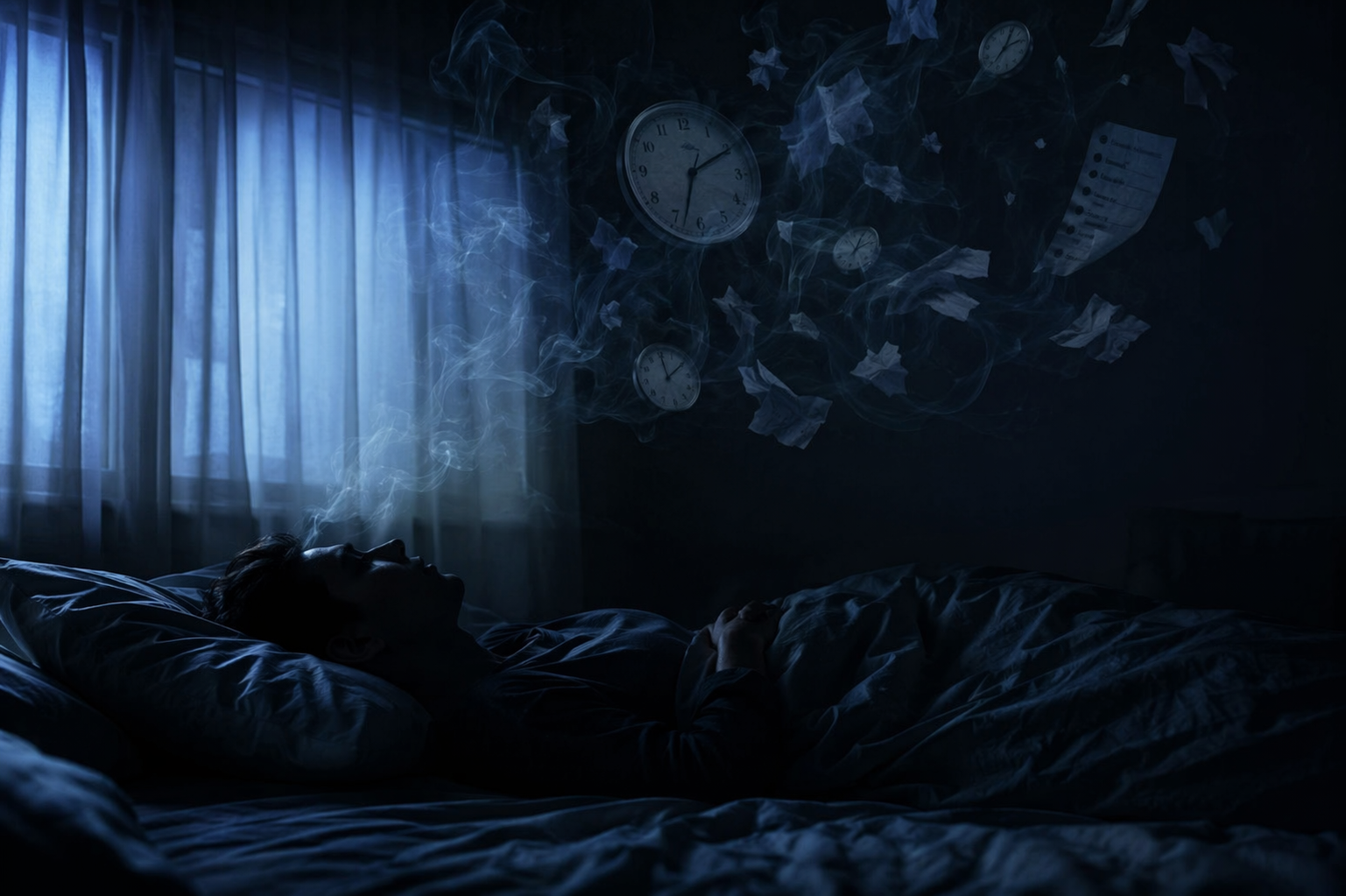
The sound is small: a pipe settling, a truck passing, the closet door clicking as the room cools. Your body treats it like a warning. You lie still, listening harder than you want to, mentally checking the route to the door, the window, the hallway, the child’s room, the bookcase across from the bed. By the time you decide nothing is happening, sleep has already moved out of reach.
That kind of earthquake-related sleep anxiety is not always a generic insomnia problem. Often, the brain is not only afraid of an earthquake. It is afraid of being helpless while asleep: barefoot, disoriented, under unsecured furniture, without a flashlight, without a plan for the first few seconds.
That distinction matters because reassurance alone can miss the point. Telling yourself to relax may help if the room already feels basically handled. It sounds thin when the dresser is still untethered and nobody in the household has agreed what to do if shaking starts at 2:13 a.m.
The research does not make this fear look silly. In a 2025 study of 402 Turkish adolescents assessed 9 to 12 months after an earthquake, 89.4% of those with high earthquake anxiety had poor sleep quality, and high earthquake anxiety was associated with 5.721 times higher odds of poor sleep quality; fear of another earthquake was the strongest predictor in the model [1]. The study was post-disaster and adolescent-focused, so it should not be treated as a direct prevalence estimate for every adult lying awake in California, Japan, Turkey, or the Pacific Northwest. But it does clarify the mechanism: when fear of another quake stays active, sleep suffers.
Why the anxious brain stays on duty
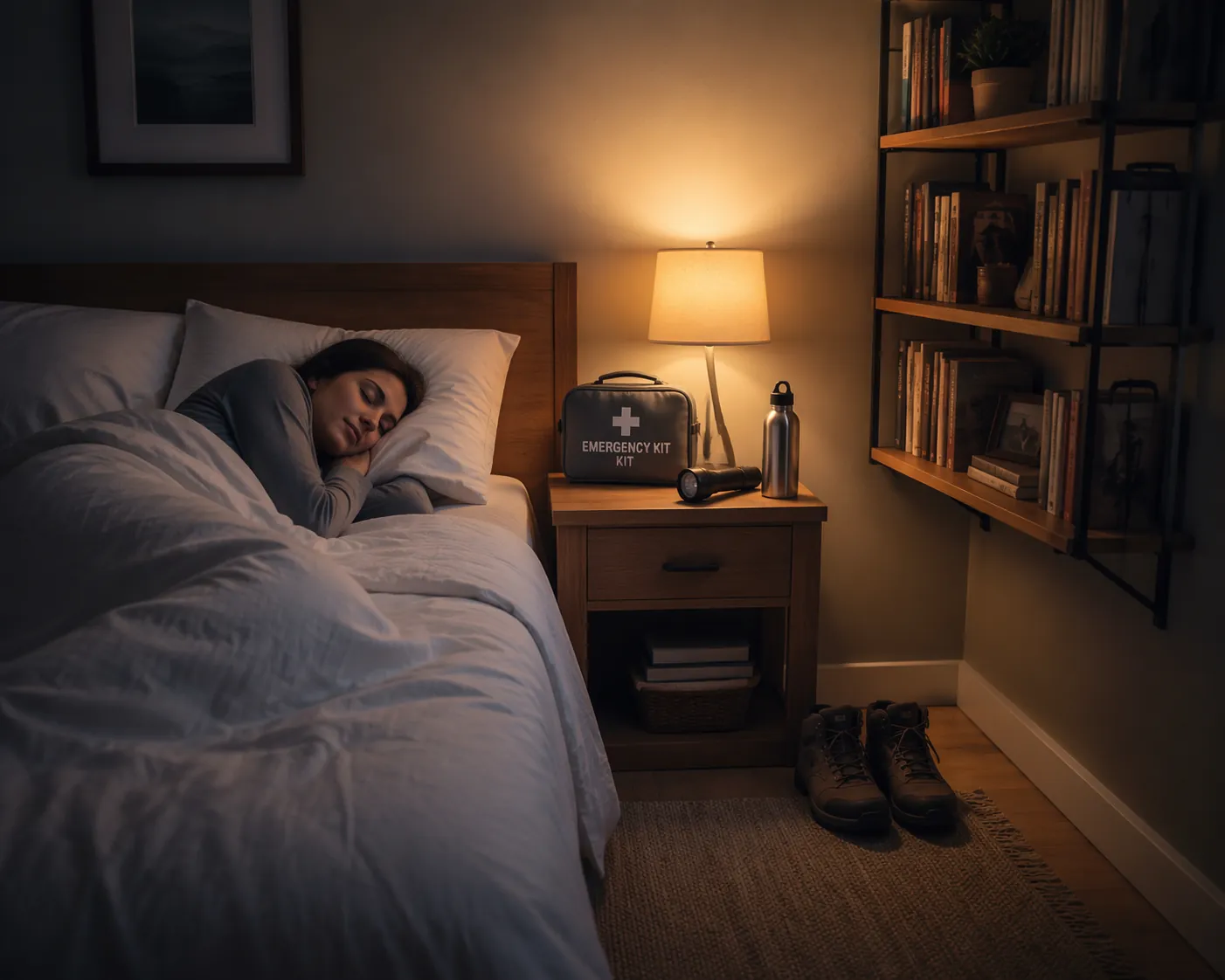
Sleep requires a temporary surrender of control. Earthquake anxiety attacks that exact requirement. The bed becomes the place where you are least ready: lights off, shoes off, phone somewhere under the blanket, glasses on the dresser, hallway dark, shelves above shoulder height.
Hypervigilance is the mind’s crude workaround. If no reliable plan exists, the brain tries to become the plan. It keeps listening. It scans for vibration. It rehearses escape routes without enough information. That alertness can feel like a safety behavior, but it is a terrible sleep behavior.
This is where bedroom preparedness becomes more than a practical safety task. It gives the brain evidence that the most vulnerable minutes have been considered. Not guaranteed. Not perfected. Considered. For many people with subclinical earthquake anxiety, that is the difference between vague dread and a bounded plan.
Preparedness closes the loop fear opens
A second 2025 study, this one involving 152 medical students, found a useful mismatch. Severe earthquake anxiety was common: 66.9% scored in the severe range on the Beck Anxiety Inventory. Yet only 54.7% had discussed a preparedness plan with their household, and only 24.7% had secured heavy furniture. Students who had taken preparedness steps reported significantly lower anxiety [2].
That finding should be read carefully. It does not prove, in a controlled trial, that bolting a bookcase to the wall will directly treat insomnia. People who prepare may differ from people who do not prepare in other ways. Still, the pattern is hard to ignore: many anxious people have not completed the very actions that make the fear more answerable.
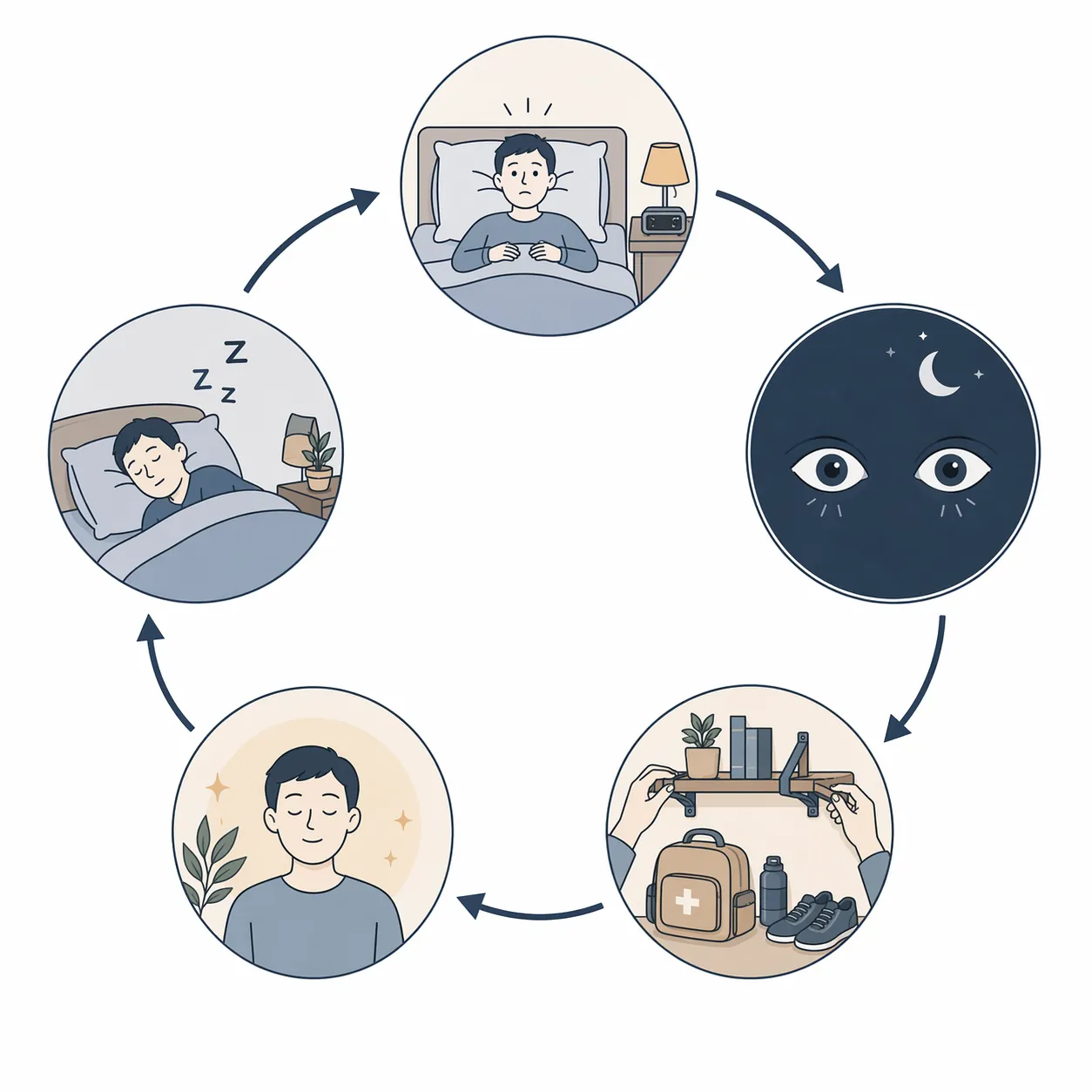
The useful loop looks like this: the fear identifies a specific helplessness, the preparedness step answers that helplessness, and the nervous system receives a more credible signal that it can stand down. A loose shelf becomes a secured shelf. A dark floor becomes shoes and a flashlight within reach. A panicked question—what do I do first?—becomes one practiced sentence: stay in bed, cover head and neck, wait for shaking to stop unless there is an immediate hazard.
Generic sleep hygiene does not usually reach that layer. A cooler room, less caffeine, and a steadier wind-down routine may all help sleep pressure build. Breathing exercises may soften the body’s alarm response. But if the mind is stuck on being trapped under a falling dresser, the more direct intervention is to make the dresser less likely to fall.
The bedroom steps that matter most at night
You do not need to turn the bedroom into a bunker. The goal is to remove the obvious reasons your brain has to keep checking the room. Start with the objects that could injure you before you are fully awake.
- Secure tall or heavy furniture, especially bookcases, dressers, wardrobes, and shelving near the bed.
- Move heavy objects, glass, framed art, and unsecured items away from above the bed and along the route you would use in the dark.
- Identify the safest position in bed or immediately beside it, based on your room layout and local guidance.
- Put shoes, a flashlight or headlamp, glasses, essential medication, water, and a charged phone where you can reach them without standing up.
- Say the household plan out loud, including who checks on children, older adults, pets, or anyone who may need help.
The furniture work is often the most emotionally useful because it addresses the fear you can see from bed. If you need a room-by-room version of that audit, use this bedroom earthquake safety guide for safer-zone details and furniture decisions.
The bedside supplies are not there because a small kit solves a disaster. They are there because the first minutes after shaking are full of small obstacles: broken glass, darkness, missing glasses, a dead phone, medication you cannot quickly find. A modest kit answers those obstacles before your half-awake brain has to. For a focused supply list, see what to keep in an earthquake bedside kit.
Script the first seconds, not the whole disaster
At night, a complicated plan is not much of a plan. The useful script is short enough to remember when startled awake. It should cover the first action during shaking, the first check after shaking, and the first communication step once it is safe.
| Nighttime fear | Preparedness answer |
|---|---|
| I will freeze and not know what to do. | Practice one first move for your bed setup before you turn out the light. |
| I will step on glass in the dark. | Keep closed-toe shoes and a flashlight beside the bed. |
| Furniture could fall before I wake fully. | Anchor heavy furniture and move hazards away from the bed. |
| My family will scatter or panic. | Agree on who checks on whom and where to meet when movement is safe. |
| I will forget tsunami rules if I live near the coast. | Keep the local evacuation trigger simple and visible. |
If your worry includes being in bed during shaking or needing to evacuate after a coastal quake, use this in-bed earthquake and tsunami response guide to build the script around your actual room and local risk.
Where relaxation fits, and where it does not
Relaxation techniques are not useless. Slow breathing, progressive muscle relaxation, a consistent bedtime, and limiting late-night disaster news can all reduce arousal. Some people also need medication, especially when anxiety is severe or sleep loss has become dangerous. Those decisions belong with a clinician, not a checklist on the nightstand.
The problem is sequencing. If you ask the body to relax before you have answered its concrete safety questions, the exercise can feel like an argument with reality. Preparedness gives relaxation something to rest on. Once the shelf is secured, the shoes are placed, the flashlight works, and the first seconds are scripted, a breathing exercise is no longer being asked to carry the whole earthquake.
There is also a boundary worth protecting. This article is about preventive or subclinical earthquake anxiety—the kind that keeps you scanning the room before sleep, even when no earthquake has just occurred. Post-disaster trauma is different. In a study of 165 Haiti earthquake survivors, 94% reported insomnia symptoms and 42% had clinically significant PTSD at 2 years; resilience did not buffer sleep disturbance in that sample [3].
If you are having nightmares, flashbacks, panic attacks, severe avoidance, persistent insomnia after an earthquake, or thoughts of harming yourself, preparedness is not enough. It may still make the room safer, but it should sit alongside professional care. For post-quake sleep recovery, a phased guide such as how to sleep after an earthquake can help organize the first steps while you seek appropriate support.
A small plan your brain can believe
The most useful bedroom plan is usually plain. Anchor what can fall. Clear what can cut. Put what you need within reach. Decide what you will do during shaking. Say the household plan before anyone is frightened and half-awake.
Then stop working for the night. The goal is not to keep improving the plan until anxiety disappears. That can become another form of checking. The goal is to give the alert part of the brain enough concrete evidence to release its shift.
Preparedness does not guarantee perfect safety, and it does not erase every tremor of fear. It does something more modest and more useful at bedtime: it reduces the need to improvise barefoot in the dark. For many anxious sleepers in earthquake country, that is the first believable invitation back toward sleep.
References
- The Relationship Between Earthquake Anxiety and Sleep Quality in Adolescents After the 2023 Kahramanmaraş Earthquakes. PMC. https://pmc.ncbi.nlm.nih.gov/articles/PMC12267622/
- Earthquake Anxiety and Preparedness Among Medical Students. PMC. https://pmc.ncbi.nlm.nih.gov/articles/PMC12633547/
- Disturbed sleep tied to mental health problems in earthquake survivors. American Academy of Sleep Medicine. https://aasm.org/disturbed-sleep-mental-health-earthquake-survivors/
Comments
Join the discussion with an anonymous comment.