
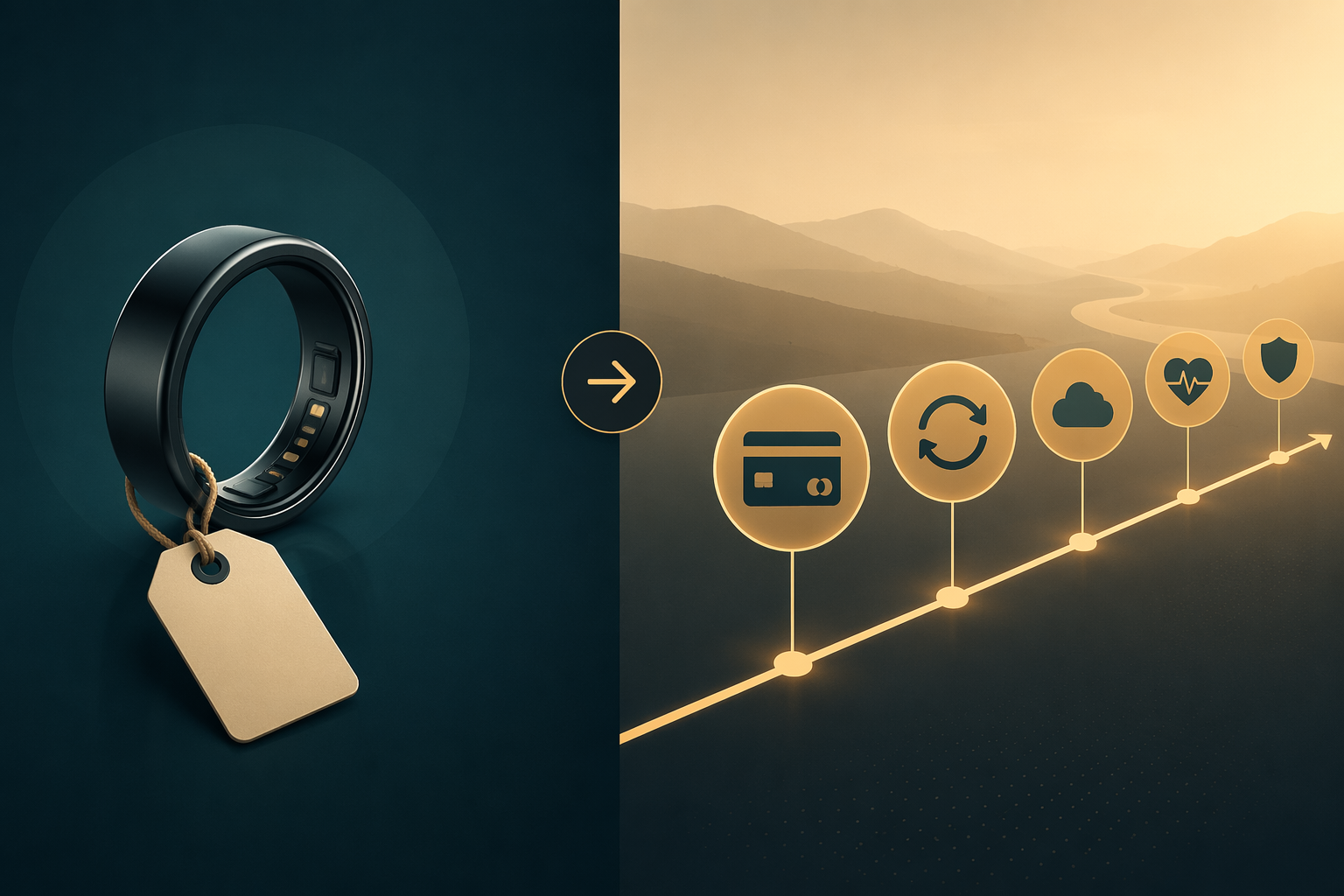
The most confusing moment in shopping for the best sleep and fitness tracker is usually not the spec sheet. It is the checkout page. One device looks cheap until the app asks for a monthly plan. Another looks expensive until you realize the sleep score, HRV status, and recovery guidance are included. A third has no subscription at all, but quietly assumes you already own the right phone.
So the useful comparison is not “Which tracker costs the least today?” It is “What will this cost over the first one, two, and three years, and what stops working if I stop paying?”
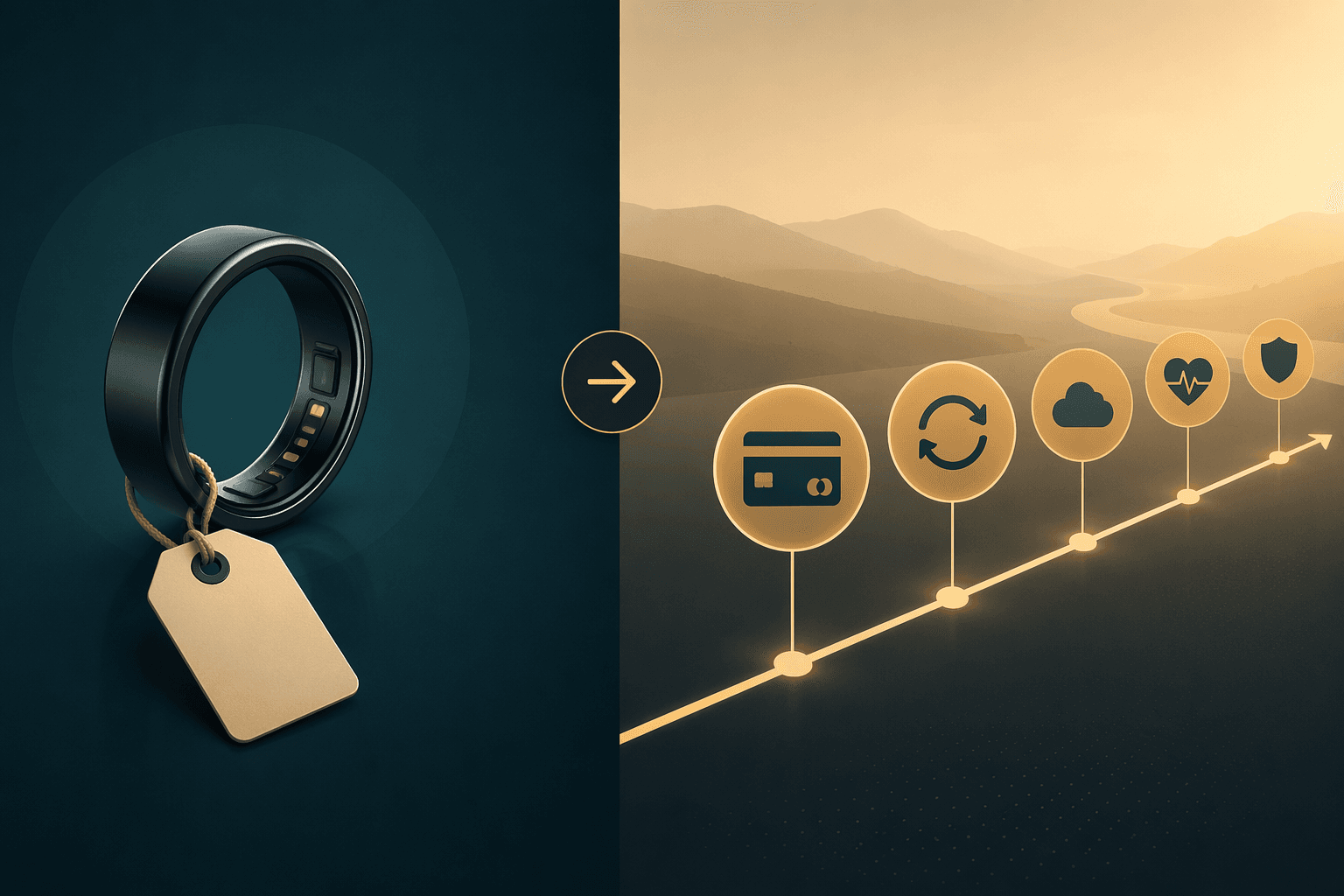
The 1-, 2-, and 3-year cost comparison
This table separates hard costs from conditional costs. Device prices and required subscriptions are part of the math. Optional subscriptions and ecosystem requirements are shown separately because they can be real costs, but not for every buyer.
| Tracker | Upfront device cost | Required subscription or membership | Optional subscription | Ecosystem dependency | 1-year total | 2-year total | 3-year total |
|---|---|---|---|---|---|---|---|
| Garmin Forerunner 165 | $250 | None | None for the listed sleep/recovery features | Garmin Connect account; no phone-brand lock-in noted | $250 | $250 | $250 |
| Samsung Galaxy Ring | $400 | None | None listed for core ring use | Advanced features such as snore detection and Energy Score require a Samsung Galaxy phone | $400 | $400 | $400 |
| Fitbit Charge 6 | $100–$160 | None | Fitbit Premium at $10/month or $80/year | Google/Fitbit app ecosystem | $100–$280 | $100–$320 | $100–$400 |
| Apple Watch Series 11 | $399 | None | Apple Fitness+ optional; up to $240 over 3 years in this comparison | Requires an iPhone | $399–$479 | $399–$559 | $399–$639 |
| Oura Ring 4 | $350–$550 | $6/month or $70/year for personalized insights and trends | Not meaningfully optional if you want the full sleep/readiness experience | Oura app ecosystem | $420–$620 | $490–$690 | $560–$760 |
| Whoop 5.0 | $0 device purchase under the membership model | $199/year, $239/year, or $359/year; 12-month minimum | Higher membership tiers rather than a separate optional add-on | Whoop membership model; no device ownership | $199–$359 | $398–$718 | $597–$1,077 |
The lowest long-term cost is not the device with the smallest box price. Garmin’s Forerunner 165 is the cleanest cost line here: $250 once, with Sleep Coach, Body Battery, HRV status, and nap detection available in Garmin Connect without a subscription in the current model.[1] Samsung’s Galaxy Ring is also a one-time $400 purchase, but the table cannot price the friction of needing a Samsung Galaxy phone for advanced features such as snore detection and Energy Score.[2]
Fitbit is the flexible middle case. The Charge 6 starts much lower, at $100–$160, and core sleep and fitness tracking work without Premium; Premium is the added layer at $10/month or $80/year.[3] If you ignore Premium, Fitbit can be the cheapest device in this group. If you keep Premium for three years, the all-in cost can climb to $400, which puts it beside Samsung rather than below everything else.
Oura looks different once the subscription is treated as part of ownership. The Ring 4 costs $350–$550 upfront, and the membership is $6/month or $70/year; over three years, that makes the practical total $560–$760 for users who want Oura’s personalized sleep, readiness, and trend analysis rather than only basic metrics.[4]
Whoop is the clearest example of why “device price” can mislead. The hardware is not the purchase. The membership is the product. Whoop 5.0 plans run $199/year for One, $239/year for Peak, and $359/year for Life, with a 12-month minimum; over three years, that is $597–$1,077, and the model does not give you conventional device ownership.[5]
Apple sits in a slightly different column. The Apple Watch Series 11 is treated here as a $399 device, with Apple Fitness+ optional in the cost range, but the bigger qualifier is that Apple Watch requires an iPhone.[6] If you already live in that ecosystem, the watch price is the relevant number. If you do not, comparing it directly with a Fitbit or Garmin without acknowledging the phone requirement makes the watch look more portable than it is.
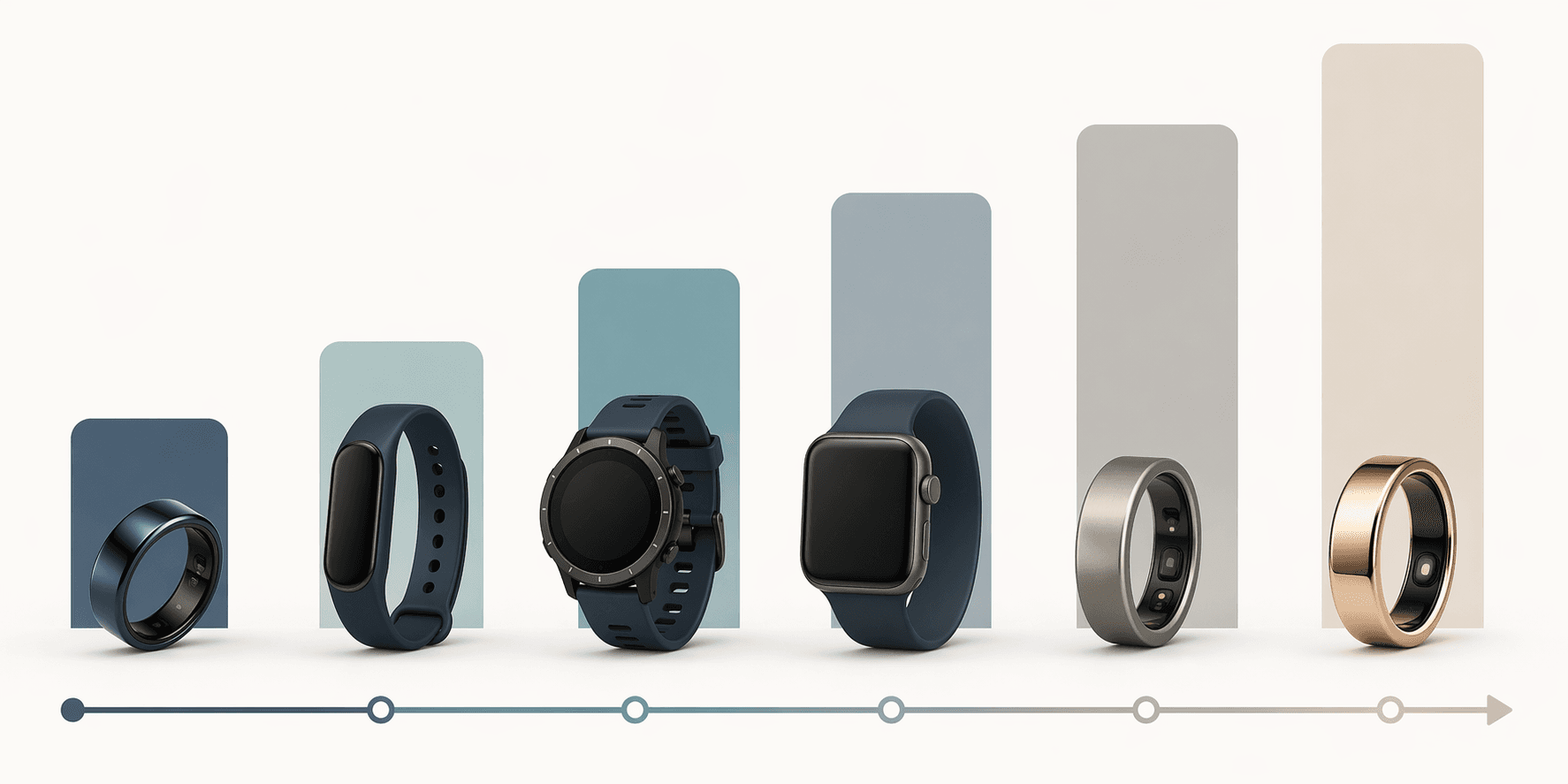
What the subscription actually changes
The fairest way to judge a subscription is not to ask whether subscriptions are good or bad. It is to ask what decision the paid layer helps you make tomorrow morning that the free layer would not.
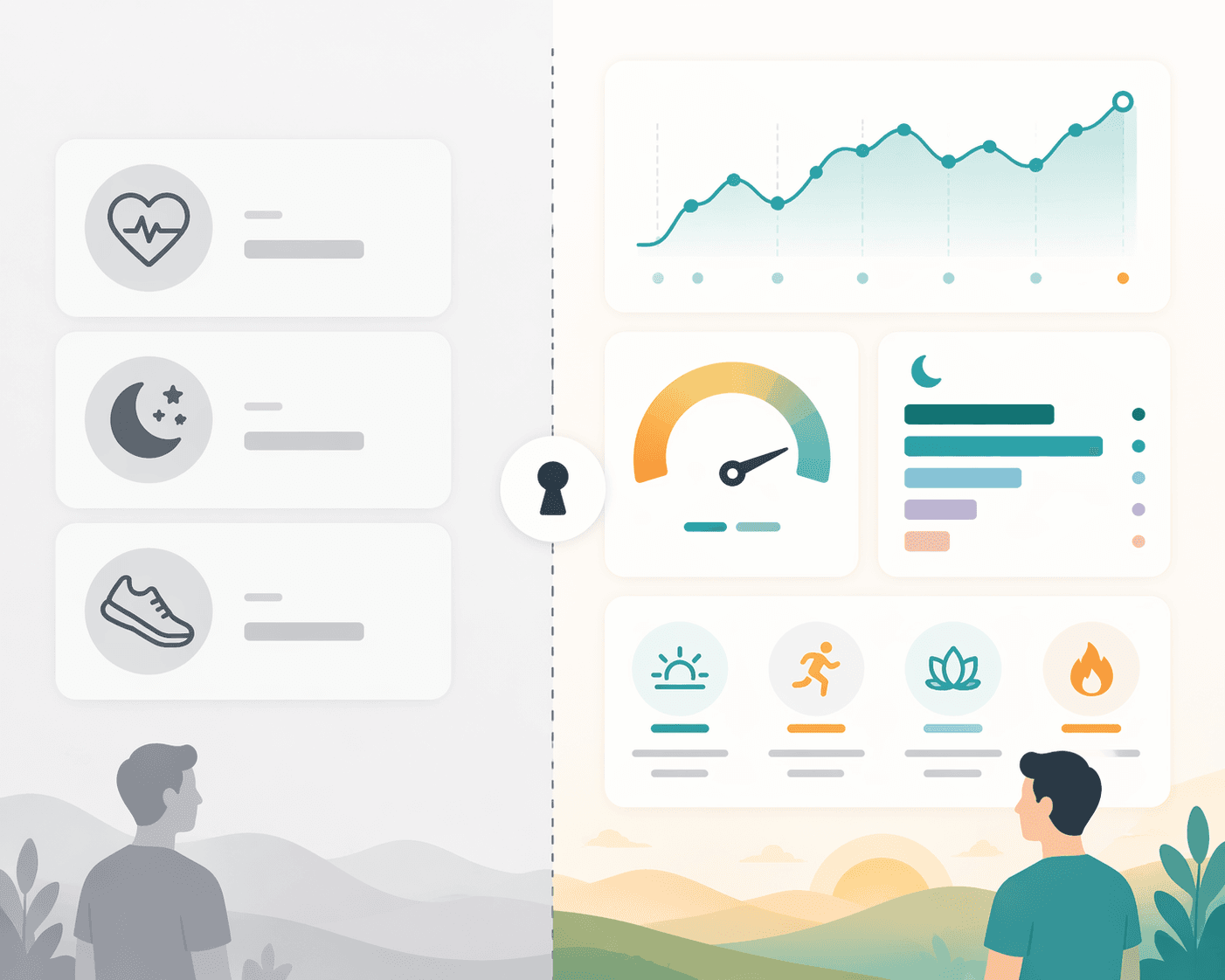
Oura: the subscription is where the product becomes Oura
Oura’s paid layer matters because it is tied to the part of the product many people are buying: personalized trends, sleep and readiness interpretation, and the sense that the ring is adapting to your baseline rather than just reporting last night’s duration. Without the membership, the ring still has basic metrics, but the experience is thinned out enough that the lower “device-only” price is not the honest cost for most Oura shoppers.[4]
That does not make Oura overpriced by default. A ring that is comfortable enough to wear every night and that translates changes in resting heart rate, HRV, sleep timing, and readiness into a usable pattern can be worth paying for. The problem is only when the buyer mentally files the ring as a $350 purchase and forgets that three years of normal use pushes it to at least $560.
Whoop: membership first, hardware second
Whoop should be considered only if the membership model itself appeals to you. The trade is straightforward: you are not buying a watch or ring in the usual sense; you are paying for continuous access to Whoop’s strain, recovery, sleep, coaching, and health-monitoring experience. That is why the three-year total can exceed every other device in this comparison even though the device purchase line is effectively $0.[5]
For a serious training user who checks recovery before deciding how hard to train, that structure may be acceptable. For someone who mainly wants sleep duration, a sleep score, resting heart rate, and a general readiness signal, Whoop is a large recurring commitment. The risk is not that the data is useless; it is that you may be renting a level of coaching you do not actually use.
Fitbit: optional means you should test the free tier first
Fitbit Charge 6 is the device in this group where “optional” is most important. Core tracking works without Premium, so the first-year cost can stay close to the sale price if you do not need the paid extras.[3] That gives Fitbit a practical advantage for cautious buyers: you can start with the base experience and add Premium only if the extra guidance changes what you do.
That also means a Fitbit buyer should not let the trial period make the decision. The useful question is whether, after the novelty wears off, the paid view tells you something clearer than the free app. If the answer is no, canceling Premium does not turn the Charge 6 into a paperweight.
Garmin, Samsung, and Apple: no required sleep subscription, but not no tradeoffs
Garmin is the cleanest current answer for buyers who want robust sleep and recovery metrics without a recurring fee. The Forerunner 165’s included Garmin Connect features make its three-year cost unusually predictable.[1] The small caveat is time: “no subscription required” describes the current model, not a law that prevents any company from changing feature packaging later.
Samsung’s Galaxy Ring has a similar no-subscription advantage, but its best version assumes a Samsung phone. If you already use one, the $400 ring is a simple long-term cost. If you do not, the missing advanced features matter because the comparison is no longer only ring versus ring; it becomes ring plus ecosystem fit.[2]
Apple Watch Series 11 is not primarily priced like a dedicated sleep tracker. It is a smartwatch that can track sleep and fitness, and for many iPhone owners that makes it more useful than a narrower wearable. But its required iPhone pairing means it is a poor “neutral” comparison for someone outside Apple’s ecosystem.[6]
More analysis is not automatically better sleep
Subscription value often gets sold through language like insight, readiness, coaching, and optimization. Some of that can be genuinely useful. A paid app that shows your bedtime drift over several weeks, flags that late alcohol is repeatedly linked with worse recovery, or helps you stop overtraining has more value than an app that merely renames the same heart-rate and sleep-duration data.
But granular sleep data can also backfire for some users. The term orthosomnia was introduced in a 2017 Journal of Clinical Sleep Medicine case series to describe people becoming preoccupied with achieving “perfect” sleep tracker results, sometimes despite tracker data not matching clinical sleep assessment.[7] That does not mean sleep tracking is harmful for everyone. It means paying for more analysis is only worthwhile if the analysis leads to calmer, better decisions rather than score-chasing.
If that concern sounds familiar, read more on orthosomnia and sleep trackers before choosing the most analysis-heavy subscription.
Comfort still belongs in the cost equation
A cheaper tracker is not a better value if it spends the night on the charger, the dresser, or your wrist only until 2 a.m. Rings, watches, and bands disappear on different people in different ways. A ring may be easier to sleep in than a watch for one person and impossible for another who dislikes anything on their fingers. A lightweight band may be less elegant but more tolerable in hot weather.
This matters more for sleep than for step counting. Daytime tracking can survive imperfect wear. Sleep tracking cannot. If you are torn between a cheaper watch and a more expensive ring, the real question is which one you will wear consistently enough to produce usable trends. For a deeper breakdown, see the sleep tracker form-factor comparison.
Accuracy is a separate question from cost
This cost comparison should not be read as a clinical accuracy ranking. Sleep wearables estimate sleep from signals such as movement, heart rate, HRV, temperature, and breathing patterns; they are not the same as a polysomnography sleep study. If your main question is whether a device’s sleep stages, wake detection, or recovery scores are reliable enough for your needs, use a dedicated accuracy comparison rather than trying to infer accuracy from price.
Start with how accurate fitness trackers are for sleep, then use the 2026 sleep and fitness tracker comparison or the metric-by-metric wearable accuracy comparison if sensor performance is the deciding factor.
Which payment model fits which buyer?
If your priority is the lowest predictable long-term cost, Garmin Forerunner 165 is the cleanest choice in this set. You pay once, and the listed sleep and recovery tools are included. Samsung Galaxy Ring is also low over three years, but only feels equally clean if you already use a Samsung Galaxy phone and want a ring rather than a watch. Fitbit Charge 6 is the budget-flexible pick if you want a low entry price and the option to add Premium later. Apple Watch Series 11 can make sense for iPhone owners who want a broader smartwatch, but its iPhone requirement keeps it from being a neutral sleep-tracker buy.
If you want a ring and will actually use trend-based sleep and readiness guidance, Oura Ring 4 is defensible at its higher three-year cost. If you want coaching, recovery, and strain analysis as an ongoing service, Whoop 5.0 may fit. In both cases, the subscription or membership is part of the product, not an add-on.
References
- Garmin Forerunner 165. Garmin.
- Samsung Galaxy Ring. Samsung.
- Fitbit Charge 6. Fitbit.
- Oura Ring 4. Oura.
- Whoop Membership. Whoop.
- Apple Watch Series 11. Apple.
- Orthosomnia: Are Some Patients Taking the Quantified Self Too Far?. Journal of Clinical Sleep Medicine. 2017.


Comments
Join the discussion with an anonymous comment.