
Most people feel the problem before they can explain it: the alarm rings, the clock says morning, and the body still seems to be living an hour behind. That mismatch is real. Sleep Foundation, citing NIH data, reports about 40 minutes less sleep on the Monday after spring-forward, with the disruption lingering for up to a week, and a 2025 systematic review of 27 studies found the same broad pattern of shorter, more fragmented sleep after daylight saving time transitions. [1][2]
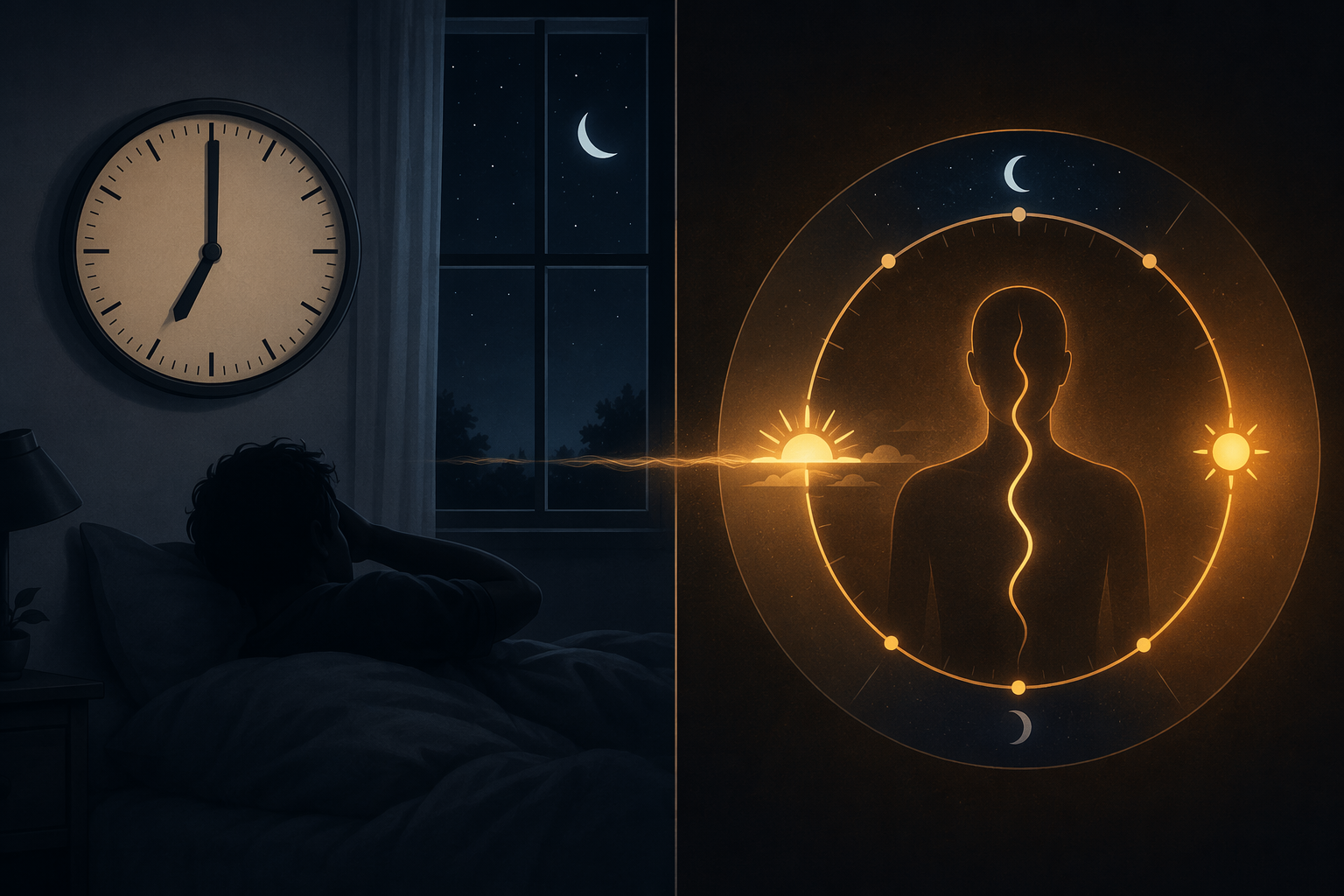
Why the lost hour lingers
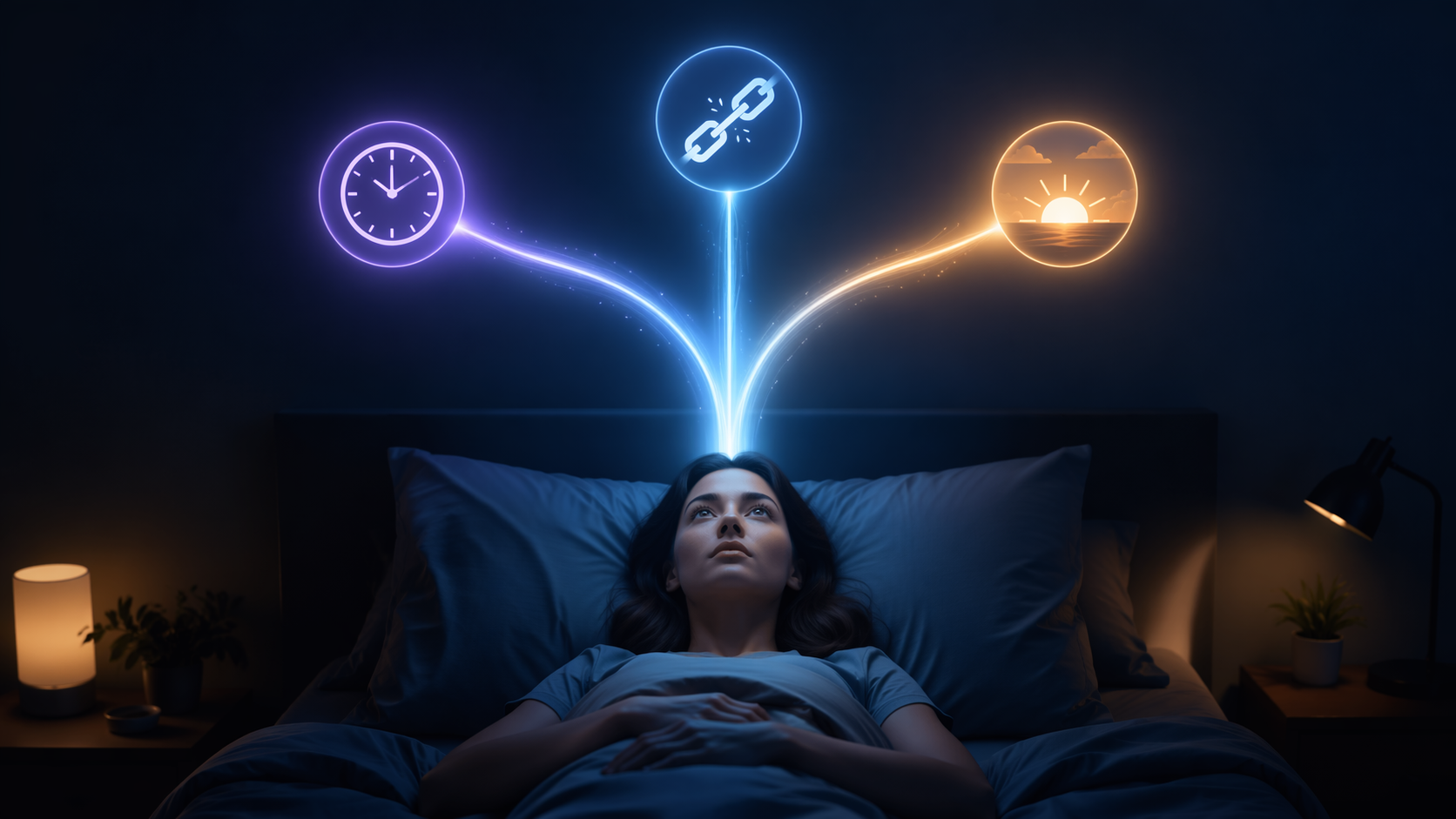
What makes DST different from ordinary poor sleep is that the sun does not move with the clock. In spring, the wall clock jumps ahead but solar time stays fixed, so morning light arrives later relative to clock time and the circadian system gets a weaker cue at the moment the schedule says it should already be awake. The AASM makes the same distinction: jet lag eventually resolves because the body can re-sync to shifted solar cues, while DST leaves the environment unchanged and the person out of step with it. [3]
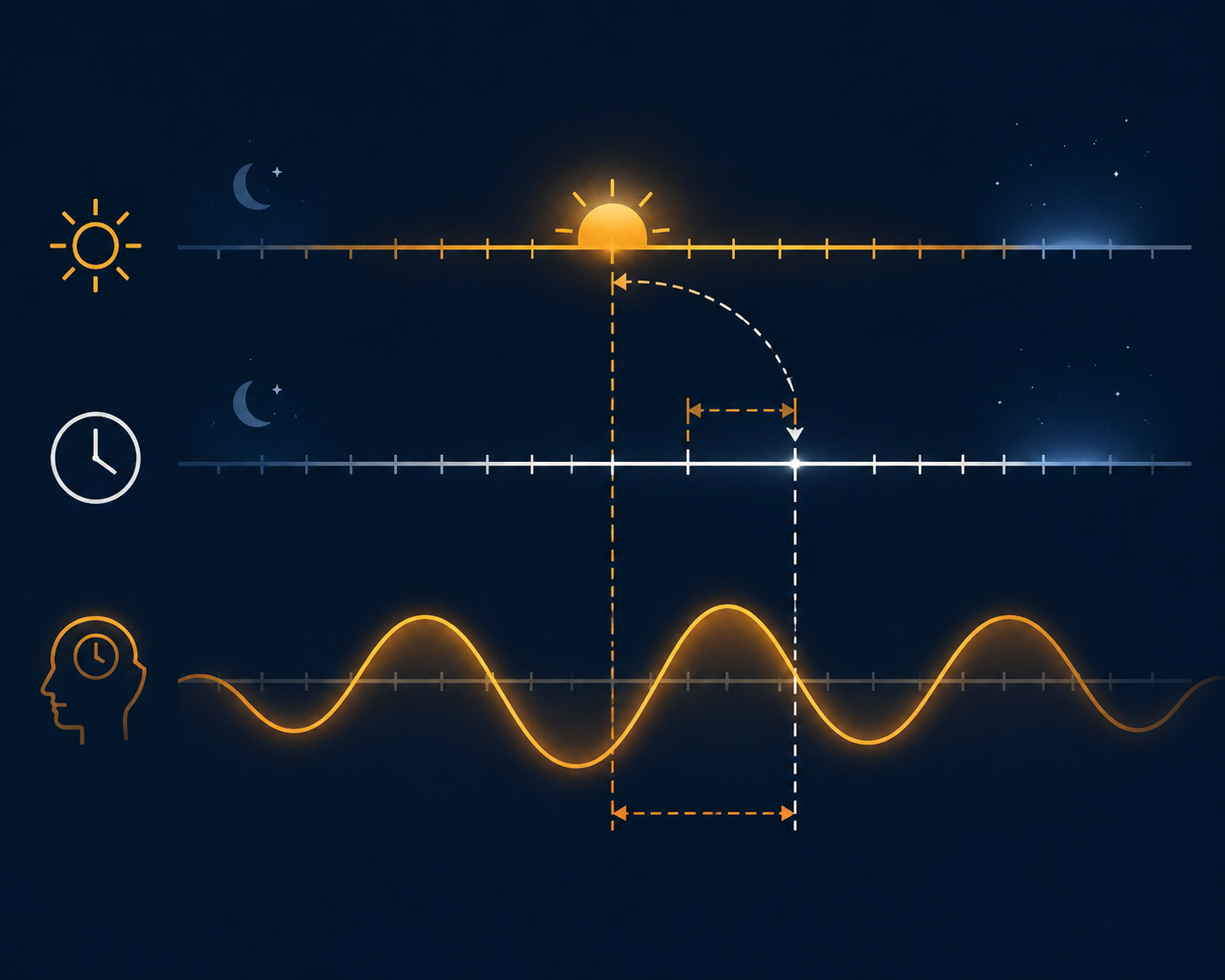
That is why the lost hour is not just a neat accounting problem. A sleep window that used to fit the night now gets sliced by a clock that moved while the light-dark cycle did not, so sleep tends to fragment rather than simply vanish. For a broader explanation of the clock system, the overview on circadian hygiene is a useful companion.
What the data show
The 2025 systematic review matters because it does not rely on one lab's measurement style. Across 27 studies, the review found reduced sleep duration and more sleep fragmentation after clock changes, with evening chronotypes generally taking the bigger hit; it also flagged methodological heterogeneity, which is a reminder that effect sizes are not perfectly comparable across populations and methods. [2]
The spring shift is the clearest example. Sleep Foundation, citing NIH data, reports an average loss of about 40 minutes on the following Monday, and the disruption can continue for up to a week. In an AASM survey, 55% of U.S. adults said they felt extremely or somewhat tired after the spring shift. [1][3]
The fall transition is the best antidote to the easy story that "gaining an hour" restores everything. A 2024 UK study of more than 11,000 participants found that Sunday night sleep increased by only about 33 minutes, not a full hour, and Harvard Health notes that short sleepers and morning larks have the hardest time adjusting in either direction. [4]
There are broader health signals in the background as well: UT Southwestern cites American Academy of Neurology data showing an 8% rise in stroke rates in the first two days after both transitions. That is worth knowing, but it should not crowd out the sleep story itself. [5]
Who feels it most
Evening chronotypes tend to lose more sleep overall, while short sleepers and morning larks have less slack to absorb either switch. Those are population patterns, not destiny; individual recovery still varies, and the studies are not methodologically identical. [2][4]
The cleanest conclusion is narrow: daylight saving time is a circadian disturbance with measurable sleep costs, not a trivial clock-setting inconvenience and not the same thing as jet lag. If you want the practical side of making the transition hurt less, the companion guide on how to adjust your sleep schedule for daylight saving time 2026 walks through that part.
References
- Daylight Saving Time: How This Time Change Affects Sleep — Sleep Foundation
- The effects of daylight saving time and clock time transitions on sleep and sleepiness: a systematic review — Sleep Medicine Reviews, 2025
- Daylight Saving Time — AASM Sleep Education
- Daylight Saving Time "fall back" doesn't equal sleep gain — Harvard Health
- Why daylight saving time may be bad for your brain and health — UT Southwestern Medical Center

Comments
Join the discussion with an anonymous comment.