
Why Perimenopause Is a Sleep Disorder Crossroads
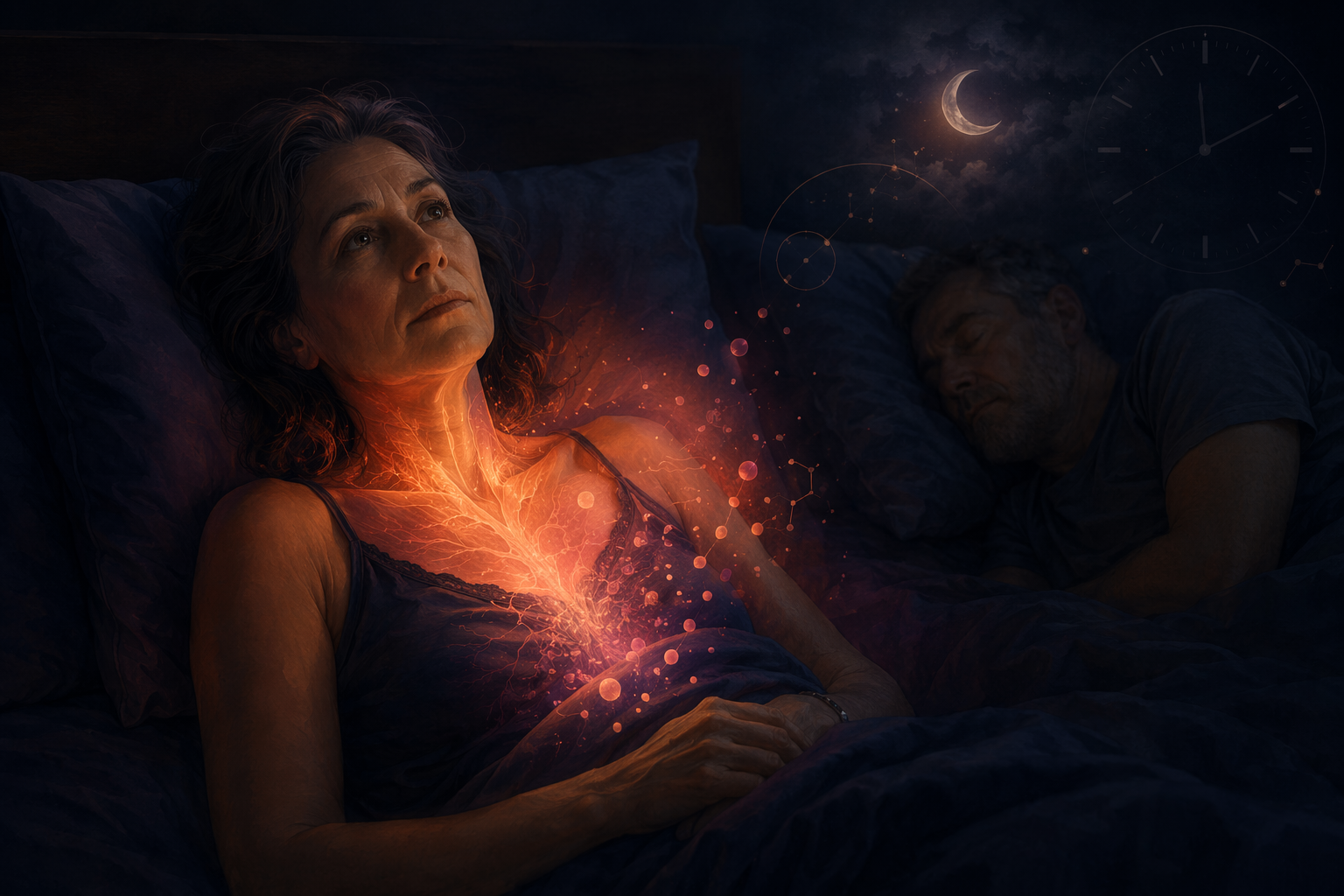
If you are a woman between 44 and 56 and your sleep has fallen apart, you have likely heard some version of "it is just perimenopause." That statement is both true and dangerously incomplete. Perimenopause is indeed a period of profound hormonal change that disrupts sleep architecture, but it is also a period when the risk for three distinct clinical sleep disorders — insomnia, obstructive sleep apnea (OSA), and restless legs syndrome (RLS) — rises sharply and often simultaneously.
The problem is that these conditions look different in women than they do in men, and they often look like each other. A woman who cannot stay asleep may assume she has insomnia when she actually has sleep apnea. A woman with creeping leg sensations at night may dismiss them as anxiety. The result is widespread misdiagnosis and years of ineffective treatment.
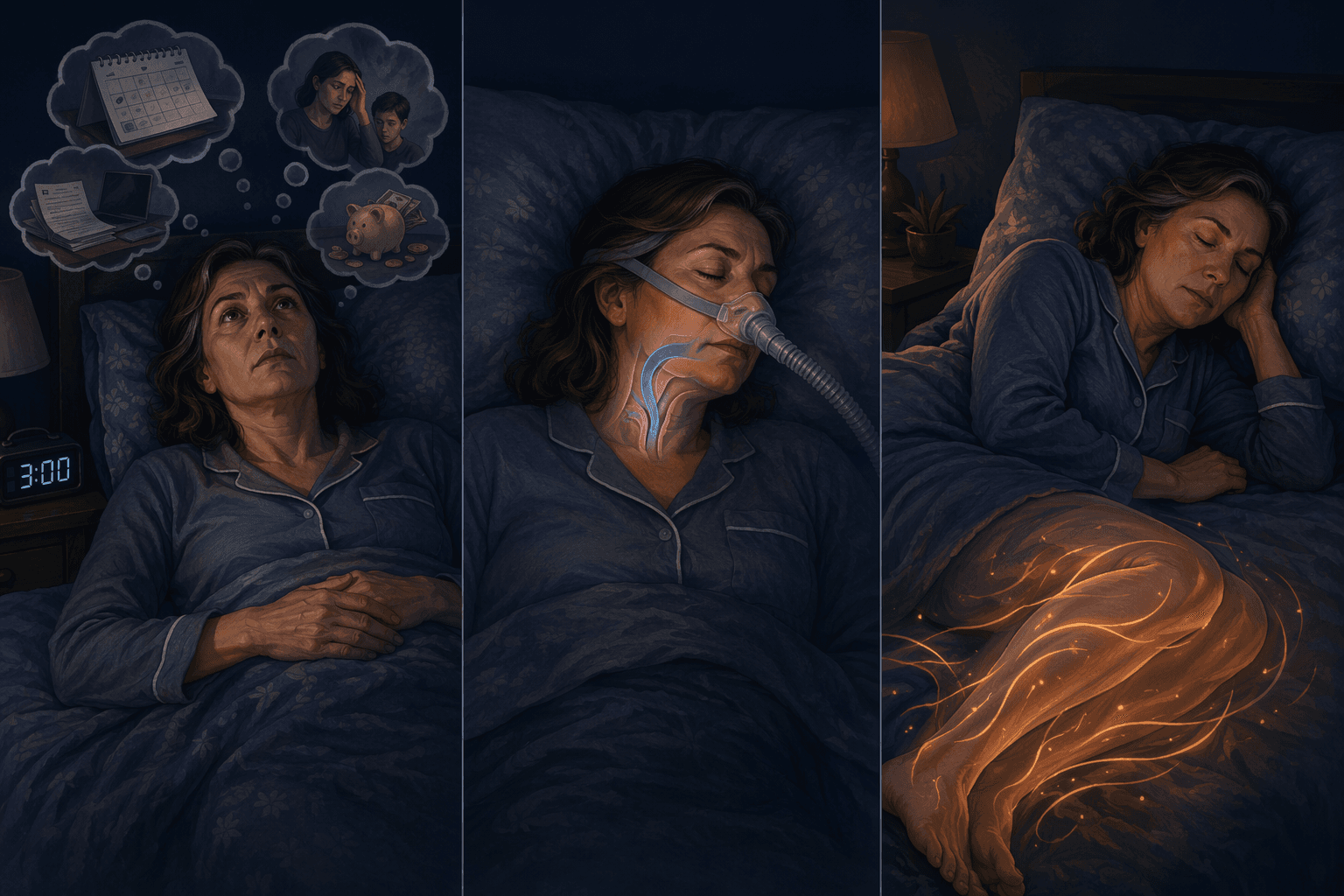
The core thesis of this article is straightforward: perimenopause is a sleep disorder crossroads where insomnia, OSA, and RLS converge and get conflated. Recognizing the difference matters because each condition requires a fundamentally different treatment approach. Treating one will not resolve the others, and treating the wrong one wastes time and delays real relief.
Insomnia in Perimenopause: Signs and Prevalence
Insomnia is the most commonly recognized sleep complaint during the menopause transition. The hallmark symptoms include difficulty falling asleep, frequent or prolonged nighttime awakenings, waking too early and being unable to return to sleep, and daytime impairment such as fatigue, irritability, or poor concentration.
Prevalence data confirm that insomnia is not a minor issue during this life stage. In the Study of Women's Health Across the Nation (SWAN), 37% of women aged 40 to 55 reported difficulty sleeping, with higher rates among Caucasian and Hispanic women. A 2023 meta-analysis by Salari et al. found that the prevalence of insomnia specifically during perimenopause was 37.6% (95% CI: 28.5–47.7%). A 2025 narrative review by Troìa et al. reports that overall sleep disturbance — a broader category that includes insomnia — ranges from 16% to 47% during perimenopause and climbs to 35% to 60% after menopause.
What distinguishes perimenopause-related insomnia from general insomnia is the role of vasomotor symptoms. Night sweats and hot flashes can trigger abrupt awakenings, fragmenting sleep and making it difficult to re-enter deeper stages. Declining estrogen and progesterone levels also affect the brain's sleep-regulating neurotransmitters, lowering the threshold for arousal during the night.
- Sleep-onset insomnia: lying awake for 30 minutes or more before falling asleep
- Sleep-maintenance insomnia: waking up three or more times per night, often with difficulty returning to sleep
- Early-morning awakening: waking up at 3:00 or 4:00 AM and being unable to fall back asleep
- Night-sweat-related awakenings: waking up drenched, needing to change clothes or cool down
- Daytime consequences: fatigue, brain fog, mood swings, reduced productivity
Sleep Apnea in Perimenopausal Women: The Atypical Presentation
This is where the diagnostic blind spot is largest. Obstructive sleep apnea is widely considered a male disease — loud snoring, witnessed gasping, large neck circumference, daytime sleepiness. But women, especially midlife women, often present with a completely different symptom profile.
According to Johns Hopkins Medicine, postmenopausal women are two to three times more likely to have sleep apnea compared with premenopausal women. The 2025 Troìa et al. review notes that sleep-disordered breathing prevalence increases from 21% in premenopause to 47% in postmenopause, citing Dancey et al. Yet the vast majority of these women remain undiagnosed.
Why? Because women with sleep apnea may not exhibit classic snoring and daytime sleepiness. Instead, they report fatigue, exhaustion, insomnia, morning headaches, mood disturbances, and anxiety. A woman who tells her doctor "I am exhausted all the time and I cannot stay asleep" may be sent home with sleep hygiene advice when she actually has OSA.
The physiological mechanism is linked to the hormonal changes of perimenopause. Estrogen and progesterone have protective effects on the upper airway muscles and respiratory drive. As these hormones decline, the throat muscles can weaken, making airway collapse during sleep more likely. This is why the risk of OSA rises sharply after menopause, not before.
Restless Legs Syndrome: A Common but Overlooked Cause
Restless legs syndrome is the third major sleep disorder that becomes more common during the menopause transition, yet it is frequently overlooked. RLS is characterized by an irresistible urge to move the legs, usually accompanied by uncomfortable sensations described as crawling, tingling, pulling, or aching. These sensations are worse at rest and in the evening, making it difficult to fall asleep or return to sleep after waking.
The gender disparity is significant. The Troìa et al. review reports that RLS affects women about twice as often as men (9% versus 5%). The Salari et al. meta-analysis found that RLS prevalence in postmenopause was 53.1% (95% CI: 3.1–97.6%), though the wide confidence interval reflects substantial heterogeneity across studies. A separate analysis within the same meta-analysis reported an even higher RLS prevalence of 63.8% (95% CI: 10.6–96.3%) among postmenopausal women.
The Sleep Foundation cites a study of women aged 44 to 56 who reported trouble sleeping: 53% had RLS, OSA, or both disorders. This statistic underscores a critical point — these conditions do not just overlap conceptually; they co-occur in the same women at alarmingly high rates.
Iron deficiency is a common contributor to RLS, and perimenopausal women are at elevated risk due to heavy menstrual bleeding. Low ferritin levels can trigger or worsen RLS symptoms, making iron status an important diagnostic consideration.
How to Tell Them Apart: A Symptom Comparison
Because the three conditions share overlapping symptoms — fatigue, poor sleep quality, daytime impairment — a systematic comparison is essential. The table below maps the key distinguishing features of insomnia, obstructive sleep apnea, and restless legs syndrome in perimenopausal women.
| Symptom / Feature | Insomnia | Obstructive Sleep Apnea | Restless Legs Syndrome |
|---|---|---|---|
| Primary sleep complaint | Difficulty falling asleep, staying asleep, or waking too early | Fragmented sleep, frequent awakenings, unrefreshing sleep | Difficulty falling asleep due to leg discomfort; nighttime awakenings with urge to move |
| Snoring | Not a core feature | Common but may be subtle in women; not always reported | Not a core feature |
| Witnessed breathing pauses | Absent | May be present; partner may report gasping or choking | Absent |
| Leg sensations | Not a core feature | Not a core feature | Uncomfortable crawling, tingling, pulling, or aching sensations; worse at rest |
| Urge to move legs | Not a core feature | Not a core feature | Strong, irresistible urge to move legs; temporarily relieved by movement |
| Daytime symptom | Fatigue, irritability, poor concentration | Excessive daytime sleepiness, fatigue, morning headaches, dry mouth | Fatigue, difficulty sitting still, reduced concentration |
| Worsening factors | Stress, anxiety, caffeine, irregular sleep schedule | Weight gain, alcohol before bed, supine sleeping position | Iron deficiency, prolonged sitting, evening hours, certain medications |
| Typical timing | Throughout the night; early morning awakening common | Throughout the night; symptoms may be worse in REM sleep | Evening and night; symptoms peak at bedtime and during the first half of the night |
| Response to movement | No effect | No effect | Symptoms temporarily improve with walking, stretching, or moving legs |
The Diagnostic Pathway: When and How to Get Evaluated
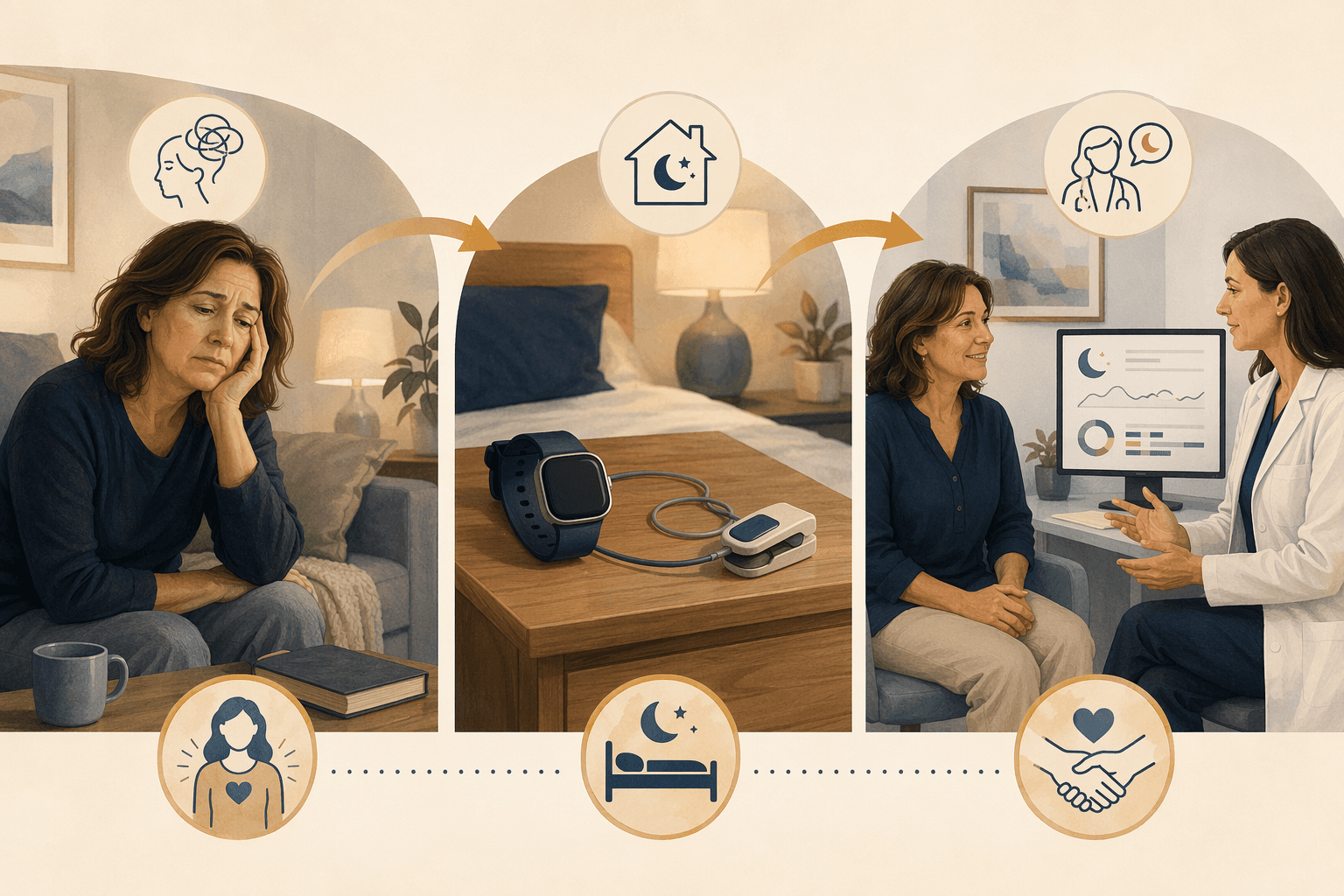
If your sleep problems have persisted for more than a few weeks and are affecting your daytime function, it is time to move beyond self-diagnosis. The diagnostic pathway differs for each condition, and knowing what to ask for can save months of trial and error.
Start with your primary care provider or gynecologist. Describe your symptoms using the comparison table above as a reference. If you have any of the following indicators, request a referral to a sleep specialist or directly ask about a sleep study:
- You wake up gasping, choking, or with a dry mouth
- Your partner has noticed loud snoring or pauses in your breathing during sleep
- You have persistent fatigue or excessive daytime sleepiness despite spending enough time in bed
- You have uncomfortable leg sensations at night that make it hard to fall asleep
- Standard insomnia treatments (sleep hygiene, relaxation techniques) have not worked
- You have a history of iron deficiency or heavy menstrual bleeding
For sleep apnea, a home sleep apnea test (HSAT) is often the first step. These devices measure breathing patterns, oxygen levels, and heart rate during a single night of sleep at home. If the HSAT is negative but clinical suspicion remains high, an in-lab polysomnogram (PSG) may be recommended because it can detect milder or positional sleep apnea that home tests may miss.
For restless legs syndrome, diagnosis is clinical — there is no single test. Your provider will evaluate your symptoms, check your iron levels (specifically ferritin), and rule out other causes such as peripheral neuropathy or medication side effects. A sleep study is not required for RLS diagnosis but may be ordered if sleep apnea is also suspected.
For insomnia, diagnosis is also clinical. Your provider may use the Insomnia Severity Index (ISI) or ask you to keep a sleep diary for one to two weeks. A sleep study is not indicated for uncomplicated insomnia, but it may be ordered if sleep apnea is suspected as a contributing factor.
Why Treatment Differs: CBT-I, PAP Therapy, and Iron
This is the most critical section of this article. The three conditions require fundamentally different treatments. Using the wrong treatment for the wrong condition will not help, and it may delay effective care for months or years.
As clinical psychologist Natalie Solomon, PsyD, quoted by Stanford Lifestyle Medicine, puts it: "Having both sleep apnea and insomnia is common [for perimenopausal and menopausal women], and it's important to remember that they are two different disorders which have two different treatments."
| Condition | First-Line Treatment | How It Works | What Does Not Work |
|---|---|---|---|
| Chronic insomnia | Cognitive behavioral therapy for insomnia (CBT-I) | Addresses the behavioral and cognitive factors that perpetuate insomnia: stimulus control, sleep restriction, cognitive restructuring, and relaxation techniques | Sleep hygiene alone; OTC sleep aids; melatonin (limited evidence for perimenopause insomnia) |
| Obstructive sleep apnea | Positive airway pressure (PAP) therapy (CPAP or APAP) | Delivers pressurized air through a mask to keep the airway open during sleep, preventing apneas and hypopneas | Sleep hygiene; CBT-I; oral appliances (second-line); weight loss alone (insufficient as standalone treatment) |
| Restless legs syndrome | Iron supplementation (if ferritin is low); dopamine agonists or alpha-2-delta ligands (gabapentin, pregabalin) for moderate-to-severe cases | Corrects iron deficiency that triggers RLS; medications reduce the abnormal sensory and motor signals in the legs | Sleep hygiene; CBT-I; PAP therapy; caffeine reduction alone (helpful but insufficient for moderate-to-severe RLS) |
A common scenario illustrates the problem: a woman with undiagnosed sleep apnea is treated for insomnia with CBT-I. She diligently follows the protocol but sees minimal improvement because the root cause — airway obstruction during sleep — has not been addressed. Meanwhile, her sleep apnea continues to fragment her sleep and strain her cardiovascular system.
Conversely, a woman with perimenopause-related insomnia who is diagnosed with mild sleep apnea and started on PAP therapy may find that the machine does not resolve her difficulty falling asleep or her early morning awakenings. She needs CBT-I for the insomnia component, even if the PAP therapy addresses the apnea.
For RLS, the treatment pathway is different again. If iron deficiency is identified, oral iron supplementation can significantly reduce symptoms. For moderate-to-severe RLS, medications that modulate dopamine or calcium channels are effective, but they must be carefully managed to avoid augmentation (worsening of symptoms with long-term use).
Key Takeaways and Next Steps
Perimenopause is not just a time of "bad sleep." It is a period of elevated risk for three distinct sleep disorders — insomnia, obstructive sleep apnea, and restless legs syndrome — that frequently co-occur and are routinely misdiagnosed in women.
- Women's sleep apnea often presents as fatigue, insomnia, or mood changes rather than loud snoring and witnessed apneas. This atypical presentation leads to significant underdiagnosis.
- Restless legs syndrome affects women approximately twice as often as men and becomes more common after menopause. Iron deficiency is a treatable contributor.
- Insomnia, OSA, and RLS can and do co-exist. Having one does not rule out the others.
- Each condition requires a different first-line treatment: CBT-I for insomnia, PAP therapy for OSA, and iron or medication for RLS. Treating the wrong condition will not produce results.
- If your sleep problems persist despite standard approaches, request a sleep specialist referral. A home sleep apnea test or in-lab polysomnogram can identify conditions that clinical interviews alone may miss.
You do not have to accept poor sleep as an inevitable part of midlife. The right diagnosis leads to the right treatment, and the right treatment can restore restful sleep even during the hormonal turbulence of perimenopause.
For a deeper understanding of how sleep apnea and insomnia affect sleep architecture differently, see our guide on Sleep Architecture: NREM and REM Stages Explained.
Comments
Join the discussion with an anonymous comment.