
Waking in Terror: Why This Is Different From Struggling to Fall Asleep
If you have ever been jolted awake by a surge of adrenaline — your heart hammering, your chest tight, gasping for air, drenched in sweat — you know it feels nothing like the quiet frustration of lying awake with a racing mind. The experience is visceral, immediate, and terrifying. And it is not the same as general sleep anxiety.
The problem is that these sudden awakenings are often mislabeled. Patients and clinicians alike may attribute them to nightmares, night terrors, sleep apnea, or simply "bad anxiety." But the treatment for each of these conditions is fundamentally different. Treating a nocturnal panic attack with generic sleep hygiene advice is about as useful as treating sleep apnea with lavender oil. Misidentification leads to months or years of ineffective management.
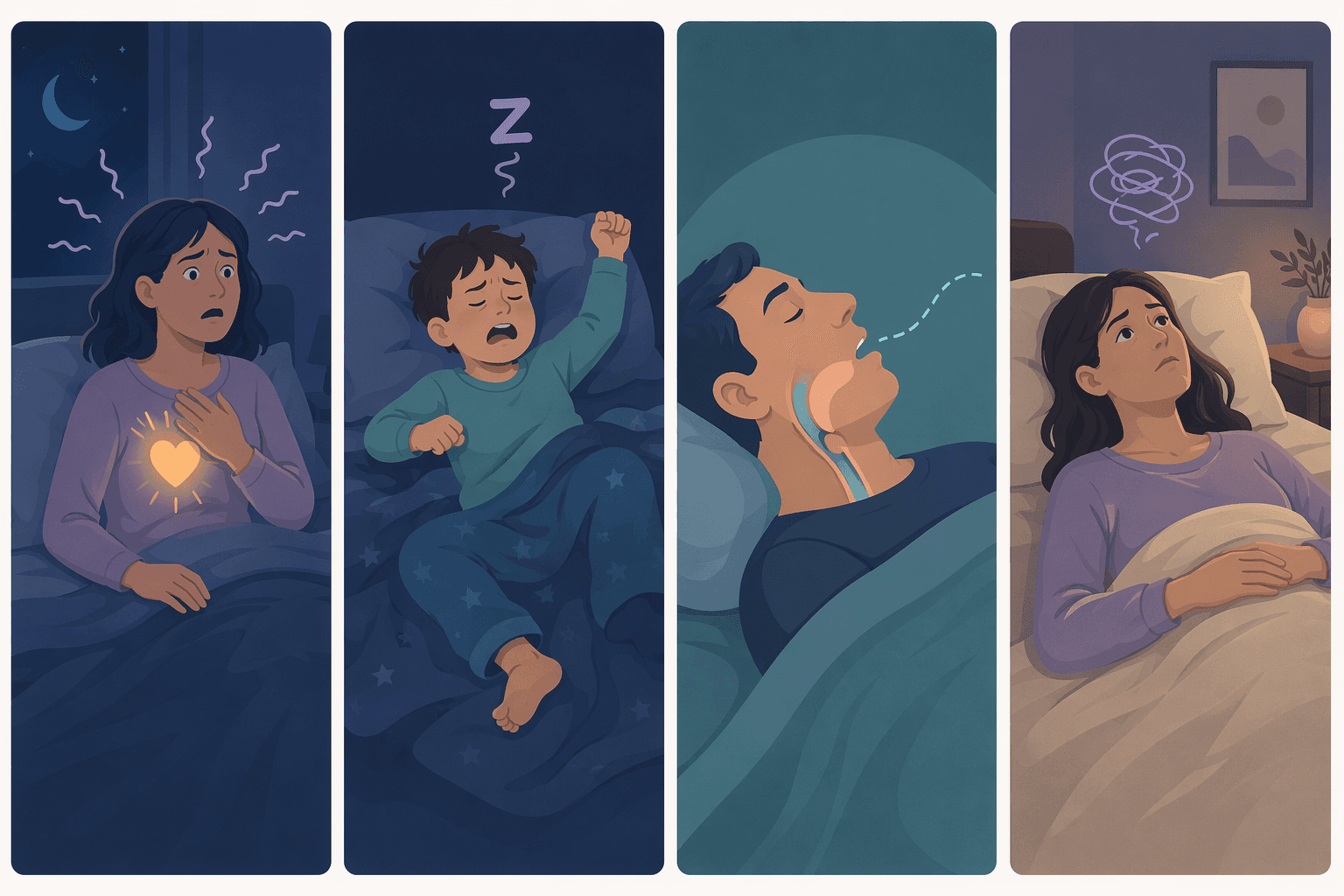
This guide compares four conditions that can cause a person to wake in distress: nocturnal panic attacks, night terrors, sleep apnea, and generalized sleep anxiety. By the end, you should be able to identify which pattern matches your experience and, more importantly, what to do about it.
The Four Conditions at a Glance: A Comparison Table
The table below provides a rapid-reference tool for distinguishing the four conditions. The most critical differentiator is awareness: during a nocturnal panic attack, you are fully awake and conscious. During a night terror, you remain asleep and have no memory of the event.
| Feature | Nocturnal Panic Attack | Night Terror | Sleep Apnea | Sleep Anxiety |
|---|---|---|---|---|
| Awareness during event | Fully awake and aware | Remains asleep | Partially awake (gasping) | Fully awake (before sleep) |
| Memory of event | Clear recall | No memory | Vague or no memory | Clear recall of worry |
| Primary physical sensation | Racing heart, chest pain, terror, choking | Thrashing, screaming, confusion | Gasping, choking, snorting | Muscle tension, restlessness |
| Typical timing | During sleep, often in first few hours | First third of the night (NREM sleep) | Throughout the night, worse in REM | At bedtime or during night wakings |
| Peak duration | Under 10 minutes | Minutes to 30 minutes | Brief (seconds to minutes per event) | Variable (minutes to hours) |
| Age group most affected | Teens and adults | Children (ages 3–12) | Adults (especially 40+) | Adults of all ages |
What Is a Nocturnal Panic Attack?
A nocturnal panic attack is a sudden episode of intense fear that awakens you from sleep. Unlike a nightmare, which is a frightening dream that you gradually emerge from, a nocturnal panic attack hits like a lightning strike — you go from asleep to fully alert in seconds, flooded with physical symptoms.
According to the Cleveland Clinic, about 11% of Americans experience a panic attack each year. Among those with panic disorder — meaning they have recurrent, unexpected attacks — up to 70% also experience nocturnal panic attacks. This means that for a significant portion of the population, the most frightening panic episodes happen not during the day, but in the middle of the night.
The physical symptoms of a nocturnal panic attack typically include:
- Racing or pounding heart
- Chest pain or tightness
- Profuse sweating
- Difficulty breathing or a choking sensation
- Intense terror or a sense of impending doom
- Trembling or shaking
- Nausea or abdominal distress
- Tingling or numbness in the hands or feet
- Chills or hot flashes
Symptoms usually peak within less than 10 minutes, according to both the Cleveland Clinic and Mayo Clinic. After the peak, the intense fear gradually subsides, but the aftermath can leave you feeling shaky, exhausted, and afraid to go back to sleep.
How to Tell the Difference: Nocturnal Panic Attacks vs. Night Terrors vs. Sleep Apnea
The most reliable way to distinguish these conditions is to ask two questions: Were you aware during the event? And do you remember it clearly the next morning?
Nocturnal Panic Attack vs. Night Terror
During a nocturnal panic attack, you are fully awake and aware. You can recall the experience in detail — the racing heart, the terror, the feeling of suffocation. You may be able to call out for help or get out of bed.
During a night terror (also called a sleep terror), the person remains asleep. They may sit up, thrash, scream, or appear intensely frightened, but they are not conscious. Attempts to wake them often lead to confusion or agitation. The next morning, they have no memory of the event. Night terrors occur during NREM (non-rapid eye movement) sleep, typically in the first third of the night, and are most common in children ages 3 to 12.
Nocturnal Panic Attack vs. Sleep Apnea
This is the most common source of confusion — and the most consequential to get right. Sleep apnea causes repeated pauses in breathing during sleep. When breathing resumes, it is often accompanied by a loud gasp, snort, or choking sound that can wake the person (or their bed partner). The waking is caused by airway obstruction and a drop in blood oxygen, not by a sudden feeling of fear.
However, the physical sensations can overlap significantly. A person with sleep apnea may wake with a racing heart, gasping for air, and chest tightness — the same symptoms as a nocturnal panic attack. The key difference is the emotional component. In a nocturnal panic attack, the dominant sensation is intense fear or a sense of doom. In sleep apnea, the dominant sensation is the physical struggle to breathe, often without the accompanying terror.
The Cleveland Clinic notes that research suggests nocturnal panic attacks may involve more severe breathing symptoms than daytime attacks, which can further muddy the waters. This is why medical screening is essential — especially since people with asthma, COPD, or sleep apnea have higher rates of nocturnal panic attacks.
Nocturnal Panic Attack vs. Generalized Sleep Anxiety
Generalized sleep anxiety is the experience of lying awake with worry — ruminating about the day, planning for tomorrow, or catastrophizing about not being able to sleep. It is a cognitive state, not a sudden physiological event. Sleep anxiety may prevent you from falling asleep or wake you during the night, but the transition is gradual. You do not go from asleep to full-alert panic in seconds.
Nocturnal panic attacks, by contrast, are discrete episodes with a clear onset, peak, and resolution. They are not a prolonged state of worry — they are an acute physiological storm that passes relatively quickly.
Why Do Nocturnal Panic Attacks Happen?
The exact cause of nocturnal panic attacks is not fully understood. They can occur with no clear trigger, which is part of what makes them so unsettling. However, research has identified several factors that increase the risk.
According to the Cleveland Clinic, risk factors include:
- Panic disorder (the strongest predictor)
- Generalized anxiety disorder
- Depression
- Insomnia
- Sleep apnea and other sleep-disordered breathing
- Post-traumatic stress disorder (PTSD)
- Obsessive-compulsive disorder (OCD)
- Substance use disorders
The Mayo Clinic adds that underlying factors may include genetics, stress, and certain changes in brain function. Importantly, an underlying medical condition — such as a sleep disorder, asthma, or a thyroid condition — can produce symptoms that mimic a panic attack. This is why a thorough medical evaluation is a critical first step, not an afterthought.
The relationship between nocturnal panic and sleep apnea is particularly important. The Cleveland Clinic notes that people with asthma, COPD, or sleep apnea have higher rates of nocturnal panic attacks. It is possible that the physiological stress of repeated breathing interruptions sensitizes the nervous system, making it more likely to trigger a panic response during sleep.
Evidence-Based Treatment: What Works for Nocturnal Panic Attacks

The good news is that nocturnal panic attacks are highly treatable. The treatment hierarchy is well-established and supported by both the Cleveland Clinic and Mayo Clinic.
First-Line Treatment: Cognitive Behavioral Therapy (CBT)
Cognitive Behavioral Therapy is the first-line treatment for panic disorder and nocturnal panic attacks. The Mayo Clinic explains that CBT helps retrain the body to react less intensely to panic symptoms and helps manage the anxious thoughts that fuel the cycle.
For nocturnal panic attacks specifically, CBT often includes:
- Psychoeducation about the physiology of panic (understanding that the symptoms are not dangerous)
- Cognitive restructuring to challenge catastrophic interpretations of physical sensations
- Interoceptive exposure — deliberately inducing harmless panic-like sensations (e.g., rapid breathing) in a controlled setting to reduce fear of the sensations
- Sleep-focused strategies to address any fear of sleep or bedtime avoidance that has developed
For many patients, CBT alone can eliminate nocturnal panic attacks over a period of 6 to 8 weeks. If insomnia is also present, CBT-I (Cognitive Behavioral Therapy for Insomnia) can be integrated. See our guide on self-directed CBT-I techniques for approaches you can begin on your own.
Second-Line Treatment: Antidepressants (SSRIs)
Selective serotonin reuptake inhibitors (SSRIs) are the most commonly prescribed medications for panic disorder. They are not fast-acting — they typically take 4 to 6 weeks to reach full effect — but they can significantly reduce the frequency and intensity of both daytime and nocturnal panic attacks. Common SSRIs used for panic include fluoxetine, sertraline, and paroxetine.
Third-Line and Cautious Options: Benzodiazepines and Beta-Blockers
Benzodiazepines (such as alprazolam or clonazepam) can provide rapid relief during an acute panic attack, but they carry significant risks, including dependence, tolerance, and withdrawal. They are generally reserved for short-term or as-needed use under close medical supervision. Beta-blockers (such as propranolol) can help control the physical symptoms of panic (racing heart, trembling) but do not address the underlying emotional component.
Red Flags: When to Rule Out Sleep Apnea and Other Conditions
Before assuming that your nighttime awakenings are panic attacks, it is essential to rule out other medical conditions that can produce similar symptoms. The Mayo Clinic specifically advises that an underlying condition such as a sleep disorder, asthma, or thyroid condition can cause symptoms that mimic a panic attack.
The following red flags suggest that sleep apnea — rather than a panic disorder — may be the primary cause of your symptoms:
- A bed partner reports that you snore loudly, gasp, or stop breathing during sleep
- You wake with a choking or gasping sensation, but without the accompanying feeling of terror
- You experience excessive daytime sleepiness, even after what seems like a full night's sleep
- You wake with morning headaches or a dry mouth
- You have a history of obesity, hypertension, or type 2 diabetes
- You are over 40 and male (though sleep apnea affects women too, especially after menopause)
If any of these apply to you, a sleep study (polysomnography) is the gold standard for diagnosis. For a comprehensive overview of sleep apnea symptoms and diagnosis, see our Sleep Apnea FAQ.
Other conditions to consider include asthma (especially nocturnal asthma), thyroid disorders (particularly hyperthyroidism), and cardiac arrhythmias. A thorough medical workup should include a physical exam, blood work (thyroid panel, basic metabolic panel), and possibly an electrocardiogram (ECG).
The Bottom Line: You Are Not Alone, and Effective Treatment Exists
Waking up in a state of terror is one of the most frightening experiences a person can have. But it is also one of the most treatable. Nocturnal panic attacks are common — affecting up to 70% of people with panic disorder — and they respond well to targeted treatment.
The first step is accurate diagnosis. Use the comparison table in this guide to assess your symptoms, and pay close attention to the red flags for sleep apnea and other medical conditions. If you are unsure, err on the side of a thorough medical evaluation.
Once other conditions are ruled out, the path forward is clear: Cognitive Behavioral Therapy is the first-line treatment, with SSRIs as a second-line option. Many people find that their nocturnal panic attacks resolve completely within 6 to 8 weeks of starting CBT.
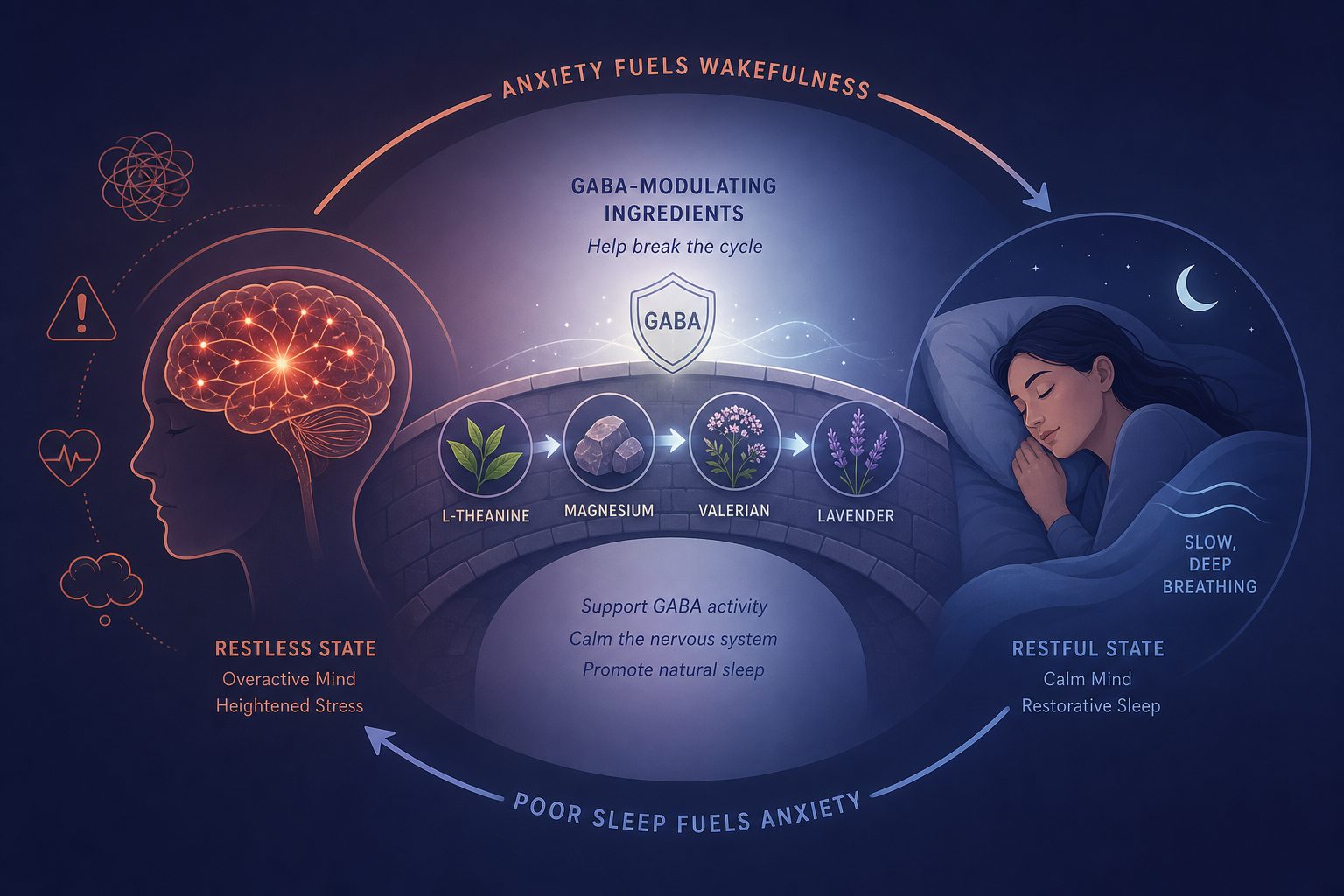
If you are also struggling with insomnia or fear of sleep as a result of these attacks, our guide on sleep anxiety and insomnia provides a deeper look at the bidirectional relationship between anxiety and poor sleep.
You do not have to live in fear of going to sleep. Proper diagnosis and evidence-based treatment can restore your nights — and your peace of mind.
Comments
Join the discussion with an anonymous comment.