
Start With Safety, Not Sleep
If local alerts still call for sheltering, monitoring, or evacuation readiness, sleep can wait; follow the National Weather Service guidance for the current threat level first [1]. Once you are already in a safe place and the main problem is that your body will not stand down, the question changes from storm prep to nervous-system control.
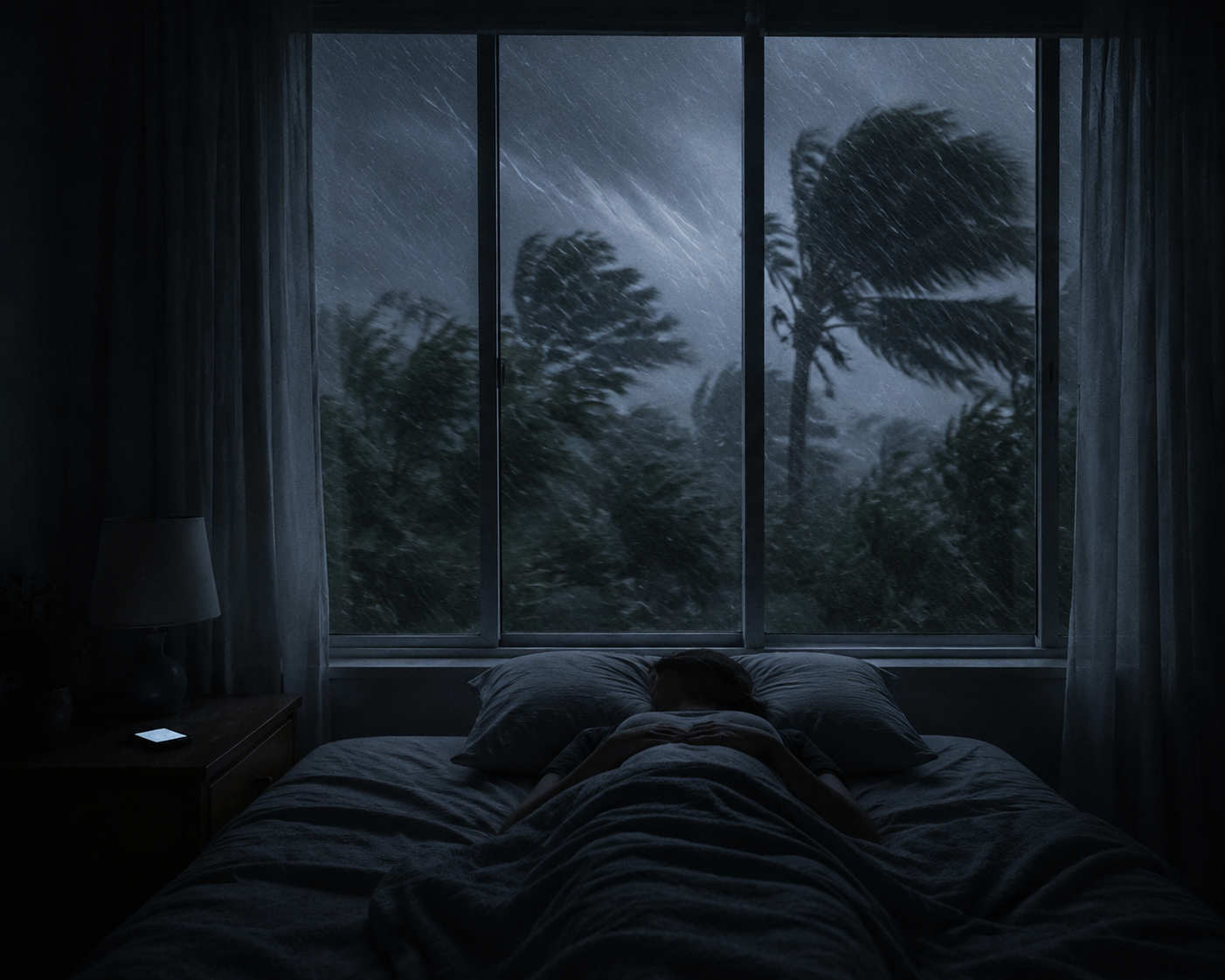
That reaction is common. Ball State reported in 2014 that about 1 in 10 Americans may have severe weather phobia that causes sleep loss or helplessness, and 85% reported at least some severe-weather fear [2]. The National Weather Service also has a storm stress and anxiety resource, which is a useful reminder that this is a recognized response, not a failure of discipline [4].
For a deeper look at why the barrier is internal hyperarousal rather than noise or light, see Why You Can't Sleep During Storms (It's Not the Noise).
Why Tropical Storm Anxiety Blocks Sleep
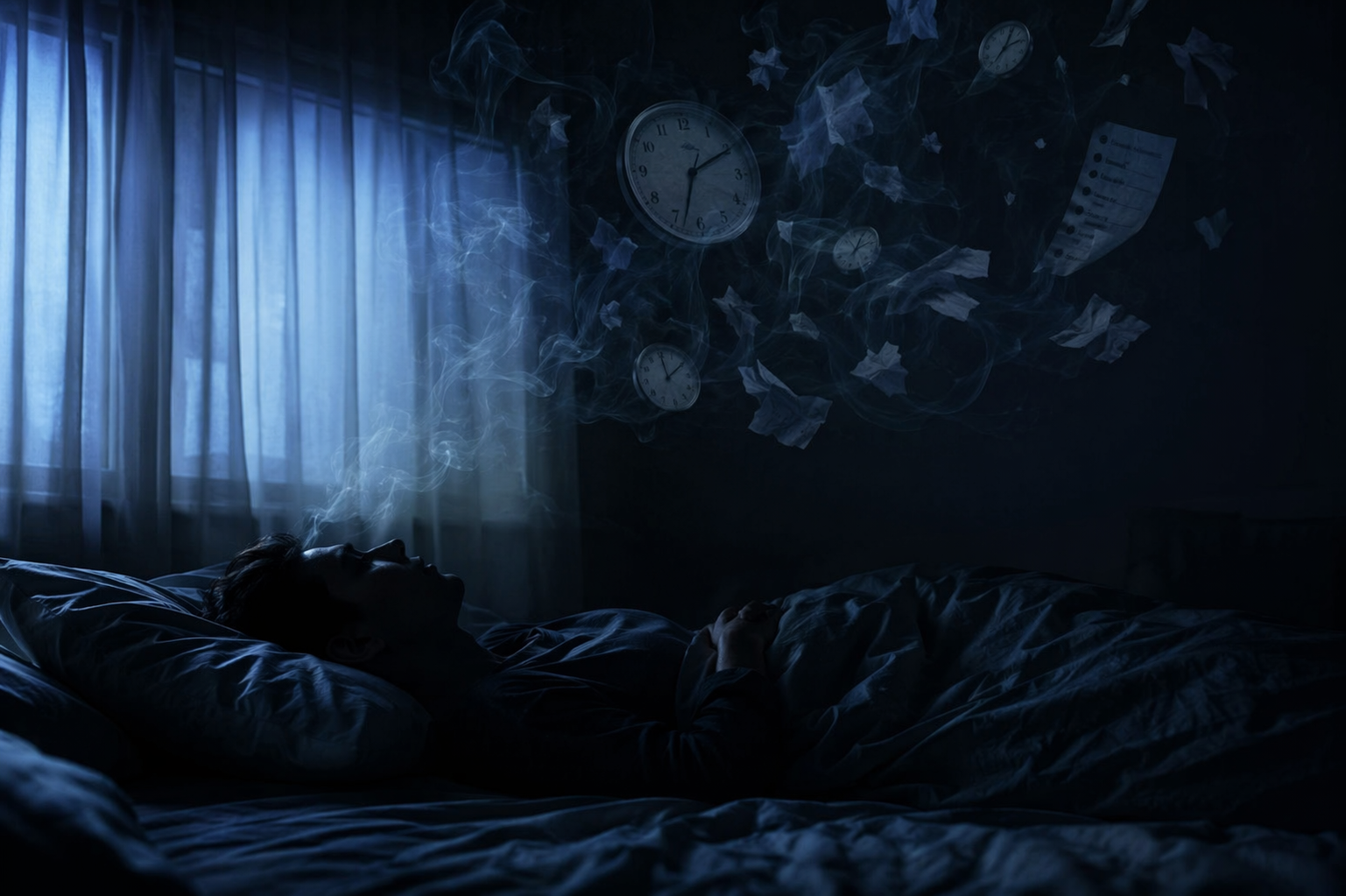
The problem is not just worry as a thought. Threat cues can keep cortisol and sympathetic activation elevated, and sleep loss makes the amygdala more reactive, so the next alert, gust, or headline feels bigger than it is [5].
That is why TV and smartphone storm coverage often makes the night worse; Baylor College of Medicine notes that repeated visual and audio coverage can intensify anxiety more than reading updates [3]. If you keep replaying the same images, the nervous system stays on duty even after the practical tasks are done.
That also explains why earplugs, blackout curtains, and a cozier blanket sometimes do very little. They can help with sound or light, but they do not answer the body that is still acting as if it needs to monitor the house.
What Actually Helps Tonight
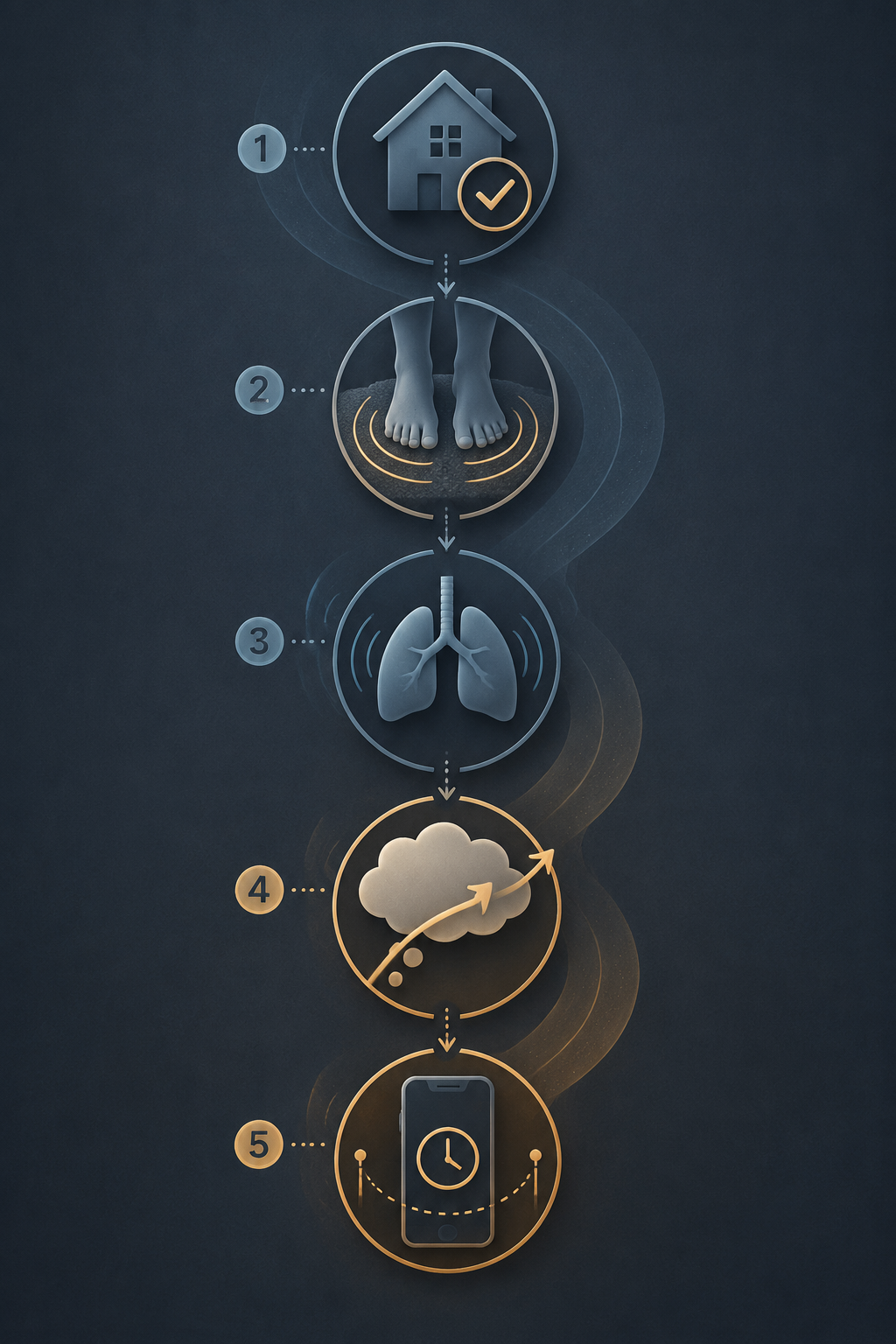
- Ground first. Name three things you can see, three you can touch, and three you can hear. Baylor recommends the 3-3-3 exercise for breaking the loop and pulling attention back into the room [3].
- Slow the arousal next. Use controlled breathing with a longer exhale and keep the pace steady for a few minutes. The goal is not to force sleep; it is to turn down sympathetic activation enough that sleep can return [5].
- Write the storm plan once. Put the next action, the contact list, the charger location, and the trigger for moving to shelter on paper. ADAA notes that a written plan reduces the mental load of deciding the same things repeatedly at night [6].
- Reframe after the body is less keyed up. If the mind keeps jumping to worst-case scenarios, use cognitive shuffling or a brief reframing pass to give the thoughts something non-catastrophic to do [5].
- Set information limits. Choose a few check times and prefer text updates over video or endless live coverage, because Baylor notes that repeated audio-visual storm coverage can intensify anxiety more than reading [3].
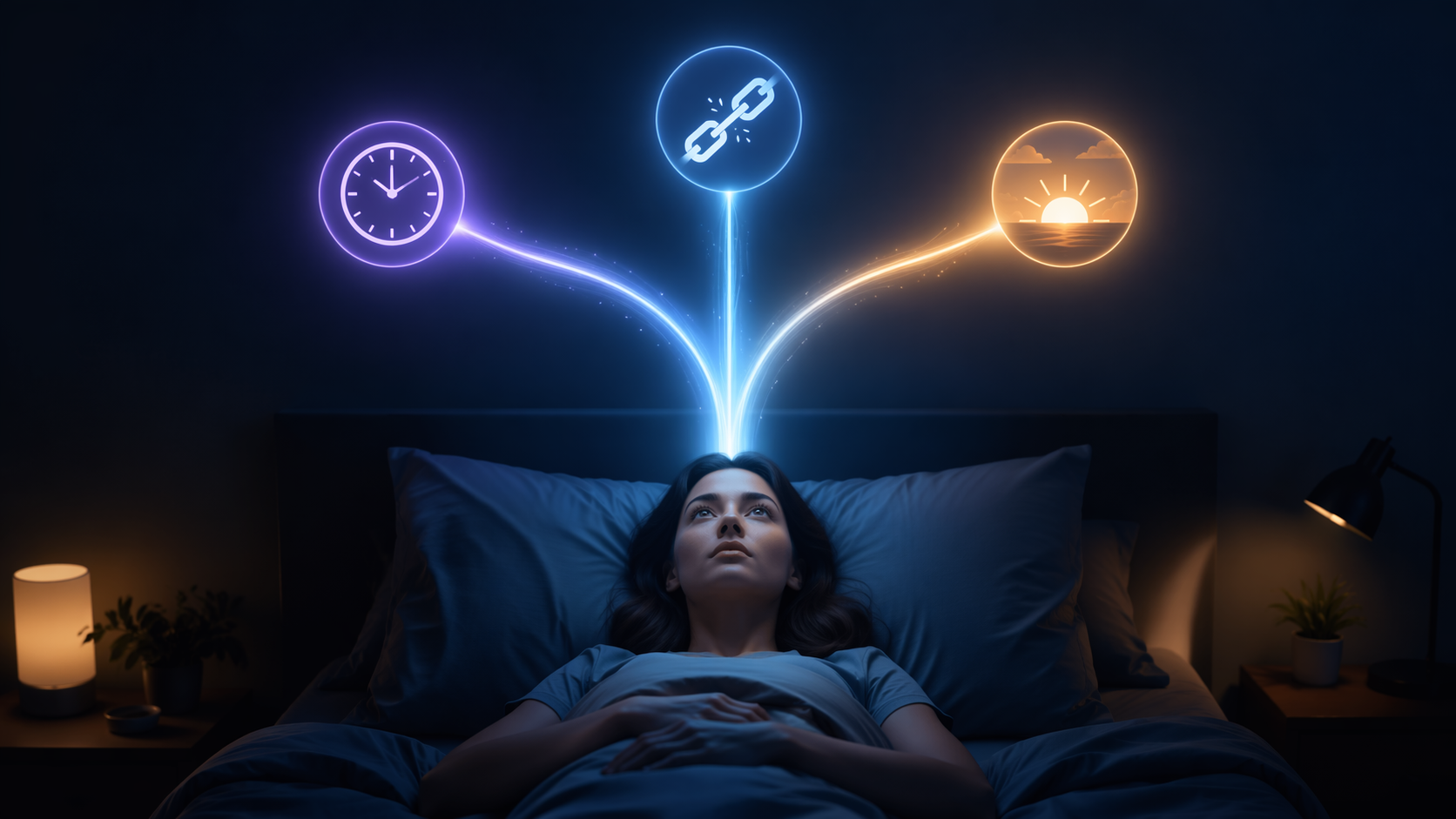
The order matters. Grounding comes before breathing, breathing comes before reframing, and information limits work best when you set them before you are already exhausted by checking. If you try to reason with the fear while your body is still on watch, you usually just give it more material.
If you need the safety-side version of this decision, How to Sleep Safely During a Thunderstorm Warning is the better next step.
When the Night Still Will Not Settle
Checking helps only when it answers a decision. Once it becomes reassurance-seeking, pick a schedule and keep the feed text-based; Baylor recommends text updates over video when anxiety is high [3].
The goal is not zero anxiety. Some alertness is adaptive during a storm, and what you want is enough regulation to rest when it is safe. If the storm passes and the hypervigilance, sleep loss, or replaying keeps running beyond the storm window, the problem has moved past one-night self-management and is worth professional support.
References
- Actions to Take When a Tropical Storm or Hurricane Threatens — National Weather Service
- One in 10 suffer severe weather phobia — Ball State University, 2014
- Navigating pre-storm anxiety — Baylor College of Medicine
- Storm Stress and Anxiety — National Weather Service
- Hurricane Preparedness and Sleep — Amerisleep
- Severe Storms: How to Reduce Your Anxiety — ADAA
Comments
Join the discussion with an anonymous comment.