
Sleeping during tropical storm landfall is not about making the night feel normal. It is about a two-part plan: prepare one interior room so the house can go noisy, warm, and dark, then manage your mind enough to get a few safe hours of rest.
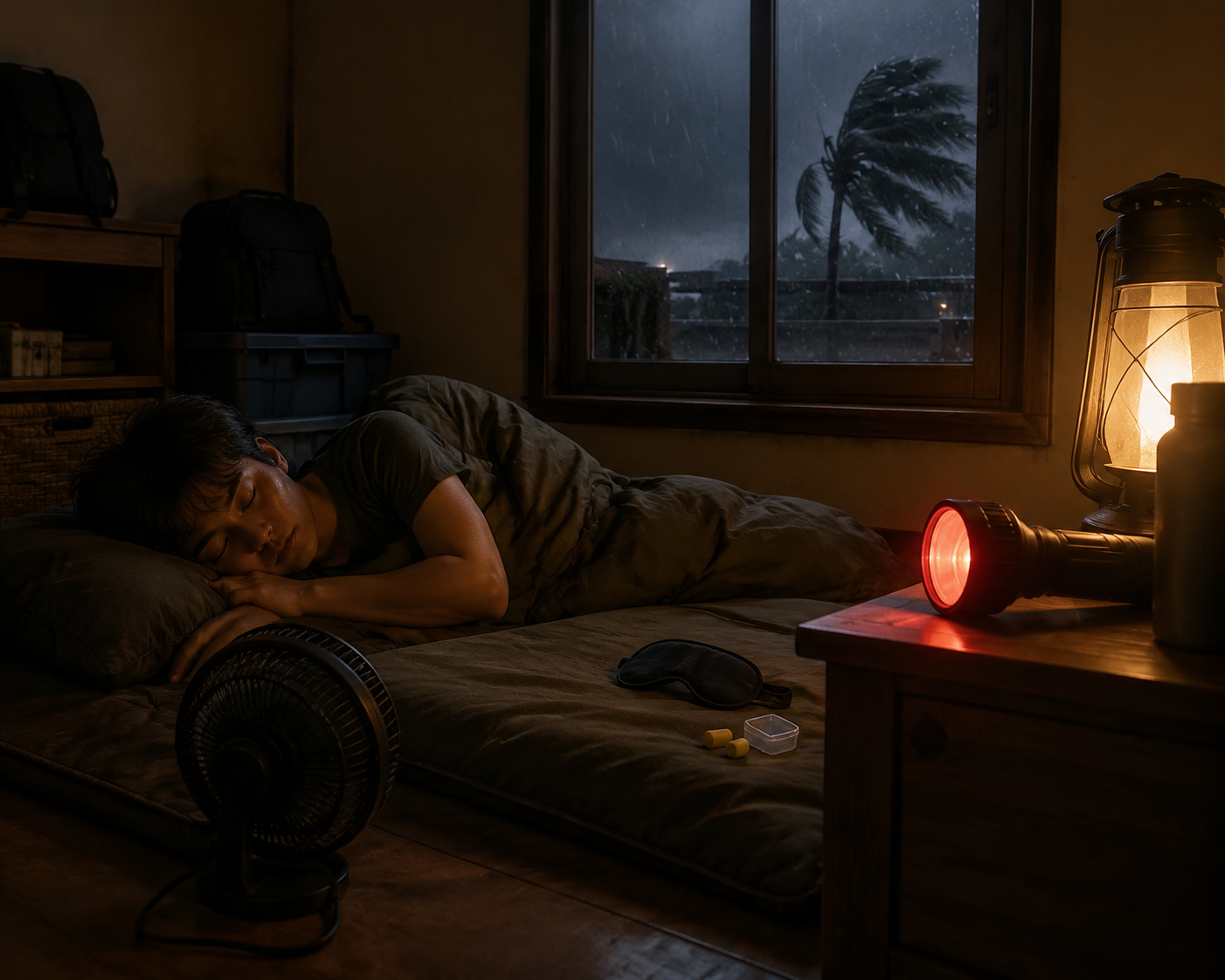
Prepare the room before dark
If local officials tell you to evacuate, leave; this plan is for a night when sheltering in place is the call. The safest sleep spot is an interior room on the lowest floor, away from windows and exterior walls, with a real buffer from glass. A common rule of thumb is at least 6 feet from any window, which matches the basic guidance from NWS, CDC, and storm-sleep prep resources.[1][2][3]
- Move the mattress, sleeping bag, or floor pad into the interior room before the wind picks up.
- Charge phones, battery packs, fans, lanterns, and any medical devices first, then decide what can be shut down safely.
- Stage the things that stop the night from turning chaotic: earplugs that actually reduce noise, an eye mask, a red-filter flashlight, water, meds, and a small bag for trash or wet items.[3]
- Use layered bedding so you can peel off or add a layer if the room changes temperature after the power goes out.[4]
- If your house setup and local guidance make it the safer move, shut off the main power only after every battery device is charged; that reduces fire and electrocution risk if water gets where it should not.[3][4]
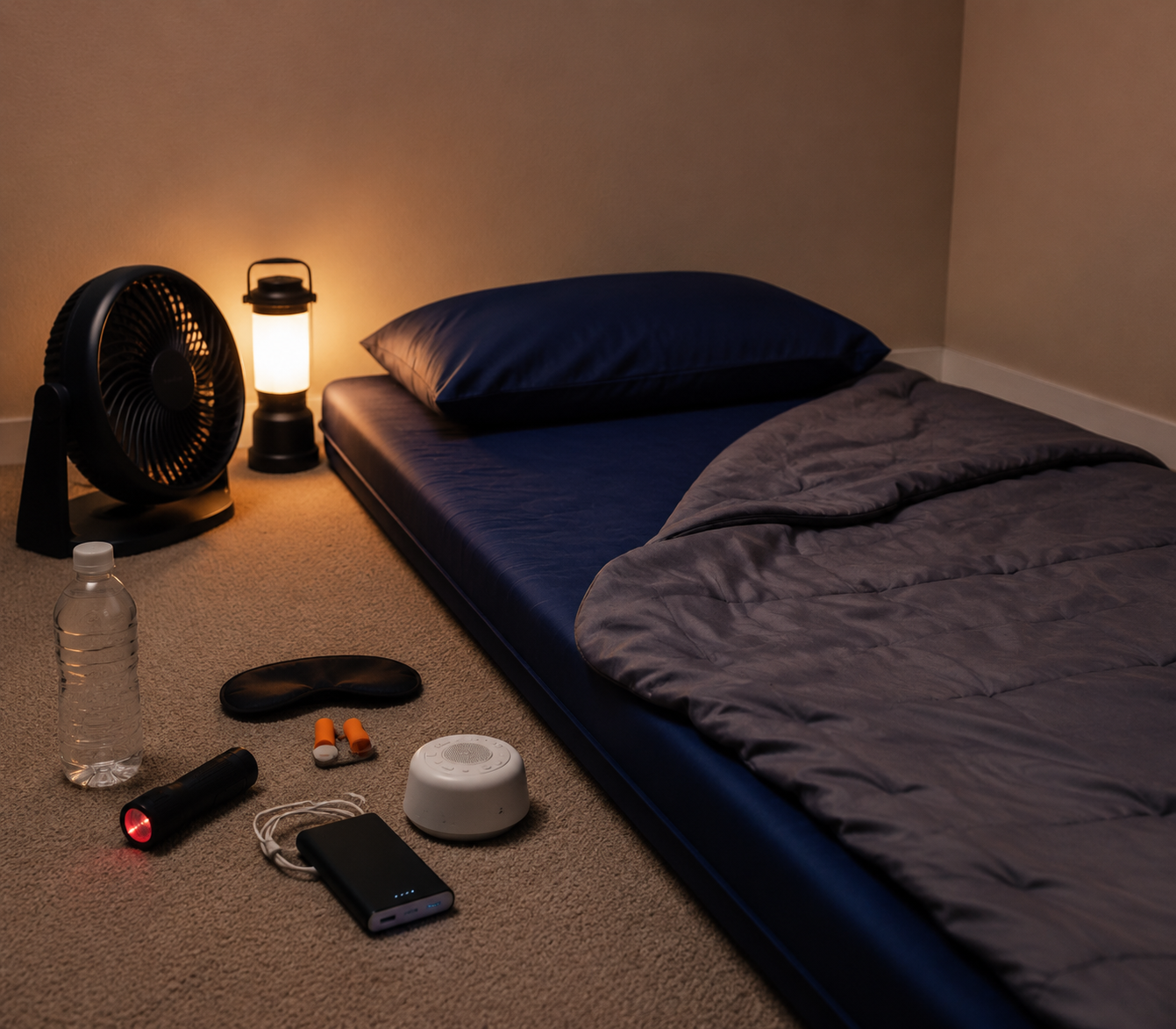
Make the night easier on your body
The goal is not 7 to 8 hours of clean sleep. A more realistic target during active landfall is 3 to 5 hours of broken rest, and treating the night like an ordinary bedtime only makes it feel worse.[3] If you want the sensory side broken out in more detail, Target Noise, Light, and Anxiety to Sleep During a Tropical Storm covers that narrower problem.
The body needs brief instructions, not a lecture. Slow breathing with a longer exhale, progressive muscle relaxation, a quick worry journal, and the 5-4-3-2-1 grounding exercise all work because they keep the mind from sprinting ahead of the weather. A simple version of 4-7-8 breathing is inhale for 4 counts, hold for 7, and exhale for 8. If you are checking updates, read them instead of watching TV news; the video loop tends to crank the nervous system up faster than text.[3][5][6]
If thunder and lightning have always hit harder than they should, that is not rare. About 8% of adults deal with a specific phobia over a 12-month period, specific phobias are about twice as common in women as in men, and astraphobia is one of the common forms.[7] The point is not to label yourself; it is to stop treating fear as a personal failure.
If more than one adult is in the house
When two or more adults are sheltering together, shift-sleeping is often the most honest plan. One person stays awake with the alerts, flashlight, and flood check while the other gets the first stretch of rest, then you trade. This is not elegant, but it keeps someone functional if conditions change and prevents both adults from being exhausted at the same time. If one of you uses CPAP, keep the battery, mask, and hoses in the same reach as the rest of the sleep kit; the companion guide on Why Hurricane Preparedness Is Critical for Your Sleep with CPAP goes deeper on that setup.
That is the standard for sleep during tropical storm landfall: a safe room, staged gear, alerts on, and expectations trimmed down to a few broken hours. The goal is a safe, clear-headed morning, not a perfect night.
References
- Hurricane Safety Tips - National Weather Service.
- Hurricane Preparedness - CDC.
- Storm sleep guidance - Amerisleep.
- Power outage sleep tips - Nest Bedding, June 8, 2026.
- Anxiety and news consumption - Baylor College of Medicine, August 2025.
- Grounding techniques for anxiety - CBT Central Florida.
- Specific phobia - Cleveland Clinic, reviewed 2021.

Comments
Join the discussion with an anonymous comment.