
The strange thing about how thunderstorms affect sleep quality is that both stories can be true. One person hears rain against the window and drops off faster than usual. Another lies awake with a tight chest, jolts at every clap of thunder, or wakes to worse CPAP data the next morning. The same storm can even do both to the same person: calming at first, disruptive later.
That is not a failure of willpower, and it is not solved by deciding whether storms are “relaxing” or “bad for sleep.” A thunderstorm changes several inputs at once: air pressure, sound pattern, light exposure, temperature, perceived safety, and for some people, upper-airway stability. The useful question is which pathway is carrying the night.
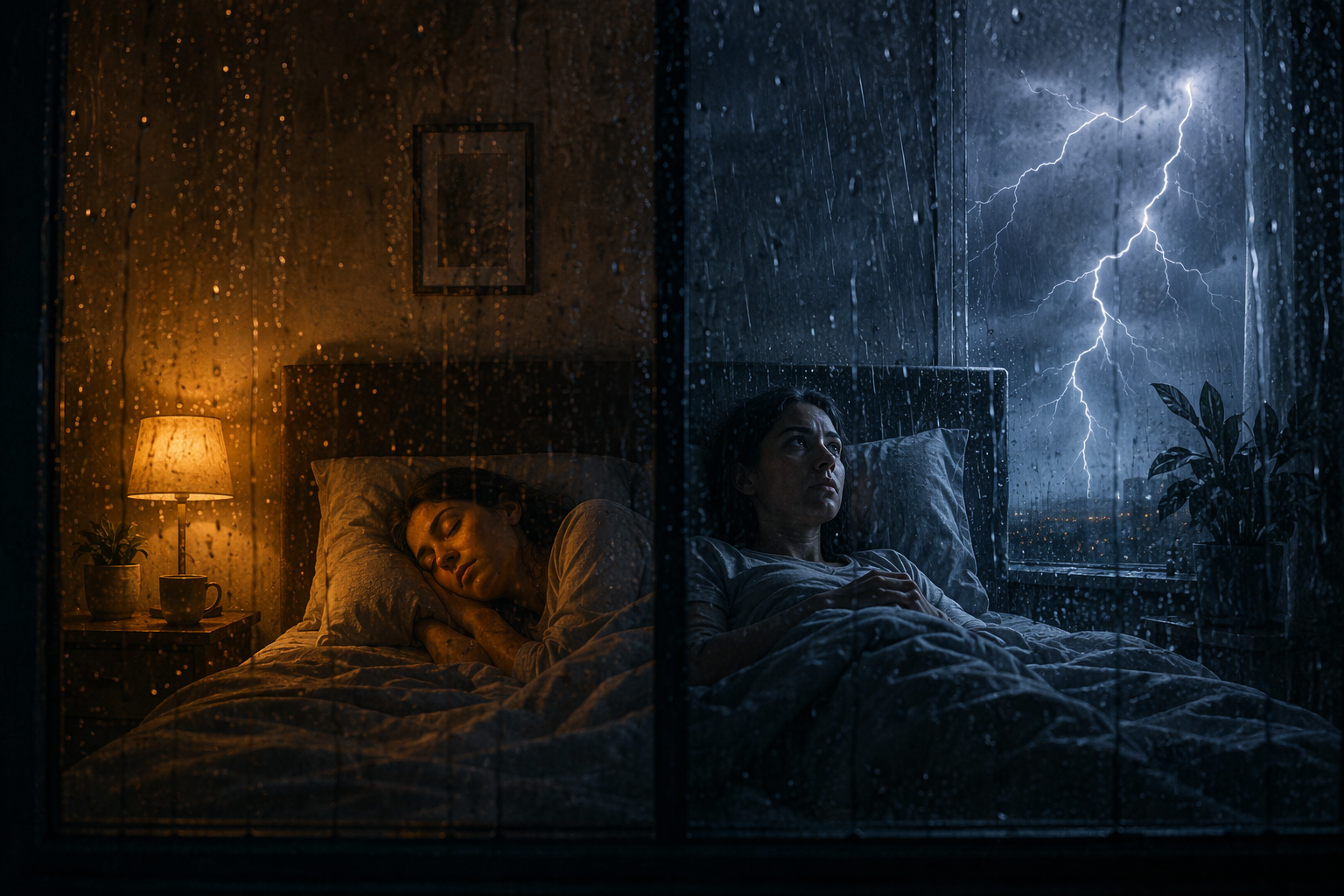
The same pressure drop can mean drowsiness for one sleeper and worse breathing for another
Barometric pressure is where the cozy storm explanation starts to become less cozy. Falling pressure before and during storms is often described as a reason people feel sleepy. Popular weather explanations describe a proposed pathway in which pressure changes may be associated with increased melatonin and drowsiness, but the direct human evidence behind that specific pressure-to-melatonin chain is not as firm as the way it is often repeated online. It is a plausible explanation to treat cautiously, not a settled rule that storms chemically sedate everyone.[1]
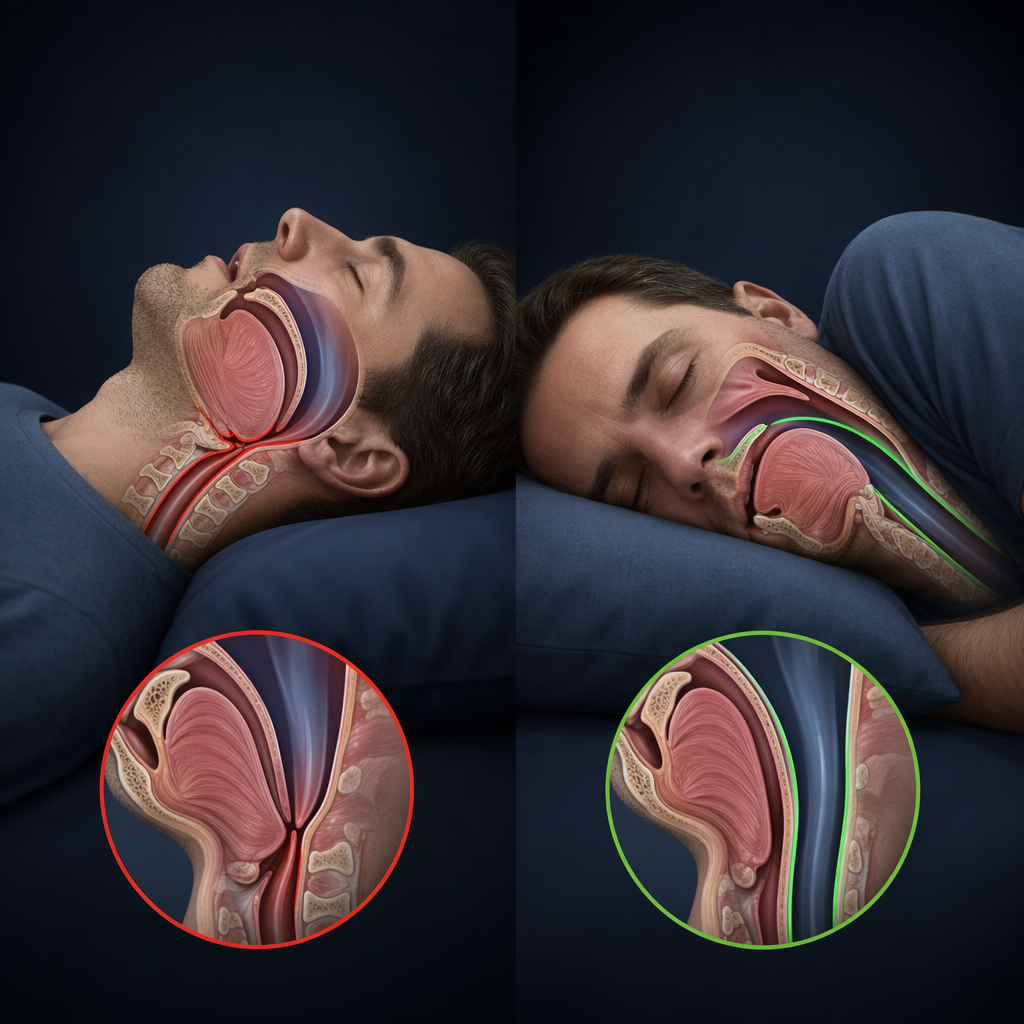
The stronger clinical counterweight is sleep-disordered breathing. In a 2010 study of 537 patients undergoing polysomnography, Doherty and colleagues found that lower barometric pressure was associated with more obstructive apnea events. The obstructive apnea index was 23.9 events per hour in the lowest pressure quartile versus 17.1 events per hour in the highest pressure quartile, with a statistically significant linear relationship.[2]
That does not mean every storm night causes sleep apnea, or that pressure explains every bad night in a person with apnea. The study involved patients referred for PSG, not a random sample of all sleepers. But it does make one point hard to wave away: for some people, storm sleep is not only about mood, noise, or preference. A meteorological change can line up with a measurable breathing change during sleep.
This is where many simple rain-sleep explanations become too blunt. If a pressure drop makes you feel heavy-eyed at 9 p.m., that does not prove the rest of the night will be restorative. A person with obstructive sleep apnea may fall asleep easily and still have more fragmented, oxygen-stressed sleep. Those are different endpoints, and mixing them up is one reason storm sleep feels so confusing.
Rain noise may help sleep onset; thunder is a different acoustic event
Steady rain belongs in a different category from thunder. Rain is closer to broadband sound: continuous, textured, and relatively predictable. In a 2017 study, broadband sound reduced sleep onset latency by 38%. That finding is useful, but only if it stays attached to the endpoint it measured. It supports the idea that rain-like sound may help some people fall asleep faster; it does not prove that a storm reduces awakenings, improves REM sleep, or protects sleep from a nearby thunderclap.[3]
Small studies on nature sounds point in the same general direction but deserve the same restraint. An Oura discussion of a Journal of Sleep Research study noted that 17 participants had improved deep sleep quality with nature sounds, but a sample that small is better treated as suggestive than definitive.[4]
Thunder works differently because the sleeping brain is not only listening for pleasantness. It is monitoring threat and novelty. A sudden, irregular, high-intensity sound can trigger a startle response quickly enough that the body reacts before the waking mind has a tidy explanation for what happened. The practical difference is obvious at 2 a.m.: a fan, rain track, or real rainfall may smooth the acoustic background, but it may not prevent a close thunderclap from punching through it.
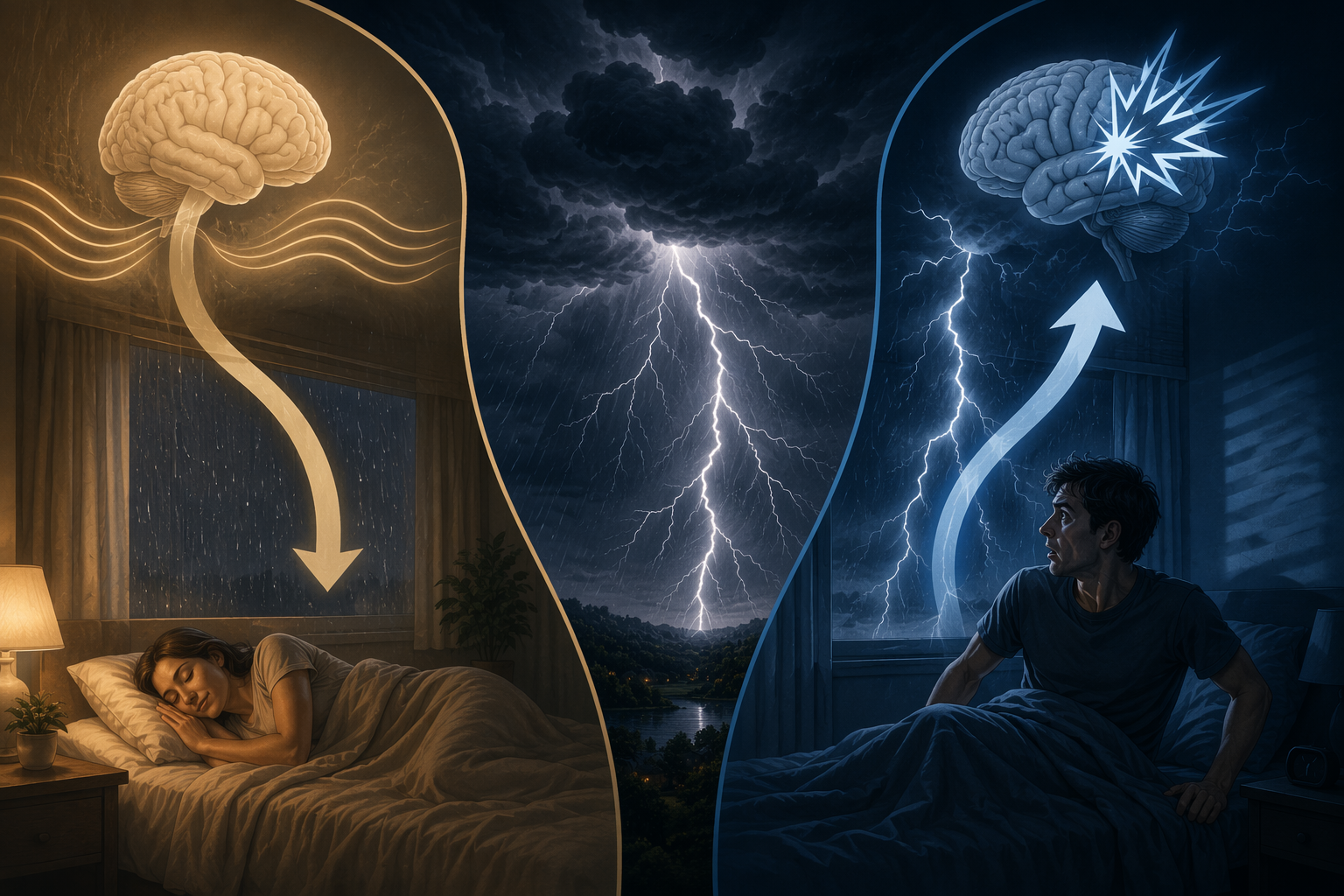
Storm anxiety is not just “being sensitive”
Some people are awake before the thunder is loud. Their sleep is disrupted by forecast-checking, lightning alerts, memories of previous damage, responsibility for children or pets, or the feeling that the house itself is being tested. That pattern is different from being awakened by one sharp sound.
At the clinical end of the spectrum is astraphobia, an intense fear of thunder and lightning. Cleveland Clinic describes astraphobia as a specific phobia and notes that about 8% of adults have specific phobias, with women affected about twice as often as men. It also identifies cognitive behavioral therapy and exposure therapy as treatment approaches.[5]
Not every bad storm night is a phobia. Nashville Psych separates storm responses into a spectrum: ordinary storm stress, subclinical anxiety, astraphobia, and storm trauma or PTSD-related reactions.[6] That distinction matters because the response should match the mechanism. A person who dislikes thunder may need sound management and reassurance. A person who spends storm season in anticipatory dread may need a clinical plan, not another playlist.
A quick way to sort your storm pattern
The easiest mistake is to ask, “Do storms help or hurt my sleep?” A better self-check is to separate the first half hour from the rest of the night, then notice what changes on storm nights compared with ordinary nights.
| What you notice | Most likely dominant pathway | What that suggests |
|---|---|---|
| You fall asleep faster with steady rain, especially when thunder is distant or absent | Broadband sound, darkness, cooler sleep environment, possible drowsiness from weather changes | Rain may be helping sleep onset; do not assume it improves the entire night |
| You feel sleepy before the storm but wake unrefreshed, snore more, or see worse CPAP or apnea data | Breathing vulnerability under lower barometric pressure | Treat this as a sleep-disordered breathing clue, especially if it repeats |
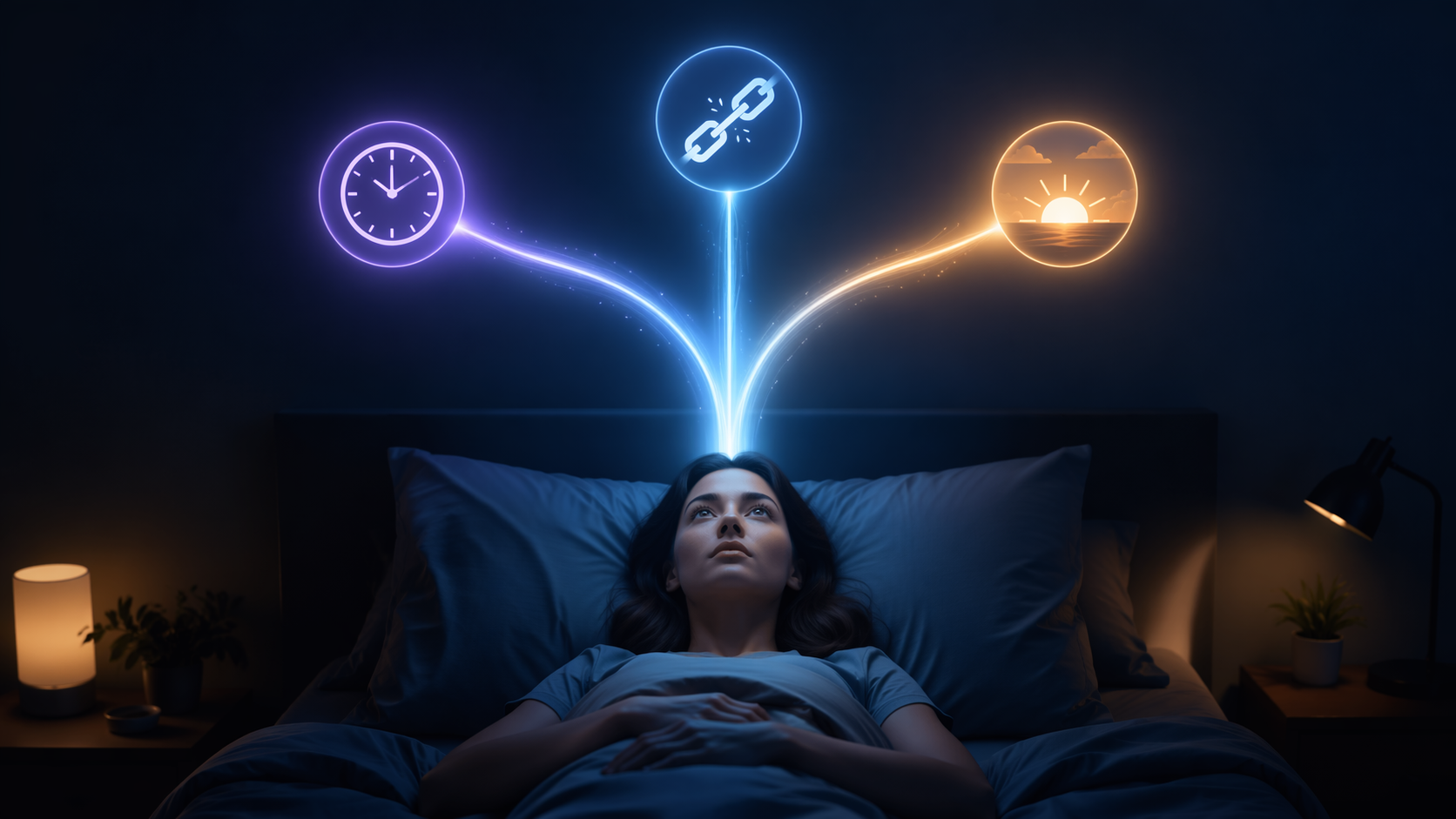
| You are awake before the storm arrives because you are monitoring forecasts or feeling unsafe | Anticipatory anxiety or storm fear | The main sleep problem begins before the sound environment changes |
| You sleep well through rain but wake sharply when thunder is close and irregular | Acoustic startle and threat monitoring | Masking and room choice may help, but only up to the intensity of the thunder |
| Your pattern changes from storm to storm | Multiple pathways competing | Track severity, timing, pressure changes, thunder proximity, and breathing symptoms rather than looking for one permanent category |
If you use a wearable, CPAP machine, or sleep diary, the useful comparison is not “storm versus no storm” in the abstract. Compare storm nights with similar bedtime, alcohol intake, congestion, room temperature, and sleep schedule. Otherwise, the weather gets blamed for everything that happened to be different that day.
What to do depends on the pathway
If steady rain helps you fall asleep
You can use that effect without turning it into a cure-all. A rain track, fan, white-noise machine, or other continuous sound can make the room less acoustically sharp. Keep the volume low enough that it blends into the background rather than becoming the thing your brain has to monitor. If your sleep problem is mostly inconsistent timing, light exposure, caffeine, or an overheated room, the better foundation is still ordinary sleep hygiene, not a more elaborate storm soundtrack.
If thunder wakes you suddenly
The goal is not to make thunder pleasant. It is to reduce contrast. A more interior room, closed windows, heavy curtains, a fan, or steady background sound can soften the jump from silence to thunder. Earplugs may help some people, but they can also make internal body sounds feel louder or create a sense of being less aware of the environment. The test is whether you wake less abruptly, not whether the setup looks like a perfect sleep routine.
If apnea signs worsen during storms
This is the branch to take seriously. Repeated storm-night worsening in snoring, witnessed pauses, morning headaches, oxygen drops, or CPAP event data is not well handled by adding calming audio. The Doherty study does not diagnose an individual from the weather report, but it supports the possibility that pressure changes can matter for obstructive events in vulnerable sleepers.[2]
If you already have a CPAP prescription, storm season is not the time to skip treatment because rain makes you feel sleepy. If you suspect apnea and have not been evaluated, recurring breathing-related storm patterns are worth bringing to a clinician, especially when they appear alongside daytime sleepiness, loud snoring, or observed breathing pauses.
If the storm starts in your mind before it reaches your window
For anticipatory storm anxiety, the key event may be the first alert, not the first thunderclap. Practical preparation can help: charge devices earlier, decide where you will sleep if warnings escalate, and set a limited weather-checking schedule instead of refreshing radar from bed. If the fear is persistent, impairing, or tied to past trauma, cognitive behavioral approaches are more relevant than sleep-product tinkering. For chronic insomnia patterns, CBT-I may be part of the treatment conversation, while phobia-focused CBT or exposure-based therapy may be more appropriate when the central problem is fear of storms.
When the storm is not only a sleep issue
Thunderstorms can overlap with other health stressors. Harvard Health has discussed thunderstorm-associated risks including sleep apnea exacerbation, cardiovascular strain, thunderstorm asthma, and a reported 3% increase in emergency department visits related to thunderstorm asthma.[7] That does not mean a poor night of storm sleep is automatically dangerous. It does mean that breathing symptoms, chest symptoms, asthma flares, or repeated oxygen concerns belong in a medical conversation rather than a lifestyle-only explanation.
Sleep aids and supplements also need to be matched to the actual problem. If the issue is fear conditioning, a sedating product may not teach the nervous system that storms are safe. If the issue is untreated apnea, sedation can be the wrong direction. If the issue is occasional sleep-onset trouble after a stressful forecast, short-term options may be worth discussing, but they belong behind the more basic question: what is the storm doing to this sleeper? For broader context, compare options by sleep problem rather than by popularity in an evidence-tiered insomnia remedy guide.
The practical answer
Thunderstorms do not have one sleep effect. They can make the room darker, cooler, and acoustically smoother. They can also lower barometric pressure, intensify obstructive breathing events in susceptible people, trigger startle responses, and activate anxiety before a drop of rain hits the window.
So the useful response is not to decide whether storms are good or bad for sleep. Notice whether the storm is acting mainly on sleep onset, breathing, sudden awakening, anticipatory fear, or some combination that changes with storm severity. The right intervention follows that pathway.
References
- Why Storms Put You To Sleep, Weather.com, 2025-01-28
- The effect of barometric pressure on obstructive sleep apnea, Journal of Clinical Sleep Medicine, 2010
- Broadband sound administration improves sleep onset latency in healthy subjects, 2017
- Can Rain Sounds Help You Sleep?, Oura
- Astraphobia (Fear of Thunder and Lightning), Cleveland Clinic
- Storm Anxiety vs. Storm Stress vs. Storm Trauma, Nashville Psych
- Thunderstorms and your health, Harvard Health, 2010

Comments
Join the discussion with an anonymous comment.