
Sleep is not automatically the safe part of the day after a drug overdose, during heavy substance use, or while taking long-term opioids for pain. The danger is not only that someone may be hard to wake. Opioids can change the structure of sleep itself, suppress breathing drive, and produce sleep-disordered breathing at the same time that normal sleep already makes breathing less responsive to rising carbon dioxide and falling oxygen. A clinical review describes most opioid-related deaths as occurring during sleep, a claim that should be handled carefully because time-of-day overdose data are hard to isolate, but the physiology behind it is not vague: opioid respiratory depression and sleep-related loss of ventilatory control can converge in the quietest hours [1].
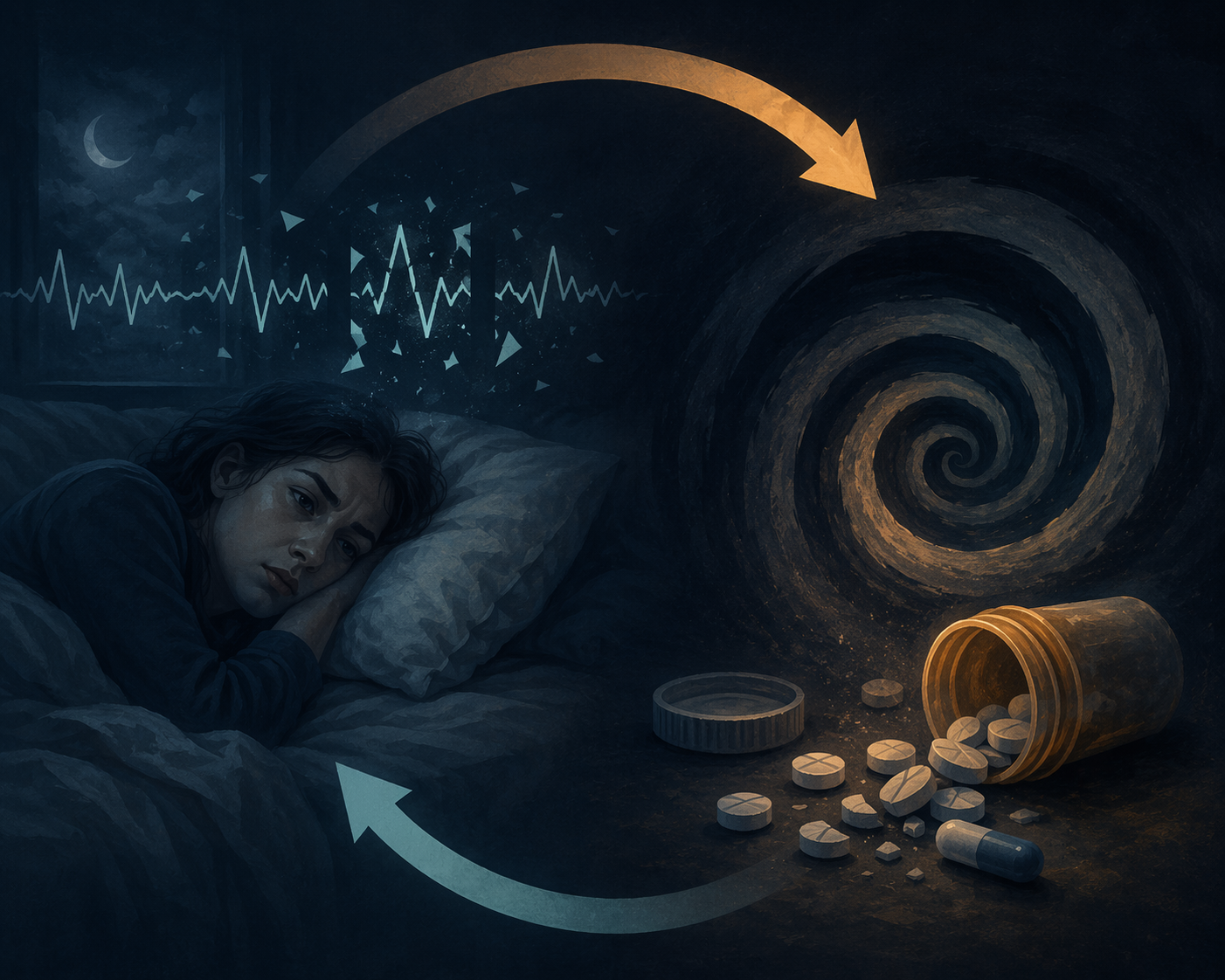
That is the most important frame for understanding drug overdose effects on sleep health: this is a loop, not a single aftermath. Substance exposure can damage sleep architecture and breathing control. Poor sleep can then become its own risk signal for later opioid-related harm. For people prescribed opioids for chronic pain, that loop can sit inside another one: pain worsens sleep, poor sleep worsens pain sensitivity, and medication decisions may escalate inside a body that is already not recovering well. Restful Ground covers that pain-sleep cycle more directly in How Chronic Pain and Sleep Quality Feed Each Other. Here, the center is narrower and more dangerous: what happens when sleep and overdose risk start reinforcing each other.
The first injury is often to sleep architecture
Bad sleep after substance use is easy to misname as simple insomnia. Sometimes it is insomnia. But opioid-affected sleep can also mean that the night contains less of the stages that make sleep physiologically useful.
Across clinical and neurobiological reviews, opioids are associated with suppressed REM sleep, reduced slow-wave sleep, and more light Stage 1 sleep [2][3]. That matters because REM sleep and slow-wave sleep do different kinds of work. REM sleep is tied to emotional and cognitive processing. Slow-wave sleep is the deepest non-REM sleep, the part most closely associated with physical restoration, immune and metabolic regulation, and the blunt feeling of having actually recovered. When slow-wave sleep is displaced by lighter sleep, a person may be unconscious for hours and still wake as if the night never finished.
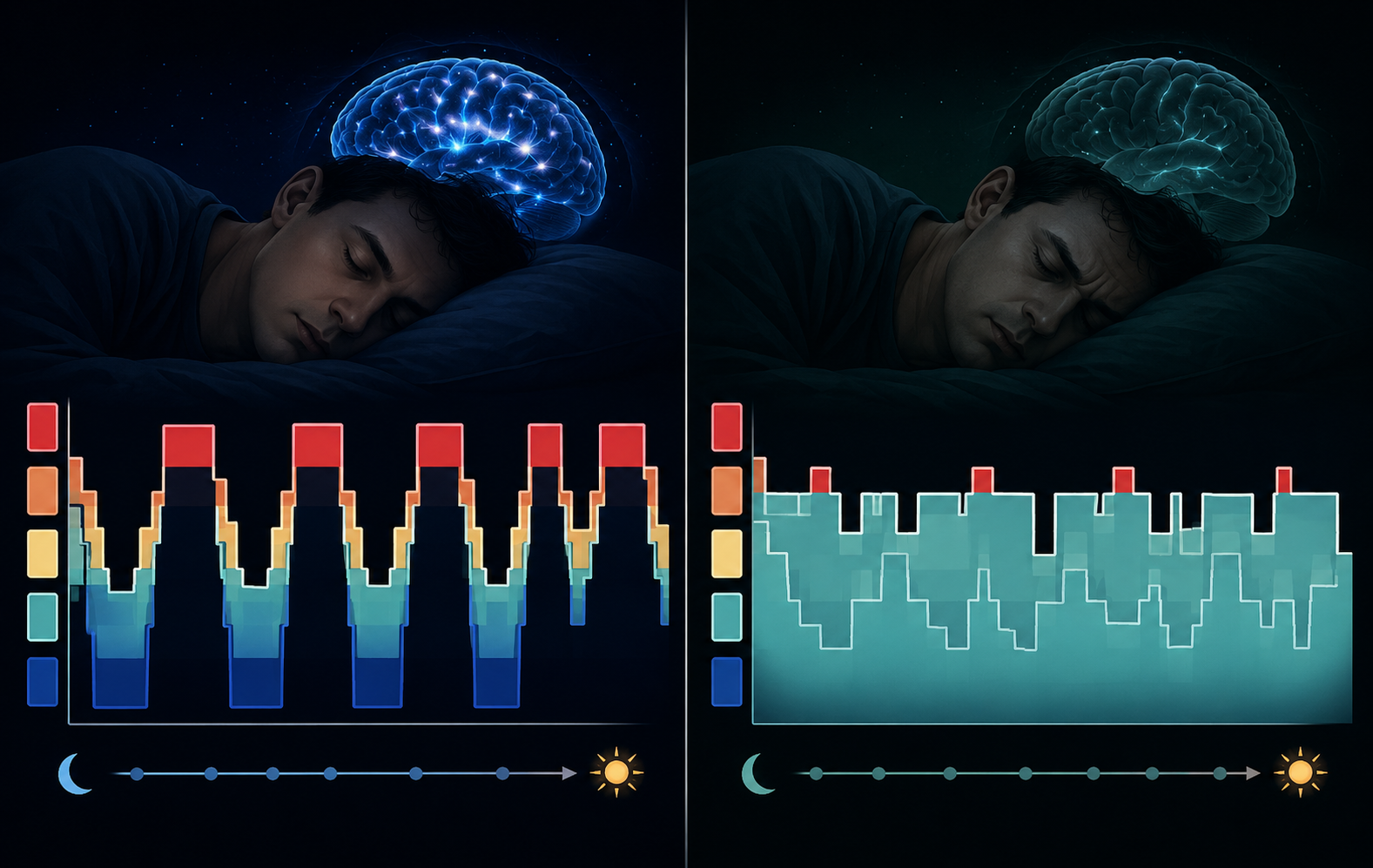
This is one reason self-report can be misleading. A person may say, truthfully, that they were in bed for seven hours. They may even believe they slept most of that time. But if the night is dominated by lighter sleep, brief arousals, suppressed REM, and little slow-wave sleep, the number of hours does not describe the biological result. For readers trying to understand why recovery feels stalled, the loss of deep sleep connects directly to the broader role of sleep quality in physical repair.
Stimulants and alcohol can also disturb sleep, though the evidence base around overdose and later sleep-health risk is not as developed as it is for opioids. Cocaine can fragment sleep through monoamine dysregulation, and alcohol can sedate early in the night while disrupting REM sleep later [2][3]. Those patterns are clinically important, especially in polydrug use, but they should not be treated as if they have the same level of overdose-risk evidence as the opioid-sleep-respiratory pathway.
The second injury is to breathing control
Sleep architecture explains why a person can sleep and not feel restored. Breathing control explains why sleep can become dangerous.
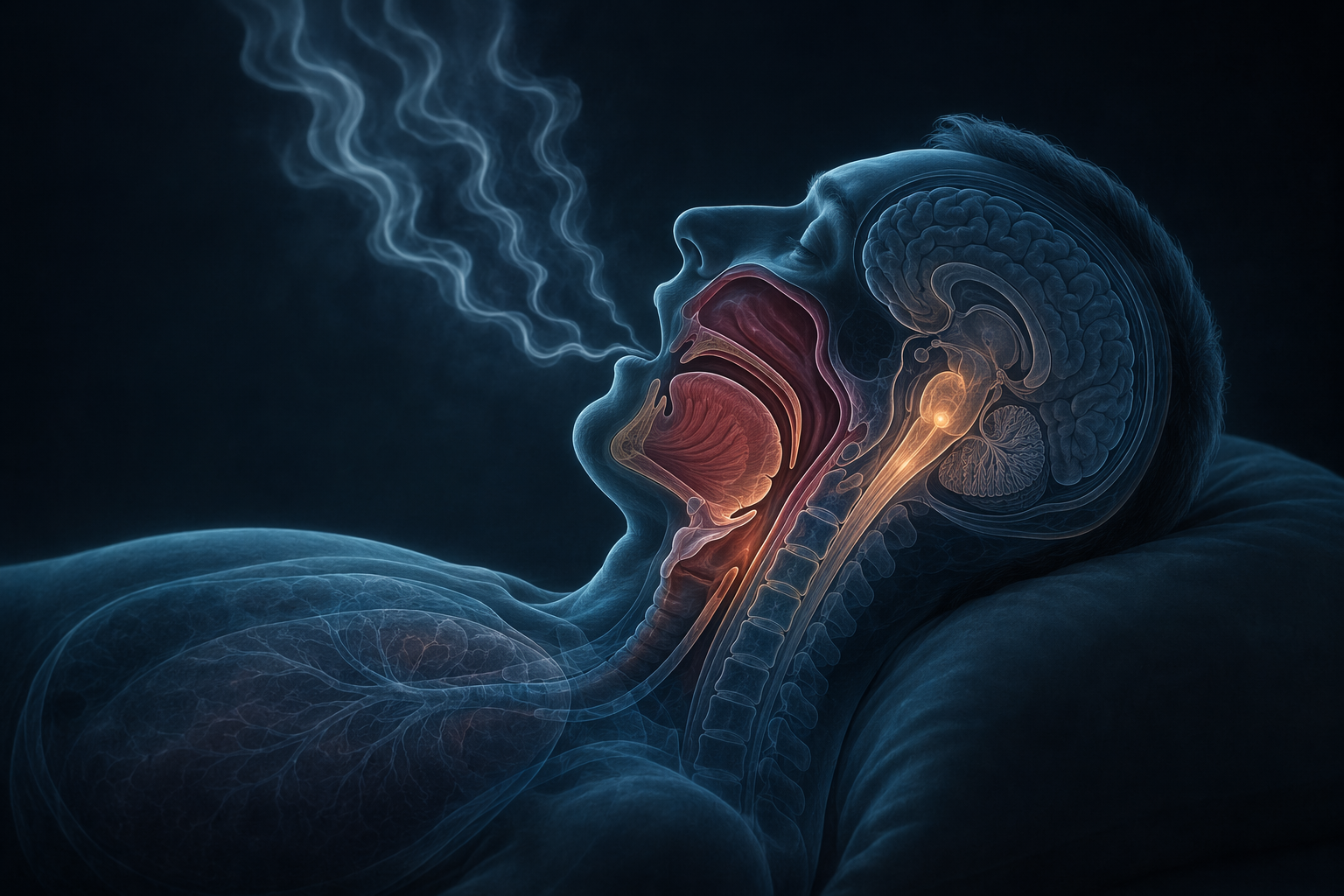
Opioids can cause or worsen sleep-disordered breathing, especially central sleep apnea. In obstructive sleep apnea, airflow is blocked despite continued breathing effort. In central sleep apnea, the brain’s breathing signal becomes unstable or pauses. Opioid-related cases can also show an irregular ataxic pattern sometimes described as Biot respiration [1][4]. If the distinction is unfamiliar, it helps to first separate ordinary snoring from apnea symptoms; Restful Ground’s guide to snoring versus sleep apnea explains the broader sleep-apnea spectrum.
The numbers are not small. Reviews report that about 24% of chronic opioid users develop central sleep apnea, and that 36% to 85% have some form of sleep-disordered breathing [1][4]. The risk appears dose-dependent [1][4]. Those figures do not mean every person on an opioid prescription has central sleep apnea, and they do not turn one prescription into a prediction. They do mean that breathing during sleep is a legitimate safety issue in opioid therapy, not a niche sleep-clinic footnote.
The timing matters. During sleep, the body normally has less behavioral control over breathing than it does while awake. Opioids further depress respiratory drive. If a person has central apneas, irregular breathing, sedating co-medications, alcohol exposure, lung disease, or an unusually high opioid dose, the night can become the period when several small losses of protection stack together. Family members often describe this as frightening stillness: the person is not simply sleeping deeply; they may be breathing too little, too irregularly, or not responding normally to the need to breathe.
Poor sleep can run the loop backward
The reverse direction is easy to miss because sleep problems can look like a consequence after the main event. But large cohort evidence suggests sleep deficiency is also a predictor of later opioid-related harm.
In UK Biobank data, short sleep duration, daytime sleepiness, and insomnia symptoms were each associated with future opioid-related adverse events, including fatal overdose, and the pattern showed a dose-response relationship [5]. That does not mean insomnia alone causes overdose in every individual case. It does mean that sleep deficiency carries measurable risk information beyond being an unpleasant symptom.
The practical implication is uncomfortable but useful: the person who is sleeping very little, falling asleep during the day, or cycling through persistent insomnia while taking opioids is not only having a quality-of-life problem. They may be showing a clinical risk signal. That signal belongs in opioid prescribing conversations, chronic pain follow-up, overdose-prevention planning, and recovery care.
Recovery sleep may not rebound quickly
After overdose or during treatment for substance use disorder, sleep can remain unstable well beyond the acute crisis. A mixed-methods study of people entering substance use disorder treatment found that 79% had significant sleep problems at intake, and 33% still had moderate to severe sleep problems after one year of abstinence [6]. Because treatment populations often involve more than one substance, those findings should not be read as a clean single-drug estimate. They do show that sleep disruption can persist into recovery rather than disappearing when substance use stops.
The same study found a striking subjective-objective gap among people receiving methadone or buprenorphine: participants averaged 4.16 hours of sleep per night by EEG while reporting 6.8 hours [6]. That gap is clinically important because it describes occult insomnia, not exaggeration. A person can underestimate how broken their sleep has become, especially when fatigue, medication effects, withdrawal, pain, depression, or irregular schedules blur the difference between being sedated and getting restorative sleep.
Relapse risk also appears to travel with sleep symptoms. In one study, the odds of persistent sleep problems were 4.7 times higher among people who returned to use than among those who remained abstinent [7]. This kind of finding still needs careful interpretation: relapse and insomnia can reinforce each other, and the same stressors may worsen both. But it is hard to defend recovery plans that treat sleep as optional comfort rather than part of stabilization.
What evidence-aligned care looks for
No sleep intervention should be sold as overdose prevention by itself. The evidence does not support that promise. What it does support is a more serious standard of care: sleep symptoms, sleep duration, daytime sleepiness, and sleep-disordered breathing should be actively assessed when someone has overdosed, uses opioids long term, receives medication for opioid use disorder, or is trying to stabilize recovery.
| Clinical signal | Why it matters |
|---|---|
| Short sleep or persistent insomnia | Associated with future opioid-related adverse events in cohort data |
| Daytime sleepiness or nodding off | May reflect sedating medication effects, poor sleep quality, or sleep-disordered breathing |
| Witnessed pauses, irregular breathing, gasping, or unusually quiet sleep | Raises concern for sleep-disordered breathing, including central sleep apnea in opioid-exposed people |
| Reports of sleeping enough but waking exhausted | May reflect disrupted sleep architecture or a subjective-objective sleep gap |
| Relapse with worsening sleep | May indicate a reinforcing cycle that needs treatment attention, not only willpower framing |
For chronic insomnia, cognitive behavioral therapy for insomnia, or CBT-I, remains the first-line behavioral treatment and is underused in addiction treatment settings [8]. That matters because adding sedatives to an already respiratory-vulnerable person can be risky, especially when opioids, alcohol, benzodiazepines, or other depressants are involved. CBT-I is not a quick fix, but it directly targets the learned arousal, irregular sleep timing, and conditioned wakefulness that often keep insomnia alive after the acute withdrawal or overdose period has passed.
For opioid-induced sleep-disordered breathing, evaluation may require sleep testing, and positive airway pressure therapy can be part of management [1]. The details matter because central sleep apnea is not managed exactly like routine snoring. Medication review also matters: opioid dose, timing, co-prescribed sedatives, alcohol use, and other respiratory risks can change the danger of a night.
Medication-based sleep interventions are more limited. Melatonin has shown some improvement in small or emerging substance-use-related sleep research, and dual orexin receptor antagonists such as suvorexant are being studied for sleep disturbance in opioid use disorder through NIH HEAL-related work [8]. Those are not reasons to self-treat after overdose or mix sleep medications into opioid exposure. They are reasons for sleep to be discussed openly with clinicians instead of hidden as a secondary complaint.
The dangerous part of the overdose-sleep loop is that it is biological in both directions. Opioids can make sleep lighter and breathing less stable. Poor sleep can identify people at higher risk for later opioid-related adverse events. Persistent insomnia can follow people into treatment and recovery. None of that makes the loop inevitable. It makes it visible enough to monitor, test, and treat with the seriousness usually reserved for the overdose event itself.
References
- Sleep-Disordered Breathing and Opioid Use: A Clinical Review, Yale/NIH clinical review.
- Differential Effects of Addictive Drugs on Sleep and Sleep Stages, PMC.
- Drugs, sleep, and the addicted brain, Nature, 2019.
- Chronic opioid use and central sleep apnea: a review of the prevalence, mechanisms, and perioperative considerations, PubMed.
- Promoting sleep health to mitigate opioid-related adverse events, PMC.
- Sleep and substance use disorder treatment: a mixed-methods study, Taylor & Francis, 2022.
- Insomnia symptoms associated with return to use and non-fatal opioid overdose, PubMed.
- Johns Hopkins Medicine sleep and opioid use disorder research coverage, Johns Hopkins Medicine, 2024.
Comments
Join the discussion with an anonymous comment.