August 12, 2026 is a genuinely tempting skywatching day: a daytime solar eclipse, then the Perseid meteor shower peaking that night under a new moon. The catch is not whether the sky is worth looking at. It is whether you can get from the eclipse to the meteor peak without turning the next morning into a slow, unsafe fog.
The astronomy part deserves enthusiasm, with one correction up front. For most North American viewers, the eclipse is partial, with about 4% to 37% of the sun covered depending on location; totality belongs to places including Iceland and Spain, with Portugal also in the broader path discussion for eclipse travel planning. [1] That means continental U.S. viewers are usually planning a partial daytime eclipse plus a late-night meteor session, not a total-eclipse pilgrimage followed by an all-night vigil.
The meteor side is stronger. EarthSky lists the Perseids peaking on the night of August 12-13, 2026, under a new moon, which keeps moonlight from washing out fainter meteors. [2] The Old Farmer’s Almanac describes the Perseids as capable of roughly 50 to 100 meteors per hour under good dark-sky conditions. [3] That is not a promise that a backyard under streetlights will deliver headline numbers. Light pollution, trees, buildings, haze, and the radiant’s position all cut into what a casual viewer actually sees.
The Sleep Problem Is the Stretch, Not the Eclipse
A daytime eclipse does not directly steal sleep. You are awake anyway. The trouble is what the day can do around the edges: travel to a viewing site, unusual excitement, extra sunlight, social plans that run long, and the small schedule drift that turns “I’ll rest before the meteors” into “I’ll just keep going.”
Light matters here. The American Academy of Sleep Medicine has emphasized that solar-eclipse days can change ordinary light exposure and daily routines, and those routines are part of how the body keeps its sleep-wake rhythm stable. [4] The eclipse itself is not the villain. Treating the entire day like a holiday from biology is.
The real collision comes later. Perseid watching often improves after the radiant climbs higher and the sky settles into the deep night. That overlaps with the part of the night when the body is least interested in performance. Sleep Foundation guidance on all-nighters warns that staying awake through the night impairs attention, mood, memory, and decision-making, and it treats driving after sleep loss as a serious risk rather than a minor inconvenience. [5]
A Practical August 12 Sleep Plan
The goal is not to make the day feel clinical. It is to move the boring decisions earlier, when you are still sensible. If you wait until 3:50 AM in a folding chair to decide whether you are safe to drive, you have made the decision harder on purpose.
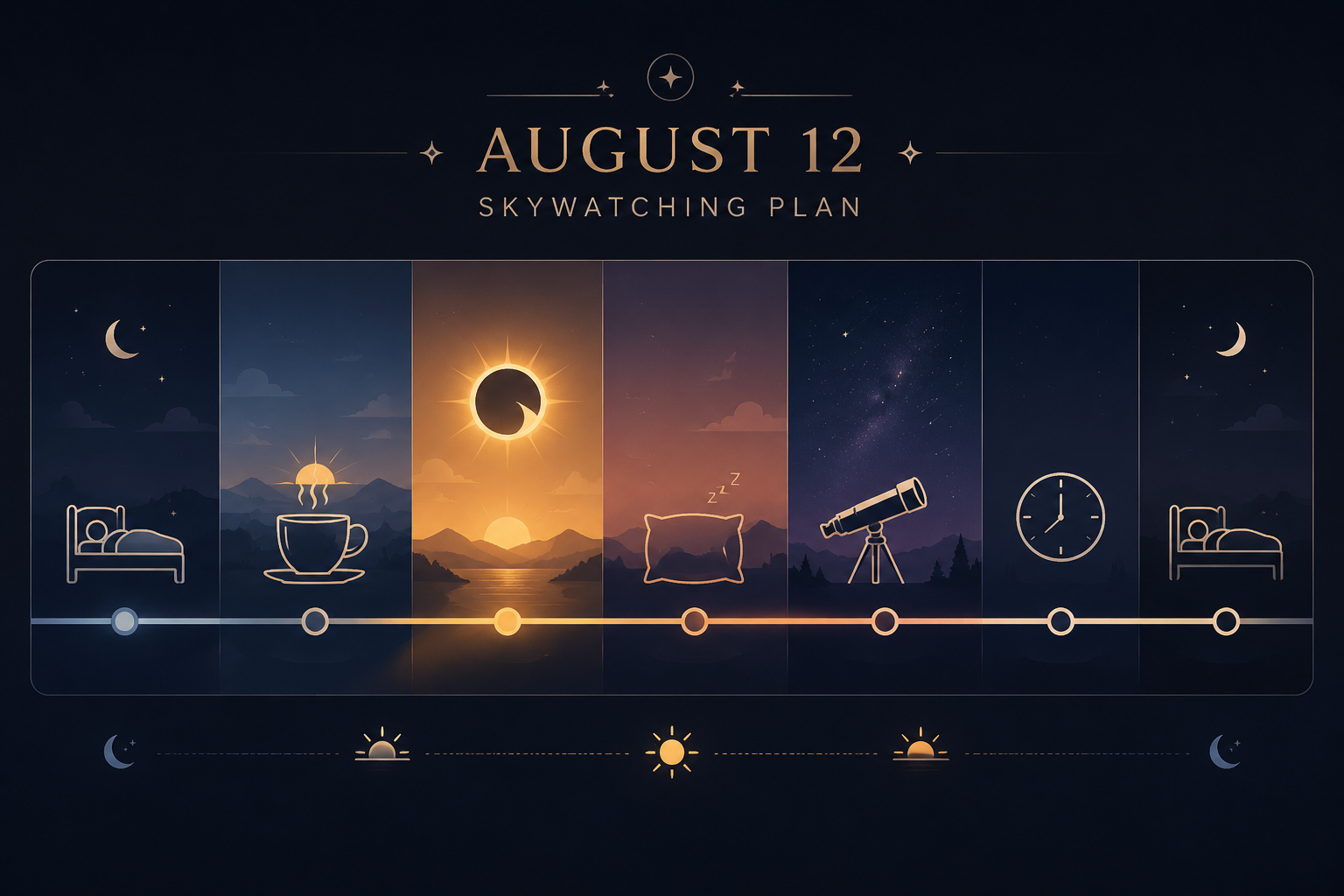
| When | What to do | Why it matters |
|---|---|---|
| Night before | Protect a normal sleep opportunity instead of banking on a heroic nap later. | Starting the day short on sleep makes every later choice worse. |
| Morning of August 12 | Use ordinary morning caffeine if you normally do, then stop treating caffeine as an all-day drip. | You want alertness for the eclipse without carrying stimulant timing too close to recovery sleep. |
| Eclipse window | Watch safely, keep the day’s excitement contained, and avoid turning the afternoon into aimless travel. | The eclipse does not cost sleep directly; the schedule drift around it can. |
| Early afternoon | Take a 90-minute prophylactic nap, completed before 3 PM. | This reduces sleep pressure before the late-night meteor window while leaving room for nighttime sleep later. |
| Evening setup | Arrive early, get comfortable, let your eyes dark-adapt, and take one planned caffeine dose near the start if needed. | Dark adaptation and alertness are useful; continuous sipping is not. |
| Late night to pre-dawn | Watch the meteors, but decide before the trip how you will handle the drive-home window. | The most tempting viewing hours can overlap with the lowest-alertness period. |
| Next day | Sleep in modestly if possible, get daylight after waking, and plan one to two recovery nights. | A single late event is manageable for many healthy adults when recovery is real. |
The Night Before: Do Not Start in Debt
The cleanest version of this plan begins on August 11. Go to bed close to your usual time and give yourself a full sleep opportunity. This is not the night to test whether four hours plus enthusiasm can carry you through an eclipse, a drive, a meteor session, and the ride home.
If you are traveling for totality in Iceland or Spain, the sleep problem is larger than one late night. Time-zone change can stack jet lag on top of event sleep loss. In that case, the sensible plan starts before the trip: shift gradually when possible, protect the first local night, and do not schedule the most ambitious driving on the same day you arrive.
Eclipse Day: Keep the Afternoon From Spilling Over
For North American viewers, the eclipse plan should fit the actual event. Use proper solar viewing protection, enjoy the partial eclipse for what it is, and avoid building a totality-level travel day around a small bite out of the sun. NASA’s August 12, 2026 eclipse page is the place to verify what your location can see before you design the rest of the day around it. [1]
Afterward, resist the sneaky part: celebratory errands, late lunch, long drive, another coffee, then suddenly no room for a nap. The best sleep move after the eclipse is unglamorous. Get yourself somewhere quiet and cool, and create a real rest window.
The Nap: 90 Minutes, Finished Before 3 PM
A 90-minute nap is long enough to cover a full sleep cycle for many adults, which makes it less likely that you wake from the deepest part of sleep feeling useless. Finishing it before 3 PM is the key detail. A late-afternoon nap may help the meteor session, but it can also push your eventual recovery sleep later than you intended.
This is a prophylactic nap, not a rescue nap. Take it before you feel wrecked. Set an alarm, give yourself a few minutes to wake fully, and do not judge the nap by whether it feels dramatic. Even quiet rest can lower the pressure to make bad decisions at 2 AM.
If a 90-minute nap is unrealistic, use the good-enough version: a short 20-minute nap or quiet rest period early in the afternoon. It will not give you the same cushion, but it is better than pretending the only valid plan is perfect.
Caffeine: One Planned Dose, Not a Thermos Strategy
Caffeine is useful. It is also easy to misuse on a night like this because sipping gives you something to do while waiting for meteors. The better plan is a single dose near the beginning of your evening viewing window, then stop.
Sleep Foundation’s all-nighter guidance recommends using caffeine strategically rather than continuously, and it warns that caffeine can interfere with later sleep. [5] For this event, use a conservative rule: keep caffeine at least six hours away from the sleep you are trying to protect. If you plan to sleep at 4 AM after a short session, late-evening caffeine is already a problem. If you plan to watch until dawn and sleep after sunrise, an early-evening dose may make sense; repeated midnight refills still make recovery messier.
Alcohol is the opposite of useful here. It may make waiting feel warmer or easier, but it worsens sleep quality and makes the drive-home decision less trustworthy. Save the toast for a night when no one needs to operate a car after the radiant climbs.
Meteor Setup: Make Staying Put Easier Than Quitting Badly
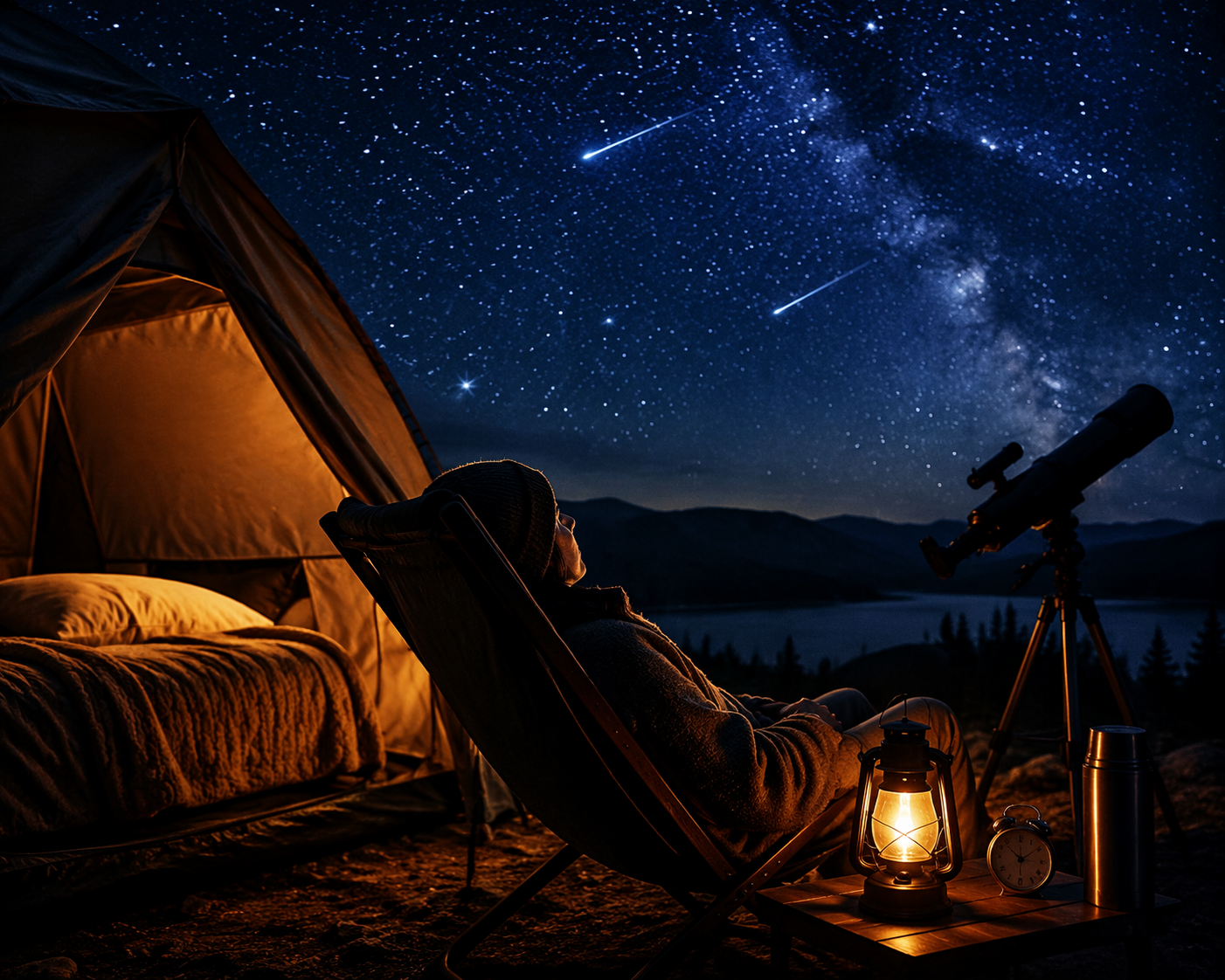
The Perseids reward patience more than neck strain. Choose the darkest practical sky you can reach safely, bring a reclining chair or pad, dress warmer than the daytime forecast suggests, and give your eyes time away from bright light. A red light is helpful; checking a bright phone every few minutes is not.
New moon conditions make the 2026 peak especially appealing because there is no bright moon washing the sky. [2] Still, the honest expectation is a range, not a guarantee. Under dark, open skies, high Perseid rates are possible; under suburban lights, with trees blocking half the sky, the count will be lower.
If you know your chronotype, use it. Evening types may tolerate a longer session with less misery; morning types should be more selective. If you are unsure, this chronotype guide can help you decide whether your realistic endpoint is midnight, 2 AM, or dawn.
The 4-6 AM Decision Is the Safety Test
The hardest part of this plan is not the nap. It is admitting, before the night starts, that the body’s lowest-alertness window can arrive exactly when the sky is still worth watching.
Pre-dawn meteor watching has a built-in trap. You may be rewarded for staying out later, then asked to make a safety-critical driving decision when sleep pressure is high, reaction time is worse, and the road is quiet enough to feel falsely easy. Sleep Foundation guidance is blunt about the cognitive and safety problems that follow an all-nighter, including impaired attention and decision-making. [5]
Pick one of these before you leave home:
- Stop early enough to drive before the deepest fatigue window, especially if you skipped the afternoon nap.
- Take a 20-minute nap before driving home, then give yourself a few minutes to wake fully before starting the car.
- Wait until after dawn, get light exposure, eat something simple, and drive only when alertness has clearly improved.
- Book nearby lodging, camp legally, designate a rested driver, or use transportation that does not depend on your pre-dawn judgment.
The 20-minute nap option is not a magic reset. It is a risk-reduction tool. If you wake confused, keep nodding off, miss turns while still parked, or feel yourself bargaining with obvious sleepiness, the answer is not louder music or colder air. The answer is not driving yet.
The Good-Enough Version
Not everyone wants a full event schedule. Fair. If you only want the low-friction version, do this: sleep normally the night before, watch the eclipse without turning the day into a travel marathon, nap or rest early afternoon, take caffeine once near the start of the meteor session if you need it, and decide your drive-home plan before midnight.
You can also choose a shorter meteor window. For a casual viewer, two comfortable hours under a darker sky often beat five miserable hours spent cold, over-caffeinated, and worried about the drive. The new moon improves the opportunity; it does not obligate you to stay until your body files a complaint.
Recovery the Next Day
After the event, do not try to “fix” the night with an enormous daytime sleep that pushes the next bedtime into chaos. If possible, sleep later than usual, get daylight after waking, keep caffeine earlier in the day, and give yourself one to two nights with a generous sleep window.
For many healthy adults, a single late night mainly shows up as next-day cognitive drag: slower thinking, weaker attention, worse mood, and less patience. Sleep Foundation describes these kinds of all-nighter effects as immediate performance problems rather than proof that one unusual night has permanently damaged your sleep. [5] If you want the broader recovery math, this research-based guide to sleep debt recovery goes deeper than an event plan needs to.
The broader routine still matters after the exception. If your normal bedtime is already unstable, the August 12 plan has less margin for error. Use the event as a scheduled disruption, then return to ordinary sleep hygiene rather than letting one late night become a week of late nights. For that baseline, see these sleep hygiene fundamentals.
Who Should Be More Conservative
This plan is for healthy adults treating August 12 as a one-night exception. It is not a permission slip for everyone to stay awake until dawn.
Be more conservative if you have chronic insomnia, a circadian rhythm disorder, untreated or poorly controlled sleep apnea, significant daytime sleepiness, a safety-sensitive job the next day, or a long solo drive after viewing. In those cases, shorten the meteor session, avoid pre-dawn driving, or separate the eclipse and meteor plans instead of forcing both into one heroic day.
For everyone else, the practical answer is reassuring but not macho: watch the partial or total eclipse you actually have access to, take the nap seriously, use caffeine like a tool rather than a personality, and protect the drive home. The sky can have one unusual night. It does not need your whole recovery week.
References
- Total Solar Eclipse on August 12, 2026 — NASA Science
- Meteor shower guide 2026: EarthSky's complete calendar — EarthSky
- Perseid Meteor Shower 2026 — The Old Farmer's Almanac
- Embracing the Eclipse: Shedding Light on the Importance of Light for Our Sleep and Daily Routines — AASM
- How to Pull An All-Nighter — Sleep Foundation
Comments
Join the discussion with an anonymous comment.