
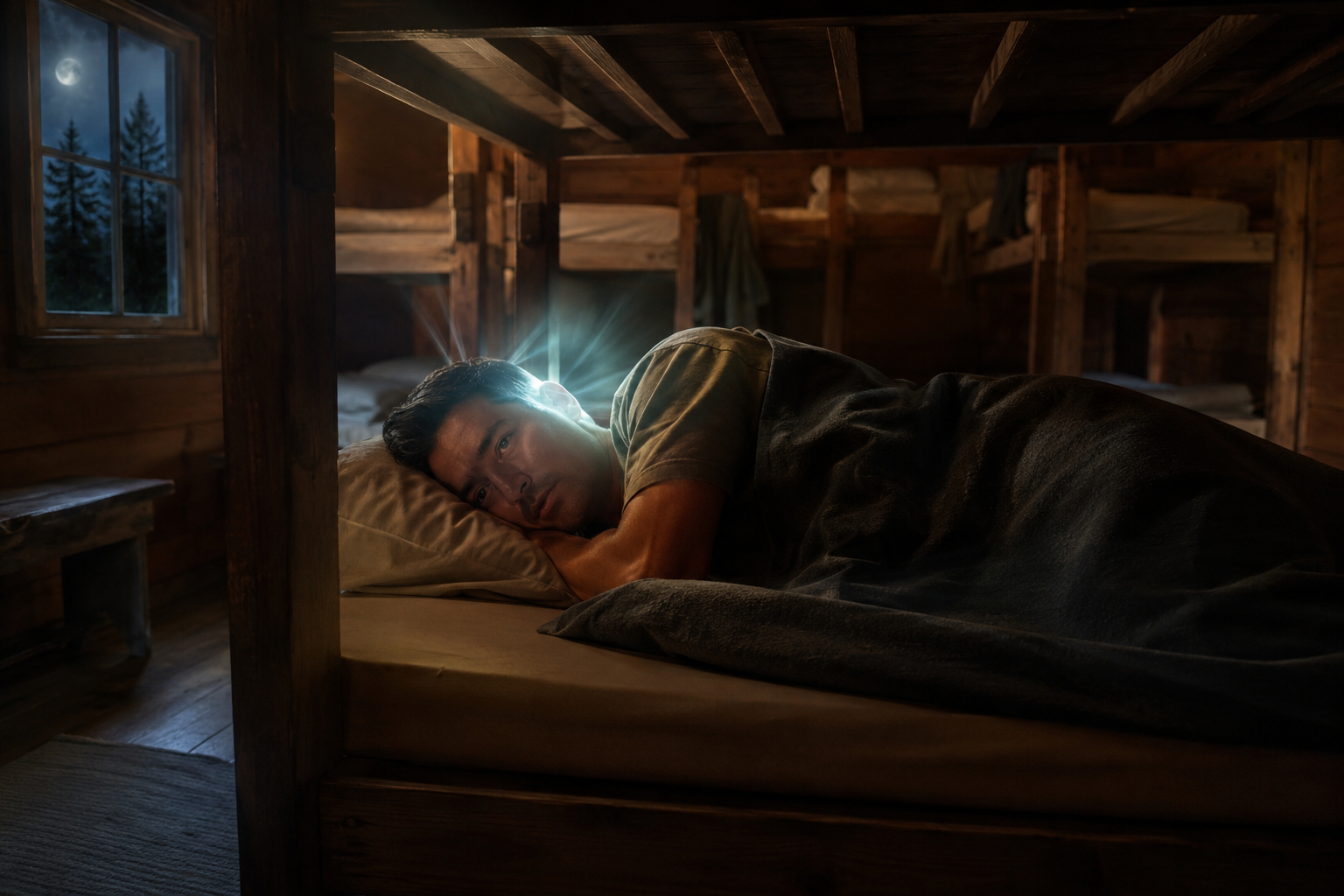
The first night at summer camp has a particular way of making an adult feel ridiculous. You are lying still in a bunk, listening to someone shift across the cabin, watching light leak around a curtain that barely deserves the name, and wondering why your body is acting as if sleep has become a high-stakes negotiation. Everyone else seems out. You are not.
That experience has a name: the first-night effect. It is not the same thing as suddenly “forgetting” how to sleep, and it is not proof that you are too sensitive for camp. In unfamiliar sleep settings, the brain can remain more watchful than it would at home, especially early in the night. For an adult counselor, chaperone, staffer, or adult camper who has to function the next morning, that distinction matters. It turns a private embarrassment into a practical problem.
Why the first camp night feels so alert
The most useful version of the first-night effect is not “new places are stressful.” It is more specific than that. In a 2016 study, Tamaki and colleagues found that during first-night sleep, one brain hemisphere showed a more vigilant pattern than the other. The researchers described this as a “night watch” system: part of the sleeping brain stays more responsive to the unfamiliar environment around it.[1]
That finding gives camp sleep a more dignified explanation. A cabin is not merely inconvenient. It is full of unfamiliar sensory information: a door latch that sounds different from yours, footsteps on boards, the smell of wood or damp gear, a mattress with the wrong firmness, breath and movement from nearby bunks, and light in places your bedroom does not have light. The brain does not need these cues to be dangerous. It only needs them to be new.
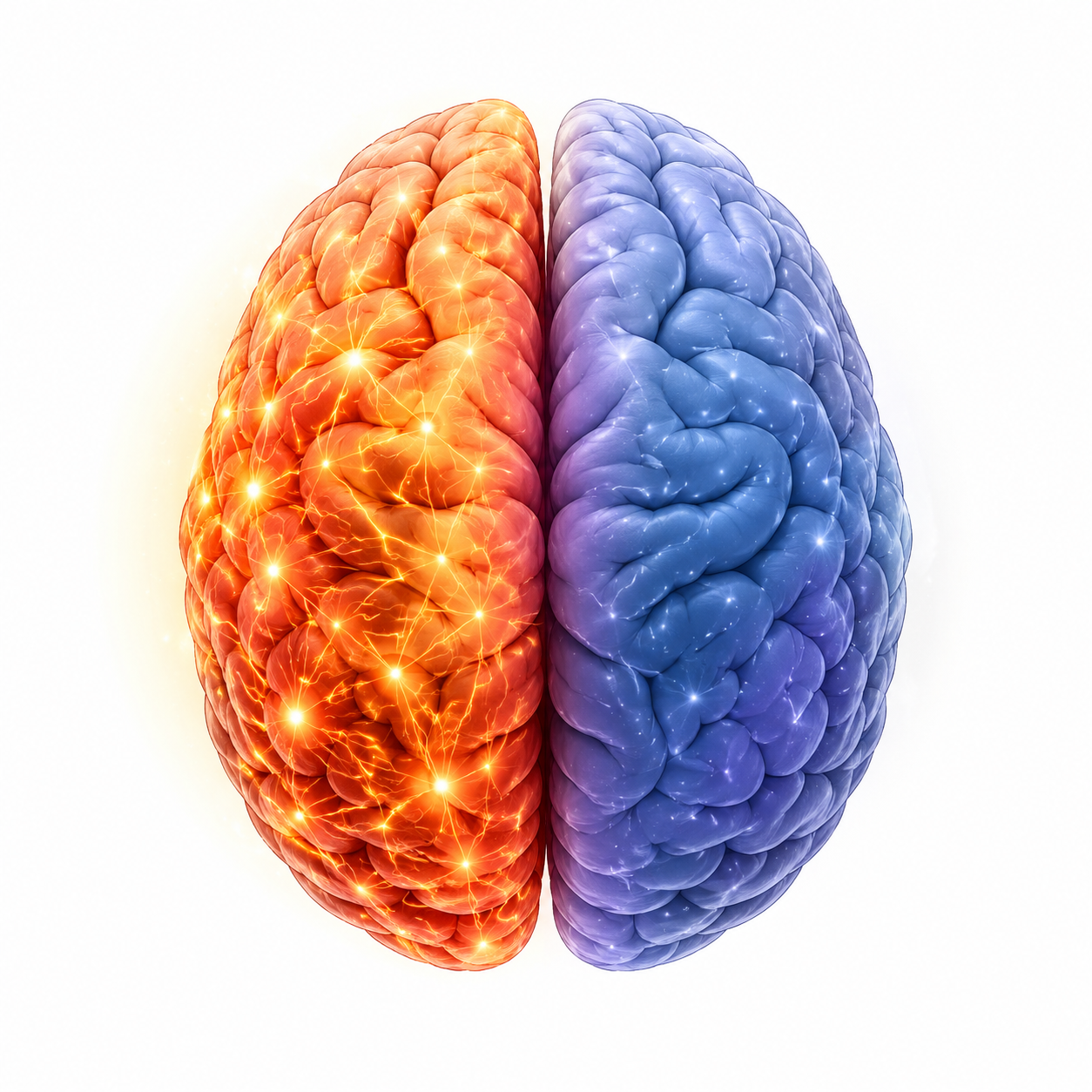
This is also why the worst advice in the cabin is often “just relax.” Relaxation may help at the edges, but it does not erase the brain’s job of checking an unfamiliar sleep site. If one hemisphere is staying partly on duty, the goal is not to shame yourself into sleep. The goal is to reduce how much novelty, noise, light, and discomfort your brain has to keep sampling.
The lab data do not perfectly reproduce camp. Tamaki’s work was done in a controlled sleep-research setting, not in a wooden cabin with counselors whispering, bunk ladders creaking, and a bathroom trip happening at 2 a.m.[1] Still, the mechanism travels well enough to be useful. Camp is almost designed to trigger first-night vigilance: unfamiliar room, unfamiliar people, altered schedule, less control over sound and light, and real responsibility waiting in the morning.
What the first-night effect changes in sleep
A 2022 meta-analysis by Ding and colleagues looked across 53 studies of healthy individuals and found measurable first-night changes: sleep onset latency increased by about 6 to 10 minutes, total sleep time decreased by about 12 minutes, and wake after sleep onset increased significantly on the first night.[2]
Those averages are helpful, but they can sound almost too tidy. Twelve fewer minutes of sleep does not capture the lived version: repeatedly checking whether you are still awake, bracing when someone climbs down from a bunk, or calculating how many hours are left before breakfast duty. The numbers show that the first-night effect is real. They do not mean every adult experiences it as a small inconvenience.
There is another reason not to overpromise. In 2024, Wick and Rasch reported that the first-night effect can occur over nonconsecutive nights separated by a week, and that it can appear even in familiar environments when the sleep setting is changed by monitoring equipment.[3] That matters for camp because “you’ll be fine tomorrow” is not always true. Many people do adapt quickly, but the brain may not treat a single rough night as a completed adjustment.
What camp adds that a sleep lab does not
Summer camp sleep is not just a new mattress. It is a new social arrangement. Adults may be sharing a room with people they barely know, sleeping near campers, staying alert for nighttime problems, or working on a schedule that starts early whether they slept or not. For staff, poor sleep is not only unpleasant; it can affect patience, attention, judgment, and safety supervision.
The American Camp Association has treated sleep disruption at camp as normal and notes that many people adapt within about three nights.[4] Its counselor self-care guidance also frames staff sleep deprivation as a concern for doing the job well, not as a harmless rite of passage.[5] That is the correct level of seriousness. A sleepy adult supervising children around water, trails, tools, medication routines, homesick campers, or late-night conflicts is not simply having a quirky camp experience.
Most online camp-sleep advice is written for parents trying to help children pack comfort items or avoid homesickness. Some of that advice overlaps with adult needs, but it misses the main adult problem: you may be responsible for other people while your own sleep system is treating the cabin as a place to monitor.
Countermeasures that match the mechanism
If the first-night effect is partly a novelty-and-vigilance response, the best camp sleep plan is not elaborate. It is boring in the right ways. You want fewer strange signals, fewer sharp sounds, less light at the wrong time, less temperature discomfort, and a routine your body recognizes.
Reduce novelty before lights-out
Arrive early if the schedule allows. Put your bag where it will stay, test the bunk ladder, find the bathroom route, check where outlets are, and notice what the room sounds like before everyone is exhausted. This is not fussing. It gives the brain a preview while you are awake, when unfamiliar details are easier to process.
- Bring one familiar sleep surface cue: your regular pillowcase, a small travel pillow you actually like, or a lightweight blanket.
- Set up your bunk before the cabin gets dark, including water, glasses, medication, flashlight, and layers.
- Walk the nighttime path to the bathroom once so your first trip is not a half-awake navigation problem.
- If you have a choice, avoid the bunk closest to the main door, bathroom traffic, or a bright window.
This same principle applies in hotels and other temporary sleep settings; the first-night effect is not unique to camp. If you travel often, the habits that help in a strange hotel room can carry into a cabin, though camp usually gives you less control over privacy and noise. For a related hotel-focused version of the problem, see boutique hotel sleep quality tips.
Treat noise as a sleep input, not a personality test
Camp noise is difficult because it is not steady. A fan hum fades into the background; a bunk creak, whispered name, dropped water bottle, or raccoon near the trash can pulls attention because it changes. Sleep Foundation notes that nighttime noise can disrupt sleep even when a person does not fully wake or remember the disturbance.[6]
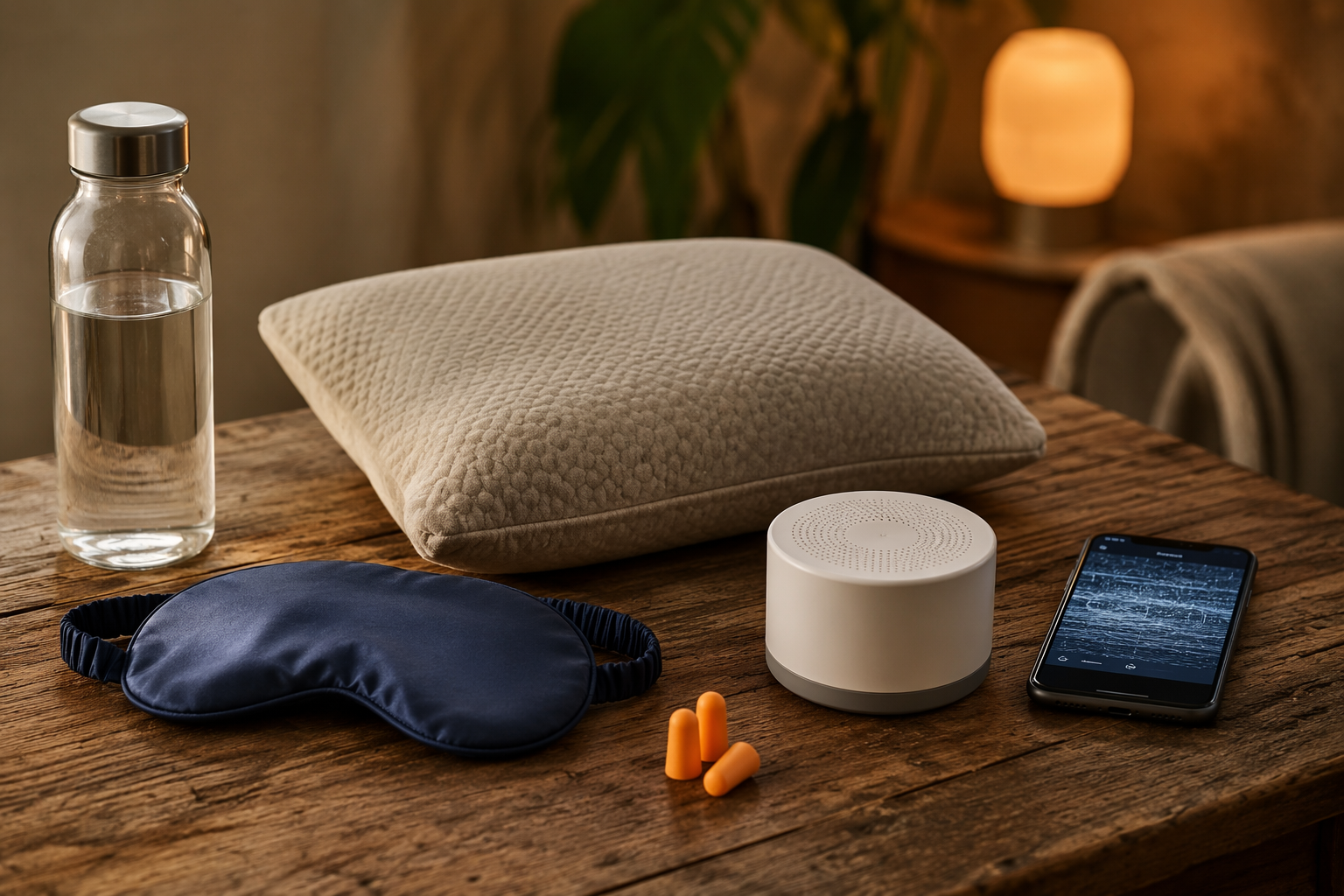
The practical answer is often a two-layer approach: reduce sharp peaks with earplugs, then add a steady sound floor with white noise if camp rules and roommate needs allow it. Earplugs alone can help, but they can also make some adults monitor internal sounds or worry they will miss something important. White noise alone can be too weak against sudden cabin sounds. Together, they can make the room less acoustically surprising.
- Use comfortable foam or silicone earplugs before camp, not for the first time in the bunk.
- Keep white noise low and steady; it should mask small fluctuations, not become the loudest thing in the room.
- Choose a sound that loops cleanly, such as fan noise, brown noise, rain, or a neutral app setting.
- If you are on duty overnight, follow camp policy before blocking sound; safety responsibilities override sleep optimization.
Do not wait until midnight to negotiate noise. If you are sharing adult quarters, agree earlier on phone alarms, door noise, bathroom lights, and whether a fan or white-noise app is acceptable. The sleepy version of that conversation is usually less generous.
Control light with small tools
Camp light is often poorly timed: bright overheads during late cleanup, flashlights after lights-out, dawn through thin curtains, and phones glowing in bunks. A sleep mask is one of the simplest fixes because it does not require changing the room for everyone else.
- Put the sleep mask on before you are irritated, not after the third flashlight sweep.
- Dim cabin lights as early as camp rules allow, especially during staff wind-down.
- Use a low, warm flashlight setting for necessary tasks instead of turning on overhead lights.
- Keep your phone screen out of direct view if it must remain nearby for duty reasons.
Plan for temperature swings
Temperature discomfort is easy to underestimate because it changes over the night. A cabin can feel hot at lights-out and cold before dawn. Sleep Foundation identifies roughly 60 to 67°F as a commonly recommended bedroom temperature range for sleep, but camp cabins rarely hold a neat number.[7]
Pack for adjustment rather than perfection: breathable sleep clothes, one warm layer within reach, socks if your feet get cold, and a blanket arrangement you can change without fully waking. If fans are allowed, point airflow to move cabin air rather than blast one bunk.
Keep the pre-sleep routine recognizable
A camp schedule will not look like your home schedule, but the last 20 to 30 minutes can still carry familiar cues. Wash up in the same order, change clothes before you are overtired, read a few pages, stretch lightly, or use the same calming audio you use at home. The point is not to create a perfect wellness ritual. It is to give your body a known sequence in a setting that is otherwise new.
Sleep Foundation’s travel-sleep guidance similarly emphasizes that travel can disrupt sleep through schedule changes, unfamiliar environments, light exposure, and noise.[8] Camp has all of those, with the added complication that someone may need you before breakfast.
| What triggers vigilance | Camp version | Best first move |
|---|---|---|
| Novelty | New bunk, room layout, bathroom route, unfamiliar people | Arrive early if possible and set up before dark |
| Noise | Creaks, whispers, doors, wildlife, alarms | Use tested earplugs plus low steady white noise if appropriate |
| Light | Thin curtains, flashlights, phones, early sunrise | Use a sleep mask and dim lights before the room gets chaotic |
| Temperature | Hot at bedtime, cold before dawn, uneven airflow | Pack layers and keep one adjustment within reach |
| Routine disruption | Late meetings, social pressure, unfamiliar wind-down | Preserve a short, recognizable pre-sleep sequence |
Where melatonin fits
Melatonin can be useful at camp, but it should not be the first or only plan. The first-night effect is strongly tied to environment and vigilance; a supplement does not make a noisy, bright, unfamiliar cabin stop being those things.
A more reasonable use is strategic: consider melatonin when camp has shifted your bedtime, travel has moved your schedule, or you know from prior experience that you need help cueing sleep in a temporary setting. Use the lowest effective dose, avoid mixing it casually with alcohol or sedating medications, and be cautious if you are pregnant, an older adult, managing a medical condition, taking prescription medications, or caring for someone else overnight. Melatonin products are supplements, not FDA-regulated drugs, so dose accuracy and formulation can vary.
For dose ranges by sleep problem, use the melatonin dosage guide. For packing decisions, the comparison of melatonin gummies, capsules, and liquids is more useful than guessing in the camp store aisle.
What to do on the first night itself
The first night is not the time to run a complicated sleep experiment. Make the room less novel, protect yourself from sudden sound and light, keep your body comfortable enough, and stop checking whether sleep has arrived. If you are awake longer than expected, stay boring: slow breathing, eyes covered, body still, no clock math if you can avoid it.
- Before dinner: set up the bunk, test earplugs, place layers and water within reach.
- Before lights-out: take care of bathroom, medication, charging, and alarms so you are not solving logistics in bed.
- At lights-out: use the sleep mask and sound plan immediately, not as a rescue measure after frustration builds.
- If awake: avoid turning the bunk into a command center; keep the body in a sleep-compatible state.
- The next morning: do not decide your whole camp week is ruined based on one first-night response.
There is a safety exception to the “block things out” approach. If your role requires you to hear campers, respond to emergencies, or supervise overnight, choose lower-isolation tools: one earplug instead of two, lower white noise, a vibrating alarm, or an agreed adult coverage plan. Sleeping better should not quietly transfer risk to someone else.
When it is no longer just first-night adjustment
Most people should expect some adaptation over the first few nights, and the American Camp Association’s camp guidance points to about three nights as a common adjustment window.[4] A rough first night, by itself, is not a diagnosis.
Pay closer attention if poor sleep persists beyond the early adjustment period, if you are unable to function safely during the day, or if camp unmasks symptoms that were already present at home. Loud snoring, gasping, witnessed pauses in breathing, morning headaches, severe daytime sleepiness, panic around bedtime, or weeks of difficulty falling or staying asleep deserve more than another pair of earplugs.
For the ordinary first camp night, though, the most accurate answer is also the least humiliating one: your brain may be keeping watch because the room is new. Give it fewer reasons to patrol. Most adults adapt within a few nights, and the damage from night one can be reduced with a plan that fits the place you are actually sleeping in.
References
- Night watch in one brain hemisphere during sleep associated with the first-night effect in humans, PubMed, 2016.
- A meta-analysis of the first-night effect in healthy individuals for the full age spectrum, PubMed, 2022.
- The first-night effect of sleep occurs over nonconsecutive nights in unfamiliar and familiar environments, PubMed Central, 2024.
- Let's Talk About Sleep, American Camp Association.
- Be at Your Best to Do Your Best: Self-Care Strategies for Camp Counselors, American Camp Association.
- How Noise Can Affect Your Sleep Satisfaction, Sleep Foundation.
- What Is the Best Temperature for Sleep?, Sleep Foundation.
- Travel and Sleep, Sleep Foundation.

Comments
Join the discussion with an anonymous comment.