
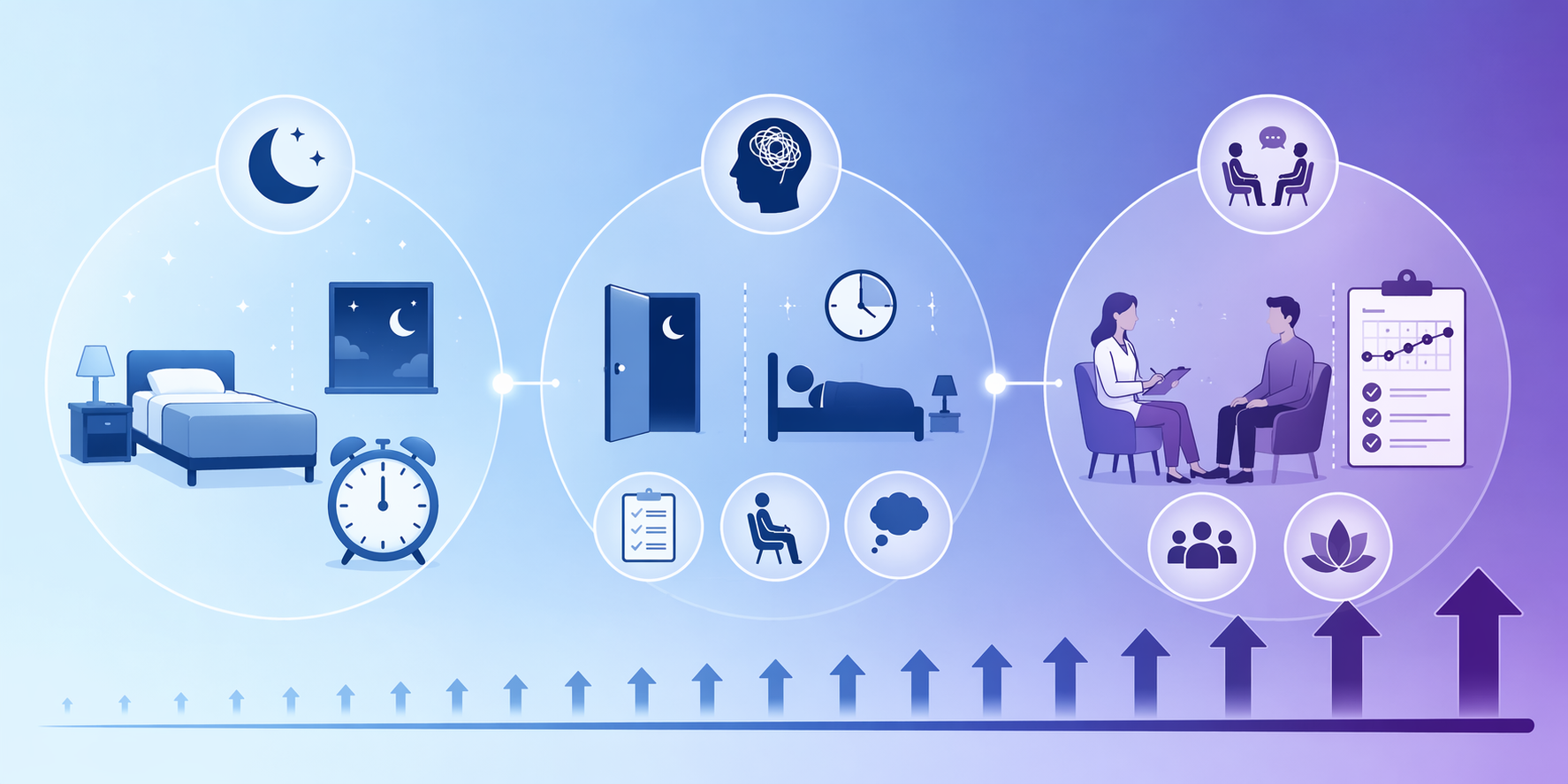
Insomnia self-care should not mean giving every sleepless person the same bedtime checklist. The right next step depends on four questions: how long this has been going on, how many nights a week it happens, how much it affects your days, and whether any red flags are present.
If you have had a few rough nights after stress, travel, illness, or schedule disruption, basic sleep hygiene may be enough. If you have been lying awake for weeks and changing your routine has not helped, you may need structured behavioral strategies, not more reminders to avoid caffeine. If your symptoms have lasted at least three months, occur at least three nights per week, and cause daytime impairment, that pattern meets the usual threshold where chronic insomnia disorder should be professionally evaluated rather than managed through trial-and-error self-care alone.
| Your pattern | Best next level of care | What that usually means |
|---|---|---|
| A short-term sleep disruption, mild daytime effects, no major red flags | Tier 1: basic insomnia self-care | Sleep hygiene, schedule regularity, light exposure, wind-down habits, and removing obvious sleep disruptors |
| Symptoms are persistent, or sleep hygiene has not helped, but no red flags are present | Tier 2: structured behavioral self-help | Stimulus control, a consistent wake time, carefully bounded self-help CBT-I, and possibly guided digital CBT-I |
| Symptoms occur at least 3 nights per week for at least 3 months, with daytime impairment | Tier 3: professional evaluation and CBT-I | Therapist-led CBT-I or high-quality digital CBT-I, with screening for other sleep or mental health conditions |
| Loud snoring or breathing pauses, severe depression, bipolar disorder, seizure disorder, unusual leg movements, or unsafe sleepiness | Bypass ordinary self-care | Seek medical evaluation before using sleep restriction or continuing self-managed insomnia treatment |
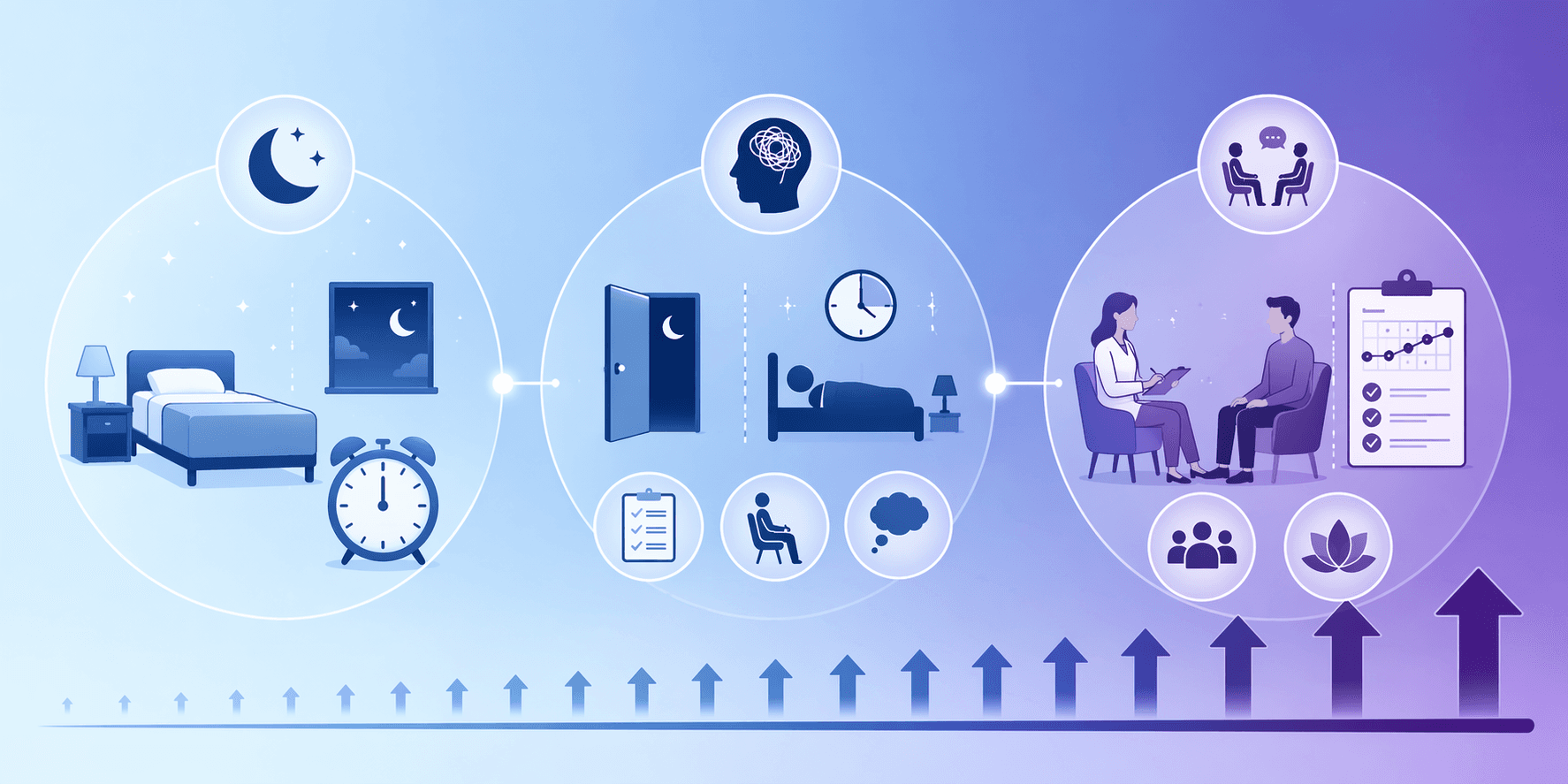
Start with duration and daytime impact, not with willpower
A bad week of sleep can feel dramatic from inside the night. That does not automatically mean you have chronic insomnia. The more useful distinction is whether the problem is still behaving like a temporary disruption or has become a stable pattern.
Clinically, chronic insomnia disorder is generally separated from occasional poor sleep by the combination of frequency, duration, and impairment: insomnia symptoms at least three nights per week, lasting at least three months, with meaningful daytime consequences. Under stricter DSM-5 and ICSD-3 criteria, chronic insomnia disorder affects about 6–10% of adults; broader definitions that include more self-reported insomnia symptoms produce higher estimates, around 16–17% in the research summarized in a 2025 meta-analysis. [1]
That difference matters. Broader insomnia symptoms are common. Chronic insomnia disorder is narrower. If those two are blurred together, people with a short-lived sleep disturbance may feel unnecessarily alarmed, while people with years of conditioned wakefulness may be told to keep repeating weak advice.
- If sleep has been difficult for days to a couple of weeks, and your daytime functioning is only mildly affected, start with basic self-care and watch the trend.
- If sleep has been difficult for more than a month, or the same problem keeps returning, move beyond sleep hygiene into structured behavioral strategies.
- If the pattern has reached at least three months, at least three nights per week, with daytime impairment, treat that as an escalation point.
- If red flags are present, do not wait for the calendar to prove chronicity before seeking evaluation.
Tier 1: when basic sleep hygiene is enough
Basic insomnia self-care is most reasonable when sleep trouble is recent, mild, and linked to an identifiable disruption: a stressful deadline, jet lag, a noisy room, inconsistent wake times, late caffeine, illness recovery, or a temporary change in routine. In that setting, the job is to remove friction and help the body find its rhythm again.
This is where familiar advice belongs: keep a consistent wake time, get morning light, reduce late-day caffeine and alcohol, keep the bedroom cool and dark, limit clock-checking, and build a wind-down period that is boring enough to let sleep arrive. Public self-help guidance, including NHS inform’s sleep problems and insomnia guide, commonly starts with this kind of routine-based troubleshooting. [2]
The point is not that sleep hygiene is fake. It is that sleep hygiene is a light tool. It can remove obvious obstacles, but it often cannot undo the learned pattern that develops when the bed itself starts to signal effort, frustration, and alertness. If your current plan is only “better habits,” and you have already done the habits consistently, repeating them harder is not a treatment plan.
For more detail on where healthy sleep habits help and where they stop helping, see the limits of sleep hygiene. For this triage decision, the important question is simpler: after you remove the obvious disruptors, does sleep begin improving within a reasonable short-term window, or does the problem keep teaching your brain that nighttime is a performance test?
Why insomnia can outgrow ordinary self-care
The useful explanation here is the 3P model: predisposing, precipitating, and perpetuating factors. A person may be predisposed to lighter sleep, anxiety, pain sensitivity, hormonal shifts, or irregular schedules. A trigger then starts the sleep disruption: grief, work stress, illness, caregiving, travel, medication changes, or a noisy environment. But the reason insomnia persists is often the third part: perpetuating behaviors and associations that keep the sleep system on guard after the original trigger has faded. [3]
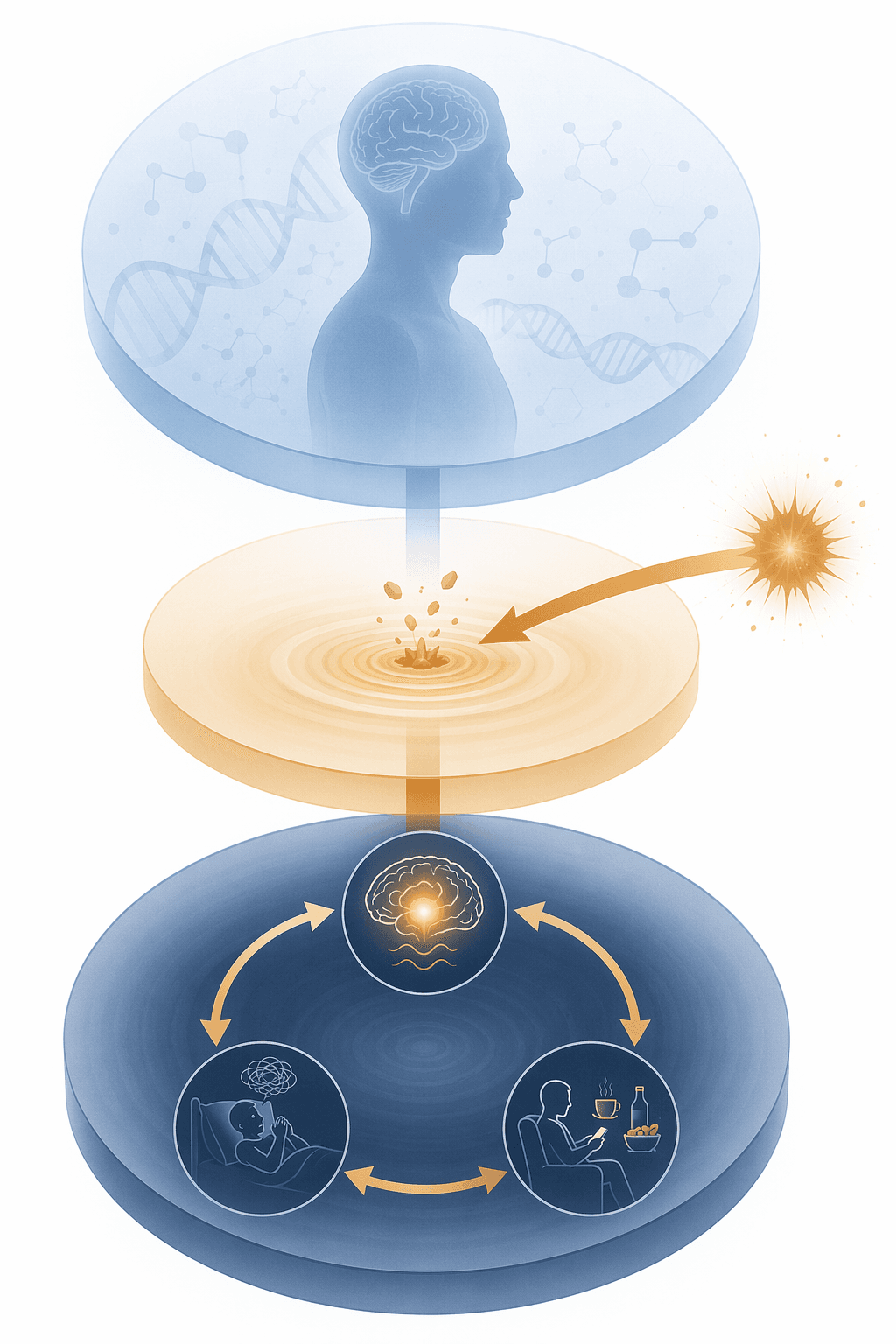
Those perpetuating factors can be subtle. You spend extra hours in bed to compensate. You nap late because you are exhausted. You cancel morning activity, lose daytime light, and weaken the sleep-wake signal. You check the clock and calculate how little sleep remains. You start entering the bedroom already braced for failure. Eventually the bed is no longer just the place where sleep happens; it is the place where the body rehearses wakefulness.
That is the point where insomnia self-care has to change shape. The target is no longer only the environment. It is the learned connection between bed, wakefulness, worry, and compensation. This is why CBT-I frameworks emphasize behavioral retraining rather than simply adding more calming products to the nightstand. A fuller explanation of that shift is covered in the CBT-I framework for chronic insomnia.
Tier 2: persistent insomnia needs behavioral self-help, not just better habits
If your sleep problem has lasted long enough that it feels patterned, or if basic self-care has made little difference, the next step is usually structured behavioral work. The two best-known CBT-I components are stimulus control and sleep restriction, although sleep restriction needs more caution than many online summaries give it.
Stimulus control: retraining the bed-sleep link
Stimulus control is one of the strongest single behavioral strategies for insomnia. In evidence-based insomnia management reviews, it is described as a potent behavioral treatment with moderate effects. [3]
The practical version is direct: use the bed for sleep and sex, go to bed only when sleepy, get out of bed when you are unable to sleep rather than lying there for long frustrated stretches, return only when sleepy, and keep the wake time consistent. The purpose is not punishment. It is to stop giving the brain hundreds of repetitions of “bed equals awake, tense, and monitoring.”
Sleep restriction: effective, but not casual
Sleep restriction, sometimes called sleep compression when introduced more gradually, limits time in bed to better match actual sleep time, then expands the sleep window as sleep becomes more consolidated. It can be powerful because it reduces long periods of awake time in bed and builds sleep drive.
It is also the part of self-help CBT-I that deserves the most guardrails. Sleep restriction can temporarily worsen daytime sleepiness. It is not appropriate to self-manage if you have bipolar disorder, because sleep loss can precipitate mania, or if you have a seizure disorder, where sleep deprivation can increase risk. It is also a poor fit when you are already dangerously sleepy during driving, caregiving, machinery use, or safety-sensitive work.
A safer self-help boundary is to use a reputable CBT-I program that provides structured rules and warnings, rather than inventing a severe sleep window on your own. If your daytime sleepiness becomes unsafe, that is not a sign to push harder; it is a sign to stop and seek clinical guidance.
Structured self-help CBT-I can be a real bridge
Self-help CBT-I is not the same as downloading a generic sleep tracker. It usually means a structured program, workbook, booklet, or digital intervention built around CBT-I components: sleep scheduling, stimulus control, cognitive work around sleep worry, relaxation where appropriate, and relapse prevention.
The evidence is stronger than for sleep hygiene alone. Reviews of insomnia management have found that self-help CBT-I produces larger benefits than sleep hygiene education, and a 2025 scoping review identified 145 studies of self-help CBT-I across formats and populations. [3][4]
That is encouraging, especially for people waiting for care, living far from a specialist, or unsure whether their symptoms have crossed into a clinical pattern. But the word “structured” is doing real work. A self-help path should tell you what to do, when to adjust, when not to adjust, and when to stop and get help.
Tier 3: when self-care should become professional care
Once insomnia has lasted at least three months, occurs at least three nights per week, and affects your daytime functioning, the question changes. It is no longer “Which sleep tip have I not tried?” It is “Have I reached the pattern where insomnia deserves evidence-based treatment?”
CBT-I is the central treatment at that point. Therapist-led CBT-I has been associated with lasting improvements in up to 70–80% of patients, according to a CBT-I primer summarizing the treatment literature. [5]
Digital CBT-I also deserves a serious place in the conversation when it is a true CBT-I program rather than a sleep-content app. A 2025 systematic review and meta-analysis of fully automated digital CBT-I included 29 randomized controlled trials with 9,475 participants and found moderate-to-large effects, with a standardized mean difference of −0.71, sustained beyond six months of follow-up. [1]
For a person with chronic insomnia symptoms, structured self-help may still be useful as a bridge while waiting for an appointment or choosing a program. But it should not become an indefinite holding pattern. If months are passing and your days are shrinking around poor sleep, the next step is evaluation, not another reset week.
A professional visit also checks whether insomnia is the main problem or whether another condition is keeping sleep fragmented. If you are unsure whether your symptoms warrant that visit, this guide to when trouble sleeping at night warrants a doctor’s visit can help you prepare the details a clinician will want: symptom frequency, duration, daytime impairment, medications, mood symptoms, breathing concerns, and what you have already tried.
The escalation framework here is synthesized from diagnostic thresholds, insomnia treatment literature, and guideline-style recommendations rather than from one single rulebook. It is meant to help you choose the level of care to pursue, not to diagnose yourself.
Red flags that should bypass ordinary insomnia self-care
Some patterns should not be managed by steadily escalating home sleep experiments. They need evaluation because the risk is not just a bad night of sleep; it is missing another condition or using a strategy that could make things worse.
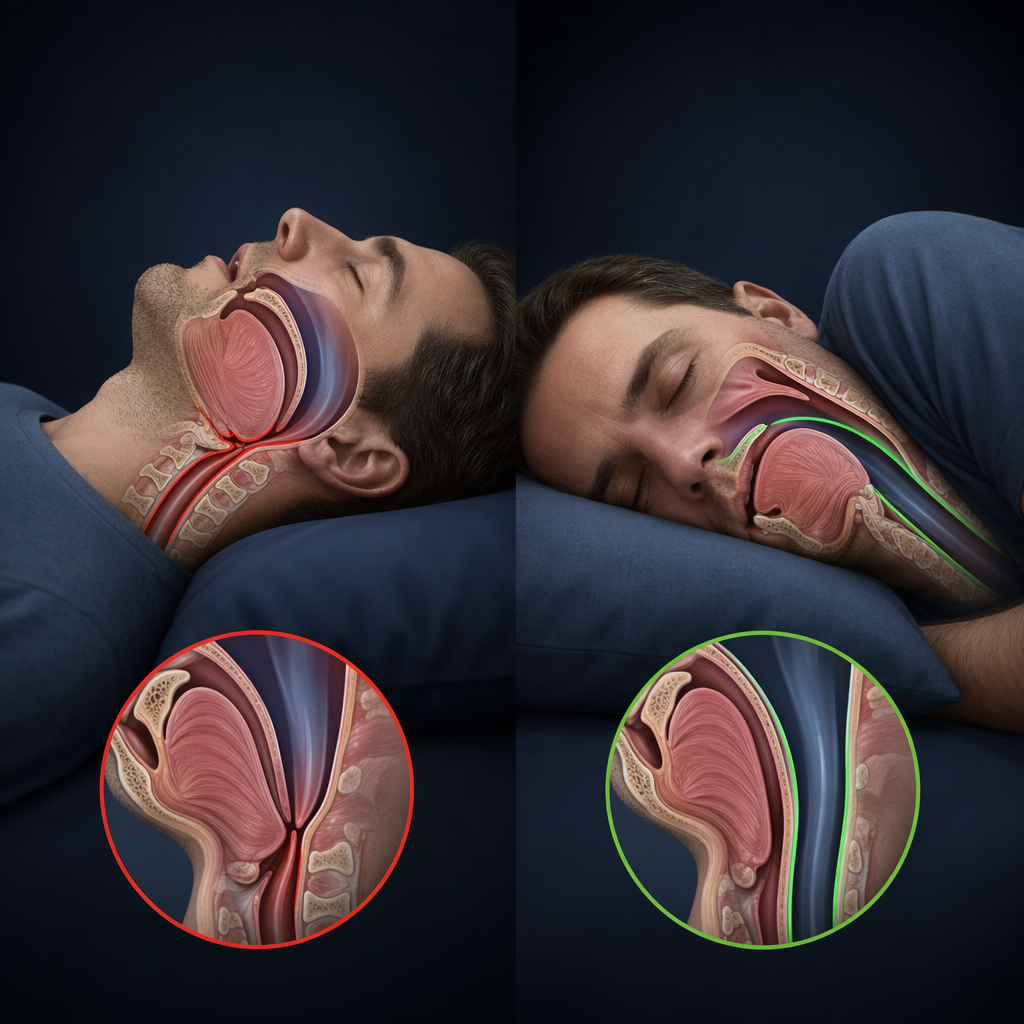
- Possible sleep apnea: loud snoring, witnessed breathing pauses, gasping, morning headaches, or significant daytime sleepiness. Sleep apnea should be ruled out before assuming insomnia is the whole explanation.
- Severe depression or thoughts of self-harm: insomnia can travel with serious mood symptoms and should not be treated as a stand-alone habit problem.
- Bipolar disorder or possible mania/hypomania: self-managed sleep restriction can be unsafe because sleep loss can destabilize mood.
- Seizure disorder: sleep deprivation can increase seizure risk, so sleep restriction should not be self-directed.
- Possible periodic limb movement disorder or other disruptive nighttime movements: repeated movements may require assessment rather than standard insomnia advice.
- Unsafe daytime sleepiness: do not continue a self-care plan that makes driving, caregiving, work, or daily functioning unsafe.
These are the moments when the right form of insomnia self-care is arranging care. If any of these apply, skip the experiment phase and use a clinician to help sort out what kind of sleep problem you are actually dealing with.
Where medication and supplements fit
Medication and supplements sit somewhat outside this self-care triage because they answer a different question: “What might make me sleep tonight?” rather than “What level of care matches this symptom pattern?” That does not mean they are never used. It means they should not distract from the escalation decision.
For short-term disruptions, some people discuss temporary medication options with a clinician. For chronic insomnia, medication may sometimes be part of care, but CBT-I remains the treatment framework with the strongest behavioral target: reducing the conditioned arousal, schedule disruption, and sleep-related fear that keep insomnia alive. Newer treatment discussions are covered in what the 2026 guidelines mean for nighttime sleeping problems.
Choose the next level without blaming yourself
If your insomnia is mild and recent, use basic sleep hygiene and give your sleep system a chance to recover. If symptoms persist beyond that early disruption, shift to structured behavioral self-help instead of collecting more bedtime tips. If the pattern has lasted at least three months, happens at least three nights per week, and affects your days, seek professional evaluation and CBT-I rather than treating self-care as a test of discipline.
References
- Systematic review and meta-analysis on fully automated digital cognitive behavioral therapy for insomnia — npj Digital Medicine, 2025
- Sleep problems and insomnia self-help guide — NHS inform
- Insomnia: evidence-based approaches to assessment and management — PMC, 2012
- A scoping review of self-help cognitive behavioural therapy for insomnia — Sleep Medicine Reviews, 2025
- CBT-I Primer — PMC, 2023


Comments
Join the discussion with an anonymous comment.