
If you typed “the cure for insomnia” and ran into results about a 1987 experimental film instead of a useful health answer, the confusion is understandable. The phrase sounds simple. The problem is that chronic insomnia usually is not a single thing with a single switch.
So the clean answer is this: there is no universal cure for insomnia in the way there is a cure for some infections. But if by “cure” you mean the treatment most likely to produce durable improvement, the closest evidence-based answer is Cognitive Behavioral Therapy for Insomnia, usually called CBT-I. In 2026, the American Academy of Sleep Medicine recommended CBT-I alone over combination therapy, and combination therapy over medication alone; the guideline’s lead author, Dr. Daniel Buysse, put it plainly: “CBT-I by itself is the most efficacious first-line treatment for insomnia.”[1]
Why a single “cure” is the wrong target
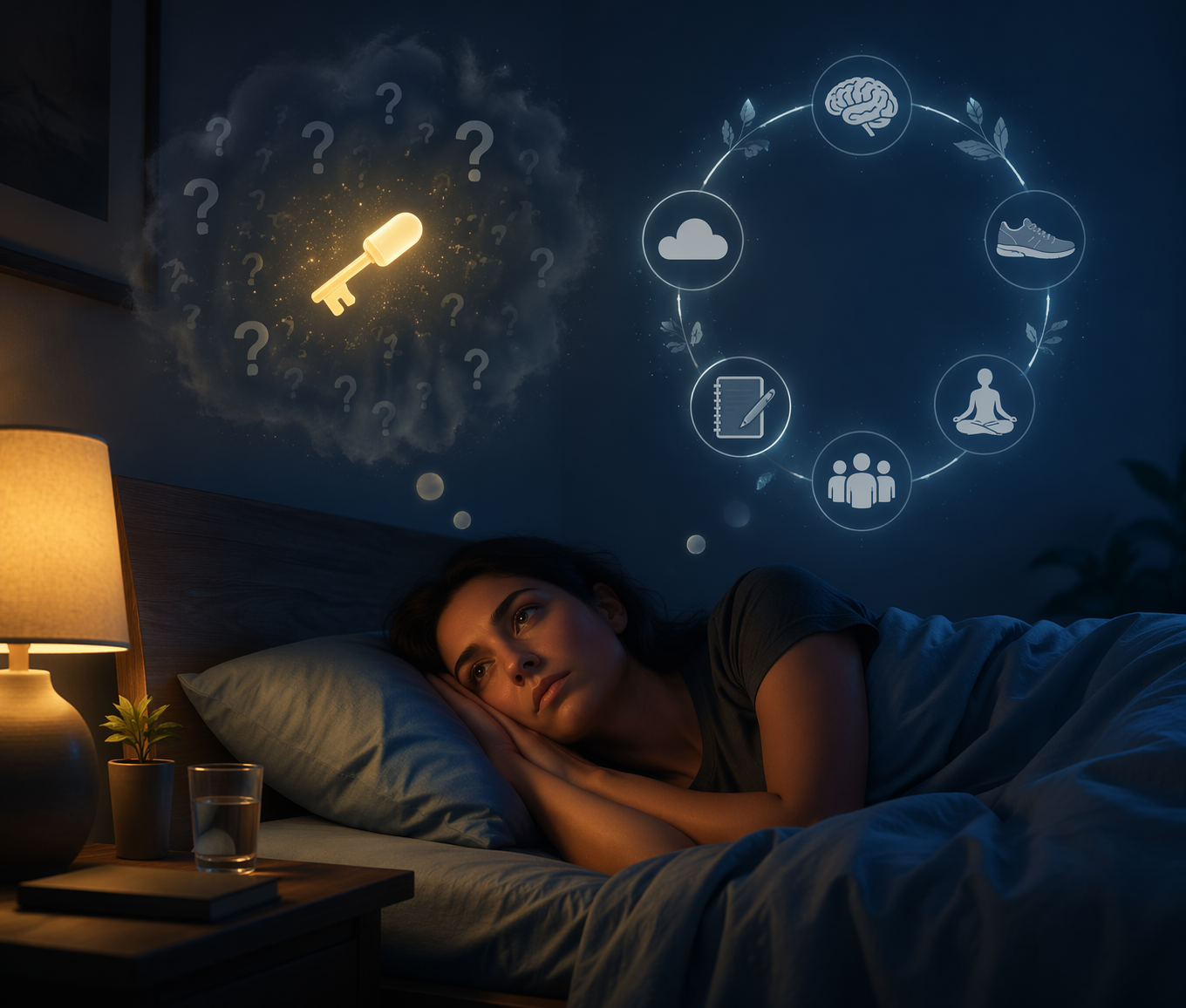
A bad night can have an obvious trigger: stress, pain, caffeine too late, a crying baby, travel, grief, a hot room. Chronic insomnia is different. It can begin with a trigger, but it persists because the sleep system learns the wrong lessons.
This is the difference between a cause and a maintaining loop. The original cause may fade, but the pattern remains: you spend more time in bed trying to catch up, nap because you are exhausted, monitor the clock, worry about tomorrow, and begin to associate the bed with effort instead of sleep. The body is tired, but the bed has become a place of alertness.
That is why the usual advice can feel insulting when it is offered as a cure. A darker room may help. Less alcohol may help. A steadier wake time may help. But chronic insomnia often survives because the person is not merely missing a tip; they are caught in a system that keeps reinforcing wakefulness.
This matters because chronic insomnia is not rare. AASM survey data reported that 12% of U.S. adults have been diagnosed with chronic insomnia.[2] If you are still awake after trying tea, meditation, white noise, new pillows, and phone-free evenings, that does not mean you failed at sleep. It may mean the treatment target has been too small.
If you are still unsure whether your sleep problem fits insomnia rather than a temporary rough patch, start with this sleep problem versus insomnia triage framework. The distinction matters because chronic insomnia calls for a treatment plan, not just reassurance.
The loop that keeps insomnia alive
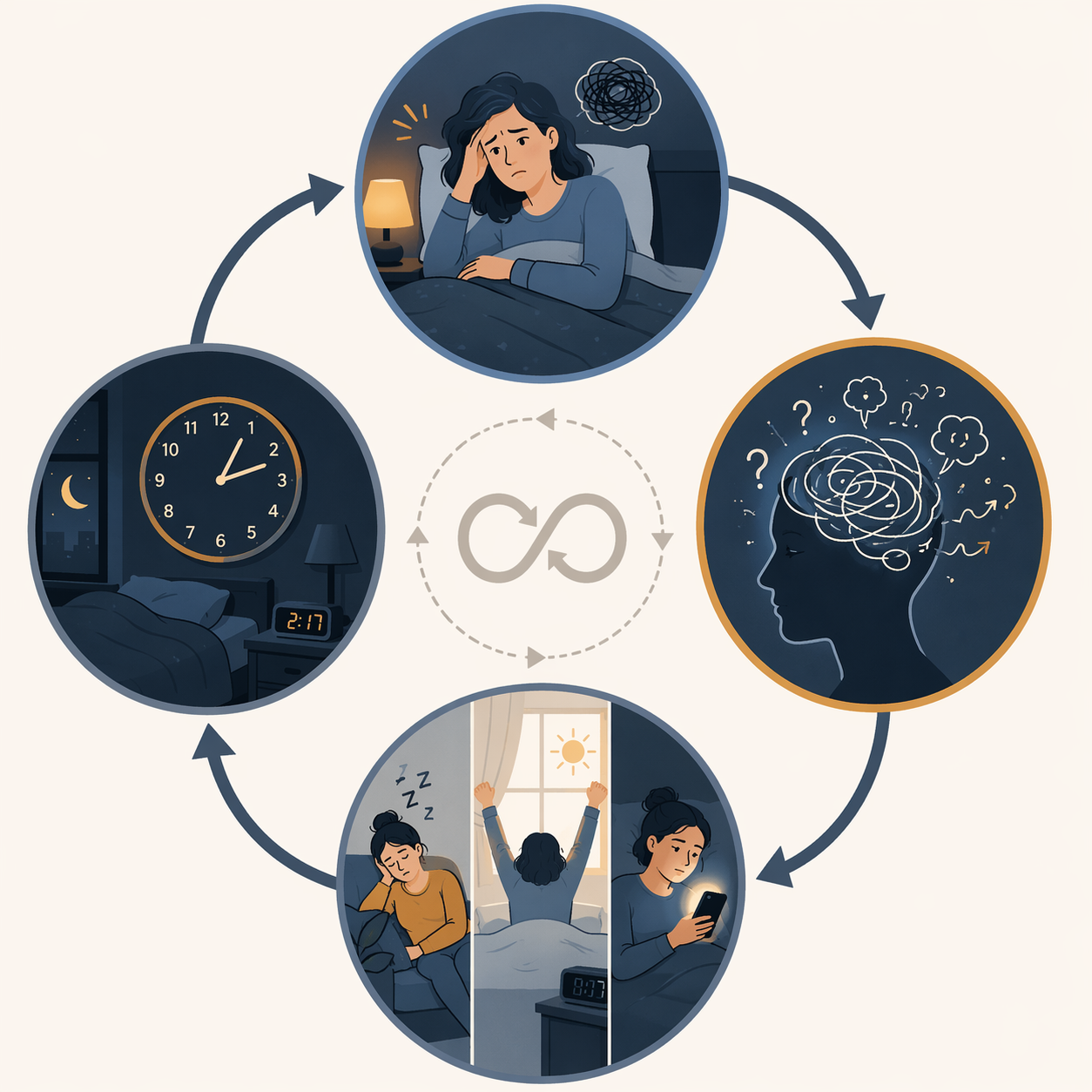
The most useful way to understand chronic insomnia is not “What caused this?” but “What is keeping this going?” The answer is often a combination of wakefulness, worry, compensation, and conditioning.
- Wakefulness teaches the brain to watch for sleep instead of letting sleep happen.
- Worry raises arousal: “If I do not sleep now, tomorrow will be ruined.”
- Compensatory behaviors reduce sleep pressure: extra time in bed, late sleeping, irregular naps, or canceling daytime activity.
- Conditioning links the bed with alertness, frustration, clock-checking, and effort.
None of these reactions is irrational. They are what tired people do to survive the next day. The problem is that the short-term rescue can become part of the long-term insomnia pattern. Spending nine hours in bed to get five hours of sleep, for example, can make the bed feel less predictable as a sleep cue. Avoiding activity after a bad night can protect you from one hard day, but it can also weaken the daytime rhythm that helps anchor the next night.
This is also why insomnia can look different from person to person. One person cannot fall asleep. Another wakes at 3 a.m. and starts calculating the damage. Another sleeps lightly for hours and never feels restored. The maintaining factors can differ by pattern, which is why pattern-specific thinking is more useful than a generic list of tips; this is covered more closely in why you cannot sleep depends on your insomnia pattern.
What CBT-I actually changes
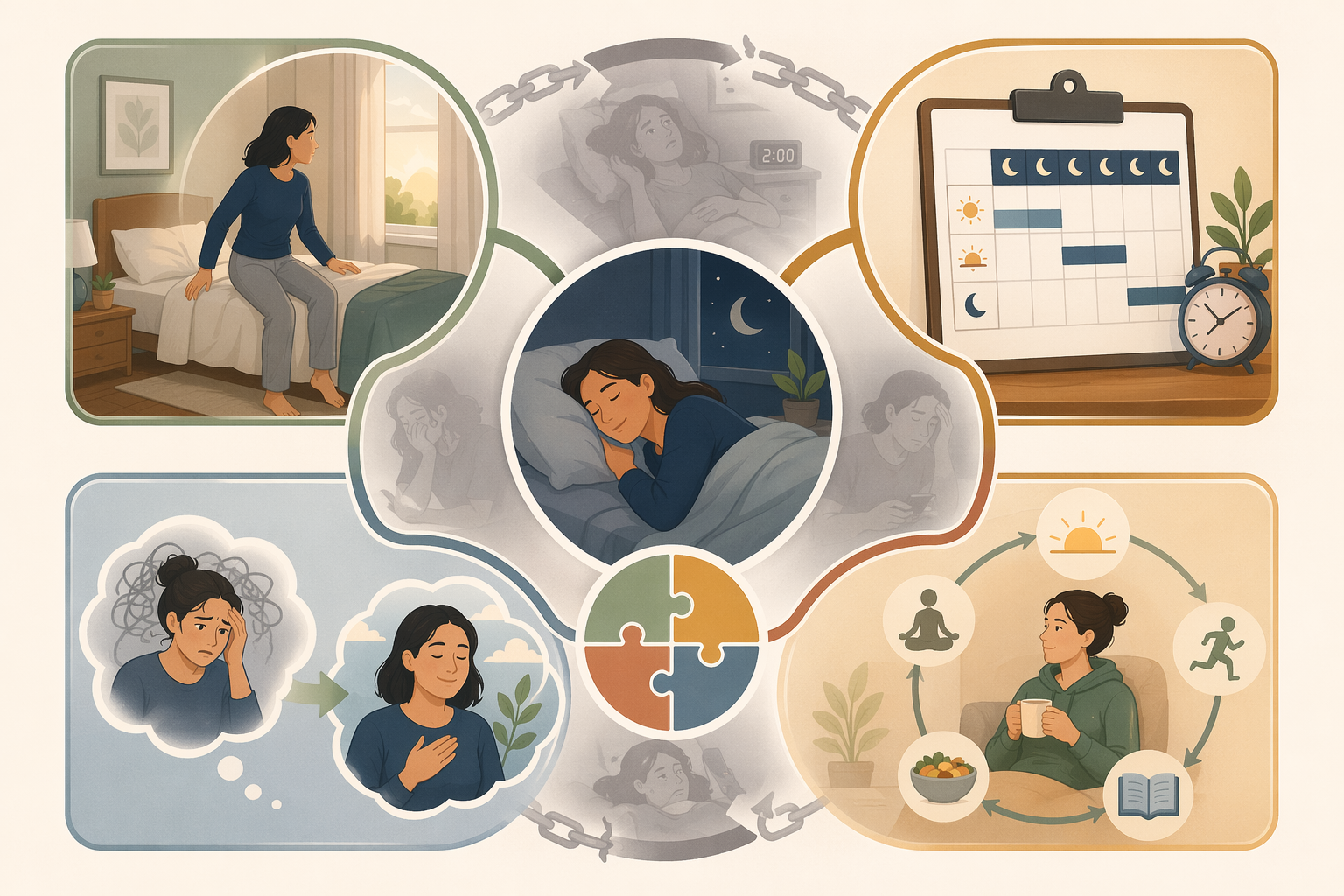
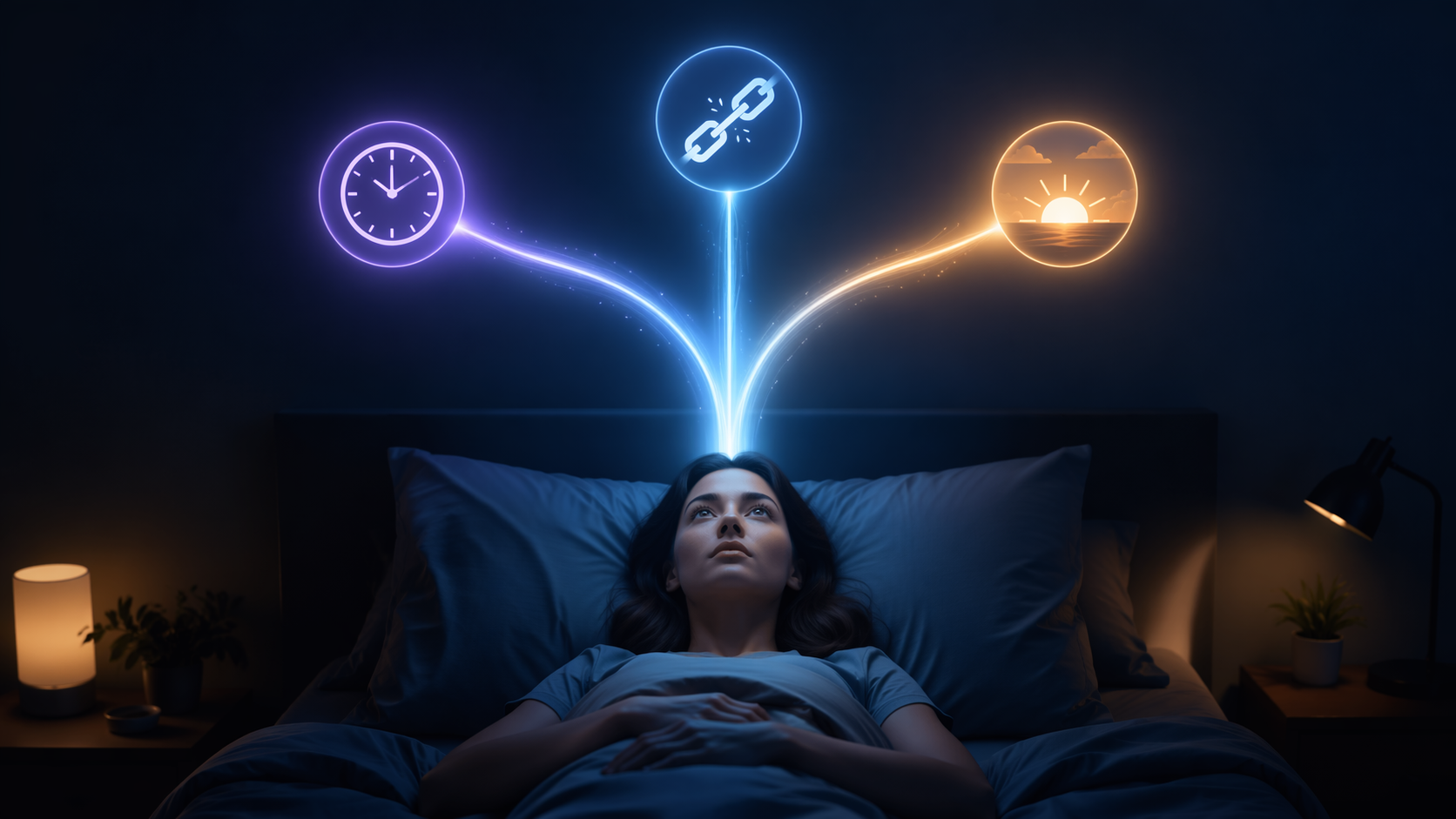
CBT-I is not sleep hygiene with a more clinical name. It is a structured behavioral treatment designed to weaken the insomnia loop. It usually combines stimulus control, sleep restriction or sleep compression, cognitive work, and schedule consistency. Those pieces matter because they target different parts of the same self-perpetuating system.
Stimulus control: making the bed mean sleep again
Stimulus control addresses the learned association between bed and wakefulness. In practical terms, it means reducing the amount of awake, frustrated time spent in bed and rebuilding the bed as a cue for sleep. This is the piece that often feels counterintuitive: if you are awake and agitated, lying there for hours may train the wrong association more deeply.
The point is not punishment. It is conditioning. A bed that has become a stage for effort, monitoring, and dread needs to become boringly linked with sleep again.
Sleep restriction: rebuilding pressure without chasing sleep
Sleep restriction is often the hardest part to hear about and the hardest part to start. It does not mean depriving someone of sleep for its own sake. It means matching time in bed more closely to the amount of sleep the person is currently getting, then gradually expanding that window as sleep becomes more consolidated.
This can feel worse before it feels better. Someone who is already exhausted may understandably resist any plan that seems to reduce rest opportunity. That discomfort is one reason CBT-I should be done carefully, especially for people with bipolar disorder, seizure disorders, untreated sleep apnea, high fall risk, or safety-sensitive jobs. The clinical idea is sound, but the plan has to fit the person.
Cognitive work: lowering the threat level around sleep
Insomnia is not caused by “thinking too much” in some moral sense. But sleep-related threat appraisals can keep the body activated. Thoughts like “I will not function at all tomorrow” or “I am losing control of my health” may be understandable and still physiologically expensive at midnight.
CBT-I does not ask people to pretend they are fine. It helps test catastrophic predictions, separate tiredness from catastrophe, and reduce the amount of mental work assigned to the bed. The goal is not forced positivity. It is less alarm.
Consistency: giving the circadian system something to hold
A consistent wake time, light exposure, and daytime activity are not glamorous, but they help stabilize the timing system that sleep depends on. This is where ordinary sleep hygiene overlaps with CBT-I, but the difference is context. In CBT-I, consistency is not a scattered wellness checklist. It supports a larger plan to rebuild sleep drive, reduce conditioned arousal, and make sleep more predictable.
How strong is the evidence?
The evidence is strong enough that CBT-I sits at the top of the treatment hierarchy, not beside lavender spray and a new pillow. The 2026 AASM guideline is especially useful because it addresses a question many patients actually face: should treatment be behavioral, medication-based, or both? Its answer places CBT-I first, combination treatment second, and medication alone behind both.[1]
A practical expectation is that most patients who complete multicomponent CBT-I improve; clinical summaries often describe improvement in about 70–80% of patients. Research reviews also report large treatment effects: one CBT-I primer describes effect sizes of 1.0–1.2, corresponding to about a 50% post-treatment reduction in insomnia symptoms.[3]
Durability is the part that deserves more attention. Sedating someone tonight can be valuable, but it does not necessarily teach the brain and behavior system how to sleep differently next month. CBT-I is different because it trains the mechanisms that maintain insomnia. In a 10-year follow-up of Swedish bibliotherapeutic self-help CBT-I, 66% of participants no longer met diagnostic criteria for insomnia.[4]
That 10-year number should be read carefully. The study involved 133 participants in a Swedish bibliotherapy context, so it is not a guarantee that every CBT-I format produces the same long-term result for every patient. Still, it is an important counterweight to the assumption that insomnia treatment only works while someone is actively taking something.[4]
Where medication fits
Sleep medication can matter. If someone has gone several nights with little sleep, is caring for children, has a demanding job, or is terrified of another sleepless night, short-term relief is not trivial. A medication that helps someone get through a crisis can be clinically reasonable.
The problem is when relief is mistaken for cure. Many sleep medicines work by increasing sedation or altering wake-promoting systems. They may reduce symptoms while they are used, but they do not necessarily change the learned association between bed and wakefulness, the fear around sleep, or the compensatory habits that keep insomnia going. Some also carry risks of tolerance, dependence, next-day impairment, falls, interactions, or rebound insomnia when stopped.
This is why the hierarchy matters. Medication can be a bridge, an adjunct, or a short-term tool for selected people. It should not become the emotional center of the plan if the goal is durable recovery. If you are weighing nonprescription options, use a cautious, age-aware guide such as how to choose the best adult sleep aid; older adults should be especially careful and may want to start with which sleep aids are safe for people over 65.
What about meditation, supplements, and sleep hygiene?
Meditation may help some people reduce arousal. A steadier wind-down routine can help. Avoiding late caffeine, alcohol near bedtime, and bright nighttime light is sensible. None of that is the same as treating chronic insomnia with a structured first-line therapy.
The common failure of sleep hygiene lists is that they focus on conditions around sleep while saying too little about the insomnia loop itself. A person can have a cool bedroom, no phone, herbal tea, and a white noise machine and still spend two hours in bed anxiously trying to sleep. In that case, the room is not the main treatment target. The learned struggle is.
Meditation deserves a similar level-headed treatment. It can be useful for some people, especially when arousal and rumination are prominent, but it is not a replacement for CBT-I when chronic insomnia is established. For a closer look at where it helps and where it does not, see how effective meditation is for insomnia.
Access is part of the treatment question
Saying “CBT-I is first-line” is not the same as making it easy to get. Many people cannot find a trained clinician nearby, cannot afford repeated visits, or cannot attend appointments during working hours. That access gap is one reason digital CBT-I and guided self-help programs matter. They are not identical to working one-on-one with a clinician, but they can bring the core methods within reach for people who otherwise would be left with generic advice or medication alone.
The best format depends on risk and complexity. Someone with straightforward chronic insomnia may do well with a structured program. Someone with severe depression, trauma symptoms, bipolar disorder, untreated sleep apnea, complex medication use, pregnancy, high fall risk, or safety-sensitive work should involve a clinician before changing sleep schedules aggressively.
So, is there a cure for insomnia?
There is no single cure for insomnia that works like a universal antidote. Chronic insomnia is too varied, and too often maintained by a loop of behavior, belief, arousal, and conditioning. Looking for one product or one bedtime rule usually keeps the target too narrow.
But insomnia is highly treatable. The most credible path is not chasing the next sedating product. It is using CBT-I to change the loop that keeps insomnia alive: less awake time in bed, less fear around wakefulness, stronger sleep pressure, steadier timing, and a bed that becomes a cue for sleep again.
That answer may be less magical than the word “cure.” It is also more useful.
References
- Combination treatment chronic insomnia guideline, American Academy of Sleep Medicine, April 2026.
- Survey shows 12% of Americans have been diagnosed with chronic insomnia, American Academy of Sleep Medicine.
- Cognitive Behavioral Therapy for Insomnia (CBT-I): A Primer, PMC, 2022.
- Long-term follow-up of bibliotherapy for insomnia, Cognitive Behaviour Therapy, 2022.

Comments
Join the discussion with an anonymous comment.