You can be exhausted all day and still become strangely alert the moment the room gets quiet. The layoff rumor that was manageable at 3 p.m. turns into severance math at 11:40. Insurance deadlines, mortgage scenarios, Slack silence, and the phrase “business needs” start looping with a confidence they did not have in daylight. That pattern is not rare enough to dismiss as overthinking: in 2026 employee-experience data from Perceptyx, 1 in 4 employees with layoff anxiety reported new sleep disruption, and those with layoff anxiety were also more likely to report physical and mental exhaustion.[1]
That Perceptyx finding is useful because it names the current workplace context. It is not the same kind of evidence as peer-reviewed sleep research, and it should not be treated as if it proves a biological pathway on its own. The pathway comes from a better-studied construct: sleep reactivity, the tendency for stress to disrupt sleep more strongly in some people than in others.[2]
Why Layoff Stress Can Keep You Awake When You Are Already Drained
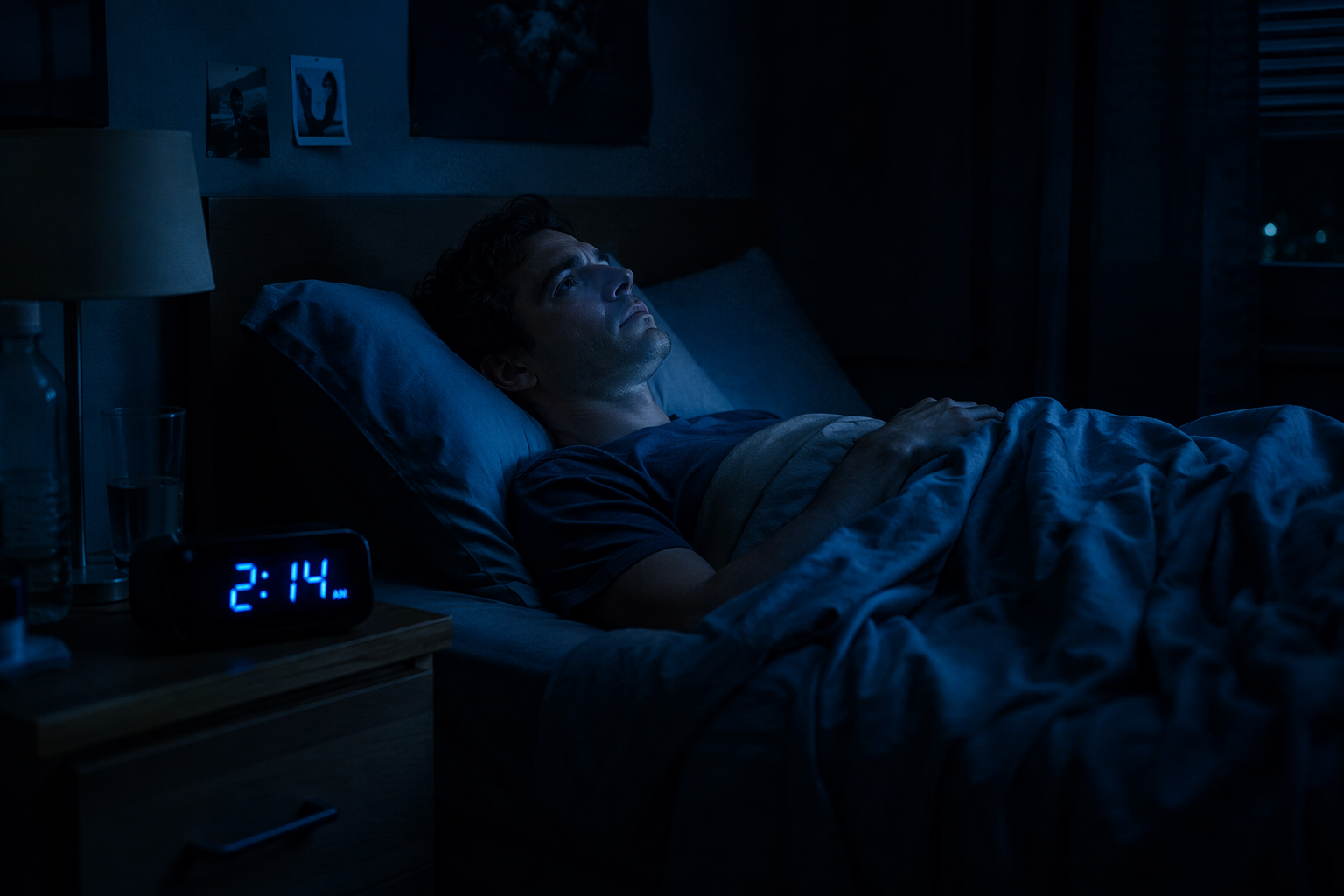
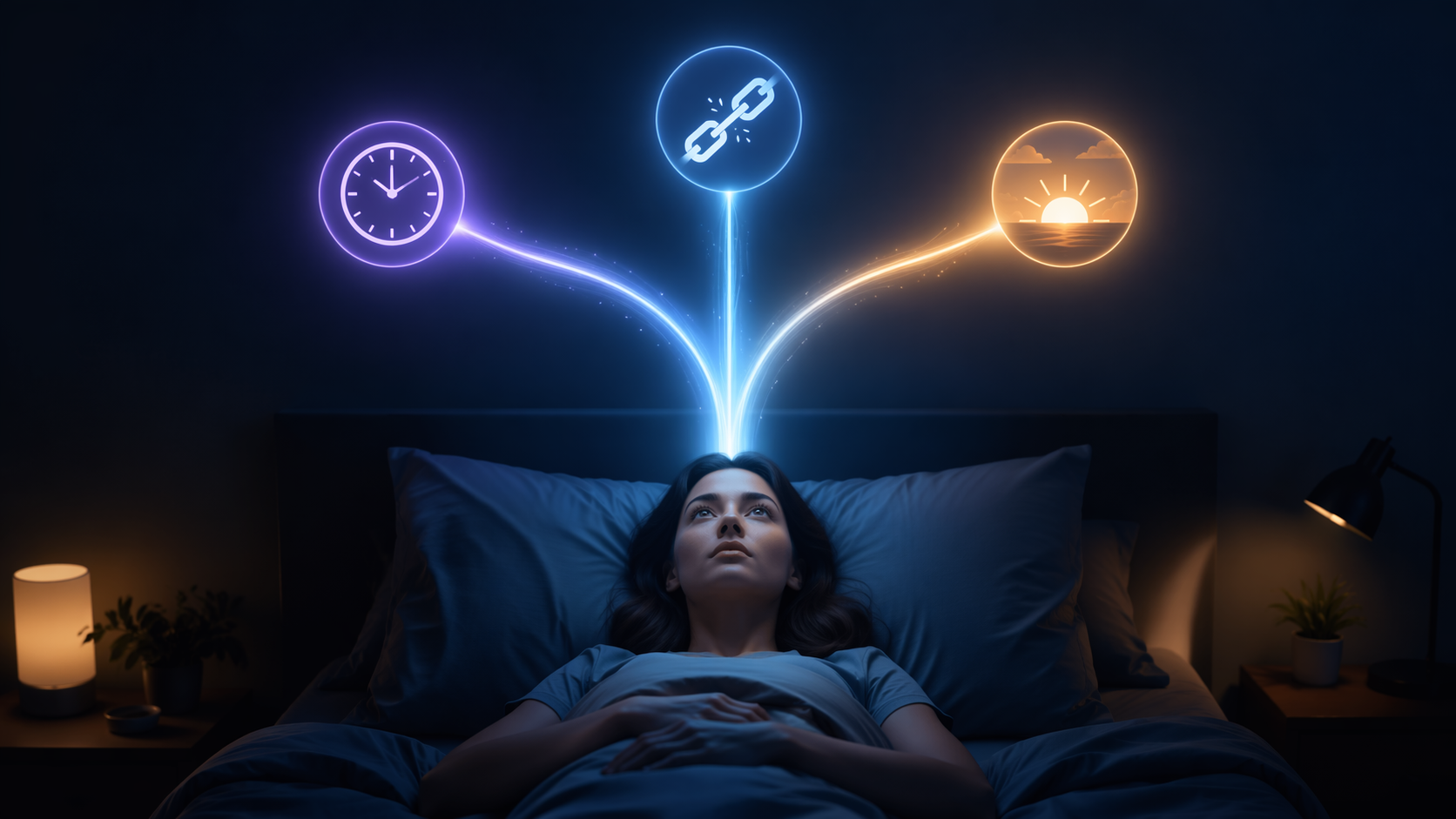
Layoff stress affects sleep because the nervous system does not wait for a termination notice to react. A credible threat to income, status, routine, health insurance, or housing can be processed as danger before anything final has happened. During the day, tasks and conversations may keep that danger partially contained. At night, when external demands drop away, the brain has fewer competing inputs. For a reactive sleeper, that quiet does not feel neutral. It becomes the first open space where the threat can fully rehearse itself.
Sleep reactivity helps explain why two people can face the same rumor cycle and have different nights. In the sleep-reactivity framework, stress exposure triggers a stronger-than-average sleep response in vulnerable individuals. The trait is not simply “being anxious,” and it is not a character flaw. Drake and colleagues describe sleep reactivity as a predisposition that is partly heritable, with estimated heritability in the 29–43% range.[2]
That number needs careful handling. Heritable does not mean inevitable. It means part of the difference between people appears to be explained by inherited vulnerability. A person with high sleep reactivity is not doomed to chronic insomnia, but their sleep system may be quicker to treat stress as a reason to stay on watch.
The Bed Becomes a Threat-Monitoring Site
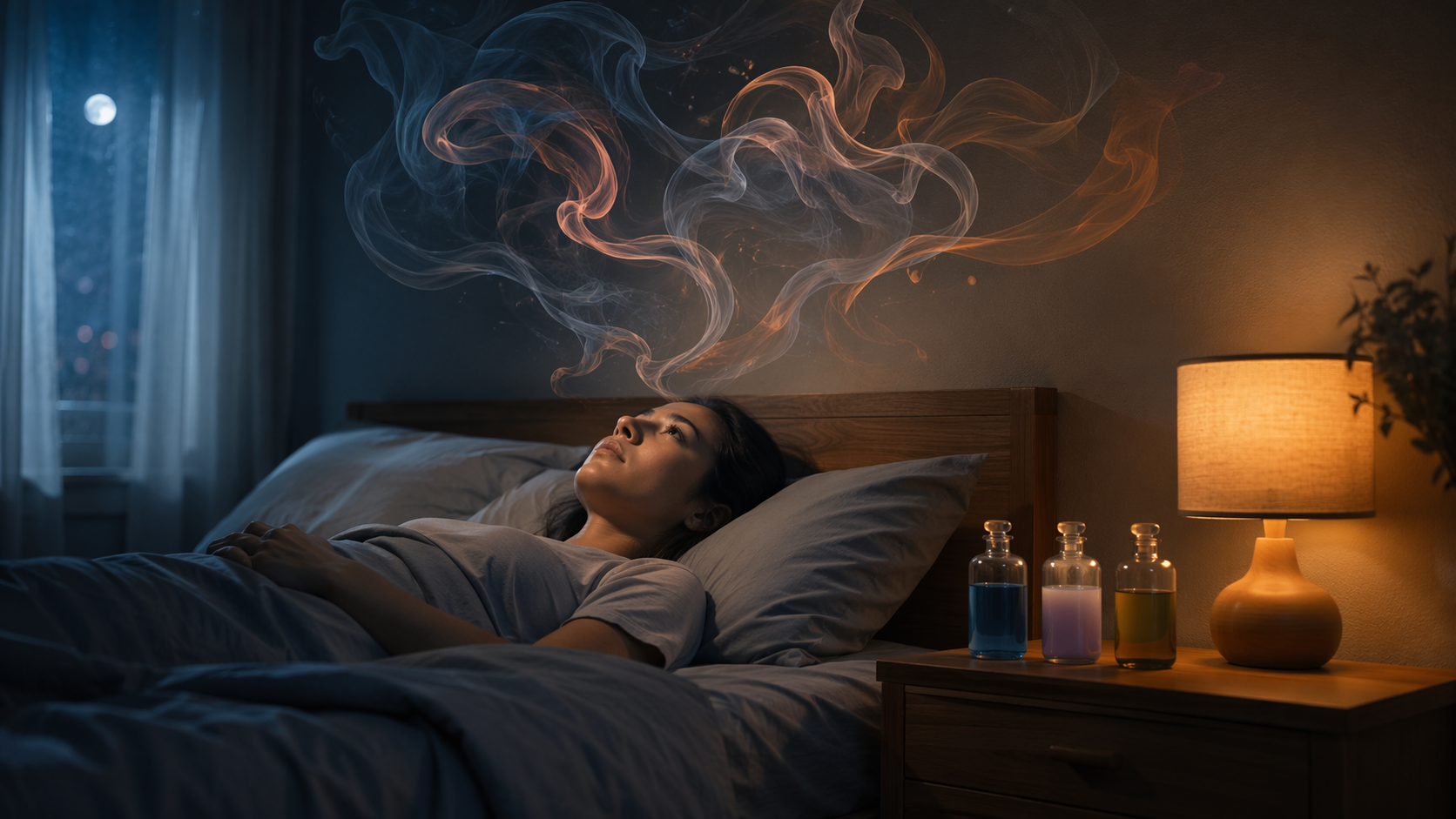
The cruel part is that the bed is supposed to signal safety. In layoff anxiety, it can begin to signal unfinished threat review. You lie down, and the mind starts scanning: Who was in the closed-door meeting? Why did the project pause? What happens if the next paycheck is the last one? This is not productive planning anymore. It is threat monitoring in a dark room.
The biological side of that shift runs through hyperarousal. Stress activates the hypothalamic-pituitary-adrenal, or HPA, axis. In simple terms, the brain and adrenal system coordinate a readiness response, including cortisol release. Cortisol is not “bad”; it is part of how the body mobilizes. But when that mobilization stays high near bedtime or returns during the night, it conflicts with the descent into sleep. For a deeper explanation of that timing problem, see why anxiety gets worse at night through the cortisol-melatonin conflict.
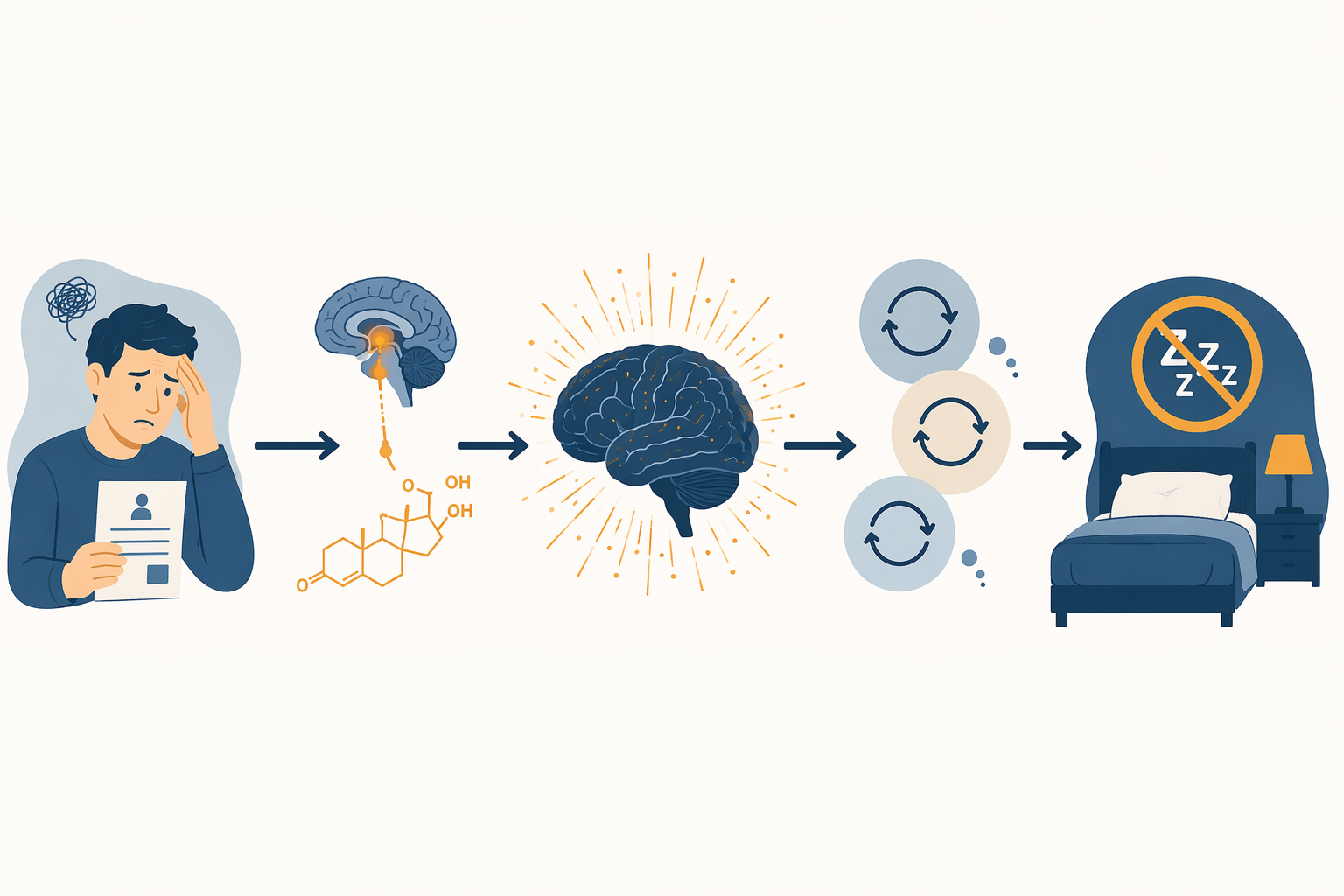
This is why “I’m exhausted, so why can’t I sleep?” is not a contradiction. Exhaustion describes depleted energy. Hyperarousal describes a nervous system that still believes vigilance is required. Those can coexist in the same body. In fact, they often make each other feel worse: the more depleted you are, the less emotional bandwidth you have for uncertainty; the more uncertain you feel, the harder the body may push itself toward alertness.
Rumination Is Where the Mechanism Becomes Personal
Rumination is not the same as problem-solving. Problem-solving changes something: a form gets filed, a budget gets adjusted, a message gets sent during working hours. Rumination repeats the threat without resolving it. It feels active, but it often leaves the body in the same danger state, only more practiced.
The EPIC study, discussed in Drake and colleagues’ review, followed 2,316 participants and found that rumination about stressors synergized with high sleep reactivity to amplify insomnia risk.[2] The word “synergized” matters. It means the risk is not just stress plus a bad habit of thinking. The cognitive loop and the biological vulnerability appear to strengthen each other.
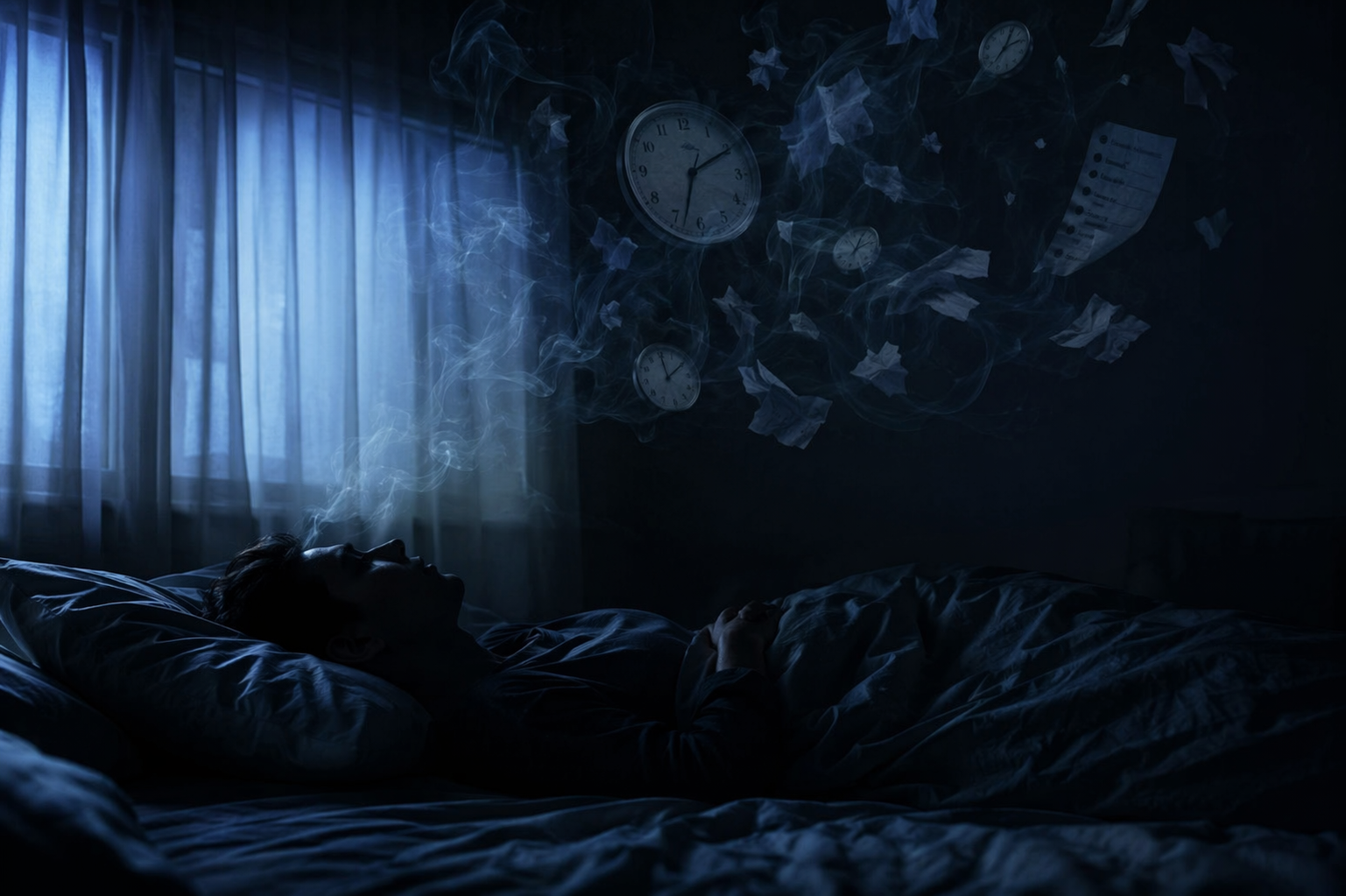
A layoff-threat night fits that model painfully well. The mind keeps presenting the next scenario because uncertainty has not closed. The body reads the rehearsal as continued danger. The heightened body state makes the thoughts feel more urgent. The thoughts then give the body more reasons to stay heightened. This is how a person can be still, silent, and doing nothing from the outside while internally running a full emergency simulation.
That loop can affect sleep onset, but it can also show up as early waking. Some people fall asleep from sheer fatigue, then wake before dawn with the same thought already running. If your pattern is waking in the early morning and feeling immediately mentally activated, the physiology overlaps with the broader question of why people wake up at 3 a.m., including the normal rise in alerting signals toward morning.
Why Some People Are Hit Harder Than Others
The most compassionate answer is also the most precise: some sleep systems are more reactive. Drake and colleagues report that 62–77% of people with chronic insomnia had high premorbid sleep reactivity, meaning the vulnerability was present before the chronic insomnia condition rather than being only a consequence of it.[2]
That finding should loosen the grip of self-blame. If your sleep collapses quickly under layoff stress while someone else seems to sleep through the same uncertainty, the difference may not be discipline. It may be that your sleep system has a lower threshold for stress-related arousal. The right comparison is not between your willpower and someone else’s. It is between two nervous systems with different sensitivity settings.
Current workplace data also suggest that the layoff-anxiety environment is unevenly distributed. In the Perceptyx report, 90% of employees who heard layoff rumors reported anxiety, remote workers experienced more than double the layoff anxiety of in-office employees, and 15% of respondents under layoff anxiety had stopped exercising.[1] Those are not sleep-mechanism findings, but they describe conditions that can remove buffers from an already reactive system: less movement, more isolation, fewer informal cues, and more time alone with ambiguous signals.
Older epidemiological data point in the same general direction, with important limits. The American Academy of Sleep Medicine reported findings from Grandner and colleagues based on 159,856 participants: 32% of people unemployed for less than one year reported sleep problems.[3] The study is from 2009, so it should not be used as a fresh snapshot of the 2026 labor market. Its value is scale: job loss and sleep disturbance have been linked in large population data, not only in individual anecdotes.
The Scarring Effect: When Bad Nights Teach the System to React Faster
One reason early support matters is that sleep disruption can become part of the stress response itself. The sleep-reactivity literature describes a sensitization, or “scarring,” effect: disrupted sleep may increase future sleep reactivity, making the system more vulnerable the next time stress arrives.[2]
In practical terms, the original layoff threat may change before the sleep system fully stands down. You get clarity about your role, or you start a job search, or the severance details become known. Yet bedtime still carries a learned association: this is where the mind spirals, this is where the body braces, this is where sleep fails. The bed has acquired a memory.
That does not mean the pattern is permanent. It means waiting for the external stressor to vanish may not be enough if the sleep system has begun rehearsing insomnia. Stress can disturb sleep architecture as well as sleep timing; for readers who want the stage-level view, how stress disrupts sleep architecture explains how arousal can interfere with deeper NREM and REM patterns.
Using FIRST as a Mirror, Not a Verdict
The Ford Insomnia Response to Stress questionnaire, usually shortened to FIRST, was developed to measure sleep reactivity: how likely someone is to have sleep disruption in response to stressful situations.[2] For someone living through layoff anxiety, its value is not that it hands down a diagnosis. It gives shape to a pattern that otherwise feels like personal failure.
| If FIRST-style reflection suggests... | It may mean... | The useful next question |
|---|---|---|
| Sleep worsens quickly when uncertainty rises | Your sleep system may be highly reactive to threat | What reduces arousal before the bed becomes the processing room? |
| You fall asleep but wake early with urgent thoughts | Rumination and morning alerting signals may be converging | Is the wake-up pattern occasional, escalating, or impairing daytime function? |
| Sleep stays disrupted after the work situation changes | The bed may have become associated with vigilance | Would CBT-I tools or clinical support help break the learned loop? |
The distinction matters because a questionnaire can orient you, but it cannot tell you whether another condition is contributing, whether medication is appropriate, or whether insomnia has crossed a clinical threshold. FIRST is best treated as a self-awareness tool: a way to notice that your system may be built to react strongly to stress, not as proof that you have a disorder.
What Understanding the Mechanism Changes
Understanding sleep reactivity does not make the layoff threat harmless. It also does not mean insight alone will restore sleep. What it can do is remove the moral accusation from the night. If your body is responding to perceived economic danger with hyperarousal, cortisol activation, rumination, and early waking, the problem is not that you are weak. The problem is that a protective system is firing at the wrong time and then learning from its own firing.
That reframing can change the next action. Instead of arguing with yourself at midnight, you can treat the pattern as anxiety-insomnia physiology and use interventions designed for it. Practical tools such as scheduled worry time, stimulus control, and getting out of bed when wakefulness is becoming conditioned are covered in what to do when anxiety keeps you up at night.
If the disruption is persistent, frequent, or impairing your ability to function, the treatment hierarchy matters. Cognitive behavioral therapy for insomnia, or CBT-I, remains the first-line treatment when insomnia becomes clinical. For help distinguishing short-term adjustment insomnia from a longer-running disorder, see the insomnia FAQ on causes, duration, treatment, and when insomnia becomes a disorder.
Layoff-related sleep disruption is predictable biology, not personal failure. That truth is not the end of treatment, but it is often the first honest place to stand.
References
- New Research Reveals Growing Layoff Anxiety and Ways to Combat It, Perceptyx.
- The impact of stress on sleep: Pathogenic sleep reactivity as a vulnerability to insomnia and circadian disorders, PMC7045300.
- Low Socioeconomic Status, Gender and Marital Status Are Associated with Increased Sleep Disturbances, American Academy of Sleep Medicine.
Comments
Join the discussion with an anonymous comment.