
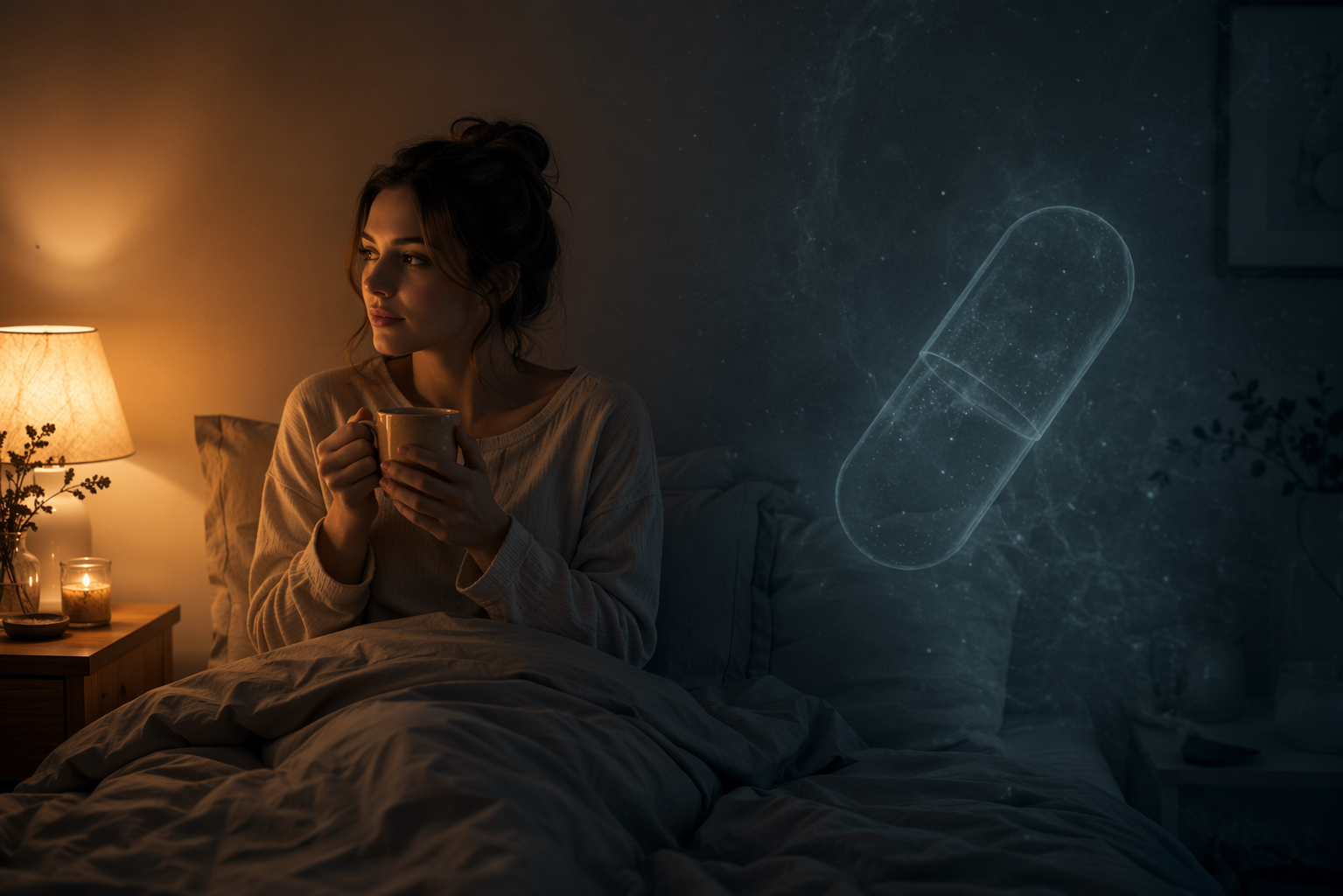
A person takes chamomile, magnesium, valerian, tart cherry juice, or melatonin at 10:30 p.m., turns down the lights, gets into bed, and sleeps a little better. The next morning, the conclusion feels obvious: the natural sleep aid worked. That experience is not silly, and it may not be imagined. The harder question is whether the ingredient did the work, or whether the repeated act of taking something — the mug, the capsule, the dim lamp, the decision that the day is over — helped the brain shift toward sleep.
That distinction matters because natural remedies for insomnia sit in a strange middle ground. Americans spend an estimated $67 billion a year on sleep aids, and a 2024 Canadian study of 4,037 adults found that about 1 in 3 reported using a natural sleep aid in the past year.[1][2] This is not a fringe habit. It is a mass response to a real problem, often made by people who are exhausted enough to try one more bottle, tea bag, gummy, powder, or tincture.
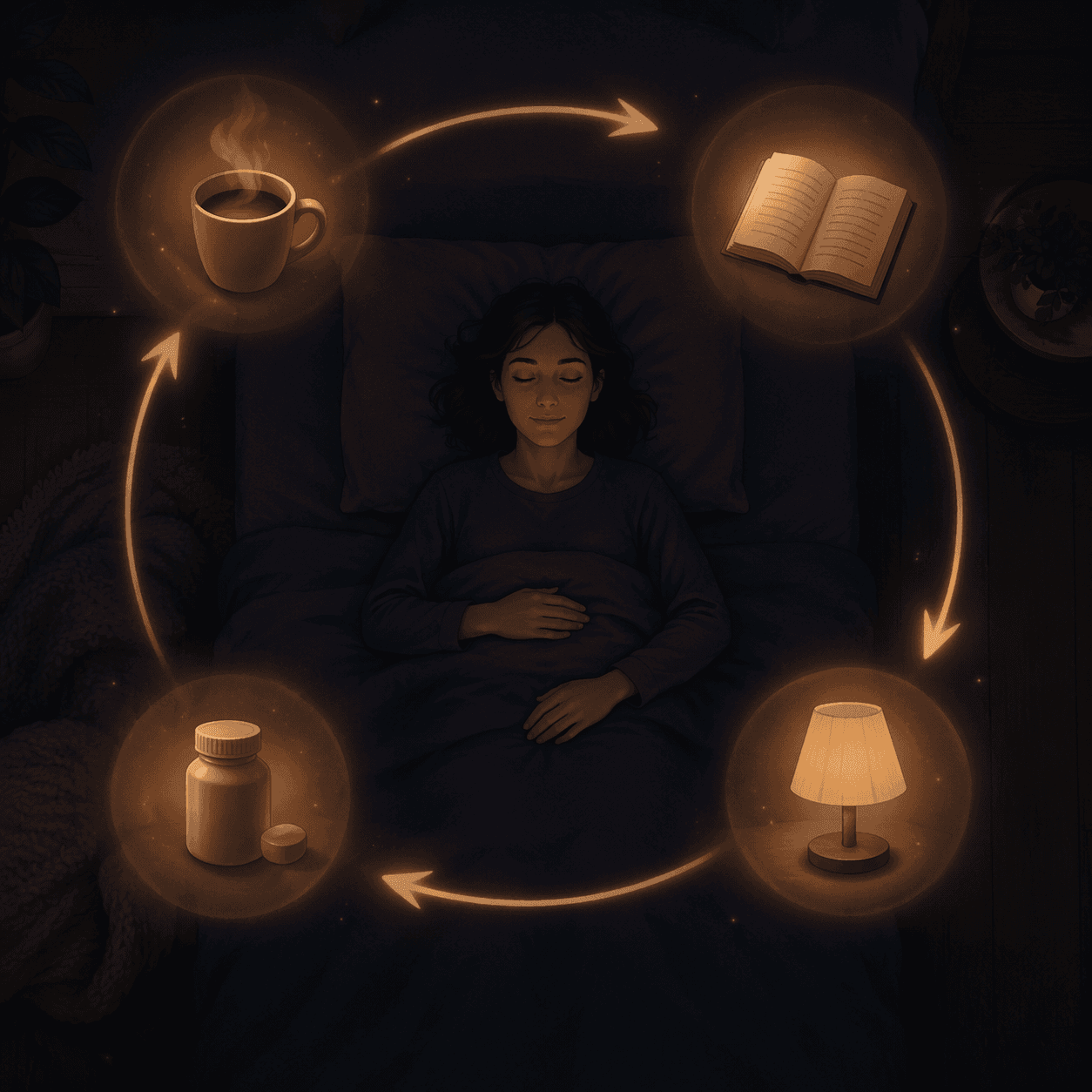
Sleep specialists quoted by National Geographic draw a useful line here. Michael Grandner, PhD, of the University of Arizona, puts it bluntly: “Insomnia is a medical condition. By definition, supplements don’t treat medical conditions.” Chris Winter, MD, makes the softer but equally important point: a consistent bedtime ritual — taking a supplement, reading, showering, drinking tea — can cue the brain that sleep is approaching.[1] In other words, the benefit can be real without proving that the active compound in the product is treating insomnia.
The Placebo Effect Is Not the Same as “Fake”
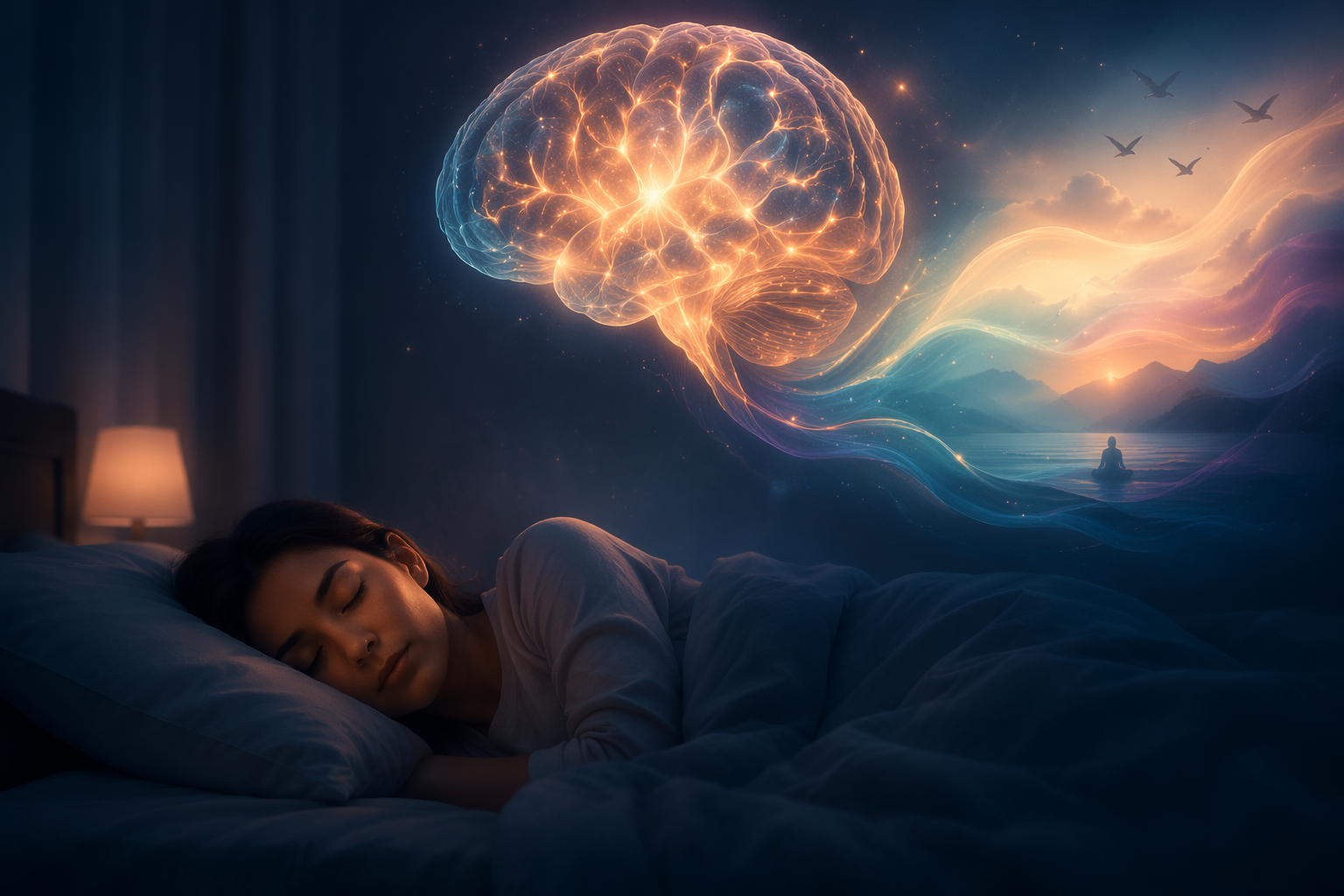
Placebo effects are often discussed as if they expose gullibility. Sleep is a poor place for that kind of scolding. Expectation, safety, repetition, reduced arousal, and a predictable sequence before bed can all change how the night feels. If someone’s sleep problem is occasional and tied to stress, travel, or an overbright evening, a calming routine may be enough to move the night in the right direction.
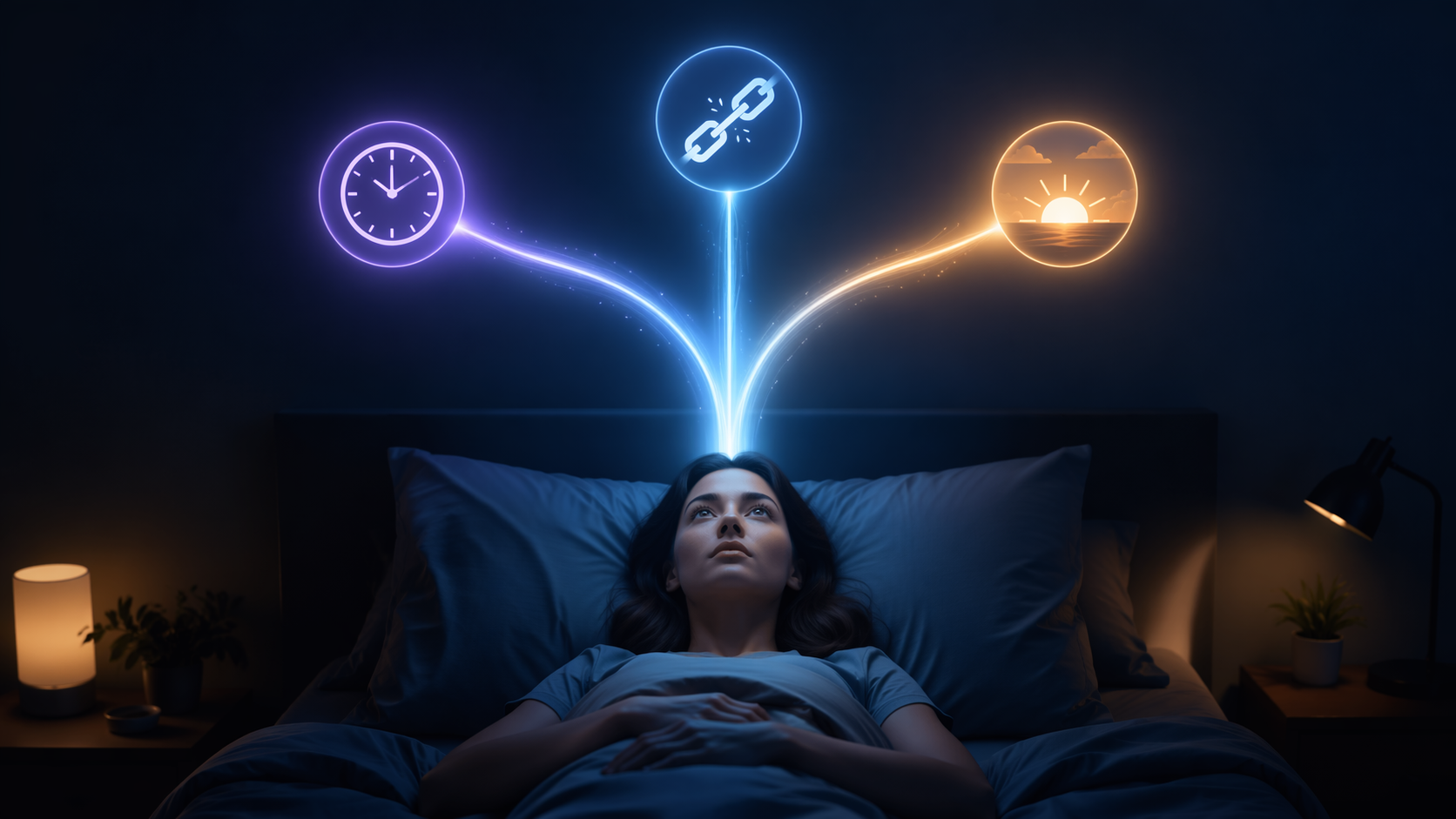
The biology is not mysterious. Sleep timing is regulated partly by circadian signals, and the brain learns from repeated environmental cues. A low light level, a familiar order of events, and the same bedtime window can become part of the body’s prediction that wakefulness is ending. For readers who want the clock-mechanism version of that idea, the useful companion is how circadian rhythm mechanisms control sleep and wake cycles.
This also explains why people can report better sleep after taking products whose ingredient-specific evidence is weak. Subjective sleep quality is a meaningful part of sleep health, but it is not identical to proving that a herb shortened sleep latency, increased total sleep time, or treated chronic insomnia. A person may feel helped by a ritual even when a clinical trial cannot show that the ingredient outperforms placebo. That is not a contradiction; it is the point.
What Happens When Herbal Sleep Aids Face Placebo?
Chamomile is a good test case because it carries almost no cultural menace. It is warm, gentle, familiar, and often folded into the most reasonable version of a bedtime routine. Yet in a placebo-controlled randomized trial, Zick and colleagues found that chamomile did not produce a statistically significant improvement in insomnia compared with placebo.[3] That does not mean chamomile tea cannot be part of a calming evening. It means the clinical evidence did not show that chamomile itself treated insomnia better than an inactive comparison.
The broader herbal literature points in the same direction. A 2015 systematic review and meta-analysis by Leach and Page examined 14 randomized controlled trials including 1,602 participants and concluded that there was insufficient evidence that herbal medicines such as valerian, chamomile, kava, and wuling benefit adults with insomnia.[4] This is where many supplement labels become too confident. Tradition, plausible calming effects, and individual testimonials do not add up to controlled evidence that a product treats insomnia.
A 2025 scoping review of 51 randomized controlled trials on over-the-counter products for adult insomnia makes the picture more complicated but not more reassuring. The review found that most products showed positive effects somewhere in the literature, but the studies were heterogeneous, often small, and likely affected by positive publication bias.[5] That is a crucial caution: “some positive findings exist” is not the same as “this remedy reliably works for insomnia.” Small trials with different products, doses, populations, and outcome measures can make the shelf look more evidence-backed than it really is.
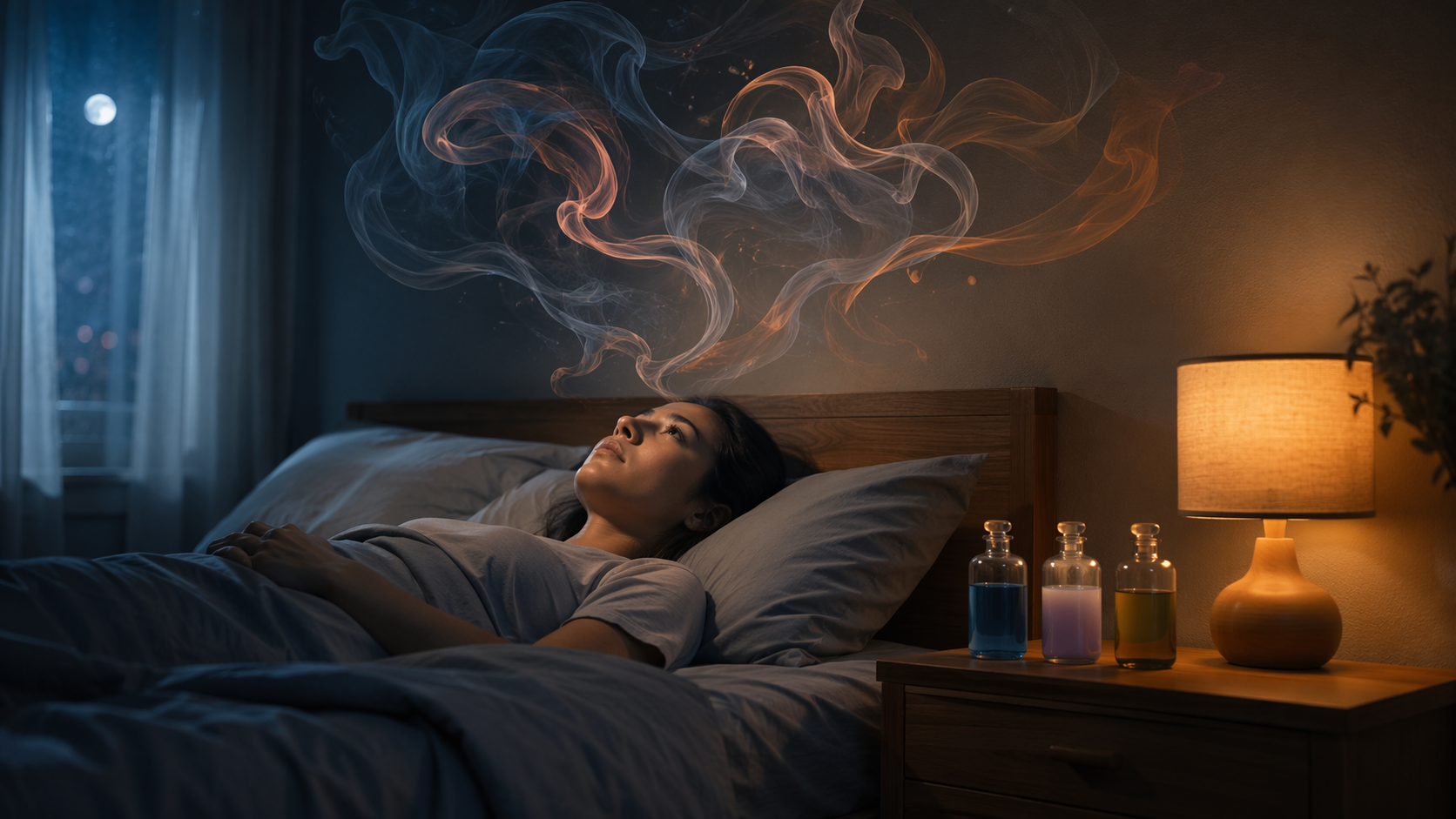
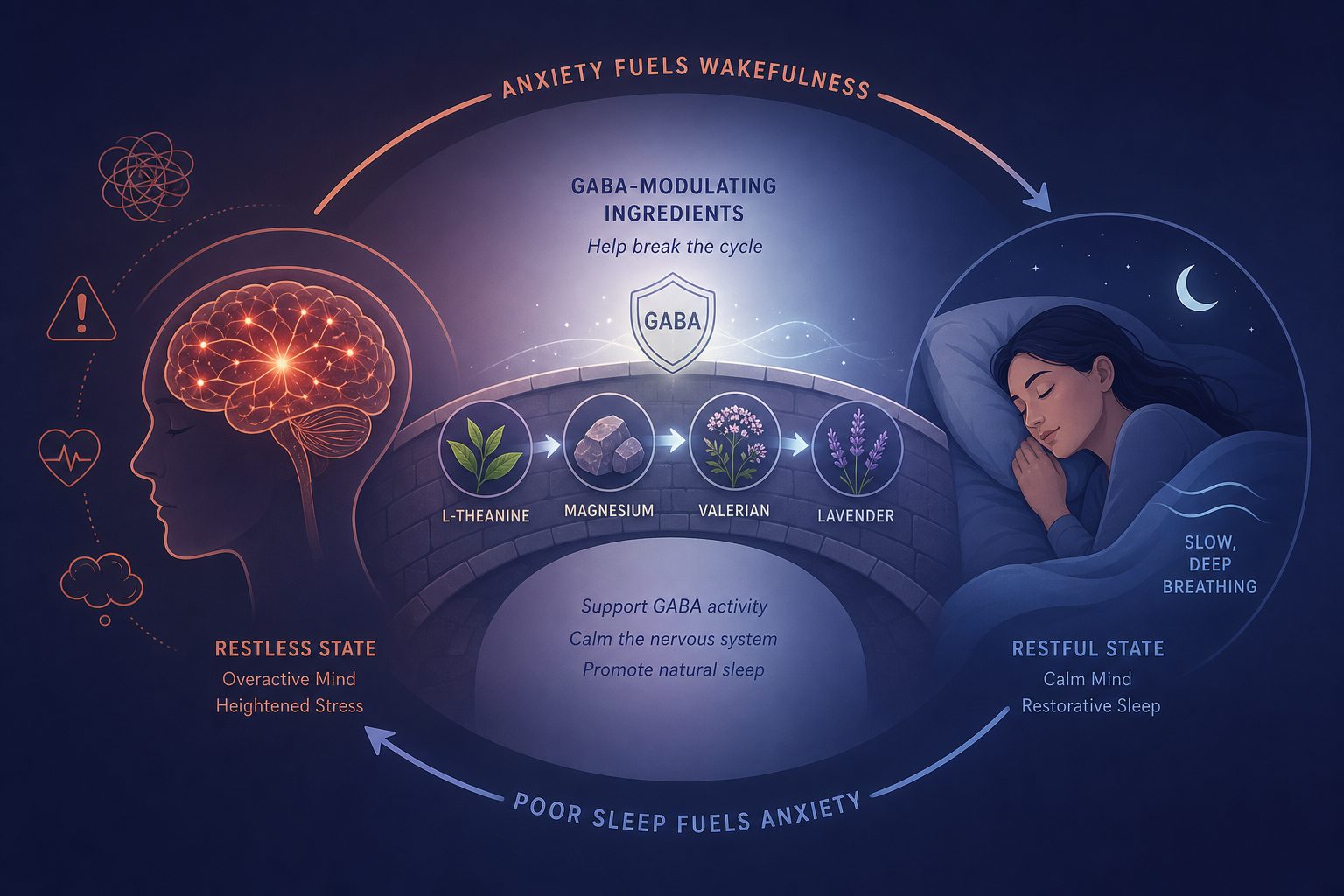
Valerian, lavender, magnesium, tart cherry juice, and similar remedies are often discussed one by one, as if the right shopping comparison will solve the problem. For many readers, the more useful comparison is between ingredient-specific proof and ritual-specific benefit. A tea may help because it replaces late-night scrolling. A capsule may help because it marks a firm stop to the evening. A lavender scent may help because it belongs to the only 20 quiet minutes in the day. Those are real pathways, but they are not the same as a remedy outperforming placebo in insomnia trials.
A Fair Exception: Passionflower, With a Small Asterisk
The evidence is not a blank wall of negative findings. A 2024 placebo-controlled randomized trial of passionflower reported significant improvement.[6] That deserves to be said plainly, especially because selective skepticism can be as sloppy as selective enthusiasm. But one positive trial does not settle whether passionflower reliably treats insomnia across different groups, doses, and study settings. It is a reason for replication, not a reason to rewrite the whole category.
Melatonin Is Different, but Usually Sold Too Broadly
Melatonin is the natural sleep aid that most deserves separate handling. It is not merely a soothing herb with a pleasant bedtime association; it is a hormone involved in circadian timing. That gives it a narrower but more credible role. The evidence supports melatonin better for circadian-specific problems such as jet lag, delayed sleep phase, and some sleep-onset difficulties than for general sleeplessness or waking through the night. One meta-analysis found about a 14-minute reduction in sleep latency in older adults, a result that is measurable but modest.[7]
This is where misuse begins. If someone cannot fall asleep because their body clock is shifted late, melatonin timing may matter more than the dose. If someone falls asleep easily but wakes at 3 a.m. with anxiety, pain, alcohol rebound, hot flashes, untreated sleep apnea, or conditioned insomnia, more melatonin is unlikely to be the missing key. For practical use, the relevant question is not “Is melatonin natural?” but “Is this a circadian timing problem?” A targeted melatonin dosage guide by sleep problem is more useful than a stronger gummy.
Regulatory context also matters. European prolonged-release 2 mg melatonin approved for insomnia in older adults is not the same thing as the U.S. over-the-counter supplement market, where products are sold under a different framework. A sleep aid being “over the counter” does not mean the same thing for every product class, and it does not mean the product has been evaluated like a prescription insomnia treatment. The distinction is easy to miss, so it is worth understanding what over-the-counter actually means for sleep aids.
When a Bedtime Ritual Is Enough, and When It Is Not
For occasional sleeplessness, the standard can be practical. If a low-risk ritual helps you wind down, does not interact with medications, does not leave you groggy, and does not keep you from addressing an obvious cause, it may be worth keeping. The honest label would read something like: this routine helps me transition into sleep. That is different from saying chamomile treats insomnia, valerian fixes sleep architecture, or magnesium is the missing cause of every restless night.
The boundary changes when insomnia is persistent, impairing, or patterned. If sleep difficulty keeps happening despite reasonable sleep opportunity, if the bed has become a place of effort and dread, or if daytime functioning is suffering, the problem has moved beyond the job description of a tea or capsule. At that point, the most evidence-based direction is not another natural product trial but insomnia care that targets the learned arousal and behaviors maintaining the disorder. The relevant framework is CBT-I for chronic insomnia, not a longer supplement stack.
The kindest interpretation of natural sleep aids is also the most precise one. Many people are not wrong that they sleep better after taking something. They may be wrong about why. If the ritual is doing the work, protect the ritual: make it consistent, quiet, low-risk, and boring in the best possible way. If insomnia is chronic or disabling, do not ask a placebo-level tool to carry a medical condition.
References
- Do natural sleep aids like melatonin and magnesium work? National Geographic, 2025 update.
- 2024 Canadian study on natural sleep aid use 2024.
- Chamomile extract for sleep disturbance in elderly persons: a randomized, double-blind, placebo-controlled pilot study Zick et al., 2011.
- Herbal medicine for insomnia: A systematic review and meta-analysis Leach & Page, 2015.
- Over-the-counter products for insomnia in adults: A scoping review of randomised controlled trials ScienceDirect, 2025.
- 2024 placebo-controlled randomized trial of passionflower for sleep 2024.
- Meta-analysis of melatonin for sleep latency in older adults.
Comments
Join the discussion with an anonymous comment.