
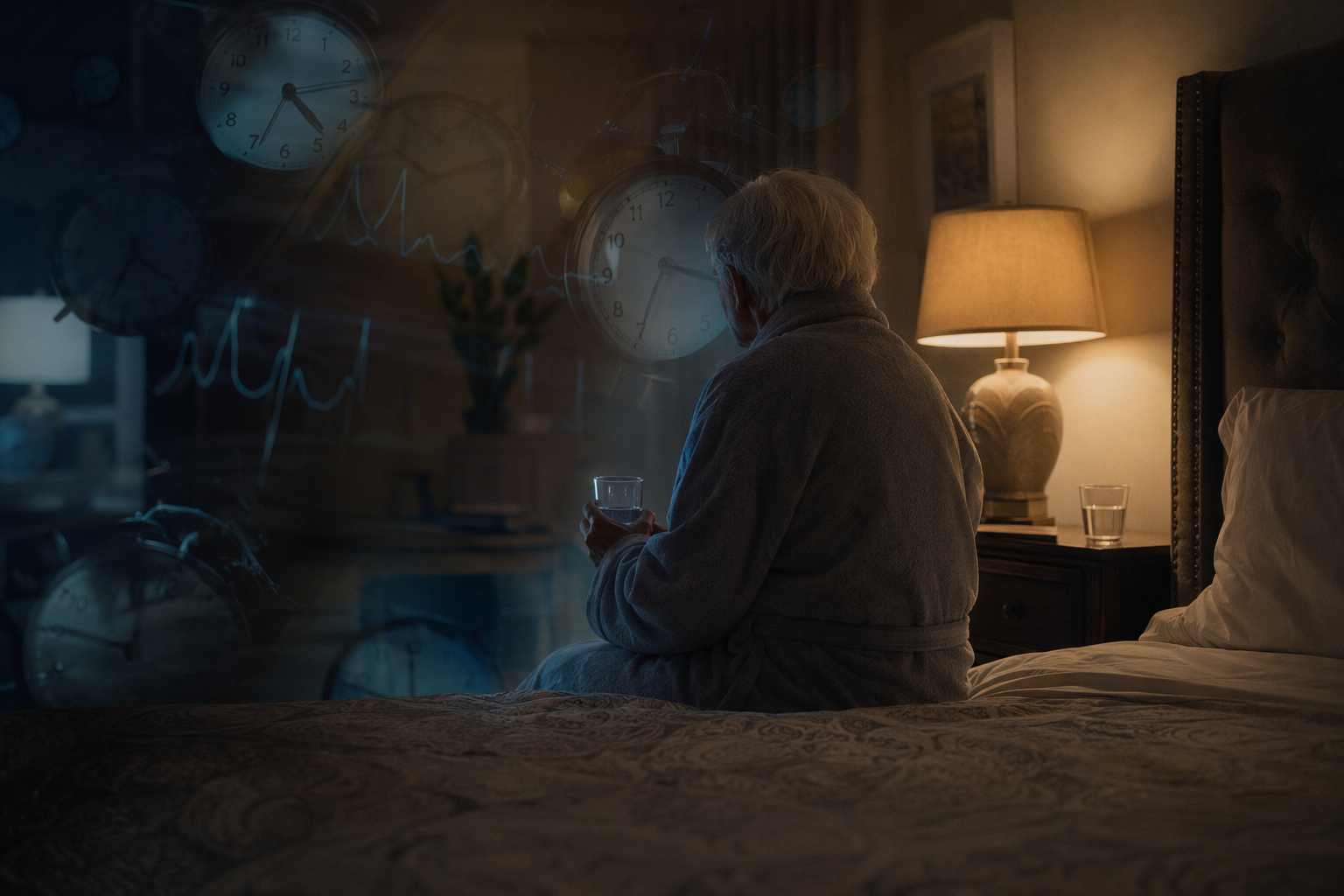
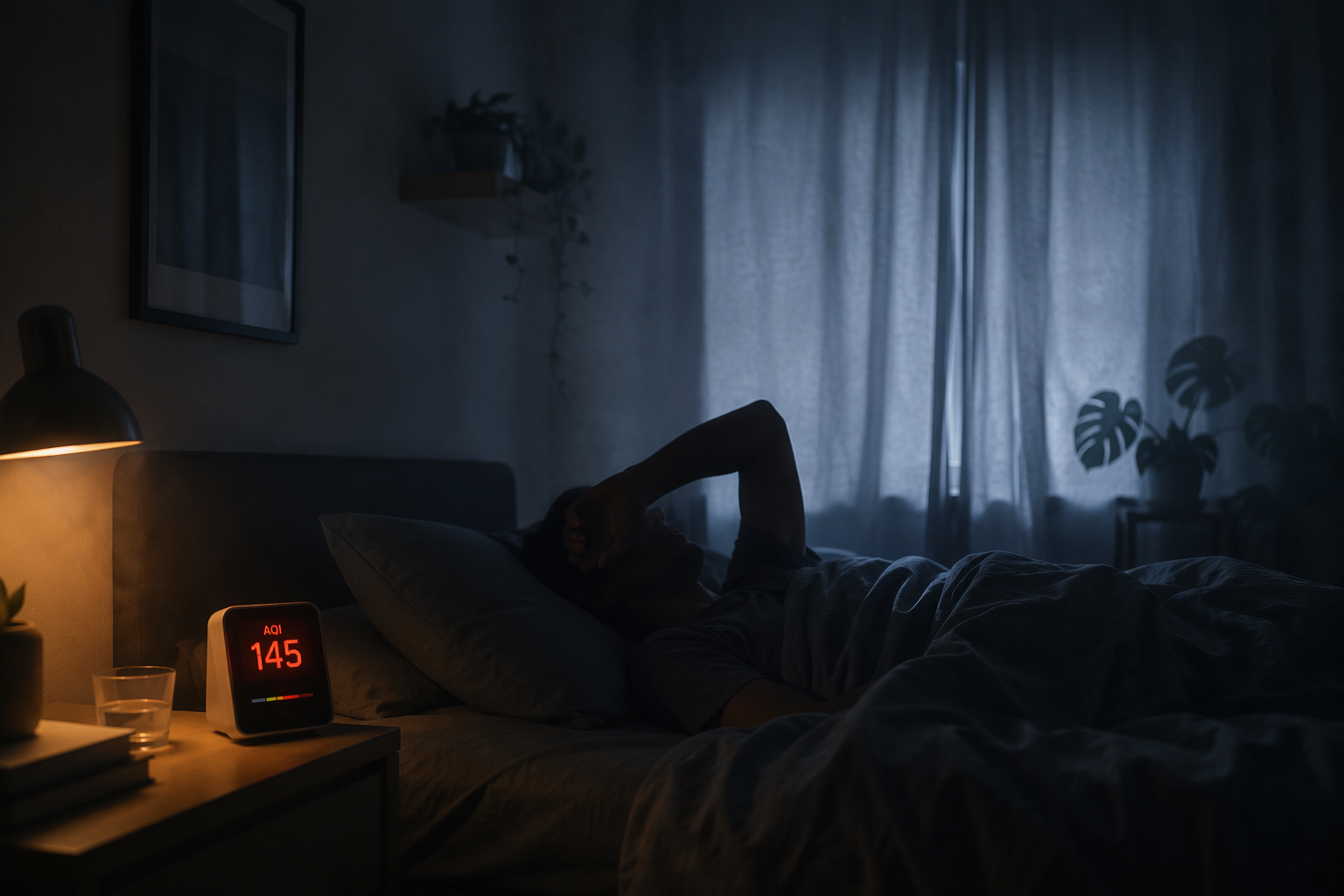
The sentence usually comes calmly: “It helps me sleep.” In assisted living, that may mean a glass of wine brought from dinner, a small pour kept in the room, or a long-standing evening ritual a resident does not want turned into a clinical problem. The claim should not be brushed aside. Among people with persistent insomnia, 30% use alcohol as a sleep aid, and 67% of those users say it helps.[1]
That belief survives because alcohol can make the first part of the night feel easier. Drowsiness is noticeable. Sleep quality is less obvious. A resident may remember falling asleep faster and miss what happened after midnight: lighter sleep, more awakenings, breathing disruption, or a morning that begins with fatigue instead of restoration.
So the better question is not whether alcohol can make someone feel sleepy. It can. The question is what alcohol does to the rest of the night in an older adult whose sleep is already vulnerable.
The gap between felt sleep and measured sleep
The most useful evidence here comes from nights measured by polysomnography, not from how rested people expected to feel. Brower and Hall compared four groups: younger non-alcoholic adults, younger adults with alcoholism, older non-alcoholic adults, and older adults with alcoholism, with the older group defined as age 55 and above.[2]
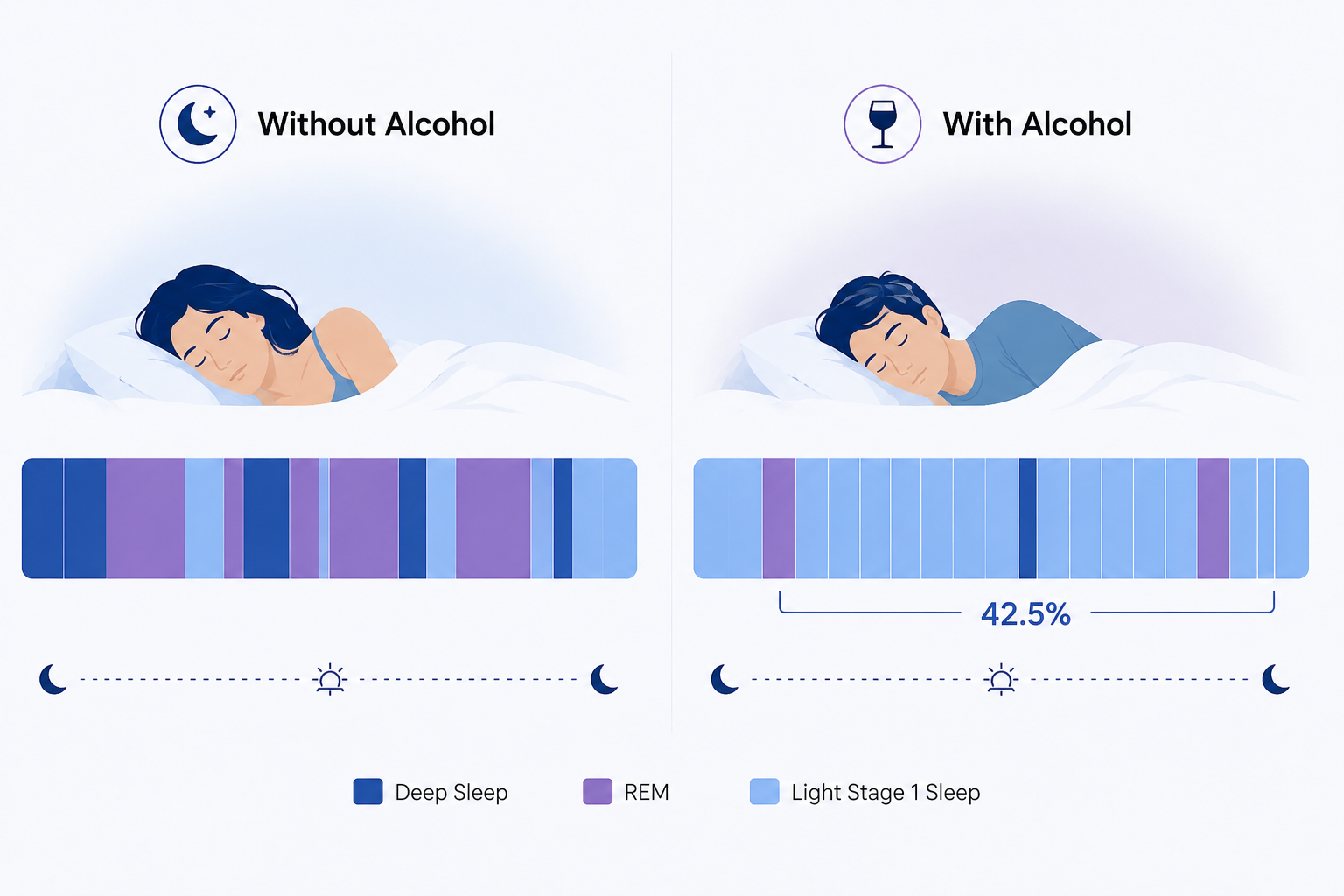
The older alcoholic group had the poorest sleep profile. Their total sleep time averaged 277.7 minutes, compared with 357.1 minutes in younger non-alcoholic controls. Their sleep efficiency was 71.6%. Most strikingly, 42.5% of their sleep was stage 1 sleep, compared with 14.2% in younger controls.[2]
Stage 1 is the shallow edge of sleep. It is the place where a person can look asleep from the doorway but remain easy to wake, easy to disturb, and unlikely to get the deeper recovery families often mean when they ask, “Did she sleep?” A night with nearly half of sleep time in stage 1 is not simply a shorter night. It is a night spent hovering.
This study should not be stretched beyond what it measured. It was not a trial of casual drinking in assisted living residents. It studied adults with alcoholism, and it screened out people with significant medical comorbidities, major depression, or sleep-disorder scores above the 70th percentile.[2] That makes the findings both narrower and, in one sense, sobering: even in a selected sample, the older alcoholic group’s measured sleep was markedly disrupted.
Why one drink can feel different later in life
Older adults do not process alcohol in the same body they had at 40. With aging, reduced body water and muscle mass can lead to higher blood alcohol concentrations after the same amount of alcohol.[3] That matters when a resident says a drink is “just what I’ve always had.” The dose may look familiar while the physiologic effect has changed.
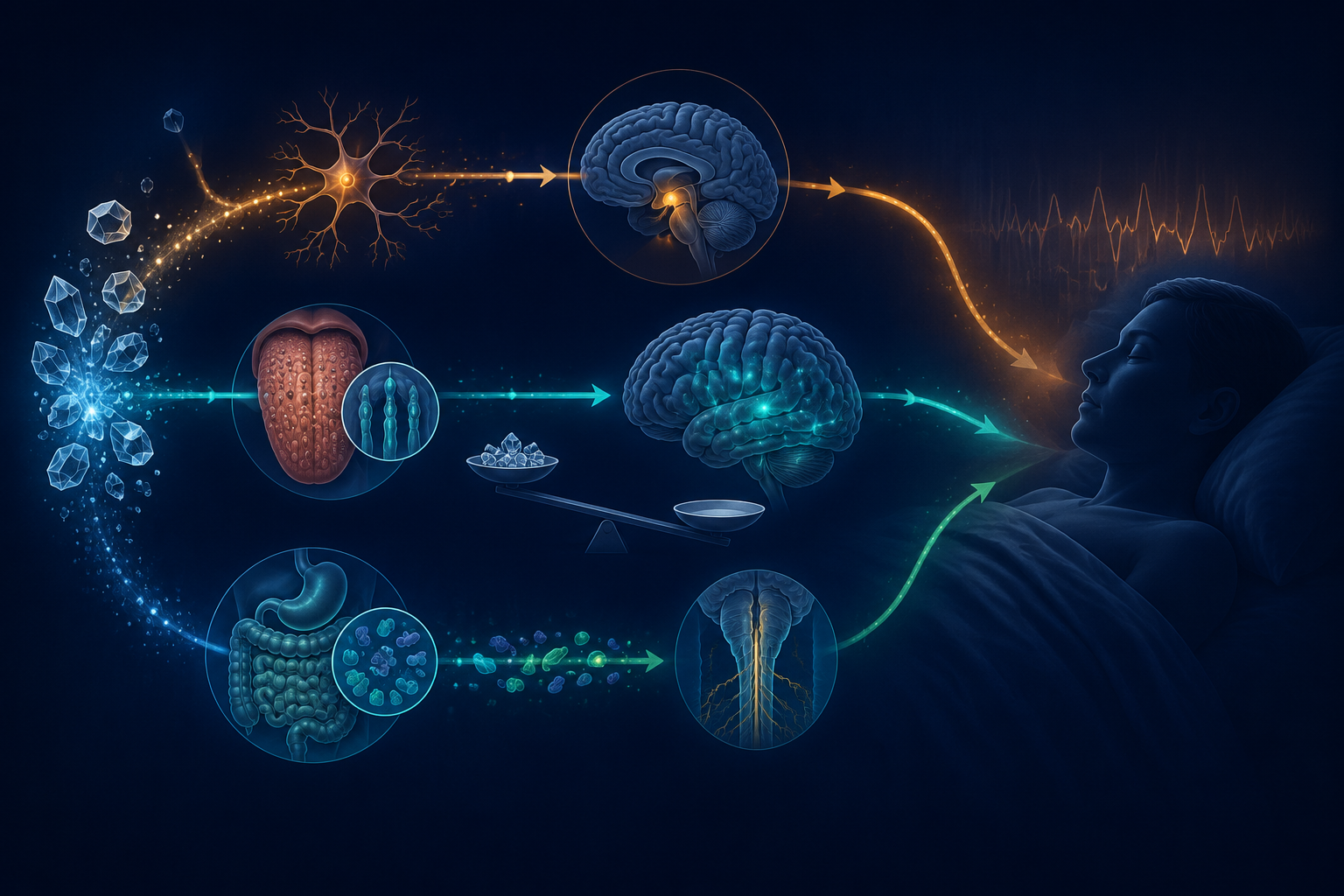
Alcohol’s sedating effect can shorten perceived sleep onset, but the night does not end there. As alcohol is metabolized, sleep can become more fragmented. REM sleep may be disrupted or rebound later in the night. Light sleep can crowd out more restorative stages. For readers who want the stage-by-stage mechanics, our guide to sleep architecture explains how NREM and REM sleep normally cycle through the night.
This is the part residents cannot easily observe from inside the experience. Falling asleep is a moment. Sleep quality is a pattern.
Breathing risk is not a side note
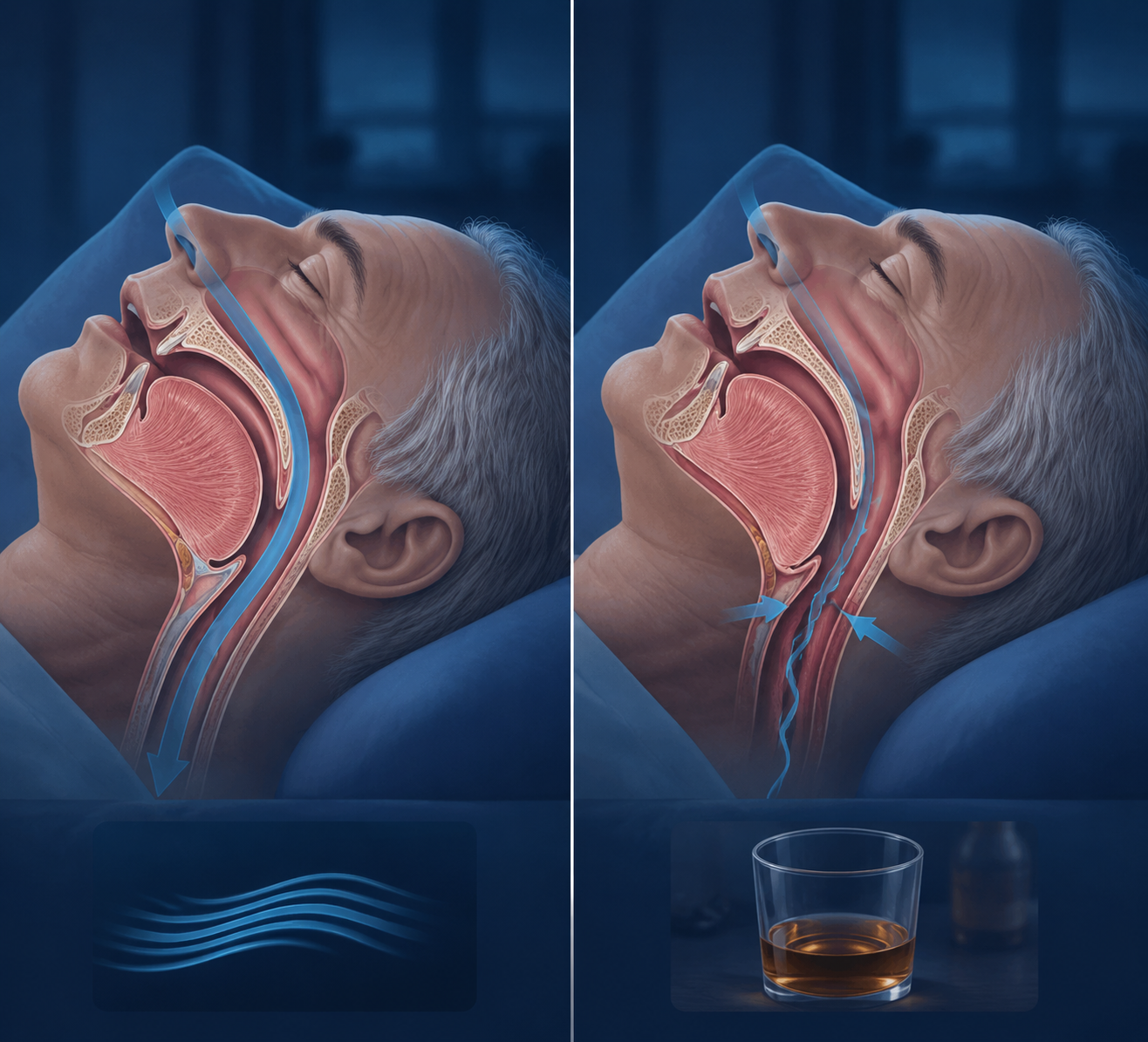
Alcohol can also make sleep-disordered breathing worse. A systematic review and meta-analysis found alcohol consumption was associated with a 25% higher risk of obstructive sleep apnea.[4] That number does not prove that every drink causes apnea in every older adult, but it does put alcohol on the wrong side of the ledger for residents who snore, gasp, use CPAP inconsistently, or wake unrefreshed.
The Brower and Hall data point in the same direction. In that study, the older alcoholic group had a respiratory disturbance index of 17.6, compared with 2.5 in younger non-alcoholic controls.[2] The groups differed in more ways than alcohol exposure alone, so this should not be read as a clean cause-and-effect estimate. Still, the contrast is clinically hard to ignore when the resident in front of you is older, sleepy during the day, and using alcohol near bedtime.
Assisted living starts from a fragmented baseline
The assisted living setting changes the practical meaning of the evidence. Many residents are not beginning from stable, consolidated sleep. In a study of 18 Los Angeles-area assisted living facilities, 65% of residents had clinically significant sleep disturbance on the Pittsburgh Sleep Quality Index, and actigraphy showed an average of 11.4 nighttime awakenings per night.[5]
That study’s sample was predominantly female, predominantly non-Hispanic white, and had a mean age of 85.3, so it should not be treated as a perfect map of every assisted living community.[5] But it gives families and staff a useful starting point: nighttime fragmentation is already common. Alcohol is being added to a sleep system that may already be unstable.
In daily care, that can show up as a resident who “goes down fine” after a drink but rings for help at 2 a.m., wanders to the bathroom unsteadily, dozes through breakfast, or insists the drink worked because the first half hour of the night felt easier. The burden then moves to aides, nurses, and family members who are trying to interpret a night in fragments.
Casual drinking is not the same as alcohol use disorder
The strongest sleep-architecture numbers come from people with alcoholism, not from residents having an occasional small drink. That distinction matters. Heavy use, binge drinking, moderate use, and light social drinking do not carry the same risk profile, and it would be misleading to pretend they do.
Still, lower-risk drinking is not the same as a sleep treatment. The mechanisms that make alcohol a poor sleep aid—sedation followed by fragmentation, altered sleep stages, and potential breathing effects—are not reserved only for severe alcohol use. Aging physiology can also make a familiar amount hit harder than expected.[3]
There is also population-level evidence that alcohol-related sleep trouble is not confined to laboratory recordings. In adults 55 and older, frequent binge drinking, defined as more than two days per week, was associated with 84% greater odds of reporting an insomnia symptom.[6] That is an association, not proof that binge drinking caused the insomnia. It does, however, fit the broader pattern: alcohol and sleep problems tend to travel together in older adults.
What families and staff should look for
A resident’s report still matters. “It helps me sleep” may mean “I feel less lonely at night,” “I am anxious,” “I miss my old routine,” or “I do not want one more part of my life managed by someone else.” Those meanings deserve attention. They are not the same as evidence that alcohol is producing restorative sleep.
The sleep concern becomes more urgent when the nightly drink appears alongside observable changes: more nighttime awakenings, new confusion after dark, unsteady bathroom trips, morning grogginess, louder snoring, witnessed pauses in breathing, missed CPAP use, or escalating reliance on alcohol when sleep is poor.
- Track the whole night, not just how quickly the resident falls asleep.
- Ask about snoring, gasping, morning headaches, daytime sleepiness, and CPAP adherence.
- Review alcohol timing and amount alongside prescription drugs, over-the-counter sleep aids, pain medicines, and anxiety medications.
- Treat falls, confusion, breathing symptoms, or a rising need for alcohol as reasons to involve the resident’s clinician.
- Offer alternatives without turning the conversation into a punishment for wanting relief.
The medication review is especially important in assisted living because sleep complaints rarely sit alone. Pain, nocturia, depression, anxiety, dementia symptoms, untreated sleep apnea, and medication side effects can all make nighttime worse. Alcohol may look like the resident’s solution while quietly complicating the clinical picture.
A better answer than “just stop”
For many residents, the drink is a ritual as much as a substance. Replacing it may require more than a warning. The useful question is what the drink is doing for the person before bedtime: marking the end of the day, easing anxiety, creating privacy, dulling discomfort, or filling an empty hour.
That is where safer sleep strategies belong. A consistent evening routine, morning light exposure, daytime activity, better pain control, reduced late caffeine, and a calmer nighttime environment are not glamorous, but they address the conditions that often make alcohol feel necessary. Our guide to what sleep hygiene actually means explains why alcohol avoidance is usually part of the foundation rather than an optional add-on.
When families are looking for substitutes, they should be careful not to trade one risky sleep aid for another. Some over-the-counter products can be problematic for older adults, especially when cognition, balance, urinary symptoms, or other medications are involved. Evidence-based resources on natural sleep aids and over-the-counter sleep aids can help frame that conversation before a purchase becomes a new nightly habit.
The evidence does not come from a perfect assisted-living alcohol trial. It comes from connected pieces: alcohol’s measured effects on sleep in older adults, the high baseline rate of sleep disturbance in assisted living, and known physiologic reasons older adults may be more affected by the same dose. That chain is indirect, but it is strong enough to guide care.
Take the resident’s perception seriously. Do not treat it as reliable proof of restorative sleep. The resident may be right that alcohol helps the first step—getting drowsy—and still be wrong about the night it leaves behind.
References
- Alcohol Use as a Sleep Aid in Insomnia. National Council on Aging; citing Roehrs et al., 2001.
- Effects of Age and Alcoholism on Sleep: A Controlled Study. Journal of Studies on Alcohol. 2001. https://pmc.ncbi.nlm.nih.gov/articles/PMC2981610/
- Alcohol and Aging. National Institute on Alcohol Abuse and Alcoholism. https://www.niaaa.nih.gov/alcohols-effects-health/aging-and-alcohol
- Alcohol and the risk of sleep apnoea: a systematic review and meta-analysis. Sleep Medicine. 2018.
- Sleep Disturbance in Assisted Living Facility Residents. Journal of the American Geriatrics Society. 2010. https://pmc.ncbi.nlm.nih.gov/articles/PMC3377484/
- Frequent binge drinking is associated with insomnia symptoms in older adults. American Academy of Sleep Medicine. 2013. https://aasm.org/frequent-binge-drinking-is-associated-with-insomnia-symptoms-in-older-adults/
Comments
Join the discussion with an anonymous comment.