
Code Purple means close the bedroom, not air it out. In the U.S. Air Quality Index system, Code Purple corresponds to an AQI of 201–300, a level described as “very unhealthy”; Canada and other countries may use different alert names, but the overnight problem is the same when fine-particle smoke is high outside.[1]
For tonight, the order matters more than the perfect setup. Pick one bedroom, seal it, start filtration before you are tired, keep cooling on recirculate, stop making particles indoors, and protect any CPAP equipment you use. Opening a window for cooler “fresh” air is the move that can undo the rest.
| Tonight’s step | What to do |
|---|---|
| Choose the room | Use the smallest practical bedroom with the fewest windows and doors. |
| Seal the leaks | Close windows, block visible gaps, and reduce air movement under the door. |
| Start filtration early | Run a correctly sized HEPA purifier, or a DIY box-fan + MERV-13 cleaner if that is what you have. |
| Cool without outdoor air | Use AC on recirculate, pre-cool if possible, and switch to lighter bedding. |
| Stop indoor particle sources | Skip candles, incense, frying, smoking, and non-HEPA vacuuming before bed. |
| Protect CPAP therapy | Keep using prescribed therapy unless your clinician tells you otherwise; check filters and consider inline filtration. |
Make One Bedroom the Clean Room
The best room is usually not the prettiest room. It is the smallest bedroom that people can actually sleep in, with the fewest windows, exterior doors, fireplaces, vents to smoky spaces, or obvious gaps. EPA clean-room guidance starts there: choose a room that is easy to close off, then reduce the places outdoor air can enter.[2]
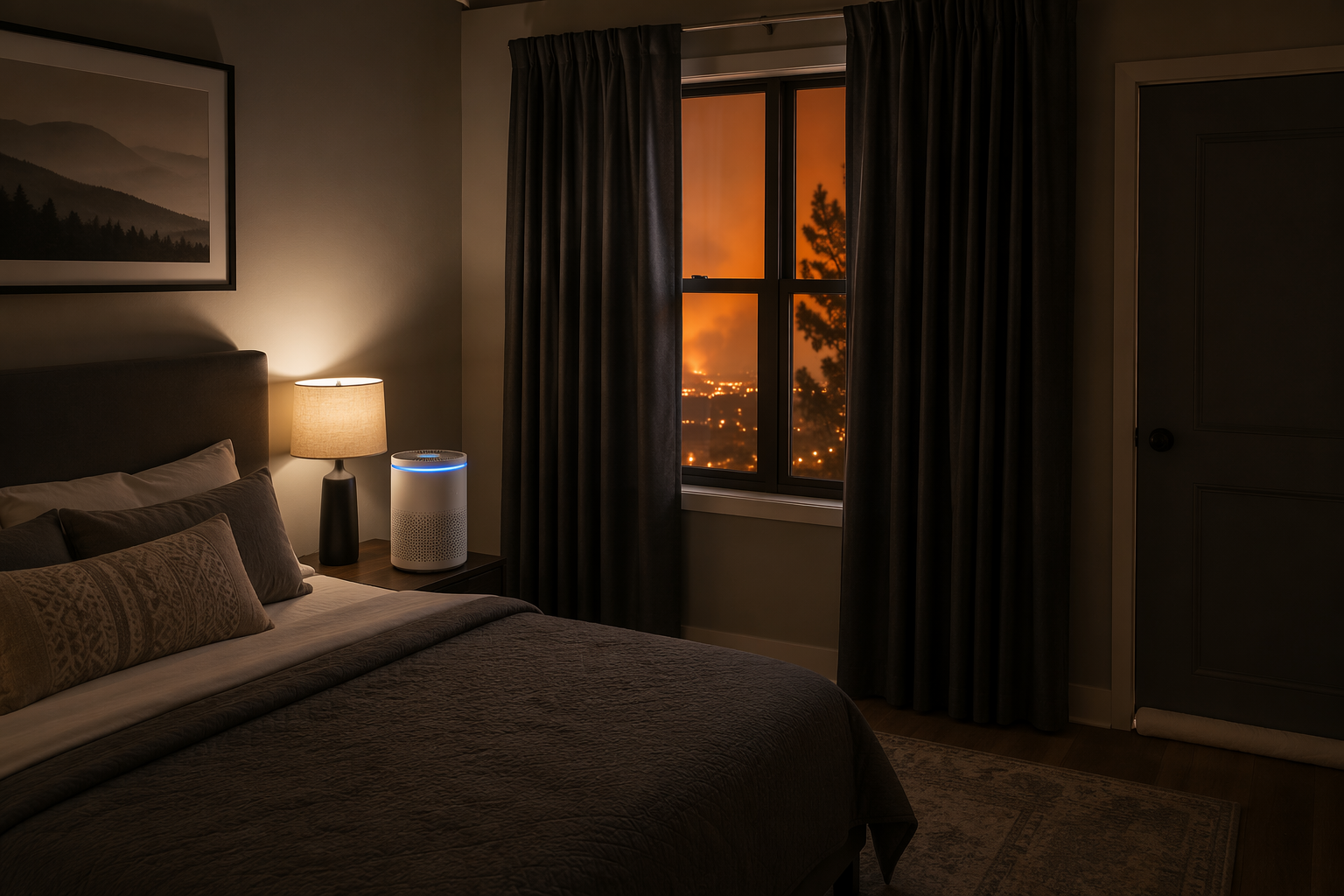
Do the unglamorous work first. Lock the windows. Close the bedroom door. Press a rolled towel against the door gap if you do not have a door sweep. Use painter’s tape, removable weatherstripping, or a draft blocker on obvious window leaks if you can do it without damaging a rental. If there is a through-window AC unit, check the side panels and tape gaps around them. If there is a fireplace in or near the room, make sure the damper is closed.
This is not about making the room airtight forever. It is about lowering the amount of smoky outdoor air that the purifier has to fight overnight. A leaky room can make a good purifier look weak because the device is constantly treating new incoming air instead of cleaning the air you are breathing.
If you need a deeper explanation of how smoke disrupts sleep once it gets into the room, use the separate guide to how Code Purple AQI disrupts sleep. But during the alert itself, the first job is physical exposure control.
Start Filtration Before Bedtime
Do not wait until lights-out to turn on the purifier. A global analysis of evening PM2.5 patterns found ambient PM2.5 commonly peaking between 9 PM and 11 PM, though that timing can shift by location, season, and the source of the smoke.[3] For a Code Purple night, that means the bedroom should be closed and filtration should already be running before the late-evening rise, not after you notice the room smells smoky.
With a HEPA purifier, use the highest setting you can tolerate while falling asleep. Put it in the clean room with enough open space around the intake and outlet. Do not hide it behind a chair, under a desk, or in the hallway. If the machine has an auto mode, consider overriding it during severe smoke; some sensors respond slowly, and the goal tonight is not a quiet average but a lower particle load while you sleep.
If commercial purifiers are sold out or you only have one for another room, a DIY box-fan air cleaner with MERV-13 filters is a reasonable backup. EPA research on DIY air cleaners found about a 75% reduction in PM2.5 in its tested setup, which is useful evidence for a low-cost option, not a promise that every taped-together fan will perform the same in every bedroom.[4]
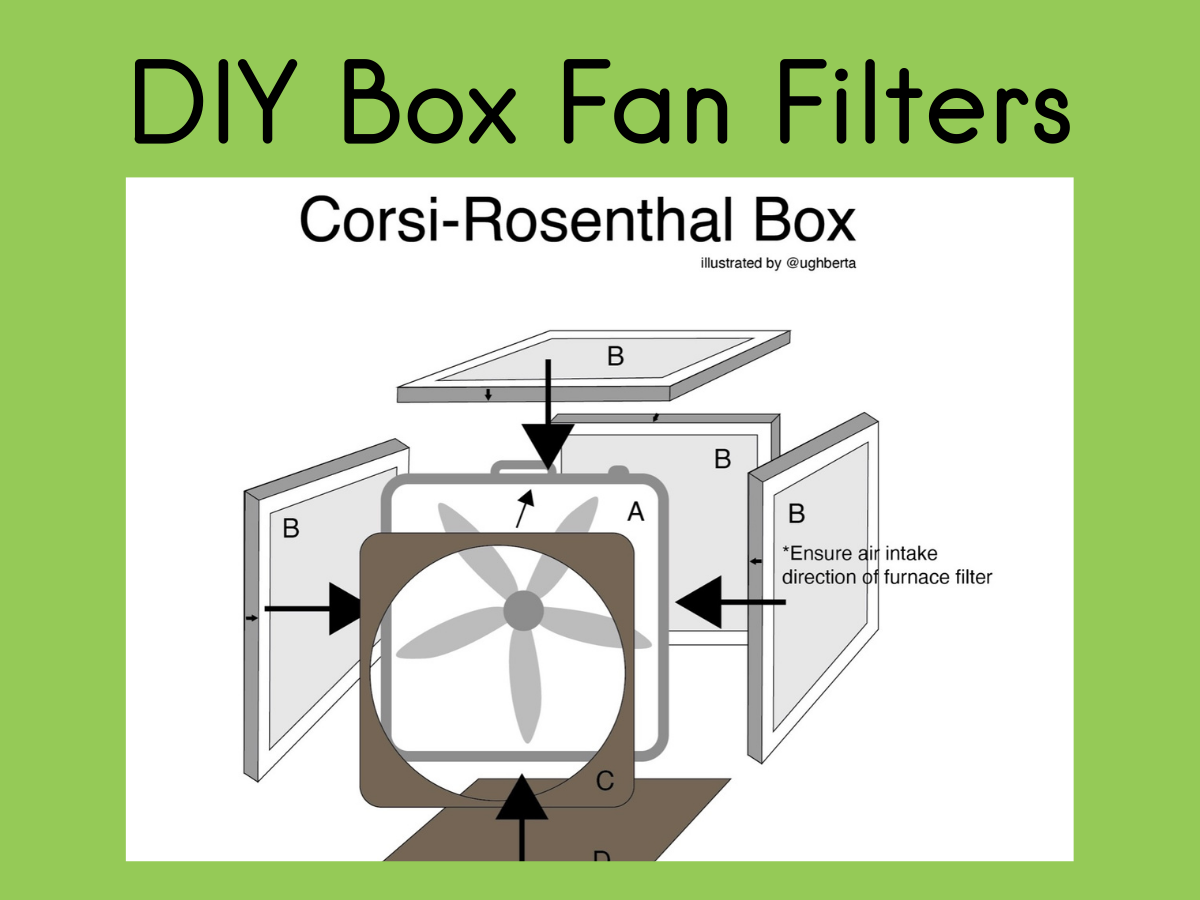
Use a newer box fan if possible, follow the fan manufacturer’s safety instructions, keep the fan away from curtains and bedding, and do not leave a visibly unstable setup where a child, pet, or half-asleep adult can knock it over. The filter should be MERV-13 or better, and airflow arrows on the filter should face the direction the air moves through the fan.
What can wait
A whole-home HVAC upgrade, a perfect CADR calculation, or a permanent weatherization project can wait until the alert is over. Tonight, you need one room with fewer leaks and continuous filtration. If you want help interpreting AQI categories beyond Code Purple, use the broader AQI bedtime guide. If your AQI is lower than this severe range, the less intensive AQI > 100 sleep tips may be the better match.
Cool the Room Without Pulling Smoke Inside
A sealed bedroom can get hot. That is uncomfortable, and heat itself can interfere with sleep. Penn Medicine reported that in a 62-participant study using objective bedroom monitoring, elevated PM2.5 was associated with a 3.2% reduction in sleep efficiency, elevated CO2 with a 4% reduction, and each 1°C deviation in nighttime temperature with about three additional nights of insufficient sleep per 100 people per month.[5] Treat those numbers as useful directional evidence, not a universal law for every sleeper.
The response is not to crack a window. If you have air conditioning, set it to recirculate rather than fresh-air intake. If your system has a fan-only mode that pulls outdoor air, do not use that mode during the smoke period. If you can pre-cool the bedroom before the worst smoke arrives, do it, then close the room and keep filtration running.
Use lighter bedding, breathable sleepwear, a cool shower before bed, and a fan inside the sealed room if it does not interfere with the purifier’s airflow. A fan does not clean smoke by itself; it only moves air. Its job is comfort, while the filter does the particle removal.
The heat-smoke tradeoff can get serious when nighttime temperatures stay high. The separate guide to summer heat, wildfire smoke, and sleep goes deeper on pre-cooling and recirculate settings. For tonight, the boundary is simple: cool the room without deliberately importing outdoor air.
Stop Making Particles Indoors
A clean room is easy to sabotage from inside. During Code Purple, skip candles, incense, wood burning, smoking or vaping indoors, frying, broiling, and unnecessary vacuuming unless the vacuum has a good HEPA system. AirNow’s smoke guidance emphasizes reducing indoor particle sources during smoke events, because indoor activities can add to the fine particles already trying to enter from outside.[6]
This is where ordinary cozy sleep advice gets a hard no. No scented candle by the bed. No incense to relax. No late frying because the windows are closed anyway. If dinner has to happen, keep it simple, use a range hood if it does not draw smoky air back in, and close the bedroom door while filtration continues.
Also avoid “freshening” sprays. Odor is not the measurement that matters tonight. PM2.5 can be present even when a room smells acceptable, and fragrance can make a sensitive airway feel worse without removing smoke particles.
If You Use CPAP, Protect the Air Path Instead of Stopping Therapy
CPAP users have a special problem during smoke: the machine is designed to move air all night. The usual answer is not to abandon prescribed therapy out of fear of smoky air. It is to make the room cleaner, keep the machine in that cleaner room, and make sure the device’s filtration is not overdue.
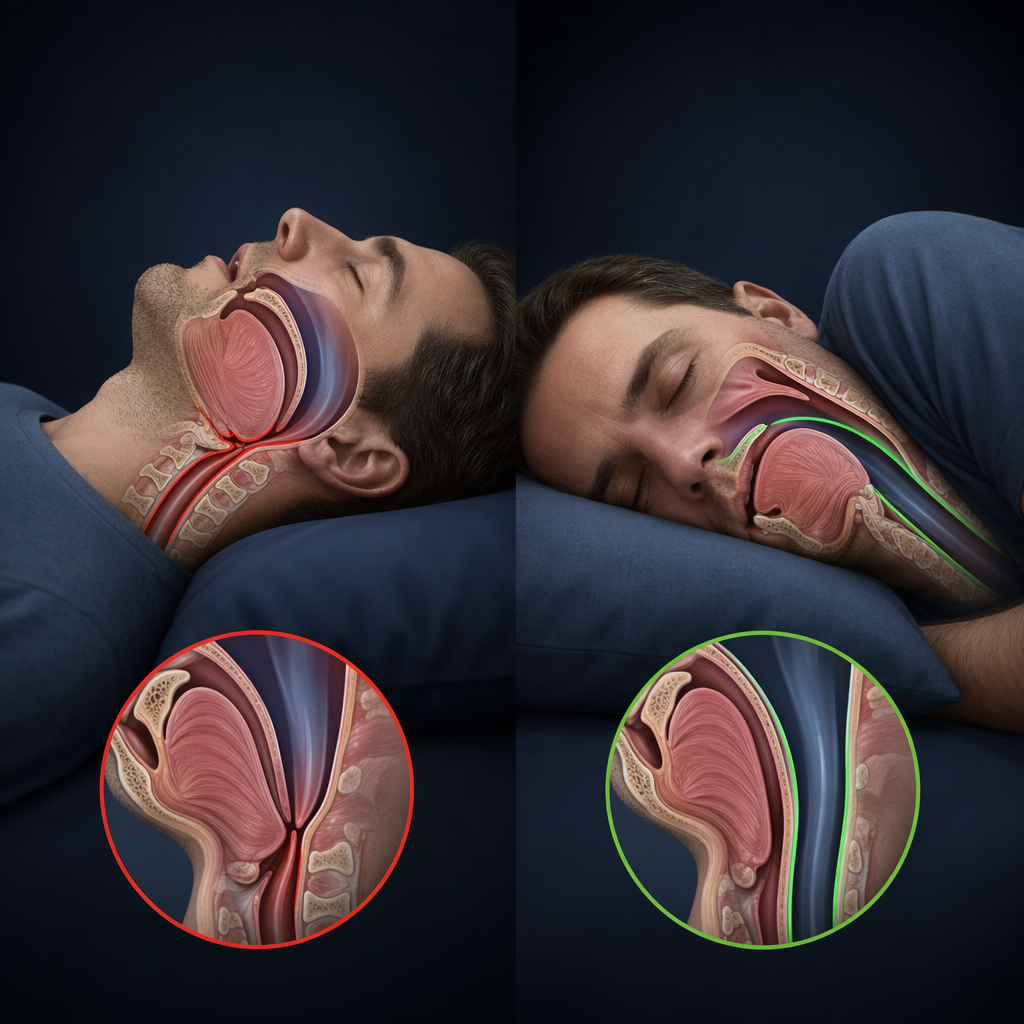
The stakes are not just comfort. In the Multi-Ethnic Study of Atherosclerosis, each interquartile increase in PM2.5 was associated with a higher apnea-hypopnea index, a measure of sleep apnea burden.[7] That does not prove a smoky night will worsen every individual’s apnea in the same way, but it is enough reason to avoid forcing unfiltered smoky air through an already vulnerable airway.
Check the disposable filter before bed. If it looks gray, dusty, warped, damp, or older than you can remember, replace it. Snore MD, a Canadian sleep apnea clinic, advises replacing CPAP filters every 2–4 weeks during heavy smoke exposure rather than waiting the usual 1–3 months.[8] Easy Breathe also describes inline bacterial or hypoallergenic filters as an additional layer between the machine and the mask for some setups.[9] These are practice recommendations from sleep-clinic and retailer sources, not randomized trial results, so treat them as practical equipment guidance and confirm compatibility with your device.
- Place the CPAP machine inside the sealed, filtered bedroom, not near a leaky window or door.
- Use the manufacturer-approved disposable filter and replace it early during smoke events.
- Ask your clinician or equipment supplier before adding an inline filter, especially if your machine tracks pressure, humidity, or leak data.
- Do not block the machine intake with cloth, towels, or improvised filter material.
- If breathing feels worse, chest symptoms escalate, or the device alarms, seek medical guidance rather than troubleshooting through the night alone.
Humidification is a comfort setting, not a smoke filter. Use it as prescribed or as you normally tolerate it, but do not assume that water in the chamber removes PM2.5 from incoming air. The air entering the machine still needs the same room-level filtration and device-level filter maintenance.
Why This Protocol Protects Sleep
The evidence does not say that one night with a purifier guarantees normal sleep during Code Purple. It says polluted air is consistently associated with worse sleep, and that lowering exposure is one of the few levers you can pull immediately. A 2020 systematic review of 22 studies found that 21 reported a positive association between air pollution and poor sleep; in the review, NO2 exposure was associated with about 60% higher odds of low sleep efficiency, and PM2.5 with about 50% higher odds.[10]
That finding should not be inflated into a promise that every filtered bedroom will produce perfect sleep. Sleep efficiency is affected by heat, noise, stress, medications, existing airway disease, and whether the room is tolerable enough to stay sealed. But it does justify being firm about the basics: seal the room, filter the air, keep cooling on recirculate, and avoid adding particles indoors.
Overnight Checklist and Escalation Boundaries
- Before 9 PM: close the chosen bedroom, seal obvious gaps, and start the purifier or DIY MERV-13 cleaner.
- Before dinner cleanup: avoid frying, candles, incense, smoking, and non-HEPA vacuuming.
- Before bed: switch AC to recirculate, use lighter bedding, and keep the bedroom door closed.
- For CPAP: inspect the filter, replace it if in doubt, and use only compatible inline filtration.
- During the night: do not open the window for relief unless heat or another immediate hazard makes the sealed room unsafe.
- Escalate: seek cleaner shelter or medical advice if symptoms worsen, the room becomes dangerously hot, a CPAP user cannot tolerate therapy, or a high-risk person is struggling to breathe.
At AQI above 200, protecting sleep is exposure control. The goal is not a perfect bedroom. It is one sealed, filtered, cooler-enough room where breathing and sleep are protected as much as possible until the alert clears.
References
- What are Code Purple and Code Maroon? — ABC27
- Create a Clean Room to Protect Indoor Air Quality During a Wildfire — EPA.gov
- Ambient PM2.5 peaks globally between 9–11 PM — Nature
- Research on DIY Air Cleaners to Reduce Wildfire Smoke Indoors — EPA.gov
- Study links air pollution, heat, carbon dioxide, and noise to reduced sleep — Penn Medicine / Penn Today
- Be Smoke Ready — AirNow.gov
- The Association of Ambient Air Pollution with Sleep Apnea — PMC6394120, Billings et al., 2019
- Wildfires and Your Sleep — Snore MD Sleep Apnea Clinic
- How Air Pollution Affects CPAP Therapy — Easy Breathe
- Air pollution exposure and adverse sleep health across the life course: A systematic review — PMC7877449, Liu et al., 2020
Comments
Join the discussion with an anonymous comment.