
If sleep helps the brain recover, why would more sleep slow recovery? Because after a concussion, sleep behaves less like a virtue and more like a dose: necessary, restorative, and not automatically better when it keeps increasing. The newest evidence points to a U-shaped pattern, where too little sleep is a problem, but so is sleeping far beyond the range that seems to support recovery best.
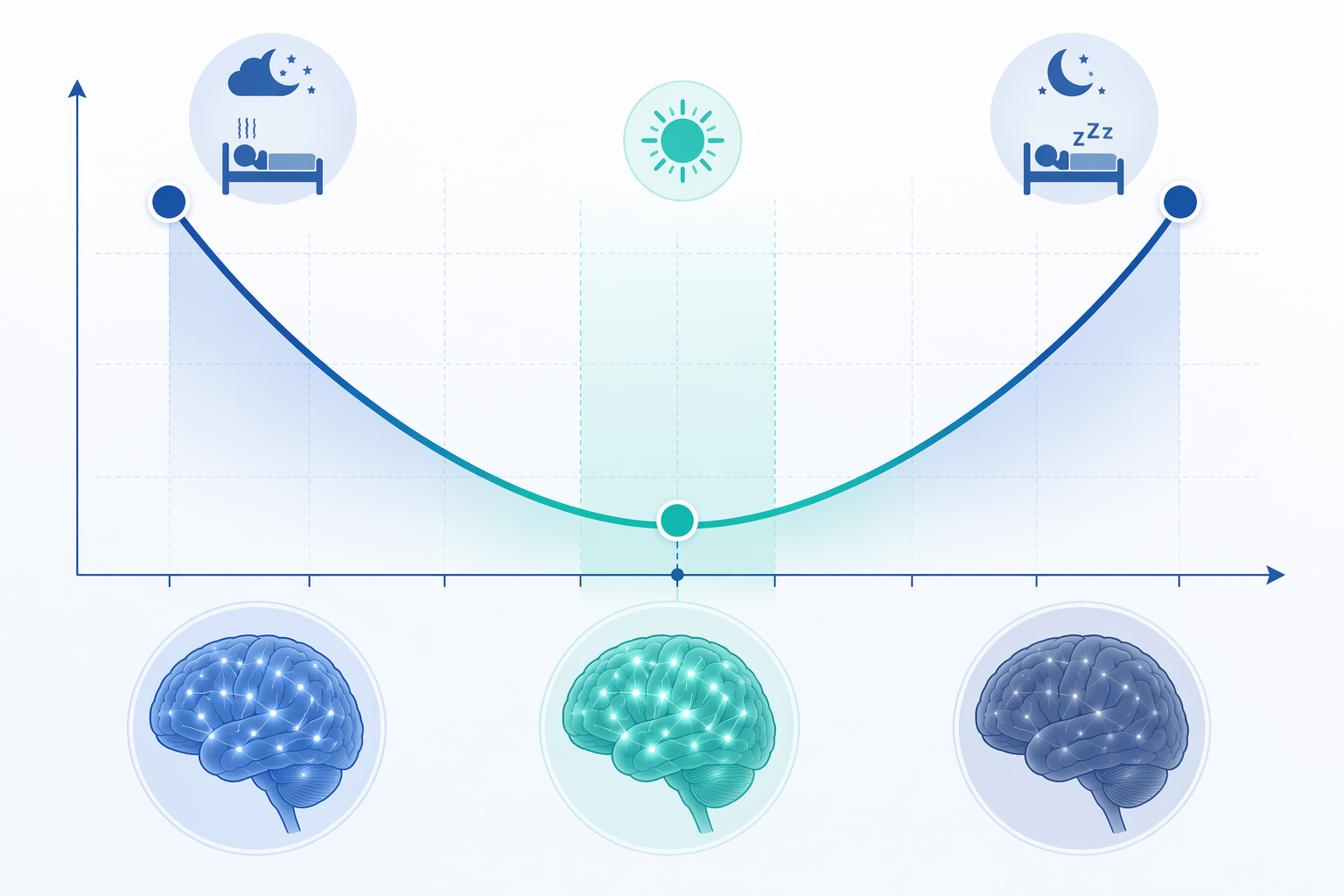
The first 48 hours are different
The acute window is the exception. In the first 48 hours after injury, extra sleep is expected and useful, and a 2024 review notes that this early rest fits the brain's repair work, including white matter recovery and glymphatic clearance of metabolic waste [1]. Sleep changes are common after concussion too: the same review notes that up to 70% of patients report some change in sleep quality or quantity [1].
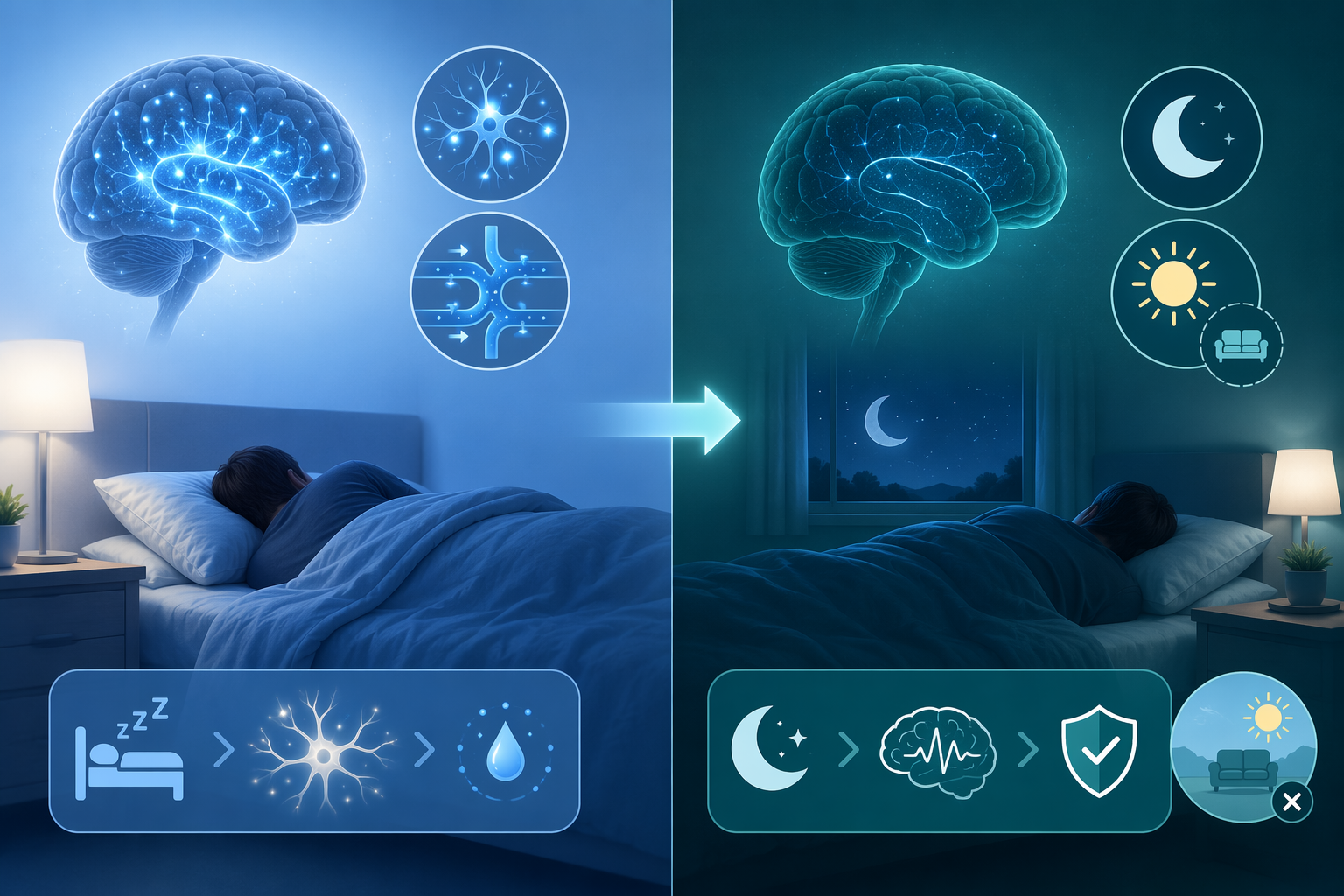
That is also why the old instruction to wake someone every few hours is no longer part of CDC concussion recovery advice [5]. The point in the first two days is not to interrupt sleep for its own sake, but to make sure the injured person can rest safely and be reassessed if symptoms worsen.
The week-one data are more precise
The most useful 2025 studies are in youth, not adults, so the cleanest reading is caution rather than certainty. In a wearable study of 11- to 17-year-olds, about seven hours of nighttime sleep with limited daytime sleep in the first week was associated with faster recovery [2]. In a separate Canadian cohort published in JAMA Network Open, average sleep above 9.5 hours per night in week 1, and above 9.9 hours per night in week 2, was associated with higher symptom burden [3].
That does not mean adults should copy a pediatric protocol exactly. It does mean the older blanket advice to "sleep as much as you can" is too blunt for week 1 and beyond.
- First 48 hours: do not fight sleep; the acute phase is for rest [1][5].
- Week 1: around seven hours of nighttime sleep is the best-supported target from the 2025 youth wearables study [2].
- Week 1 and week 2: average sleep above roughly 9.5 hours per night is the range that raised concern in the Canadian cohort [3].
- If the person is sleeping long hours but feels foggier, more irritable, or less functional, more time in bed is not automatically helping [1][3].
Why naps can help or hurt
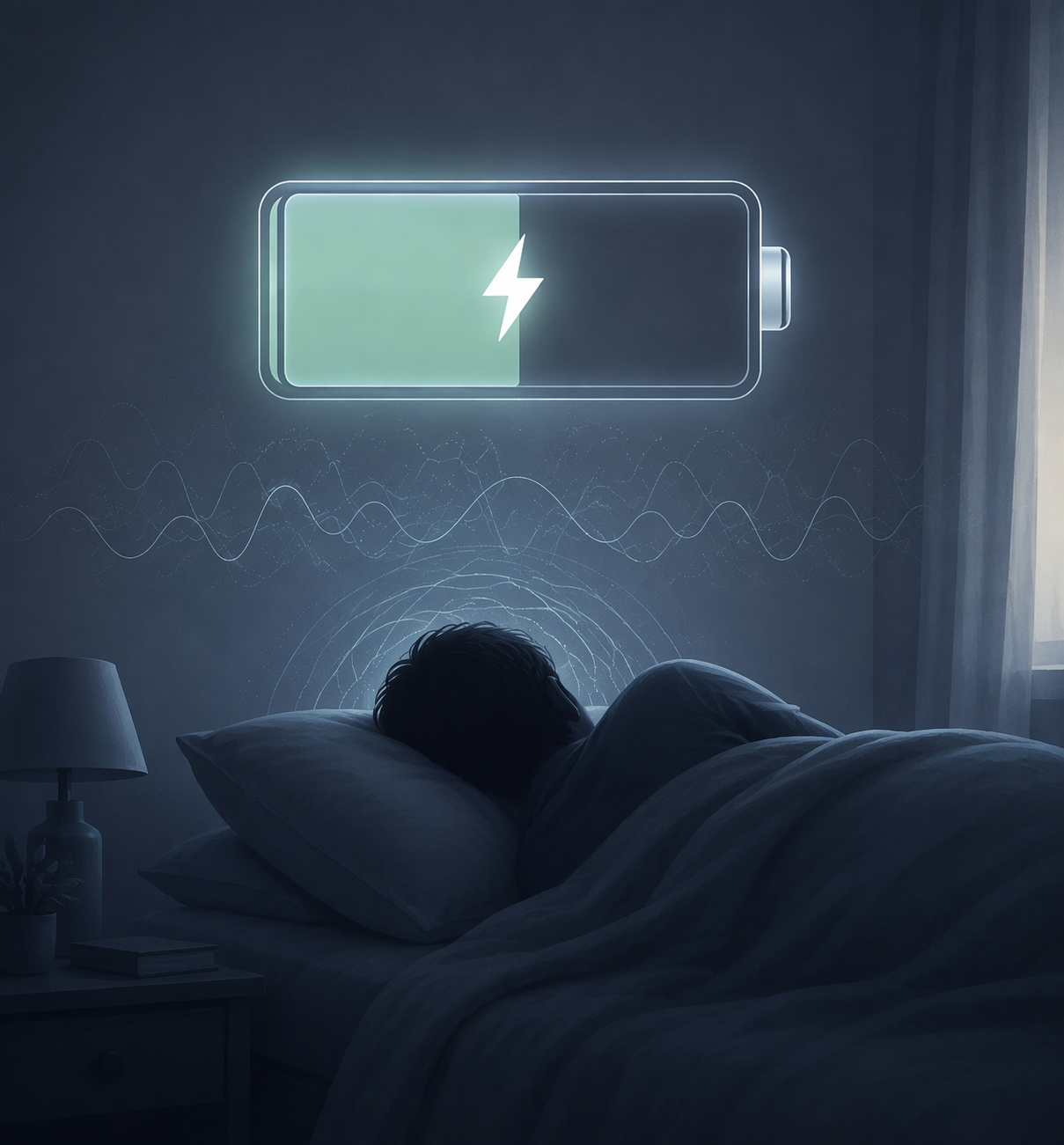
Daytime naps are the part people most often overread. A nap can be sensible early on, especially if symptoms are flaring or the person slept badly overnight. But after about 3 to 5 days, the goal shifts toward consolidating sleep at night, not spreading it across the day. Long or late naps can take pressure off bedtime and make the next night lighter and more fragmented.
That is also why sleep disturbance deserves real attention rather than being treated as a side complaint. In a 2025 CHOP analysis of 4,469 pediatric patients, sleep disturbance was the second-strongest predictor of prolonged recovery and the strongest modifiable one [4].
What to do tonight
For most people after the acute 48-hour window, the practical target is targeted sleep, not maximal sleep: keep nighttime sleep steady, watch for the pattern of sleeping well above about 9.5 hours in the first week, and keep daytime naps limited enough that nighttime sleep can consolidate [2][3][4].
If sleep is still badly fragmented, non-restorative, or paired with worsening symptoms, that is the point to get clinical guidance rather than just adding more hours in bed. For a fuller phased protocol, see How to Rebuild Sleep Quality During Concussion Recovery. If the sleep problem may be coming from pain, trauma, or the injury itself rather than the concussion alone, Why Your Sleep Is Off After an Accident — Three Pathways to Recovery helps separate those patterns. When the issue becomes troubleshooting rather than schedule-setting, melatonin is a secondary option to look at in Melatonin Sleep Aid Matching or What You Should Know About Melatonin Gummies.
References
- Concussion and the Sleeping Brain — PubMed Central, 2024, https://pmc.ncbi.nlm.nih.gov/articles/PMC11162982/
- After Concussion: Monitor Sleep and Limit Daytime Naps for Faster Recovery — Pediatrics Nationwide, March 19, 2025, https://pediatricsnationwide.org/2025/03/19/after-concussion-monitor-sleep-and-limit-daytime-naps-for-faster-recovery/
- Association of Sleep Duration With Symptom Burden After Concussion in Canadian Youth — JAMA Network Open, 2025, https://jamanetwork.com/journals/jamanetworkopen/fullarticle/2835423
- Children's Hospital of Philadelphia Researchers Find Sleep Disturbances Among Strongest Predictors of Prolonged Pediatric Concussion Recovery — Children's Hospital of Philadelphia, 2025, https://www.chop.edu/news/childrens-hospital-philadelphia-researchers-find-sleep-disturbances-among-strongest-predictors
- Recovery from Concussion — CDC HEADS UP, https://www.cdc.gov/heads-up/guidelines/recovery-from-concussion.html
Comments
Join the discussion with an anonymous comment.