
If your sleep changed after a concussion, the first question is not “How do I force myself back to normal?” It is “Which recovery stage am I in tonight?” The answer changes quickly. In the first days, the priority is safe rest without unnecessary waking. In the next few weeks, the priority shifts toward rebuilding a predictable sleep-wake rhythm. If insomnia is still present after about a month, the plan should move beyond basic sleep hygiene and into evidence-based insomnia care.
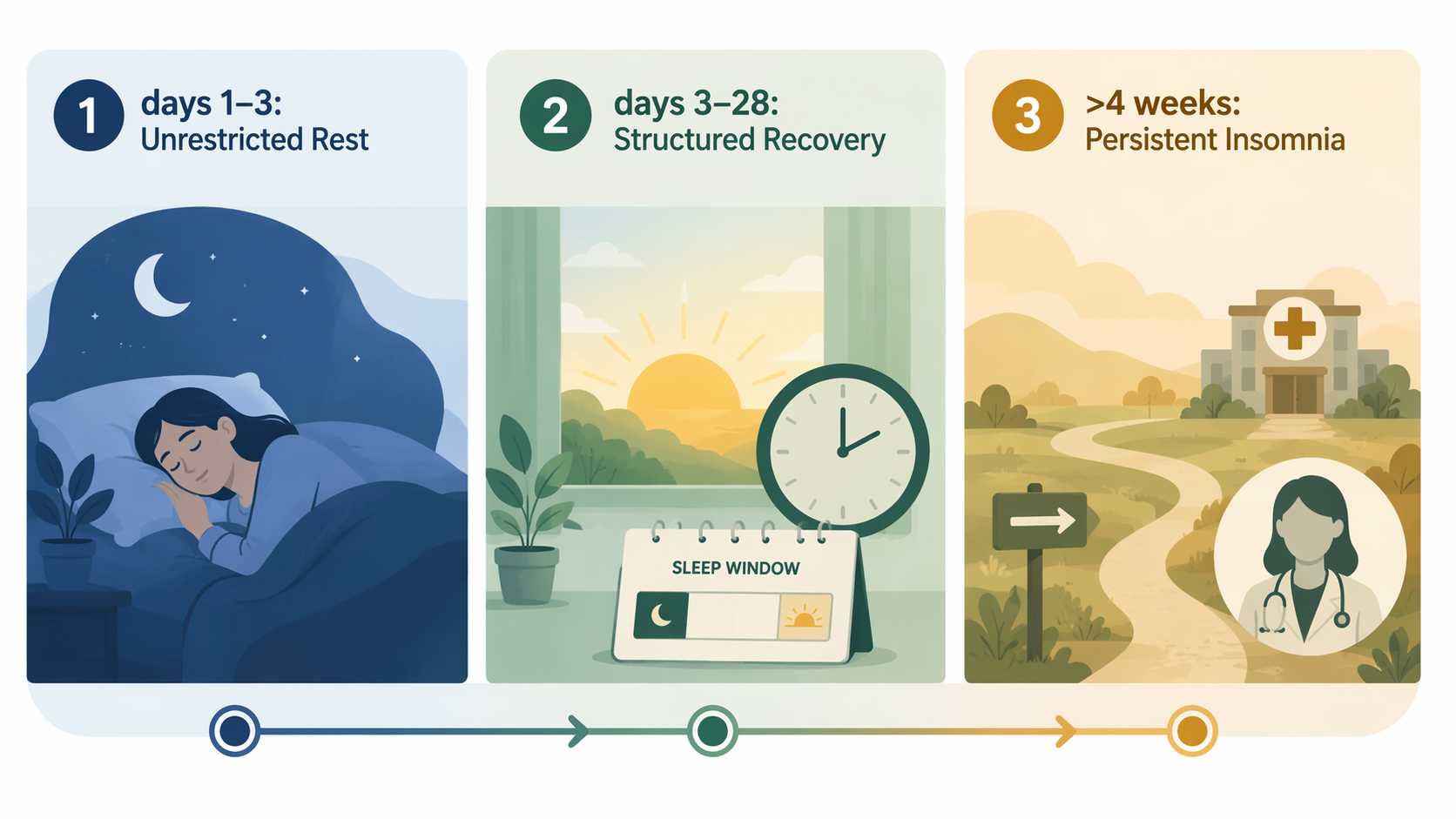
| Recovery stage | Main sleep problem | What to do tonight |
|---|---|---|
| First 72 hours | The brain needs rest, while the household may be anxious about missing warning signs. | Sleep as much as needed after medical assessment; do not wake the person every few hours just to check on them unless a clinician told you to. |
| Days 3–28 | Sleep may become irregular: long naps, delayed bedtime, light sensitivity, or early-morning drifting. | Set a stable wake time, use morning light, reduce evening light, limit naps, and screen for sleep apnea symptoms early. |
| Beyond 4 weeks | Temporary disruption can harden into insomnia: more time in bed, more monitoring, less confidence in sleep. | Use CBT-I as the main insomnia treatment pathway and involve concussion-informed sleep or rehabilitation specialists when symptoms persist. |
First 72 Hours: Let Sleep Happen, But Watch for Red Flags
The old household rule was to wake someone every few hours after a concussion. That advice still circulates, and it creates a miserable first night: the injured person finally falls asleep, then someone shakes them awake because everyone is afraid not to. Current clinical guidance is more practical. After the person has been medically assessed and there are no red flags, sleep should not be restricted just for checking purposes; worsening symptoms or concerning neurological changes are the reason to seek care, not ordinary sleep itself.[1]
That does not mean ignoring the person. It means separating reasonable monitoring from turning the night into surveillance. If severe or worsening headache, repeated vomiting, increasing confusion, seizure, unusual behavior, weakness, slurred speech, or trouble waking appears, the response is urgent medical care. If none of that is happening and the person is sleeping, sleep is doing useful work.
Sleep is not passive downtime after concussion. Reviews describe concussion as a neurometabolic stress state that can disturb sleep-wake regulation, circadian timing, and the brain systems involved in repair and waste clearance; white matter repair is one of the processes thought to depend on adequate sleep after injury.[2] The human glymphatic-recovery story is still not proven by large randomized trials, so it should not be treated as a guarantee that more sleep automatically equals faster healing. It is enough to say this: in the acute stage, deliberately interrupting sleep without a medical reason works against the direction of recovery.
Screens deserve a separate early rule because this is one place where patients can actually do something concrete. A randomized trial cited in a 2024 review found that restricting screen time for the first 48 hours after concussion was associated with a shorter recovery time, 3.5 days versus 8 days.[2] That finding does not prove that screens “cause concussion insomnia,” and it came from an early-recovery intervention rather than a lifelong light rule. Still, for the first two days, reducing scrolling, gaming, video calls, and long work sessions is a reasonable protective choice.
- Sleep when sleepy, including longer-than-usual overnight sleep.
- Do not set alarms to wake yourself for concussion checks unless your clinician gave that instruction.
- Keep the room dim and quiet; avoid making bedtime a symptom-review meeting.
- Reduce screens for the first 48 hours, especially visually intense or emotionally activating use.
- Escalate for red flags rather than for normal sleepiness after a medically assessed concussion.
Days 3–28: Start Rebuilding the Rhythm
By the third day, many people are no longer sleeping around the clock, but they are not back to normal either. This is the awkward zone: fatigue pushes naps later, headache pushes bedtime earlier, work messages pull attention back to screens, and then the night becomes unpredictable. This is where sleep quality during concussion recovery becomes less about “getting more sleep” and more about giving the brain a repeated schedule it can recognize.
Clinical concussion guidance supports assessing sleep-wake disturbance as part of recovery rather than treating it as a side complaint.[1] The 6th International Consensus Statement on Concussion in Sport also notes that sleep disturbance in the first 10 days after sport-related concussion warrants evaluation, which is a useful threshold even for adults whose injury did not happen on a field.[3]
Anchor the Wake Time Before You Chase the Perfect Bedtime
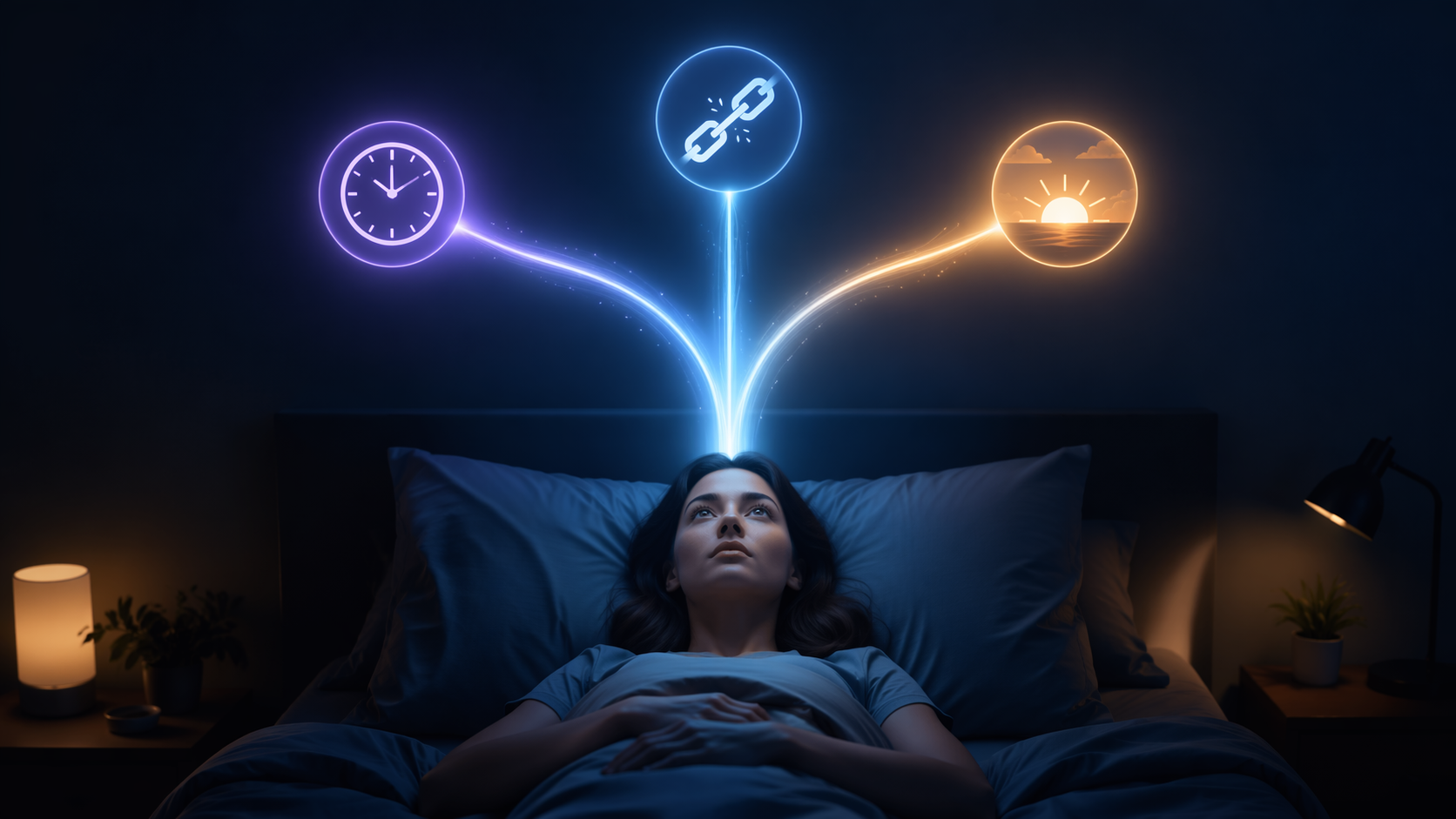
A stable wake time is usually the first useful anchor. Bedtime can still float a little while symptoms settle, but waking at wildly different times makes it harder for the circadian system to re-entrain. Choose a wake time that is realistic for your current workload and symptom level, not the wake time you had before the injury if that now forces you into sleep deprivation.
Morning light helps reinforce that anchor. A narrative review of circadian interventions for concussion reported that 30 minutes of morning blue light exposure from an LED panel within 2 hours of waking produced moderate-to-large improvements in sleep quality, daytime sleepiness, and mood in concussed adults across multiple randomized controlled trials.[4] That does not make blue light a stand-alone cure. It makes timed morning light a reasonable tool when the sleep schedule has drifted later or daytime alertness has collapsed.
Evening light needs the opposite treatment. If the first part of the day is for signal, the last part of the day is for lowering stimulation: dimmer rooms, fewer rapid visual tasks, and less bright phone use. For a broader non-concussion routine, the basics are covered in sleep hygiene fundamentals, but after concussion the point is not aesthetic calm. It is reducing the number of competing signals your brain has to sort through at the end of the day.
Use Naps Carefully, Not Fearfully
Napping is not forbidden after concussion. In the first days, naps may be part of recovery. The problem begins when daytime sleep becomes large enough or late enough to steal pressure from nighttime sleep, especially after the first few days.
A 2025 youth concussion study used actigraphy during the first week after injury and found that approximately 7 hours of nighttime sleep with limited daytime napping was associated with faster symptom resolution.[5] This should be read carefully. The study was in youth, not adults; actigraphy tends to overestimate sleep and underestimate wakefulness compared with polysomnography; and “about 7 hours” is not a prescription for every injured adult. The useful lesson is directional: protect consolidated nighttime sleep, and do not let naps quietly become the main sleep period.
- If you nap, keep it early enough that bedtime still has a chance.
- Use naps for symptom-limited recovery, not as a way to avoid all daytime activity.
- If you are sleeping for long stretches during the day and awake most of the night, treat that as a rhythm problem to discuss with a clinician.
- Do not let a wearable’s sleep estimate decide whether your recovery is “good” or “bad.” Use it only to spot patterns.
Do Not Wait to Screen for Sleep Apnea Symptoms
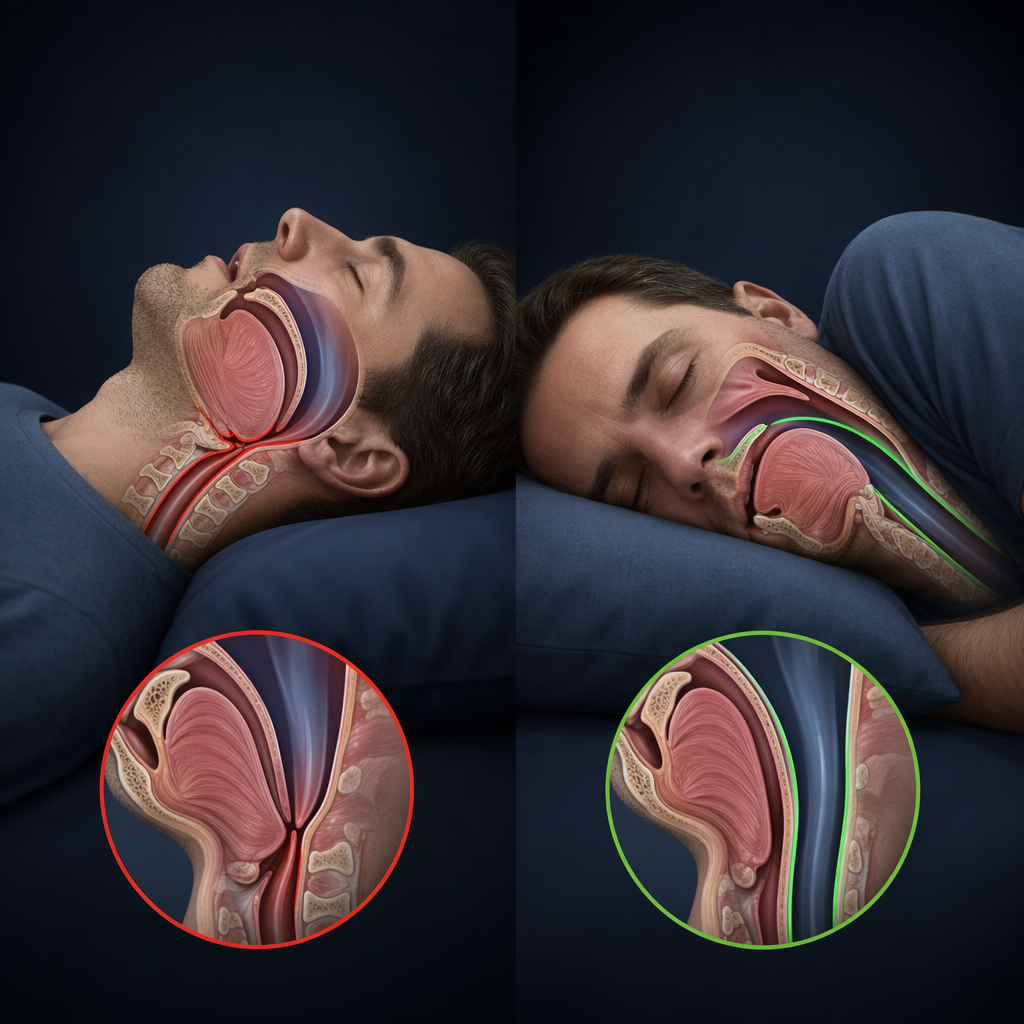
Some post-concussion sleep problems are not insomnia. Loud snoring, witnessed pauses in breathing, waking up gasping, morning headaches, dry mouth, high blood pressure, or strong daytime sleepiness should raise the possibility of obstructive sleep apnea. A concussion-focused review reports that sleep apnea affects 35–60% of concussion patients and may impair glymphatic clearance, though the clearance pathway in humans is still a developing area of evidence rather than a settled treatment mechanism.[4]
This matters because sleep apnea is not fixed by a better wind-down routine. If symptoms fit, ask about screening early rather than after a month of failed sleep hygiene. Consumer wearables with sleep apnea notifications may be useful prompts for discussion, but they are not diagnostic studies; the practical distinction is explained in guides to FDA-cleared sleep apnea notifications and Apple Watch sleep apnea accuracy.
Why Sleep Symptoms Deserve Attention Even When the Evidence Is Pediatric-Heavy
The largest recent concussion sleep datasets are heavily pediatric and adolescent, so adult readers should not pretend these numbers map perfectly onto them. Still, they show why clinicians take sleep symptoms seriously. In a 2025 CHOP Minds Matter study of 4,469 specialty concussion patients, 67% reported sleep disturbances, and those with sleep disturbance had about 50% greater odds of prolonged recovery.[6] Because the sample came from specialty concussion care, the prevalence may be higher than in primary care or less severe injuries.
An earlier adolescent study found that subjective sleep symptoms were associated with a 3- to 4-fold increase in recovery time.[7] That is not a reason for an adult patient to panic after three bad nights. It is a reason not to dismiss sleep disruption as a harmless inconvenience while continuing to work late, nap unpredictably, and hope the pattern self-corrects.
Beyond 4 Weeks: Stop Escalating Sleep Hygiene and Treat the Insomnia
After about four weeks, the question changes again. If you are still lying awake for long periods, spending extra hours in bed to “make up” for bad sleep, checking sleep scores every morning, or dreading bedtime because it has become a nightly test, the problem may no longer be only concussion-related sleep disruption. It may be insomnia becoming learned.
This is where basic sleep hygiene reaches its limit. A darker room, a steadier wake time, and less evening light may still support recovery, but they are not the main treatment for established insomnia. Cognitive behavioral therapy for insomnia, or CBT-I, is the first-line treatment pathway, typically delivered over 6–8 sessions; concussion-focused patient education summaries describe CBT-I as showing significant short- and long-term improvement for post-concussion insomnia.[8] If you need a deeper explanation of what CBT-I actually changes, see What Actually Cures Insomnia? CBT-I Explained.
CBT-I is not just advice to relax. It targets the behaviors and expectations that keep insomnia going: spending too much time in bed awake, irregular sleep windows, fear-driven monitoring, and conditioned arousal at bedtime. After concussion, it should be delivered with attention to symptom tolerance, return-to-work demands, headache patterns, dizziness, mood symptoms, and any medications that may be affecting alertness.
Where Melatonin and Light Therapy Fit
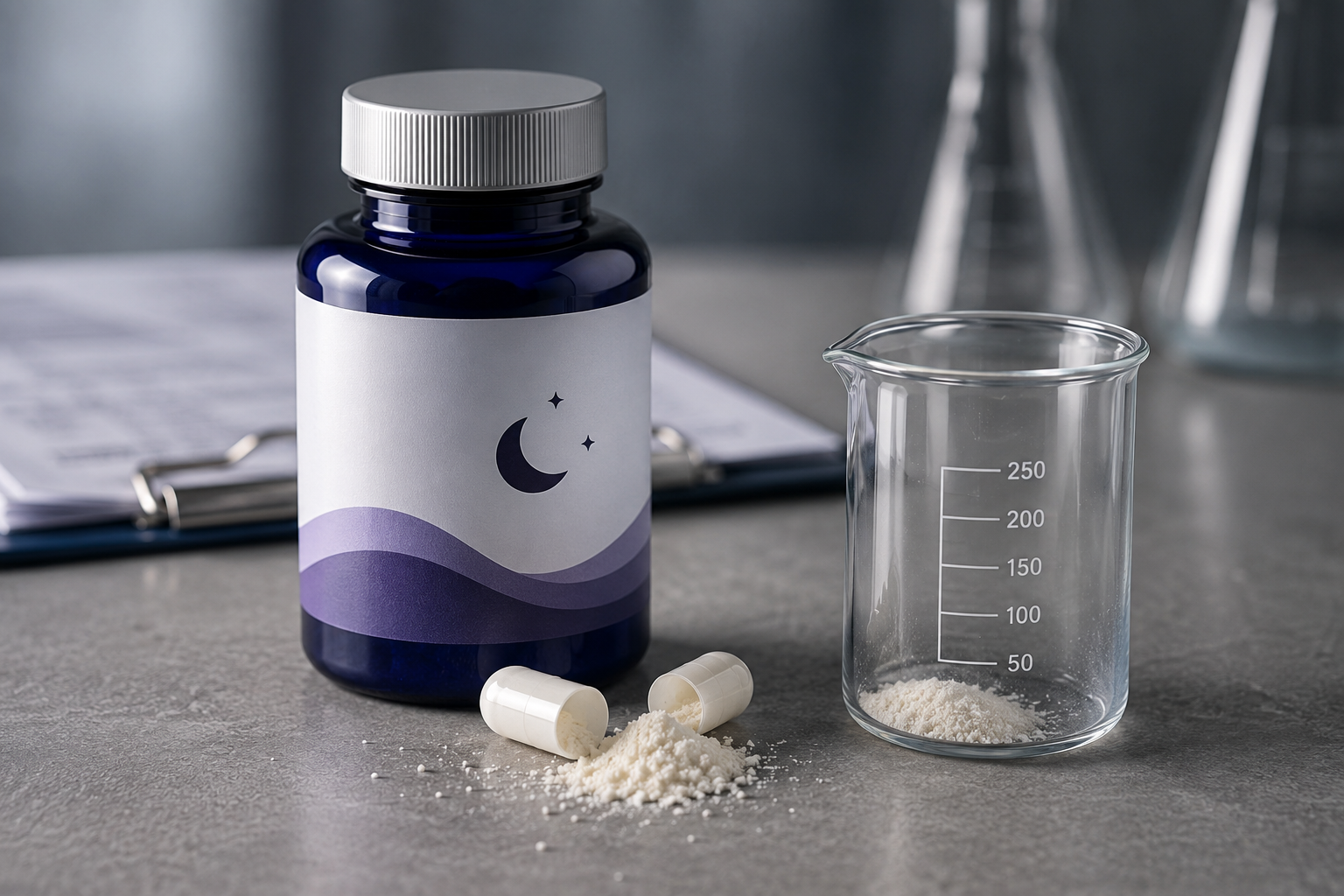
Melatonin can be considered, but it should stay in its lane. The Living Concussion Guidelines list melatonin dosing at 2–5 mg, taken 2 hours before bed and combined with reduced evening light; the guideline grades this as Level C, meaning the recommendation rests on expert opinion or consensus rather than strong concussion-specific trial evidence.[1] A circadian review similarly notes that mid-range doses, 3–5 mg, showed the most efficacy in the material it summarized.[4]
That makes melatonin a timing tool, not a rescue sedative. It is most plausible when the sleep schedule has shifted later or evening light exposure is interfering with the body’s night signal. Supplement quality and dosing vary, so it is worth reading about melatonin label accuracy and how to match melatonin to the sleep problem before treating a gummy or tablet as harmless trial-and-error.
Morning blue light therapy belongs in the same circadian category, especially when the schedule has drifted or daytime sleepiness remains prominent. It should be discussed with a clinician if you have migraine, bipolar disorder, eye disease, light sensitivity, or medications that affect light sensitivity. In the persistent phase, light and melatonin may support timing, but CBT-I remains the central insomnia treatment when insomnia is the pattern.
Be Careful With Sedating Shortcuts
Over-the-counter sleep aids and leftover prescription sedatives can look tempting when you have slept badly for weeks. They can also create next-day grogginess, worsen balance, cloud cognition, or interact with other medications at exactly the wrong point in concussion recovery. Diphenhydramine products, benzodiazepines, alcohol, and cannabis are not interchangeable with insomnia treatment. If you are comparing options, start with the problem type rather than the strongest sedating effect; this guide to OTC sleep aids by sleep problem can help frame the conversation, but persistent post-concussion insomnia belongs with a clinician.
When to Bring in Specialist Care
Specialist care is not a failure of self-management. It is the correct next step when the sleep problem is no longer simple, short-lived, or clearly improving. Consider concussion-informed sleep medicine, rehabilitation, neurology, psychology, or sports medicine support when insomnia lasts beyond four weeks, sleep disturbance is worsening, daytime sleepiness is unsafe, headaches or dizziness flare with sleep restriction, mood symptoms are intensifying, or sleep apnea symptoms are present.
A useful appointment does not require perfect tracking. Bring a rough two-week sleep diary: wake time, bedtime, approximate time awake at night, naps, caffeine, alcohol, medications, screen-heavy evenings, and the symptoms that most affect sleep. If you use a wearable, bring the trend, not the verdict. Device-estimated sleep duration can help show drift or fragmentation, but it should not overrule your symptoms or a clinician’s assessment.
The goal is not to produce flawless sleep scores while your brain recovers. The goal is to match the sleep response to the recovery stage: rest freely at first, rebuild rhythm during the next few weeks, screen for treatable sleep disorders, and move to CBT-I or specialist evaluation when insomnia persists. That gives recovery support without letting temporary concussion sleep disruption become another month of improvisation.
References
- Sleep-Wake Disturbances, Living Concussion Guidelines.
- Concussion and the Sleeping Brain, Donahue & Resch, 2024.
- Consensus statement on concussion in sport: the 6th International Conference on Concussion in Sport-Amsterdam, October 2022, British Journal of Sports Medicine, 2023.
- Circadian therapy interventions for glymphatic dysfunction in concussions injuries, Kureshi et al., 2023.
- Sleep quantity and quality during the first week postinjury and time to symptom resolution in youth with concussion, British Journal of Sports Medicine, 2025.
- Sleep disturbance after pediatric and adolescent concussion, Frontiers in Sleep, 2025.
- Sleep as a modifier of recovery in pediatric and adolescent concussion, Clinical Pediatrics, 2017.
- Sleep and Sleep Problems, Concussion Alliance.
Comments
Join the discussion with an anonymous comment.