
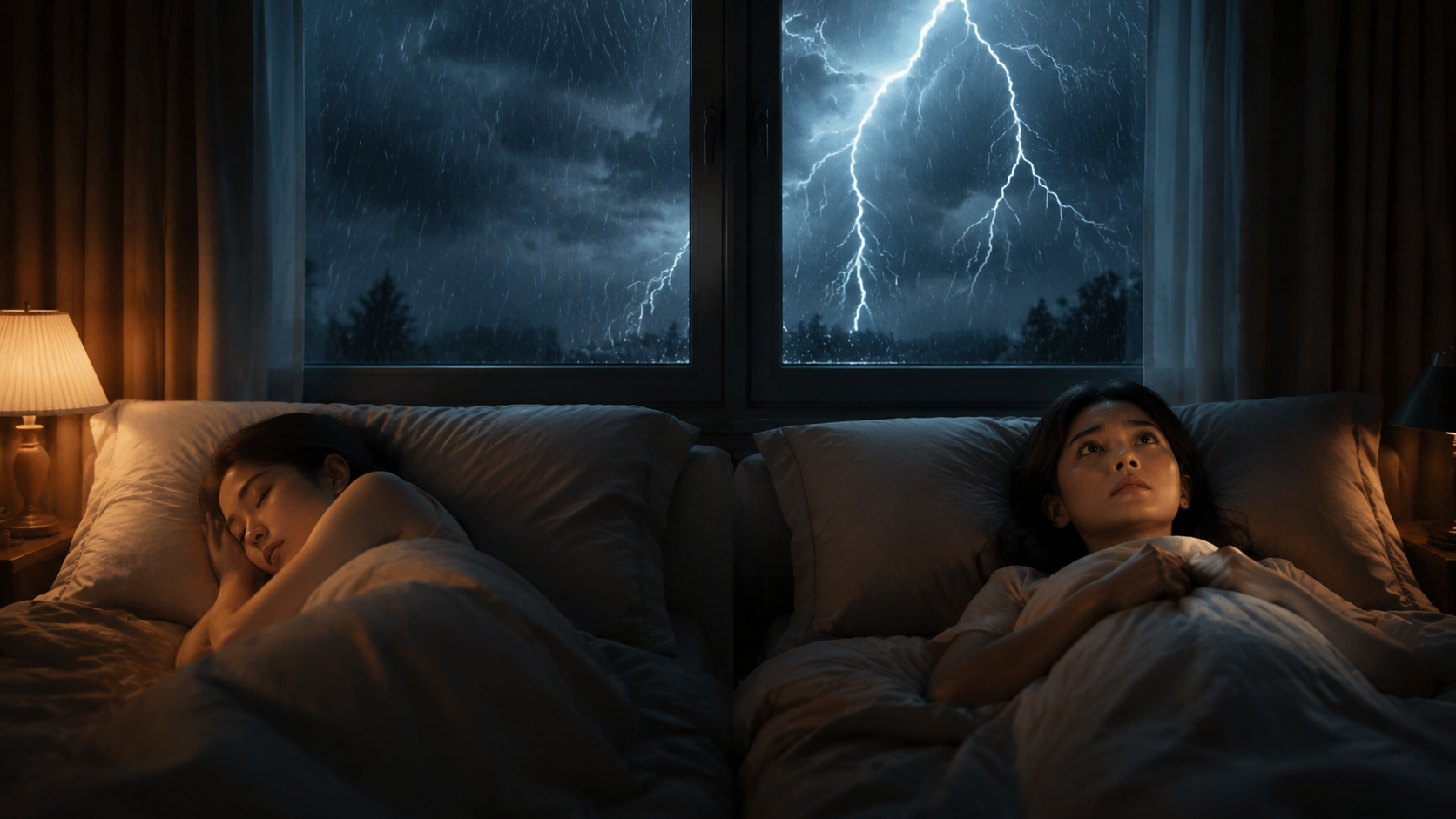
Heavy rain and wind can split a bedroom in half. One sleeper hears the storm as a steady blanket and falls deeper; the other hears the same weather as a warning system and stays alert. The puzzle is not whether storms are soothing or disruptive in general. It is which pathway wins in a given body on a given night.
The calm side of the storm
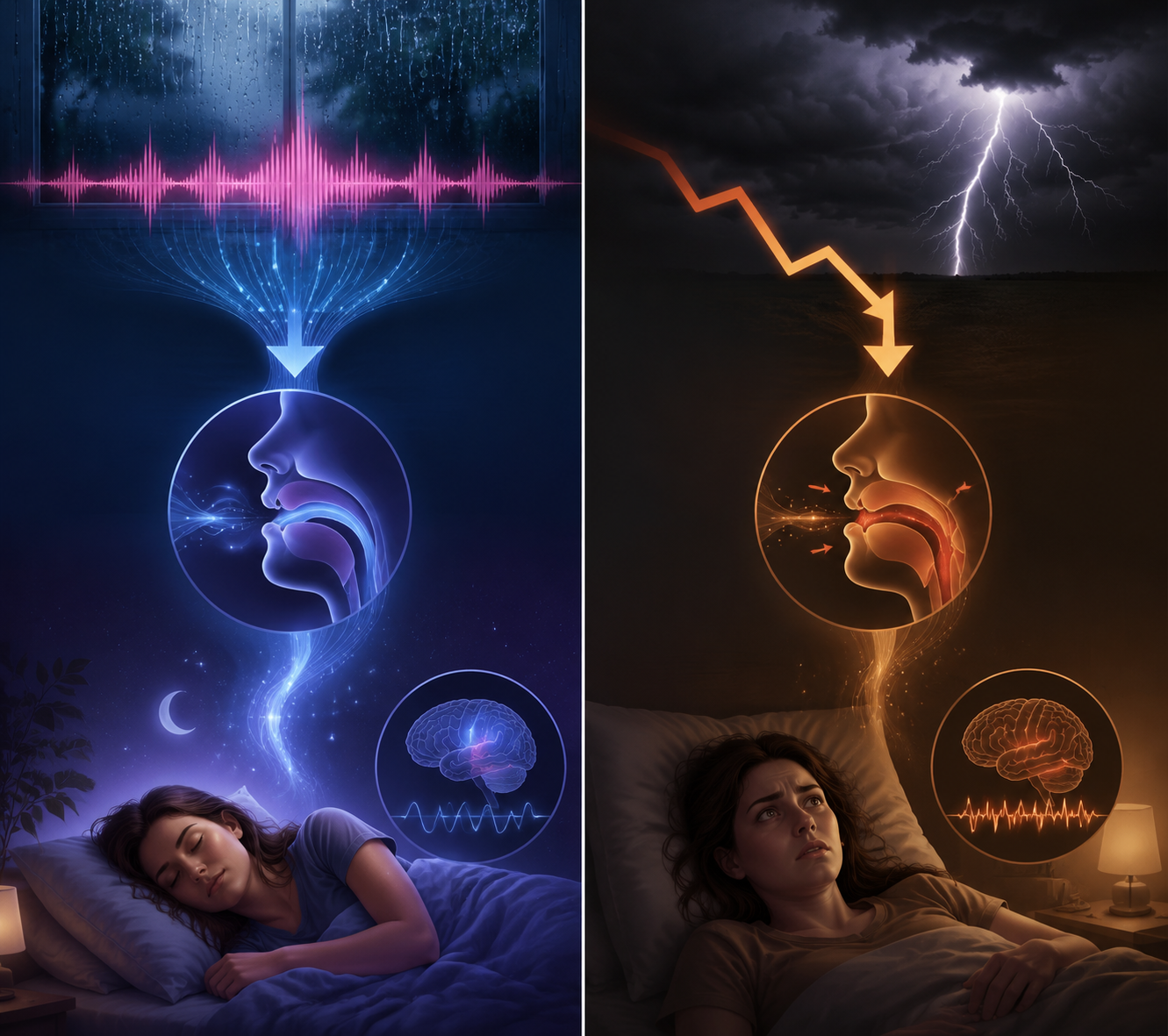
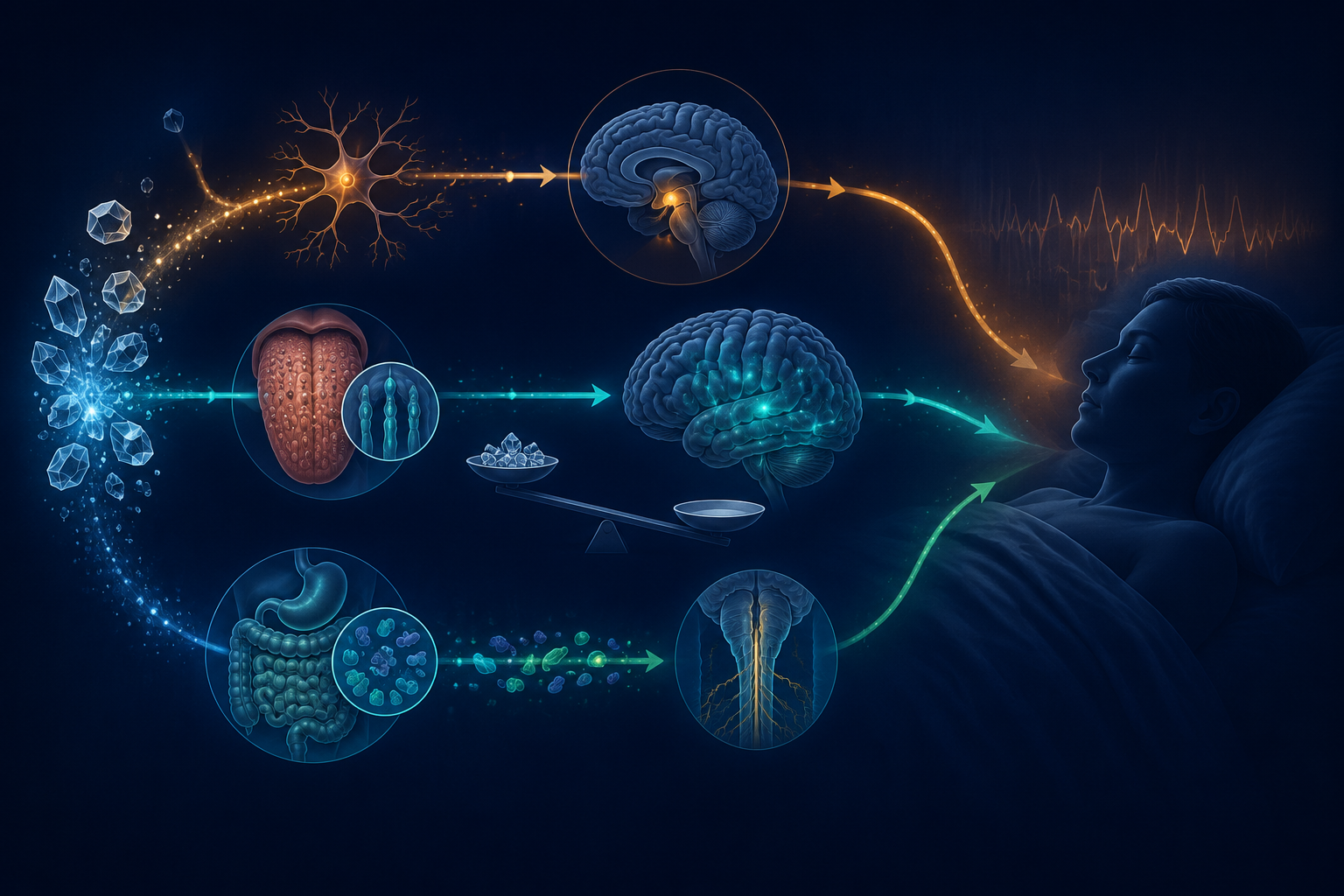
A small five-night pilot with 17 participants found that rain sounds could nudge slow-wave sleep in a pink-noise-like direction, which is part of why a storm can feel sedating even when it is loud [1]. Pink noise is not just "pleasant" noise; its rhythm sits in a 1/f spectrum that may help brain activity settle into more stable sleep transitions [2]. That calming effect is real enough to matter, but the study base is thin, so it is better read as a mechanism than a universal promise.
The disruptive side of the storm
The stronger evidence points the other way. In a retrospective single-site sleep-lab study of 537 patients, falling barometric pressure tracked with more obstructive sleep apnea: each 1 mB drop was associated with 0.3 more OAI events per hour, and the lowest-pressure quartile averaged 23.9 events per hour versus 17.1 in the highest quartile [3]. The authors also noted that the sample skewed toward severe sleep-disordered breathing, so this is a signal about vulnerability, not proof that every storm worsens every sleeper.
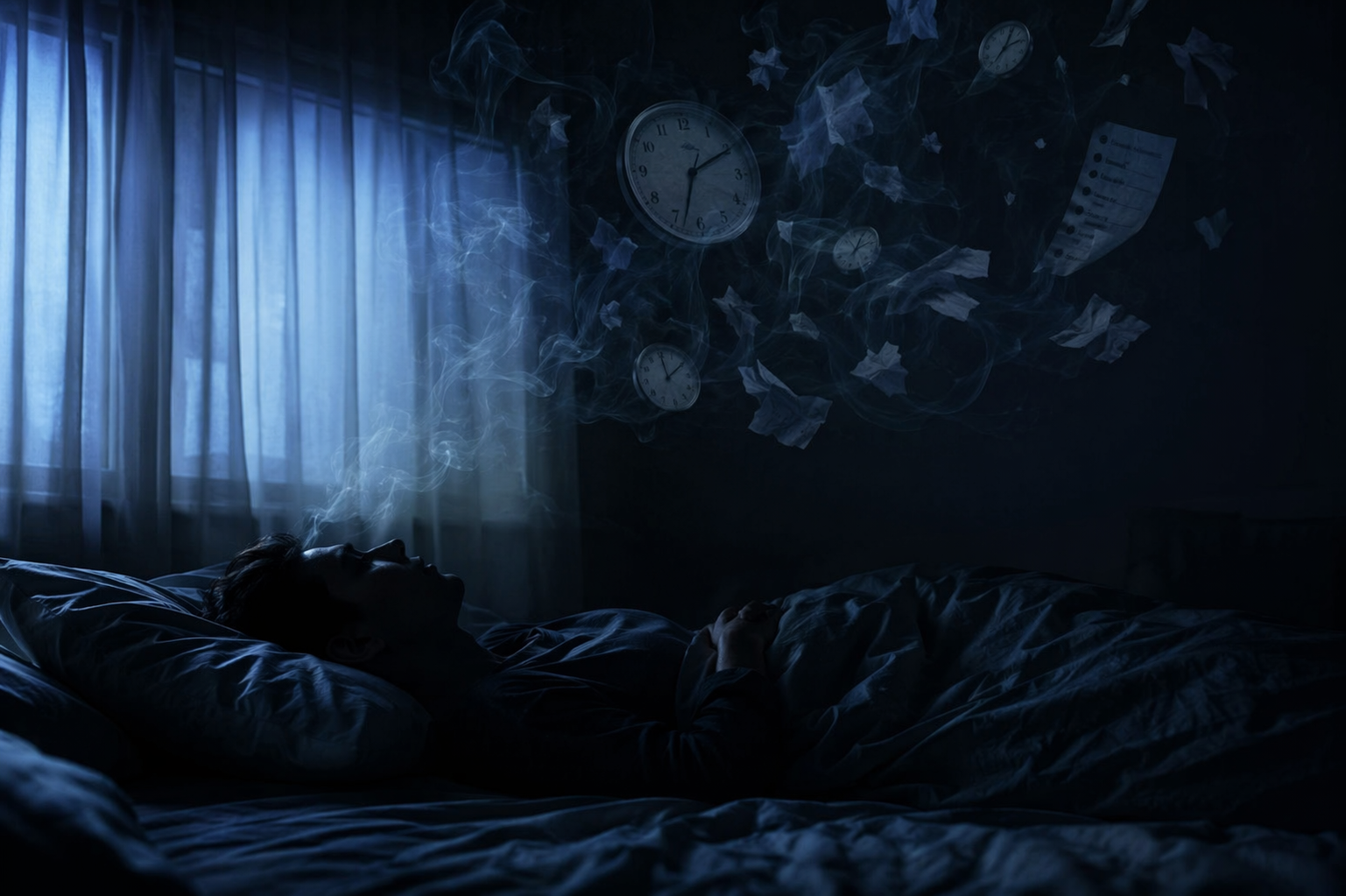
Wind, thunder, lightning flashes, and the sense that something is changing outside can push the nervous system toward vigilance even when the rain itself is steady. For people with astraphobia, thunder is not atmosphere but threat, and a small survey of about 300 adults across 43 states found roughly 10% reported weather phobia severe enough to lose sleep, though that estimate comes from one limited survey and should be treated cautiously [4][5]. When the lead-up to the storm is what keeps you awake, the problem may start before the first drop reaches the window, which is why the National Weather Service has a storm-anxiety resource for people who need help with the anticipation piece [6].
Which side is winning for you
- If storm nights make you fall asleep faster, wake less, and feel more restored, the sound pathway is probably doing most of the work.
- If the same weather leaves you wired, checking the window, or waking at every flash or gust, the pressure-and-arousal pathway is probably winning.
- If you snore louder, gasp, or notice breathing feels worse during storms, the airway side deserves more attention than the soundtrack.
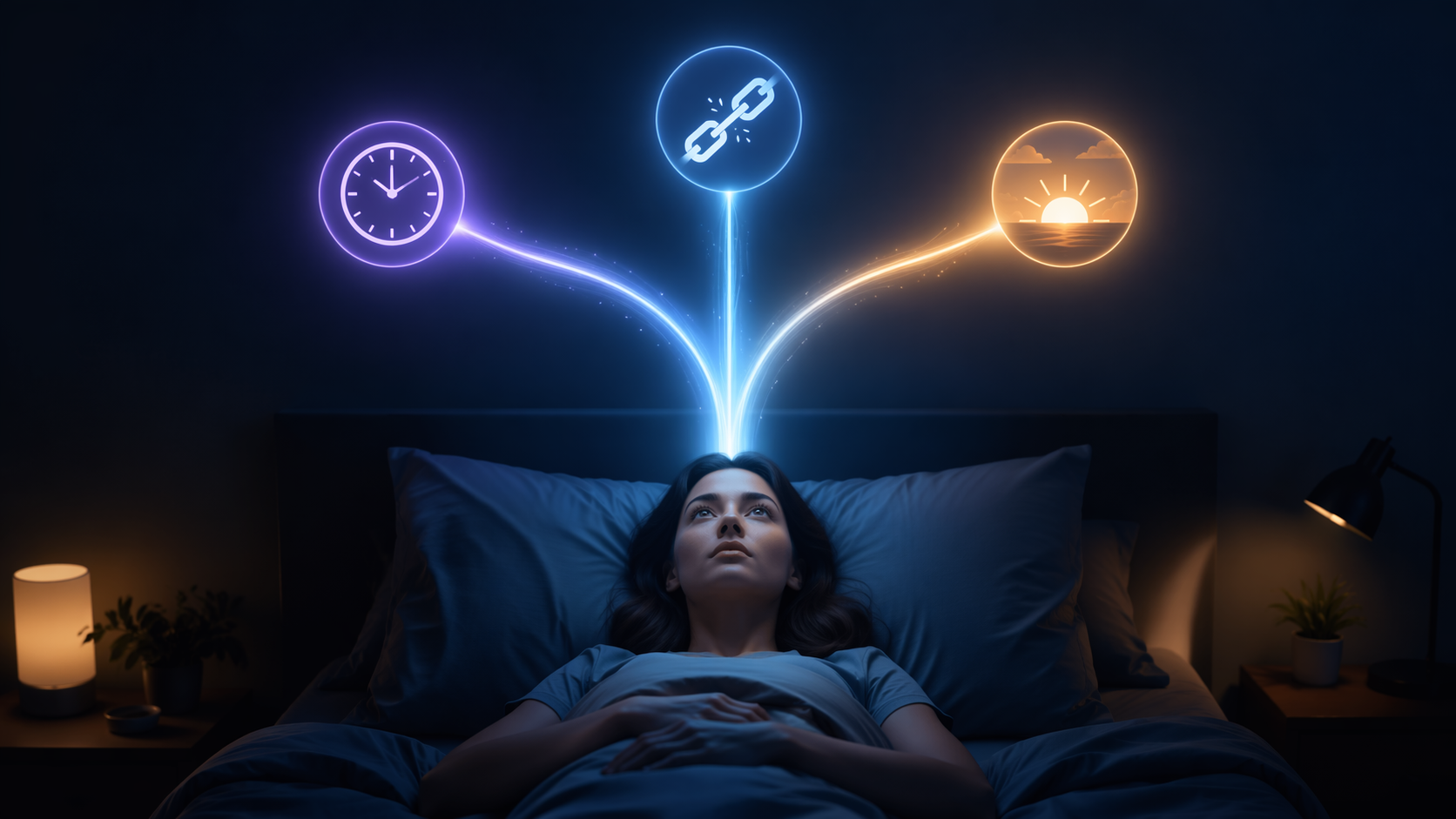
That is the useful self-check: not whether rain is "good" or "bad" for sleep, but whether your body is treating it like a lullaby or a trigger. If the disruptive pattern sounds familiar, the next useful reads are how storms affect sleep, the severe-weather sleep disruption framework, and, if anxiety is the bigger piece, anxiety-insomnia: what to do or CBT-I for sleep anxiety. If you are trying to tell weather noise from a breathing problem, sleep tracker vs. home sleep study is the more practical fork.
References
- Can rain sounds help you sleep? - Oura - https://ouraring.com/blog/can-rain-sounds-help-you-sleep/
- Pink Noise and Sleep - Sleep Foundation - https://www.sleepfoundation.org/noise-and-sleep/pink-noise-sleep
- Do Weather-Related Ambient Atmospheric-Pressure Changes Influence Sleep Disordered Breathing? - PubMed Central - https://pmc.ncbi.nlm.nih.gov/articles/PMC2854702/
- Astraphobia (Fear of Thunder and Lightning) - Cleveland Clinic - https://my.clevelandclinic.org/health/diseases/22101-astraphobia
- One in 10 suffer severe weather phobia - Ball State University - https://www.bsu.edu/news/press-center/archives/2014/10/one-in-10-suffer-severe-weather-phobia
- Storm Anxiety - National Weather Service - https://www.weather.gov/oun/stormanxiety

Comments
Join the discussion with an anonymous comment.