
If you are doing everything "right" and still waking up at 2:47 a.m., the problem is probably not your bedtime routine. Gen X women report shorter sleep than other generations, with a third getting less than seven hours a night, and nearly 60% say they are stressed about finances and caregiving [1]. That is not a pillow problem.
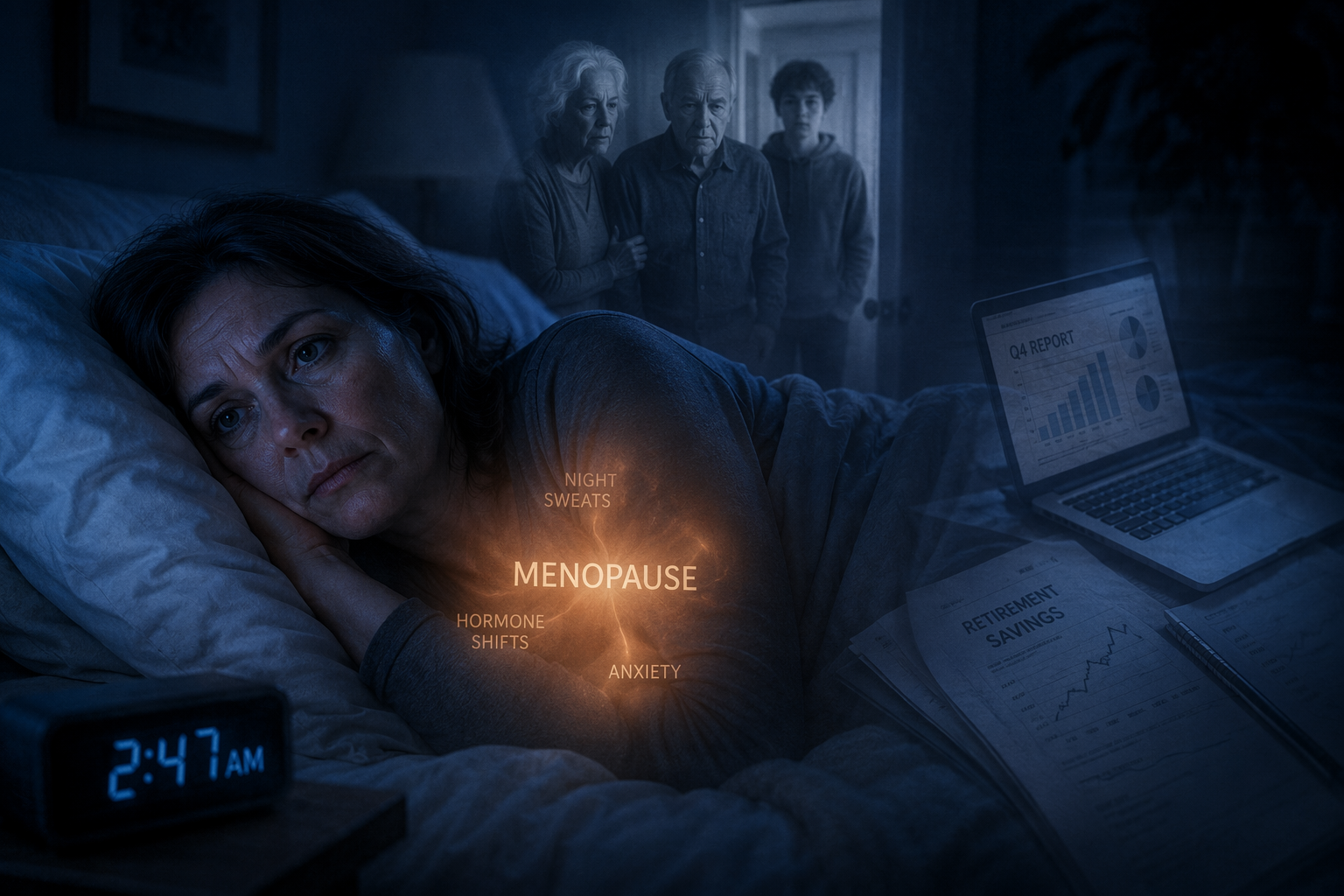
Menopause adds its own damage. Sleep difficulties show up in the years leading up to menopause for about 46% of people, and about half report sleep disorders after menopause [2]. For the women carrying kids, parents, jobs, and bills at the same time, the nervous system does not get much of a chance to settle down [3].
This Is a Layered Sleep Problem
The point is not that hormones are irrelevant. They are central. But estrogen and progesterone are not acting alone; they are landing in a life stage where sleep is already being pulled apart by caregiving, career pressure, and financial strain. Longitudinal SWAN data tracks sleep problems across the menopause transition over time, which is why this often feels like a slow collapse instead of one bad week [5].
If you want the mechanics of that hormonal cascade, see Why Perimenopause Disrupts Sleep: The Hormonal Cascade Behind Night Waking. The short version is that menopause-transition sleep is not one clean symptom with one clean fix. Night sweats, lighter sleep, and repeated wake-ups can all be part of the same mess, and then the rest of life keeps stepping on the wound.
What To Tackle First
| Priority | What it addresses | Why it comes here |
|---|---|---|
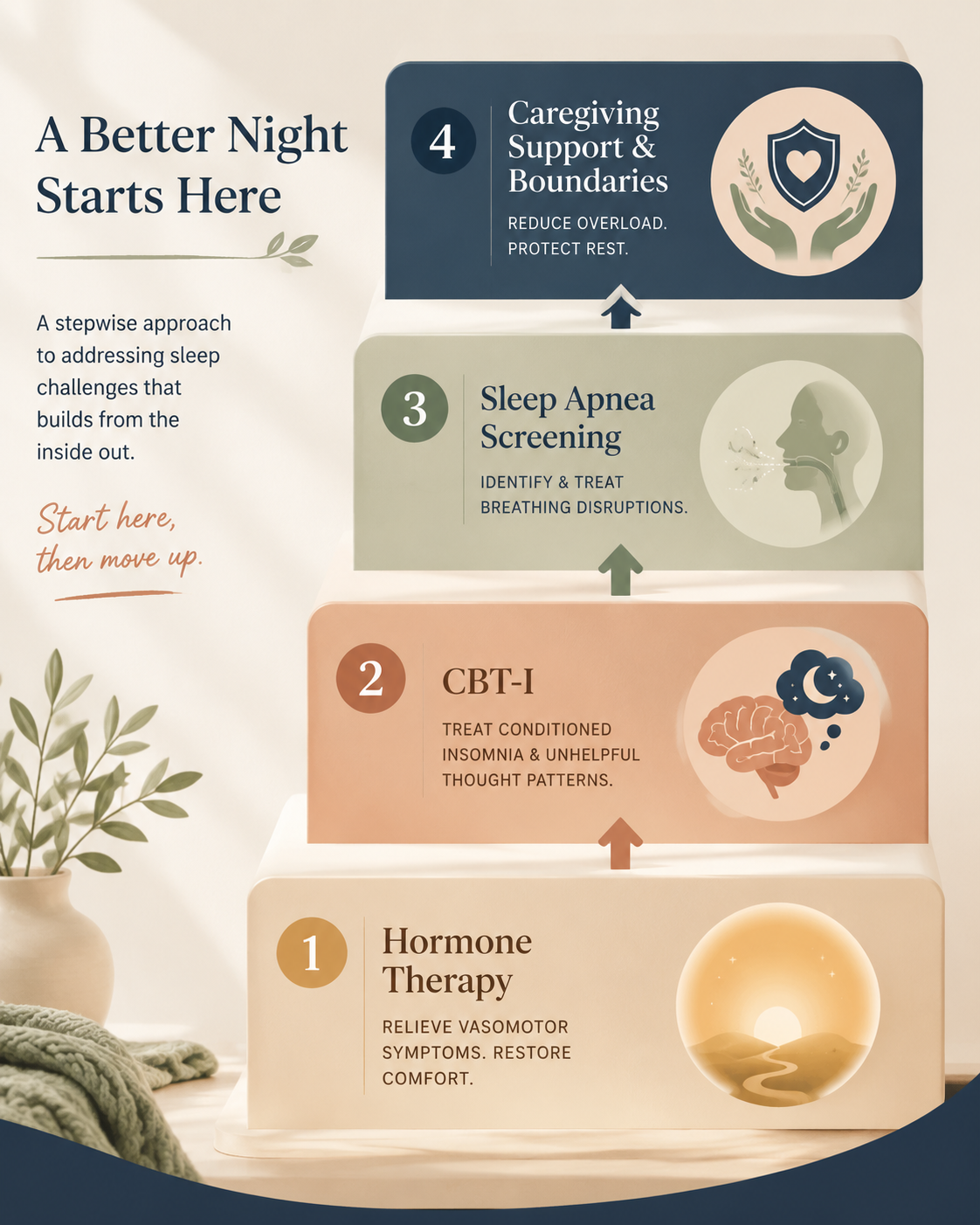
| Hormone therapy | Hot flashes and night sweats that break sleep onset or keep waking you | Treat the biologic trigger first when vasomotor symptoms are the driver |
| CBT-I | Conditioned insomnia and hyperalert wakefulness that stay after symptoms settle | Re-train the sleep pattern once the original trigger is better controlled |
| Sleep apnea screening | Unrefreshing sleep, snoring, pauses, or morning fog | Menopause changes the differential, and apnea is still often missed in women |
| Caregiving support and boundaries | Chronic arousal from unpaid work, family pressure, and nonstop logistics | Lower the background load that keeps the nervous system on guard |
If vasomotor symptoms are what is blowing up sleep onset or sleep maintenance, hormone therapy belongs near the top of the list. That is the part too many women were pushed away from for years, and the result was a lot of suffering that got treated like a personal discipline problem instead of a treatable symptom cluster.
If the hot flashes are quieter but the brain still flips on at 3 a.m., CBT-I is the next serious move. It is aimed at the learned, conditioned part of insomnia, which is often what remains after the original hormonal trigger has been addressed. See CBT-I Is the First-Line Treatment for Menopause-Related Insomnia for the deeper version of that argument.
Sleep apnea screening comes next because women’s apnea does not always look dramatic, and menopause shifts the odds in the wrong direction. In the Wisconsin Sleep Cohort, post-menopausal women were 2.6 times more likely to have an apnea-hypopnea index of at least 5 than pre-menopausal women [4]. If sleep feels unrefreshing no matter how much time you spend in bed, or if snoring and morning fog are part of the picture, do not shrug it off. See also The Atypical Sleep Apnea Symptom Checklist for Women and Is It Perimenopause Insomnia or Sleep Apnea?.
Caregiving support and boundary setting belong in the plan too, just not as a fake substitute for medical treatment. In a 2026 Cleo Family Health Index survey, 64% of working women in the sandwich generation were at high burnout risk, and the same report cites nearly double the risk of moderate to severe menopause symptoms when women are managing both family caregiving and menopause [3]. That does not prove caregiving causes every sleep problem. It does make the overlap impossible to ignore.
Why Sleep Hygiene Stops Working
Sleep hygiene is not useless. It is just too small for a problem this layered. A cooler room and less evening caffeine can help at the edges, but they do not turn off night sweats, redo the apnea differential, negotiate with an aging parent, or erase the mental spreadsheet running in the dark. When nearly 60% of Gen Xers say they are stressed about finances and caregiving [1], the idea that a better pillow will fix the whole thing is insulting.
Gen X sleep is not broken because these women forgot how to rest. It is broken because midlife stacked hormonal change, caregiving overload, and peak-career pressure on top of a sleep system that was already vulnerable. The right response is staged treatment, not a more disciplined bedtime.
References
- Why Gen X Women Can’t Sleep — TIME — https://time.com/5759867/ada-calhoun-gen-x-women-insomnia/
- Menopause and Sleep — Sleep Foundation — https://www.sleepfoundation.org/women-sleep/menopause-and-sleep
- Two Out of Three Women in the Sandwich Generation Reach a Caregiving Breaking Point — LifeHealth — https://www.lifehealth.com/two-out-of-three-women-in-the-sandwich-generation-reach-a-caregiving-breaking-point/
- Menopausal status and sleep-disordered breathing in the Wisconsin Sleep Cohort Study — PubMed — https://pubmed.ncbi.nlm.nih.gov/12615621/
- Effects of Sleep Problems During Menopause — SWAN Study — https://www.swanstudy.org/womens-health-info/effects-of-sleep-problems-during-menopause/




Comments
Join the discussion with an anonymous comment.