
If your nights usually start fine and fall apart around 3 AM, Silenor for sleep is at least the right kind of medication to be looking at. It is not mainly a “knock me out at bedtime” drug. Low-dose doxepin, sold as Silenor in 3 mg and 6 mg tablets, is approved for sleep maintenance insomnia: the pattern where sleep arrives, then breaks too early or too often.
That distinction matters. Someone awake for two hours at 11 PM has a different problem from someone who sleeps until 3 AM and then watches the clock. If you are still sorting out which pattern fits you, it helps to separate why you can’t sleep by insomnia pattern before judging any medication.
The short answer is measured, not magical: in one key sleep-lab trial, doxepin 3–6 mg reduced wake time after sleep onset by about 23 minutes compared with placebo, improved sleep efficiency in the final third of the night, and increased total sleep time by about 25–29 minutes.[1] For a person awake and miserable in the back half of the night, 23 minutes can matter. It is still 23 minutes, not a guarantee of sleeping cleanly until morning.

The Fit: Late-Night Waking, Not Bedtime Struggle
Silenor fits best when the main complaint is staying asleep. That can mean repeated awakenings, early-morning waking, or the familiar 3 AM pattern where sleep seems to switch off too soon. It is less compelling when the central problem is sleep onset: lying awake at bedtime, tense and alert, waiting for the first stretch of sleep to begin.
The drug’s own evidence points in that direction. A 2025 pooled analysis found that doxepin 3 mg improved latency to persistent sleep by 6.4 minutes, a statistically significant 22% reduction, but that did not meet the American Academy of Sleep Medicine’s 10-minute threshold for clinical significance.[2] In plain terms, the signal for falling asleep faster exists on paper, but it is not large enough to make Silenor a strong sleep-onset choice.

For people trying to understand what causes waking up at 3 AM every night, that is a useful guardrail. A medication can be FDA-approved for insomnia and still be a poor match for the part of insomnia you actually have.
Why Low-Dose Doxepin Can Help the Back Half of the Night
Doxepin is an old tricyclic antidepressant, but Silenor is not used at antidepressant doses. At 3–6 mg, doxepin acts mainly as a histamine H1 receptor blocker, with very high H1 affinity and negligible norepinephrine reuptake inhibition or anticholinergic effect; that selectivity is lost at antidepressant doses above 25 mg.[3]
That mechanism is one reason Silenor is more biologically plausible for sleep maintenance than sleep initiation. Histamine is one of the brain’s wakefulness-promoting systems. Blocking H1 signaling during the circadian low point can make it easier to remain asleep when the night is most vulnerable to fragmentation.[3]
This is also why Silenor sits in a different lane from many sedative-hypnotics. It is not a benzodiazepine receptor agonist, and it is not scheduled as a controlled substance. That difference is real, though “non-controlled” should not be mistaken for “no next-day effects for everyone.” For a broader explanation, see what non-habit-forming on a sleep aid actually means.
What the Trials Actually Showed
The most useful Silenor data are not broad claims about “better sleep.” They are specific measures of what happened after people were already asleep.
| Measure | What It Means | What Low-Dose Doxepin Showed |
|---|---|---|
| WASO | Wake after sleep onset; minutes awake after initially falling asleep | About 23 minutes less than placebo in Roth et al. 2007 |
| Final-third sleep efficiency | How much of the last part of the night was spent asleep | Improved from 79.6% with placebo to 88.2–89.3% with 3–6 mg |
| Total sleep time | Total minutes asleep across the night | Increased by about 25–29 minutes |
| LPS | Latency to persistent sleep; how long it took to fall asleep | Improved by 6.4 minutes in a 2025 pooled analysis, below the AASM clinical significance threshold |
Roth et al. was a crossover randomized trial with 67 adults. Its strongest finding was in the part of the night that matters most to early-morning wakers: sleep efficiency in the final third improved from 79.6% on placebo to 88.2–89.3% on doxepin 3–6 mg.[1] That is not the same as saying everyone slept through the night, but it is a meaningful target match.
The trial also had a major limit: each dose was assessed over only two nights.[1] Short sleep-lab trials can detect a medication effect, but they do not tell you how the drug feels after weeks of ordinary nights, shifting stress, missed doses, late dinners, and real mornings.
Longer data come from a 12-week trial in 254 older adults. In that study, doxepin showed sustained improvements in wake after sleep onset, total sleep time, and sleep efficiency, without evidence of tolerance developing over the 12 weeks studied.[4] That is reassuring as far as it goes. It still leaves open what happens beyond three months.
Where Silenor Sits in the Treatment Order
The American Academy of Sleep Medicine guideline suggests clinicians use doxepin for sleep maintenance insomnia in adults, but this sits inside a broader insomnia treatment hierarchy in which behavioral treatment remains central.[5] CBT-I is not a decorative wellness add-on here; it is the treatment with the strongest role when insomnia has become a conditioned, recurring pattern.
That does not mean a person has to suffer indefinitely before discussing medication. Access to CBT-I can be limited, insomnia can become brutal quickly, and some people need more than one tool. But Silenor makes the most sense as a second-line or adjunctive discussion when the main problem is sleep maintenance and behavioral approaches are insufficient, unavailable, or too slow for the current situation. If you are deciding when symptoms warrant medical care, trouble sleeping at night and when to see a doctor is the more practical question than whether you are “bad enough.”
The Evidence Is Useful, but Not Independent Enough to Overstate
A 2015 systematic review identified 9 randomized controlled trials of doxepin for insomnia, 6 of them using low doses from 1–6 mg. The review described small-to-medium effect sizes and noted that all low-dose studies were sponsored by Somaxon or Currax Pharmaceuticals.[6]
Industry sponsorship does not make the results fake. It does mean the confidence level should be more restrained than it would be with several independent trials asking similar questions. It also matters that there are no active-comparator trials. Claims that Silenor is “better than” Z-drugs, orexin antagonists, sedating antidepressants, or other options are not supported by head-to-head evidence in the available research.
So the cleanest evidence-based sentence is narrow: low-dose doxepin improves sleep maintenance measures compared with placebo, especially wake time after sleep onset and final-third sleep efficiency. It should not be sold as a broad insomnia fix.
Safety: Better Than Many People Expect, Messier Than the Label Makes It Feel
In clinical trials and the FDA label, low-dose doxepin looks relatively clean. Adverse-event rates were comparable to placebo, with headache around 5% and somnolence reported in the 0–4% range. Trials did not show next-day residual sedation on DSST/SCT psychomotor tests, did not show a withdrawal syndrome, and Silenor is not classified as a controlled substance.[4][7]
That profile is genuinely different from some older hypnotic categories. Still, real-world experience is not always as tidy as a trial table. Drugs.com user reviews give Silenor a 5.8 out of 10 rating from 315 reviewers, with reports that include next-day grogginess, vivid dreams, and weight gain.[8] User reviews cannot establish rates or causality, but they are a reminder that “placebo-like in trials” does not mean “invisible in every body.”
One confusing safety issue is the boxed warning people may see when they search for doxepin. The antidepressant-dose suicidality warning for doxepin above 25 mg does not apply to Silenor at 3–6 mg, according to the Silenor prescribing information.[7] That distinction is worth making explicitly because the same molecule carries very different implications at different doses.
Dosing Details That Can Change the Night
Silenor is usually taken 30 minutes before bedtime, and the label says it should not be taken within 3 hours of a meal because food delays absorption.[7] That timing is not a minor pharmacy instruction if your goal is to judge whether the medication helps. A late dinner or snack can shift how the drug comes on and make the experience harder to interpret.
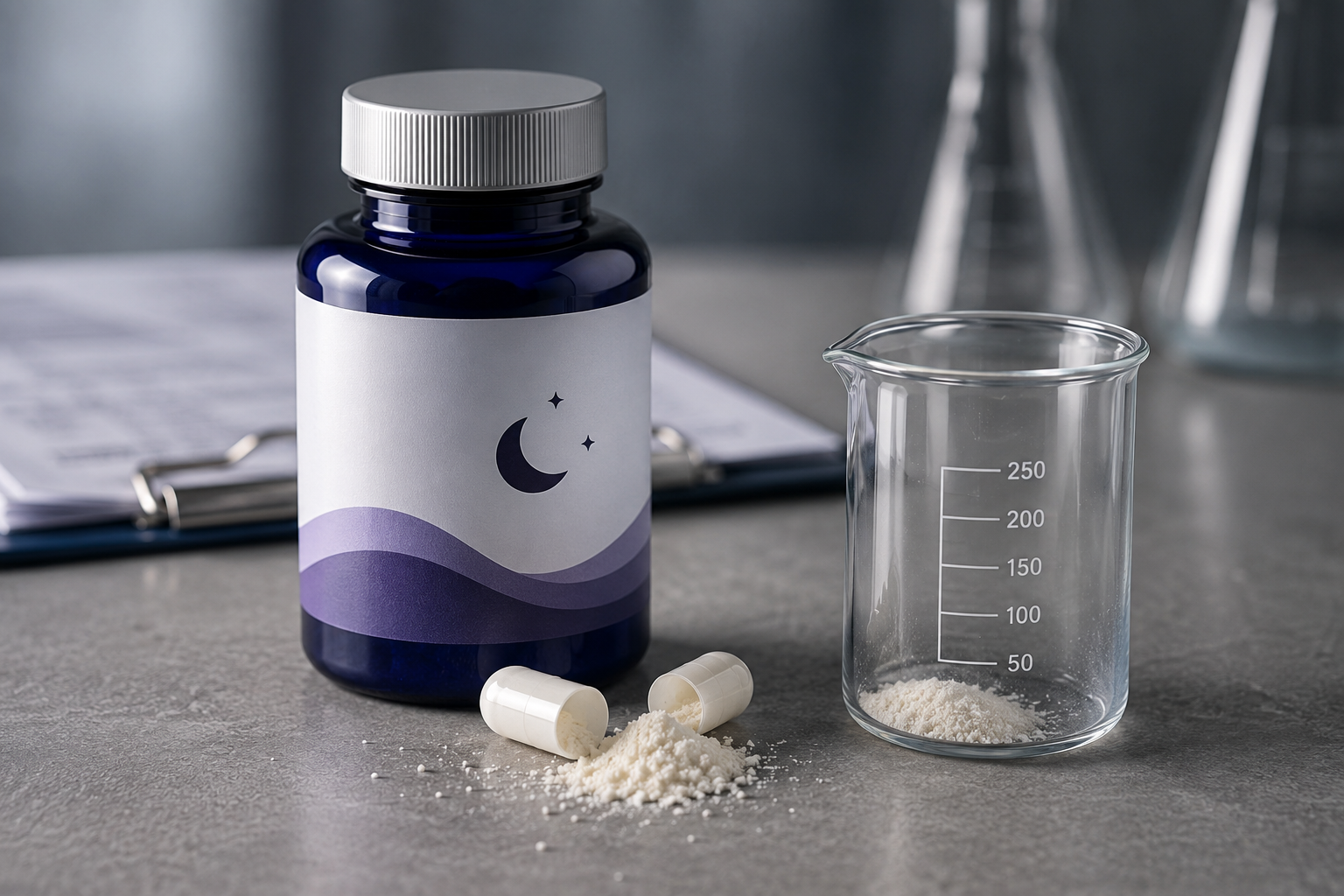
- The approved Silenor doses are 3 mg and 6 mg.
- It is intended for use close to bedtime, not during a middle-of-the-night awakening.
- Taking it too close to food can delay absorption.
- Generic doxepin capsules and solutions are not automatically interchangeable with Silenor for low-dose insomnia use.
The last point is where people get into practical trouble. A 10 mg doxepin capsule is not something to casually split into a Silenor-equivalent dose, and pharmacies cannot simply substitute a different formulation unless the prescription is written that way. If cost is part of the decision, the clinician needs to prescribe with that in mind.
Cost and Access Are Not Side Issues
Brand Silenor can be expensive, with reported pricing around $640 per month, while generic doxepin 10 mg/mL oral solution has been reported around $20–24 per month.[9][10] Those figures can change by pharmacy, insurance, coupon, and region, but the gap is large enough that it belongs in the first conversation, not the last.
Cost also affects adherence and interpretation. If someone stretches doses, skips nights, or switches formulation without a clear plan, they may conclude the medication “failed” when the trial was never stable enough to judge. A reasonable sleep medication is only reasonable if the person can actually obtain and take it as prescribed.
A Sensible Conversation With Your Clinician
Silenor is worth discussing when the pattern is specific: you fall asleep reasonably well, then wake in the back half of the night and cannot return to sleep. It is less persuasive when bedtime insomnia is the dominant problem, when the medication would be taken inconsistently because of meal timing or cost, or when next-day functioning is already fragile.
A useful appointment does not have to begin with “Can I have Silenor?” It can begin with the pattern: how long it takes to fall asleep, when you wake, how long you stay awake, what time you must function the next morning, and what behavioral treatment you have already tried or can realistically access. For some people, that points back toward CBT-I or another cause of early waking. For others, low-dose doxepin becomes a legitimate second-line option.
- Ask what benefit size would count as success for your situation.
- Ask whether your pattern is truly sleep maintenance insomnia.
- Ask how to monitor next-day grogginess, mood changes, vivid dreams, or weight changes.
- Ask whether brand Silenor or a generic doxepin formulation is being prescribed, and why.
- Ask how food timing should work on ordinary nights, not ideal nights.
For the right insomnia pattern, Silenor can be a serious option. The right expectation is not a transformed sleeper overnight, but a targeted attempt to reduce late-night wakefulness by a modest, sometimes meaningful amount.
References
- Efficacy and Safety of Doxepin 1 mg, 3 mg, and 6 mg in Adults With Primary Insomnia, Sleep
- Latency to Persistent Sleep With Doxepin 3 mg, 2025
- Doxepin in the Treatment of Insomnia: A Systematic Review, Sleep Medicine Reviews
- Efficacy and Safety of Doxepin 1 mg and 3 mg in a 12-Week Sleep Laboratory and Outpatient Trial of Elderly Subjects With Chronic Primary Insomnia, Sleep
- Clinical Practice Guideline for the Pharmacologic Treatment of Chronic Insomnia in Adults, American Academy of Sleep Medicine
- Doxepin for Insomnia: A Systematic Review of Randomized Placebo-Controlled Trials, Sleep Medicine Reviews, 2015
- Silenor Prescribing Information, U.S. Food and Drug Administration
- Silenor Reviews & Ratings, Drugs.com
- Silenor Prices, Coupons and Patient Assistance Programs, GoodRx
- Doxepin for Sleep: Dosage, Side Effects, and Cost, MEDvidi


Comments
Join the discussion with an anonymous comment.