
Rare disease sleep problems are often described too softly. “Restless nights” can mean a child waking repeatedly, a teenager falling asleep through the day, an adult with a syndrome living with untreated breathing events, or a parent who has not had a full night of sleep in years. The first correction is simple: in rare genetic syndromes, sleep disruption is common enough to be expected in clinical care, but not so inevitable that it should be dismissed.
The strongest cross-syndrome evidence comes from a 2021 meta-analysis of 273 papers, 55,310 participants, and 19 genetic syndromes. Across those syndromes, insomnia was estimated at 45%, while some disorder-specific estimates were much higher: sleep-disordered breathing reached 72% to 77% in mucopolysaccharidosis disorders, and excessive daytime sleepiness was estimated at 60% in Smith-Magenis syndrome.[1]

Those figures do not mean every person with a rare genetic syndrome has the same sleep disorder. They do mean that sleep should not be treated as a lifestyle footnote after the “real” diagnosis has been named. A screening questionnaire is not the same as a polysomnography diagnosis, and parent-reported data cannot answer every mechanism question. Still, when almost half of a cross-syndrome population screens for insomnia and certain syndromes cluster strongly with breathing or daytime-sleepiness problems, the clinical posture should change from “Is sleep really part of this?” to “What kind of sleep problem are we looking at?”
Insomnia Is Common, but Not Genetically Specific
Insomnia is the sleep complaint most likely to travel across diagnostic boundaries. In the Agar meta-analysis, it was the most prevalent sleep disorder across the included rare genetic syndromes, yet it did not map neatly onto one syndrome-specific genetic pathway.[1] That matters because a family may assume that a rare diagnosis automatically makes standard insomnia care irrelevant. The evidence points in a more useful direction: insomnia can be part of a complex syndrome and still deserve the same careful behavioral assessment given to anyone else with trouble falling asleep, staying asleep, or returning to sleep after waking.
That does not make insomnia simple. A child who wakes frequently may also have pain, seizures, reflux, anxiety, sensory sensitivity, medication effects, or breathing changes. An adult may have years of conditioned wakefulness around bedtime. A caregiver may be sleeping lightly because they are listening for movement, alarms, choking sounds, or wandering. The useful point is not that sleep hygiene can solve a rare disease. It is that insomnia symptoms should not be ignored just because the underlying condition is rare.
Behavioral treatment belongs in the conversation for this reason. Cognitive behavioral therapy for insomnia, bedtime routines, light exposure timing, stimulus control, and a realistic review of naps and nighttime responses may help when the core problem is insomnia. For readers trying to identify the shape of the insomnia first, a pattern-based guide to not being able to sleep can be a practical starting point. But behavioral work should not be used to explain away snoring, gasping, low oxygen, unusual daytime sleepiness, or a syndrome with a known airway or circadian pathway.
The Same Nighttime Symptom Can Have Different Causes
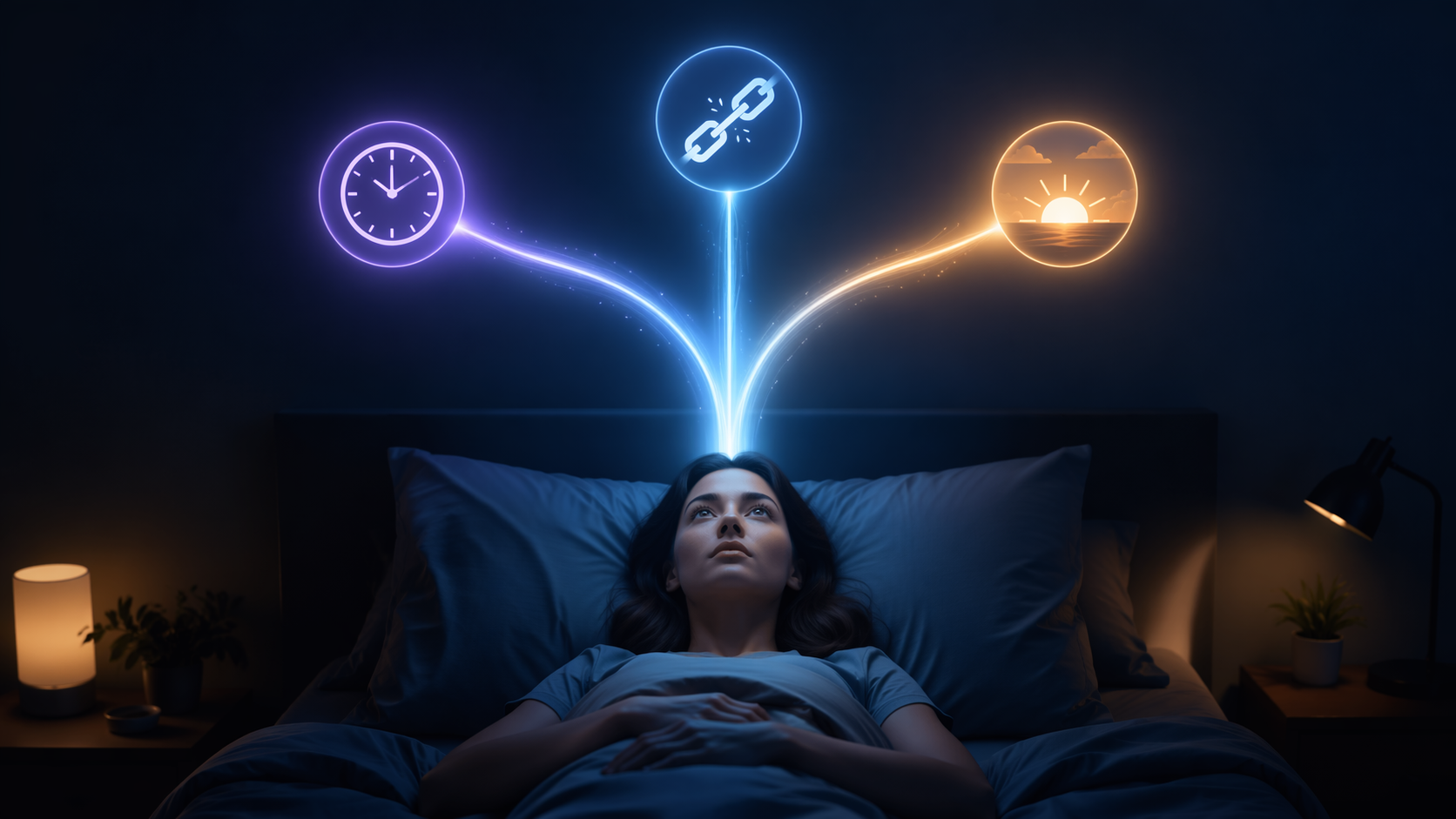
“Waking all night” is not a diagnosis. In one syndrome, the driver may be airway obstruction. In another, the sleep-wake clock may be shifted or inverted. In another, the daytime problem may look like poor motivation or behavior until excessive sleepiness is assessed directly. Rare genetic syndromes force a more disciplined question: what mechanism could plausibly be producing this sleep pattern?
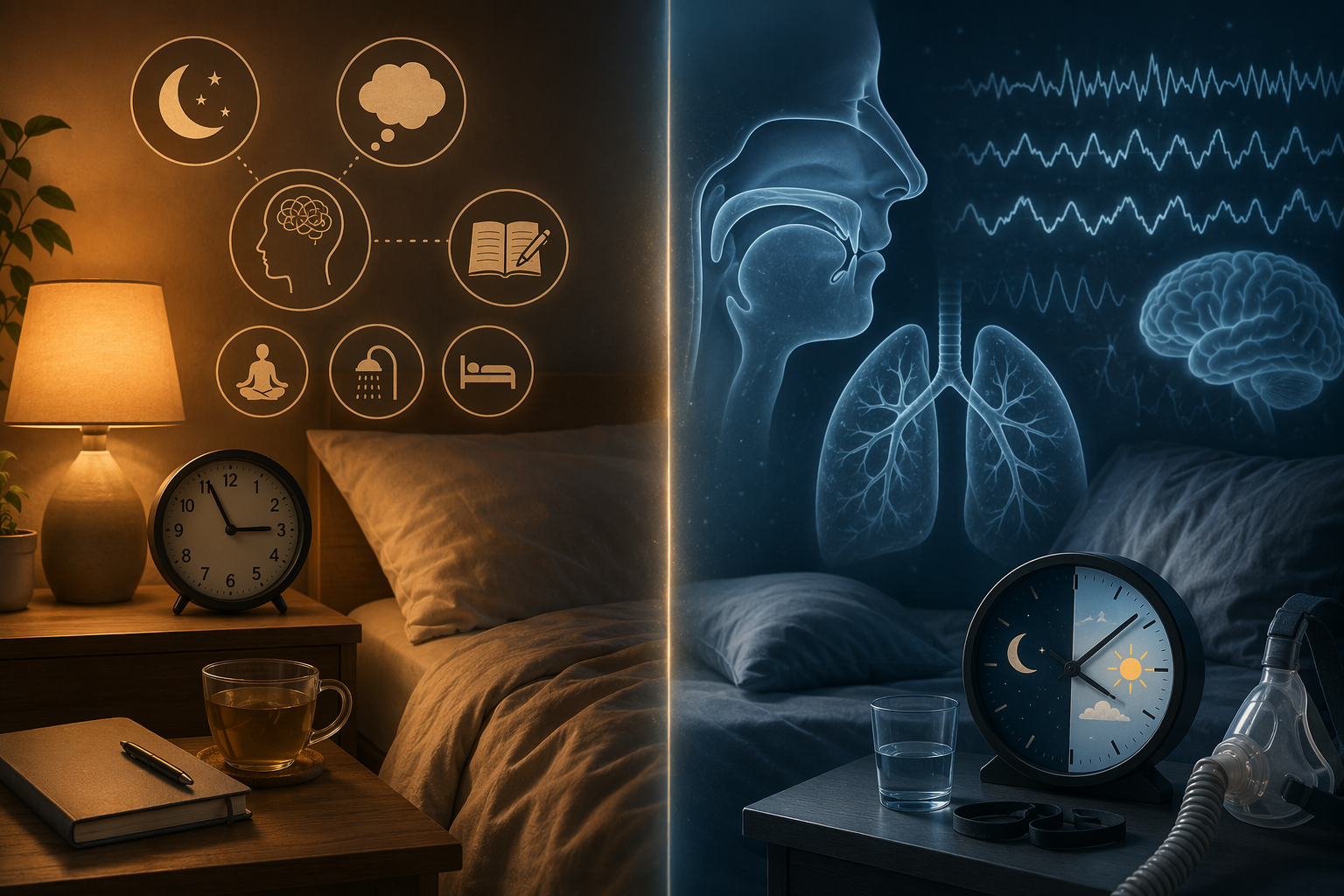
Mucopolysaccharidosis disorders are the clearest example of why generic sleep advice can miss the main problem. In these disorders, glycosaminoglycan accumulation can contribute to upper-airway obstruction, and a review of rare hereditary diseases reported obstructive sleep apnea in 64% to 95% of people with mucopolysaccharidosis.[3] The Agar meta-analysis, using its own cross-syndrome methods, also found very high sleep-disordered breathing estimates in MPS disorders.[1] A calmer bedtime routine may still be humane and helpful, but it does not evaluate an obstructed airway.
Smith-Magenis syndrome points in a different direction. Sleep difficulty in this syndrome has been linked to an inverted melatonin rhythm, with daytime melatonin secretion and nighttime disruption described in the hereditary-disease sleep review.[3] In the Agar meta-analysis, excessive daytime sleepiness in Smith-Magenis syndrome was estimated at 60%.[1] That combination should make clinicians cautious about treating the complaint as ordinary insomnia or as a matter of household discipline. The clock itself may be part of the disorder.
Prader-Willi syndrome shows why the daytime story matters as much as the night. The hereditary-disease review reported obstructive sleep apnea at approximately 80% in Prader-Willi syndrome and described a study in which 35.71% met narcolepsy criteria.[3] Those figures should not be generalized to every person with Prader-Willi syndrome without evaluation, but they do make one clinical point hard to avoid: persistent daytime sleepiness should not automatically be blamed on behavior, weight, school demands, or poor habits.
Congenital central hypoventilation syndrome belongs in a still different category. PHOX2B-related CCHS is associated with hypoventilation that is especially prominent during non-REM sleep, according to the same review.[3] Here, the sleep problem is not best understood as bedtime resistance or fragmented family sleep. It is a breathing-control disorder with consequences that require syndrome-aware medical management.
Rett syndrome adds another caution: not every dramatic breathing pattern has the same sleep meaning. The review notes that Rett-related breathing abnormalities may resolve during sleep, suggesting a behavioral or cortical origin rather than a primary brainstem origin for those particular waking abnormalities.[3] That distinction is easy to lose when all breathing concerns are collapsed into one phrase. It is also why symptom description matters: awake versus asleep, snoring versus pauses, restless movement versus gasping, morning headaches versus daytime sleep attacks.
Questionnaire Burden Is Not a Diagnosis, but It Is a Signal
Large cohort data from the Rare Diseases Clinical Research Network gives another view of the problem. In young children, the proportion scoring above the clinical threshold on the Children’s Sleep Habits Questionnaire was 96% for Angelman syndrome, 86% for Rett syndrome, and 70% for Prader-Willi syndrome.[2] These are questionnaire thresholds, not laboratory-confirmed sleep diagnoses. But they are too large to file under “normal family variation.”
The same study included sibling controls, and 67% of those siblings also scored above the clinical threshold.[2] That finding deserves careful handling. It does not prove that siblings have the same biological sleep disorder as the child with the syndrome. It does show that sleep disruption can spread across the household, through awakenings, vigilance, shared rooms, noise, stress, and caregiving routines. A care plan that asks only whether the affected child sleeps may miss who else is becoming impaired.
The RDCRN cohort was predominantly white, and the evidence base for many rare syndromes remains heavily pediatric.[2] That limits how confidently the numbers can be applied to every family, adult, or underrepresented group. The limitation should narrow the claim, not erase it. Published prevalence data are strongest for syndromes that have been studied enough to enter these analyses; many rarer conditions may have serious sleep problems without comparable published estimates.
What to Ask Before Accepting “That’s Just the Syndrome”
The practical next step is not to arrive at an instant diagnosis. It is to stop using one word, “sleep,” for several different clinical problems. A useful sleep conversation with a clinician starts with the pattern, the timing, the daytime consequence, and the syndrome-specific risks.
- If the main problem is difficulty falling asleep, long awakenings, early waking, or dependence on repeated parental intervention, ask whether insomnia-focused behavioral treatment is appropriate.
- If there is snoring, gasping, witnessed pauses, restless sleep, morning headaches, or unexplained daytime sleepiness, ask whether sleep-disordered breathing needs evaluation; a guide to snoring versus sleep apnea can help families describe what they are seeing.
- If the person seems sleepy at the wrong biological time, has a known Smith-Magenis diagnosis, or shows a day-night rhythm that seems reversed, ask about circadian assessment rather than assuming ordinary insomnia.
- If sleepiness is severe despite enough time in bed, especially in a syndrome associated with hypersomnolence or narcolepsy-like findings, ask whether the daytime sleepiness itself needs specialist evaluation.
- If the caregiver or siblings are also losing sleep, name that as part of the care problem, not as a private failure of endurance.
This is also where sleep hygiene needs the right-sized role. A predictable schedule, lower evening stimulation, light management, and consistent responses to night waking may reduce avoidable insomnia triggers. They are worth doing when they match the problem. They are not a substitute for airway evaluation in a high-risk syndrome, for circadian treatment when the clock is biologically displaced, or for specialist workup when daytime sleepiness looks disproportionate. For a broader explanation of where habits help and where they stop helping, see the hidden limits of sleep hygiene.
Melatonin deserves the same caution. It may be relevant when the question is circadian timing, but it should not become the default answer to every rare-disease sleep complaint. A child with obstructive events, a person with hypoventilation risk, or an adult with narcolepsy-like sleepiness needs a more specific question than “What can make sleep happen faster?”
When Sleep Becomes Part of the Care Plan
A rare diagnosis often reorganizes medical life around the most visible threats: seizures, feeding, mobility, infections, development, respiratory crises, behavior, or pain. Sleep can become the background condition everyone lives around. The prevalence data argue against that hierarchy. In the syndromes with enough research to analyze, sleep problems are not occasional inconveniences; they are among the most common comorbidities.[1]
Families do not need to prove that sleep disruption is dramatic before asking for help. They need to describe it precisely enough that the next step fits the mechanism: insomnia care when the pattern is behavioral or conditioned, airway assessment when breathing signs or syndrome risks point there, circadian evaluation when timing is abnormal, and hypersomnolence workup when daytime sleepiness is the disabling symptom. If sleep trouble is persistent, worsening, unsafe, or impairing daytime function, it is reasonable to treat it as a medical issue; a guide to when trouble sleeping warrants a doctor’s visit can help frame that conversation.
The fairest answer to the title question is this: sleep problems may be expected in many rare genetic syndromes, but they should not be accepted without assessment. “Part of the syndrome” can be the beginning of a better question, not the end of care.
References
- Sleep disorders in rare genetic syndromes: a meta-analysis of prevalence and profile. Molecular Autism. 2021.
- Evaluating Sleep Disturbances in Children with Rare Genetic Neurodevelopmental Syndromes. Rare Diseases Clinical Research Network. 2021.
- Sleep and Sleep Disorders in Rare Hereditary Diseases. 2014.


Comments
Join the discussion with an anonymous comment.