
USMNT vs Türkiye is now a useful worked example, not a preview. The match kicked off at 10pm ET at SoFi Stadium on June 25, 2026, which put East Coast viewers on track for a likely finish around 12:30am ET once halftime, stoppage time, and the usual post-match drift were included.[1] For anyone planning around a future 10pm ET World Cup kickoff, the sleep problem is the same: the game lands directly inside the hours most adults would normally be protecting.
This schedule assumes a normal wake time around 7am. It does not pretend that split sleep is secretly better than a full night. It is a damage-control plan for the fan who has already decided the live match matters: bank sleep before kickoff, use a short afternoon nap, stop caffeine by 3pm, watch the game without turning the rest of the night into a second event, then recover the next morning without sleeping so late that the following bedtime falls apart.
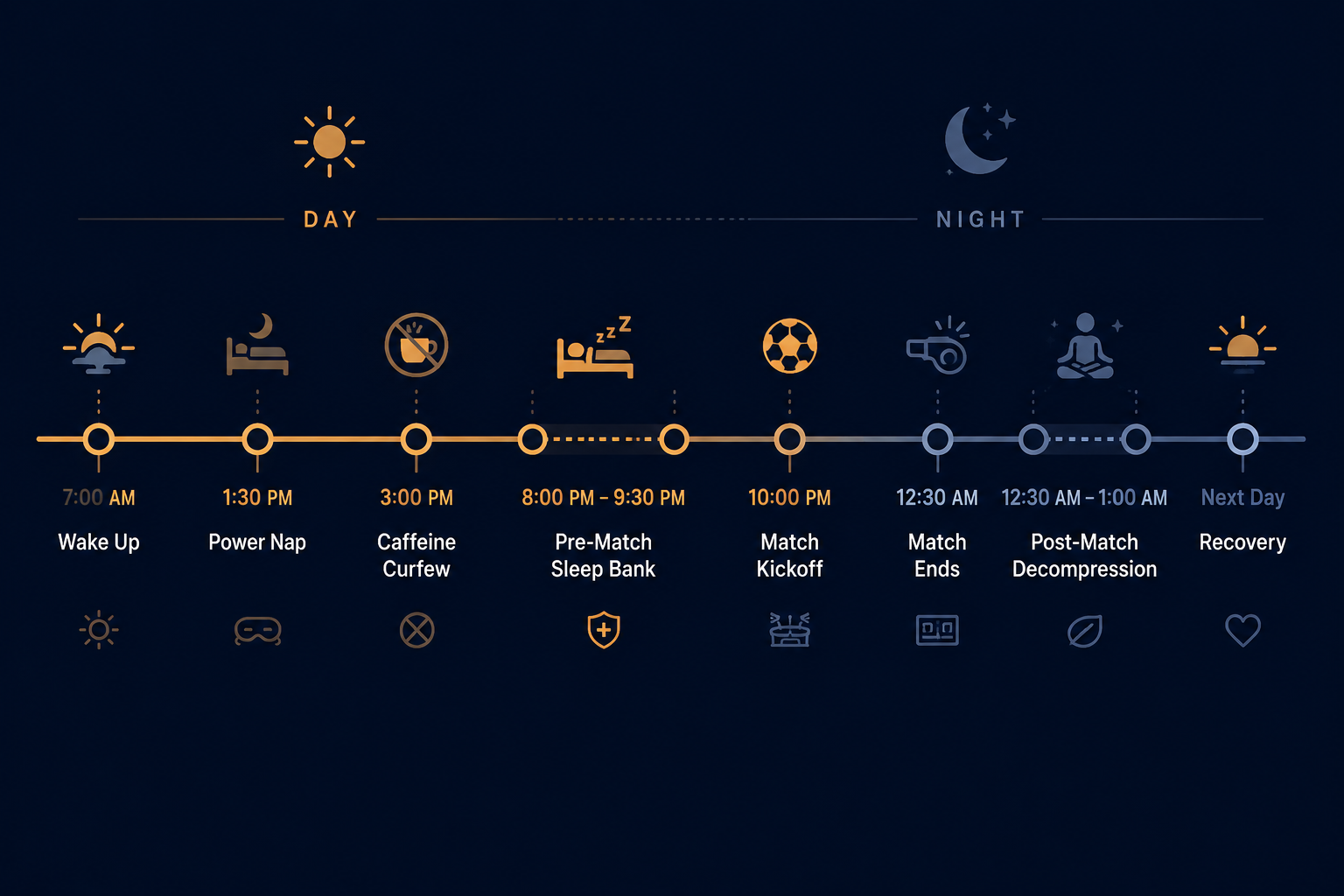
The 10pm ET Match-Day Schedule
| Time ET | What to do | Why it matters |
|---|---|---|
| 7:00am | Wake at your normal time. Get bright outdoor light as early as practical. | Keeps the day anchored so the late match does not become a full schedule reset. |
| Morning | Keep meals, exercise, and work routines normal. | The goal is not to turn the whole day into a sleep experiment. |
| 1:00–3:00pm window | Take one 20-minute nap, ideally around 1:30pm or 2:00pm. | This uses the common early-afternoon alertness dip without pushing sleep too close to bedtime.[2] |
| 3:00pm | Stop caffeine: coffee, energy drinks, strong tea, caffeinated pre-workout. | Late caffeine is the easiest way to make the post-match sleep window worse. |
| 6:30–7:30pm | Eat a normal dinner. Avoid making the match snack table your second dinner. | Heavy food close to the post-match bedtime can make the landing rougher. |
| 7:45pm | Dim the home environment where possible. Charge devices outside the bed if you can. | You are preparing for a pre-match sleep block, not just waiting for kickoff. |
| 8:00–9:30pm | Sleep bank: get into bed for a 90-minute pre-match sleep block. | A 90-minute block lines up with common sleep-cycle planning used in sleep calculators and late-match guidance.[2] |
| 9:30pm | Wake, use the bathroom, hydrate lightly, and move to the viewing setup. | Give yourself a clean transition so you are not jolting awake at kickoff. |
| 10:00pm | Kickoff. | For the USMNT vs Türkiye example, this was the confirmed start time at SoFi Stadium.[1] |
| Halftime | Keep lights low. Skip caffeine. If you snack, keep it small. | You still need to be able to sleep after the final whistle. |
| 12:30am | Treat this as the practical match-end planning point. | The game itself may vary, but this gives the schedule a realistic late-night boundary. |
| 12:30–1:00am | Decompress for 20–30 minutes in dim light. No highlights spiral, no tactical-thread doomscrolling. | Doctor-backed late-match advice commonly emphasizes a low-stimulation wind-down after the game.[3] |
| 1:00am | Lights out. | This preserves a second sleep block before a 7am alarm. |
| 7:00am | Wake if you must. If the morning is flexible, sleep in, but cap it at about 9:00am. | A capped lie-in helps recovery without pushing the next night later. |
The numbers are not magic. They are constraints. With an 8:00–9:30pm sleep bank and a 1:00am–7:00am second block, the schedule creates about 7.5 hours of sleep opportunity around a match that otherwise would cut straight through the night. Some people will not sleep for every minute of those windows. That is why the plan starts before the game instead of pretending the damage can be cleaned up afterward.
Why These Timings Matter
The pre-match sleep block does the heavy lifting
A 10pm kickoff is awkward because it is late enough to invade normal sleep, but early enough that most fans will stay wired through the final whistle. The cleanest move is to treat 8:00–9:30pm as part of the event. That 90-minute window is long enough to plausibly include a complete sleep cycle, a planning idea used by sleep-cycle calculators and late-match sleep guides.[2]
This is similar in spirit to the way non-standard schedules use planned sleep blocks before work, travel, or overnight obligations. If you want the deeper version of that logic, see this guide to sleep hygiene for shift workers. The parallel is useful, with one important difference: a soccer match is optional. That makes the planning more important, not less, because the next morning still belongs to real life.
The nap should be short, early, and boring
Use the 1–3pm dip for a 20-minute nap. Longer naps can leave you groggy; later naps can steal pressure from the 8pm sleep bank. Hillarys’ World Cup sleep planning uses the same basic ingredients — 90-minute sleep-cycle thinking and 20-minute power naps — though its examples are built for UK viewers rather than US time zones.[2]
If you have kids at home, the same principle can be adapted without making the whole household revolve around the match. UK family guidance around late tournaments has suggested moving children toward an earlier rest window before evening games, but the useful takeaway for a US household is simpler: do not wait until everyone is already overtired to start negotiating sleep.[4]
The 3pm caffeine curfew is where many plans fail
The most tempting mistake is saving caffeine for the match. That may keep you sharper at 11:15pm, but it also makes 1:00am look less like bedtime and more like halftime. Late-match sleep advice from GQ UK also emphasizes managing caffeine timing rather than trying to overpower the night with stimulants.[5]
If you need caffeine, use it earlier in the day and stop by 3pm. The cutoff is not a moral stance; it is a practical boundary. You are asking your body to wake for a match and then stand down quickly. Caffeine after mid-afternoon makes that second request harder.
The post-match landing needs a hard edge
Build in 20–30 minutes after the final whistle, not 90. Dim the lights. Brush your teeth. Set the alarm. If you want to send one message about the match, send one. Then stop. Livi’s doctor-backed late-match guidance points in the same direction: reduce stimulation after the game so the body has a chance to return to sleep.[3]
This is where the plan is least glamorous and most useful. The match may end around 12:30am, but the real sleep loss often comes from the hour after it: highlights, analysis, group chats, another drink, one more clip. The schedule gives that emotional residue a small container instead of letting it take the rest of the night.
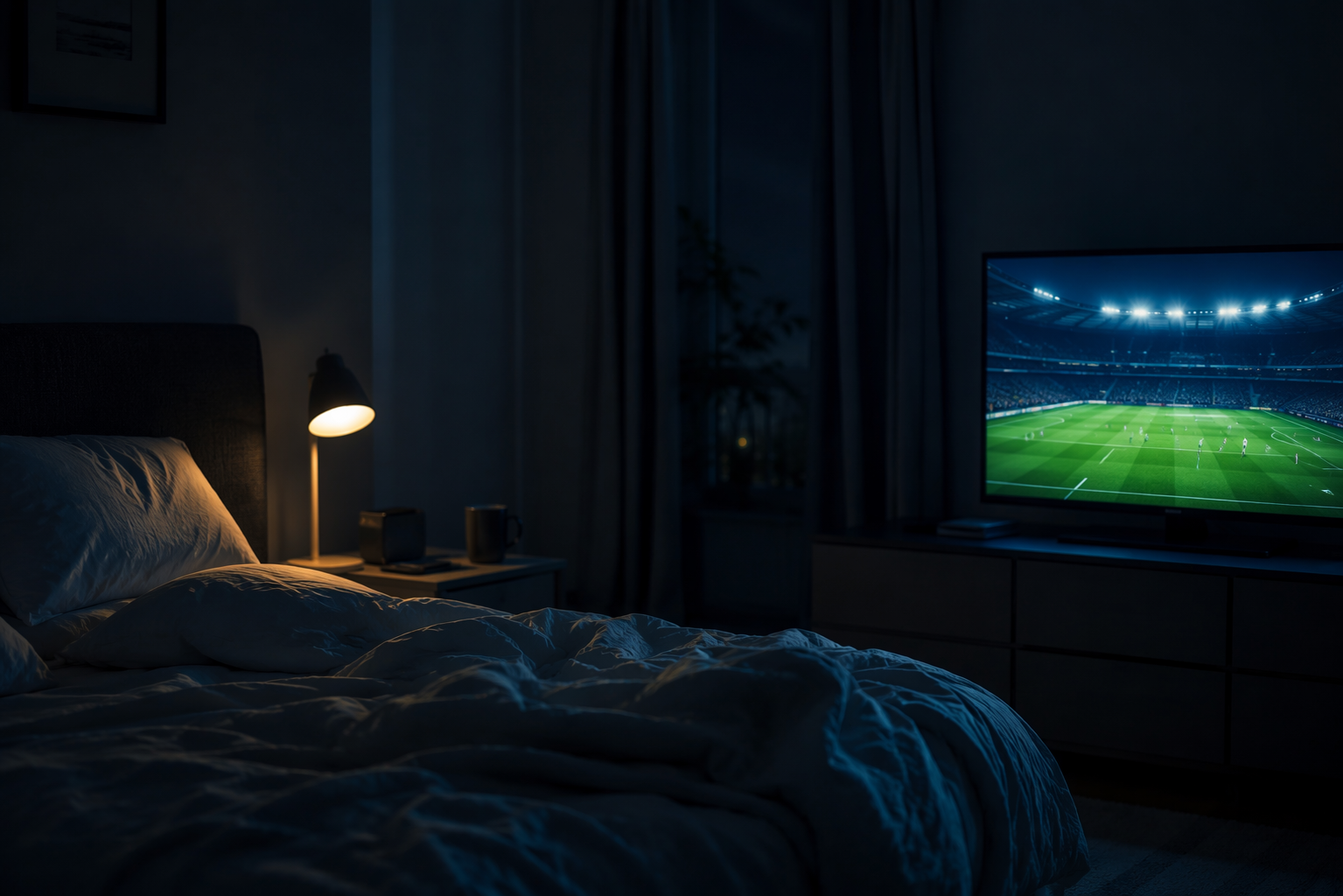
The Sleep Tax Is Real, But Keep It in Scale
The Sleep Charity has framed major tournament viewing as a kind of “World Cup sleep tax,” ranking countries by the disruption created when matches land outside normal sleep hours.[6] That phrase is useful because it names the cost. It is less useful if it turns one late match into a catastrophe.
Some tournament coverage has used large cumulative estimates — T3, for example, cited a possible 275 hours of sleep loss across a tournament viewing schedule.[7] Treat that kind of number as a journalistic scenario, not a clinical measurement of what one fan will lose. Your actual sleep cost depends on which matches you watch live, your time zone, your work schedule, how fast you fall asleep, and whether you keep late nights rare.
For one 10pm ET match, the more grounded question is whether you protected enough sleep opportunity around the game. If you want the broader recovery science, including how sleep debt behaves after short-term restriction, start with this explanation of sleep debt and recovery.
Adjusting the Schedule by US Time Zone
The 2026 World Cup spans venues across four US time zones: Eastern, Central, Mountain, and Pacific.[8] That matters because a 10pm ET kickoff is not equally punishing everywhere. The East Coast takes the main hit. Pacific viewers get something close to a normal evening game.
| Viewer time zone | Local kickoff | Best adjustment |
|---|---|---|
| ET | 10:00pm | Use the full split-sleep plan: 20-minute nap, 3pm caffeine cutoff, 8:00–9:30pm sleep bank, 1:00am lights out. |
| CT | 9:00pm | Consider a shorter 7:30–8:30pm rest window if you can sleep early; keep the 3pm caffeine cutoff. |
| MT | 8:00pm | You may not need a true sleep bank. A 20-minute afternoon nap and a firm post-match wind-down may be enough. |
| PT | 7:00pm | Treat it like a normal evening event. Protect bedtime after the match instead of forcing a split-sleep plan. |
Do not import UK match-night advice without rebuilding the clock. Much of the public sleep guidance around late soccer is written for BST viewers watching North American games. The physiology may travel; the schedule does not.
If Your Wake Time Is Earlier Than 7am
A 5am or 6am wake time changes the math. If you have an early commute, a clinical shift, a school drop-off, or a child who treats dawn as a personal brand, do not pretend the same plan produces the same result. Move the sleep bank earlier if possible, make the nap non-negotiable, and shorten the post-match landing to the essentials.
| Normal wake time | Practical change | Trade-off |
|---|---|---|
| 5:00am | Try a 7:30–9:00pm sleep bank and lights out by 12:50am after the match. | You may still be short. Avoid scheduling demanding morning work if you can. |
| 6:00am | Use the standard nap, start the sleep bank by 7:45 or 8:00pm, and keep decompression closer to 20 minutes. | The next day may require a quieter morning. |
| 7:00am | Use the full template. | This is the schedule the plan is built around. |
| Flexible morning | Let yourself sleep later, but cap it at about two hours past normal wake time. | Sleeping indefinitely can push the next bedtime later and extend the disruption. |
This is also where a deliberate schedule shift can help if you know several late matches are coming. The method is closer to planning around clock change than winging it on the night itself; this daylight saving sleep schedule shows the same idea in a different context.
Food, Supplements, and the Things That Should Stay Optional
Food can support the landing, but it should not become the plan. Nutrition-focused sleep guidance has discussed options such as tart cherry juice, walnuts, and Greek yogurt as sleep-friendly evening choices.[9] Fine. If one of those sits well with you, use a small portion after the game or earlier in the evening. Do not use it to justify a heavy late meal.
Melatonin deserves the same restraint. It may help some people with shifted timing, but it is not a remote control for sleep, and it can be the wrong tool depending on dose, timing, medications, and health history. If you are considering it for schedule shifting rather than occasional insomnia, read this guide on when melatonin works before treating it as part of a match-night routine.
The Next-Day Recovery Plan
The morning after a late match should be boring on purpose. Wake at the normal time if you have to. If you can sleep in, cap it at about two hours past your usual wake time. Get morning light. Hydrate. Keep caffeine to the morning and early afternoon. Do not take a long late-day nap unless you are willing to make the next bedtime harder.
Bedtime Sleep Calculator’s recovery guidance describes a short post-event recovery arc that can improve over the next couple of nights rather than instantly disappearing the next morning.[10] That is the right expectation for one late match. You can feel mostly functional after a well-managed split night and still carry some sleep pressure into the next day.
For a more detailed look at why a single short night may take more than one night to fully normalize, see this explanation of sleep debt recovery nights. For the match plan itself, keep the recovery simple: cap the lie-in, get light, avoid late caffeine, return to the normal bedtime, and let the next couple of nights do their work.
References
- USA vs Türkiye, Stars and Stripes FC.
- World Cup Sleep Planner, Hillarys.
- Doctor-backed tips for surviving late World Cup matches, Livi.
- Family nap scheduling strategies, Good Housekeeping UK.
- Four sleep strategies for late matches, GQ UK.
- World Cup sleep tax, The Sleep Charity.
- World Cup sleep loss estimate, T3.
- 2026 World Cup schedule and time zones, CBS Sports.
- Nutritionist-backed sleep foods, Vivere Life.
- Three-day recovery protocol, Bedtime Sleep Calculator.

Comments
Join the discussion with an anonymous comment.