
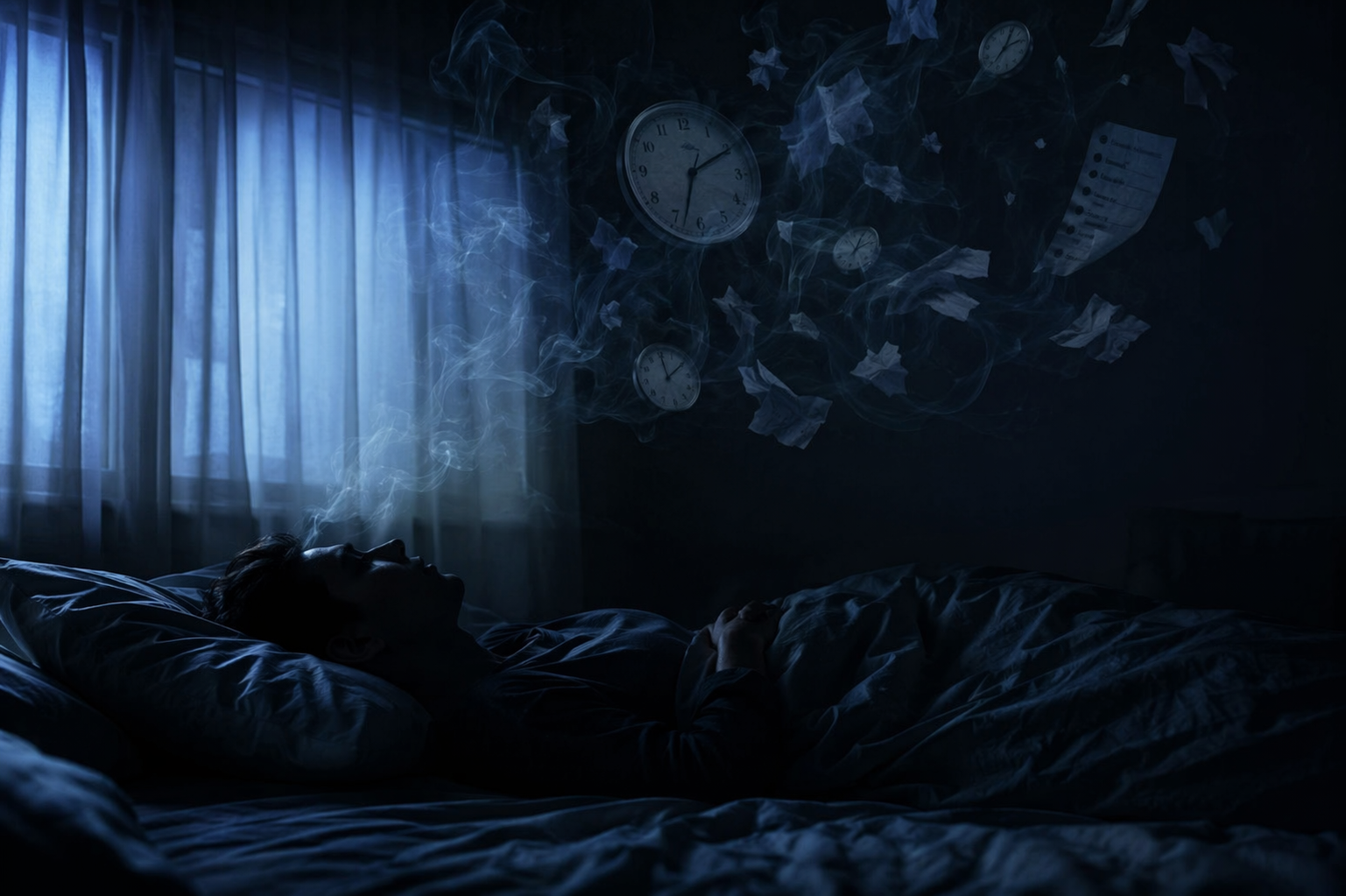
The adult pattern that points toward delayed sleep phase syndrome is usually not subtle: you get into bed at a reasonable hour, feel exhausted, and still remain awake until 2 or 3 AM. Then, if nobody forces a morning alarm, you can sleep a full night and wake up feeling closer to normal. The problem is not that sleep never comes. It comes late.
That distinction matters. Delayed sleep phase syndrome in adults, also called delayed sleep-wake phase disorder, is a circadian rhythm sleep-wake disorder. The sleep system is working, but its timing is shifted later than work, school, caregiving, and ordinary medical advice expect. Clinical descriptions commonly center on a sleep-wake schedule delayed by at least two hours compared with the desired or socially required schedule, lasting long enough to cause real impairment.

This is why DSPS often feels maddening from the inside. At midnight, the person may be doing everything that looks responsible. At 7 AM, the same person may look unreliable, late, foggy, or impossible to wake. If they sleep from 3 AM to 11 AM on a free day and function much better, the morning failure was not proof that they “didn’t care.” It was the predictable consequence of forcing an early wake time onto a delayed biological night.
The Pattern That Makes DSPS Different From Insomnia
Insomnia and DSPS can both involve lying awake in bed. The difference is what happens when the clock is allowed to move. In many insomnia patterns, the person may still sleep poorly even when the schedule is flexible: sleep is fragmented, short, anxious, or unrefreshing. In DSPS, the more revealing feature is delayed but otherwise fairly normal sleep. When the person follows their own late schedule, sleep quality and duration can normalize.
The American Academy of Sleep Medicine’s patient education material describes delayed sleep-wake phase as a pattern in which the major sleep period is delayed, the person has trouble falling asleep and waking at conventional times, and sleep improves when they can follow the delayed schedule.[1] Mayo Clinic similarly describes delayed sleep phase as an internal sleep clock delay that causes difficulty falling asleep and waking at desired times.[2]
| Pattern | More consistent with DSPS | More consistent with another sleep problem |
|---|---|---|
| Sleep onset | Usually cannot fall asleep until very late, often early morning | Variable timing, or difficulty sleeping at many different clock times |
| Free schedule | Sleeps better and long enough when allowed to sleep late | Still sleeps poorly even without an early alarm |
| Morning function | Severe sleep inertia, missed alarms, lateness, cognitive fog when forced up early | May be tired for other reasons, including short sleep, fragmented sleep, mood symptoms, or another disorder |
| Duration | Chronic pattern, not just a stressful week or a few late nights | Recent, inconsistent, or clearly tied to a temporary trigger |
| Clinical question | Is the body clock delayed? | Is sleep being disrupted by insomnia, apnea, restless legs, mood disorder, substances, schedule changes, or environment? |
A person with DSPS may still develop insomnia on top of it. Years of failed bedtimes, alarm panic, and being judged for lateness can train the bed into a place of dread. But the diagnostic starting point is the timing pattern, not the moral interpretation of the morning.
What Clinicians Look For Before Calling It DSPS
A DSPS diagnosis is not made from being a night owl once, preferring quiet evenings, or staying up late because the house finally calms down. Clinical criteria require a persistent delay, impairment, improvement when the schedule is unconstrained, and no better explanation from another disorder, medication, substance, or sleep condition. AASM material describes symptoms persisting for at least three months as part of the diagnostic picture.[1]
- A consistent inability to fall asleep at the desired or required bedtime
- A sleep-wake schedule delayed by at least two hours compared with the needed schedule
- Marked difficulty waking for morning obligations
- Normal or near-normal sleep duration and quality when allowed to sleep on the delayed schedule
- Symptoms lasting at least three months
- The pattern not being better explained by another medical, psychiatric, sleep, medication, or substance-related cause
That last point does a lot of work. Depression can shift sleep later or make mornings nearly impossible. ADHD can bring irregular routines, evening alertness, and difficulty disengaging. Anxiety can make bedtime noisy and tense. Shift work can move the body clock because the light-dark schedule has been moved. Alcohol, cannabis, stimulants, sedatives, and some medications can change sleep timing or sleep quality. None of those possibilities invalidates DSPS, but they prevent a rushed diagnosis.
The practical question is not “Do I have bad sleep hygiene?” It is “What happens to my sleep when timing pressure is removed, and is that pattern stable enough to document?”
The Diagnostic Route: Diary First, Then Objective Timing When Needed
The first useful test is often not a laboratory test. It is a sleep diary. AASM recommends keeping a sleep diary for at least seven days before evaluation, and many clinicians prefer longer if the schedule varies across workdays and free days.[1] The point is to capture bedtimes, estimated sleep onset, wake times, naps, alarms, missed obligations, caffeine or alcohol use, medications, and days when the person could sleep freely.
The free days are not a loophole; they are evidence. If sleep repeatedly shifts late and then becomes more consolidated, the record begins to separate circadian delay from a generalized inability to sleep. If the diary shows a different pattern every few nights, frequent awakenings, very short sleep no matter the schedule, or symptoms such as choking, leg discomfort, or unusual behaviors during sleep, DSPS may not be the main explanation.
Actigraphy can add another layer. A person wears a small device, often on the wrist, that estimates rest and activity patterns over multiple days. It cannot read the mind or prove sleep stage, but it can show whether the body is repeatedly inactive and active on a delayed schedule. Mayo Clinic lists actigraphy among the tools used to help diagnose delayed sleep phase.[3]
The strongest circadian marker is dim light melatonin onset, or DLMO. In a DLMO assessment, saliva samples are collected, typically hourly, under dim-light conditions to see when melatonin begins to rise. That rise marks biological evening more directly than the clock on the wall. Mayo Clinic describes melatonin testing as one possible diagnostic tool for delayed sleep phase.[3]

Polysomnography, the overnight sleep study many people know from sleep apnea testing, is not required for every suspected DSPS case. It becomes useful when the story includes snoring, breathing pauses, severe sleep fragmentation, unusual movements, parasomnia symptoms, or daytime sleepiness that seems too intense to explain by timing alone. In that situation, the clinician is not trying to prove the person is “really tired.” They are checking whether another sleep disorder is riding underneath the delayed schedule.
Why the Body Clock Can Run Late
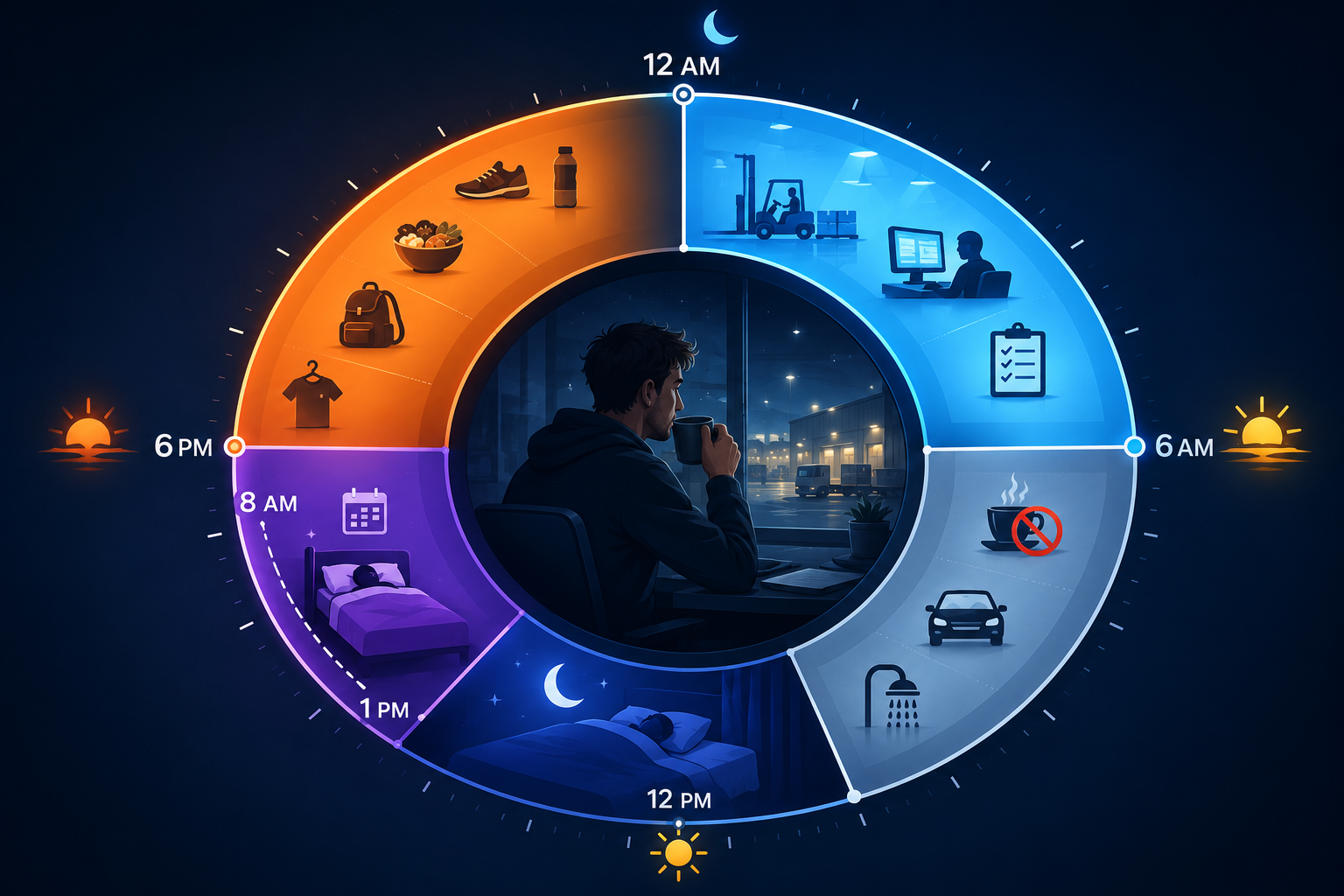
The biology of DSPS is useful because it changes the frame from obedience to timing. Human circadian rhythms are not exactly 24 hours by default; they are synchronized each day by light, darkness, activity, meals, and social timing. In delayed sleep-wake phase disorder, the internal system is shifted later, harder to advance, or both.
A 2023 review describes delayed sleep-wake phase disorder as being associated with a longer intrinsic circadian period, or tau, including tau values greater than 24.2 hours in affected people. A longer internal day makes it easier for the sleep period to drift later and harder to pull it earlier without carefully timed cues.[4]
The same review discusses genetic contributions, including variants involving PER2, one of the clock genes involved in circadian timing.[4] That does not mean every adult with DSPS needs genetic testing, or that a single gene explains the condition. It means the late schedule can be rooted in clock biology rather than preference.
Melatonin timing helps explain the lived experience. Melatonin does not knock a person unconscious, but its evening rise is one signal that the body is entering biological night. If that rise happens late, the person may be staring at a socially appropriate bedtime while their physiology is still sending a “not yet” signal. Trying harder at 10:30 PM does not reliably change the timing of biological evening.
Light exposure matters here, but it deserves more precision than the usual scolding about screens. Evening light can push the circadian system later, and morning light can help anchor it earlier. Screens may contribute through light, stimulation, social engagement, and time displacement. Reducing the whole problem to blue light alone is too neat; a broader explanation of screen-related sleep disruption is covered in why blue light is not the only reason screens affect sleep.
A Delayed Bedtime Does Not Always Mean a Delayed Melatonin Clock
One of the more useful complications in the research is that not every person who meets clinical criteria appears to have the same circadian pattern. In a 2017 study of delayed sleep phase disorder, about 40% of cases were described as “circadian-entrained”: their DLMO timing was not delayed in the expected way, but the gap between melatonin onset and actual sleep onset was enlarged.[5]
That finding matters because it prevents an overly tidy story. Some adults may have a genuinely delayed internal night. Others may have a body clock that starts biological evening at a more typical time, while behavior, arousal, light exposure, routines, or other factors stretch the interval before sleep. Both groups can look similar at the level of missed mornings. They may not need the same clinical emphasis.
This is also why DLMO testing is not just a research luxury when the diagnosis is unclear. A diary can show when someone sleeps. Actigraphy can show when they are inactive. DLMO can show whether biological night itself is late.
How Common Is DSPS in Adults?
The prevalence numbers should be handled carefully. Cleveland Clinic summarizes estimates of 0.17% to 1.51% in the general adult population and about 3.3% in young adults, while noting that delayed sleep phase is most common in adolescents and young adults.[6] Those figures come from older and mixed research contexts, so they are better read as rough boundaries than as a crisp current count for 2026.
The same clinical overview describes a decline after about age 30 and a possible secondary peak among women ages 40 to 60.[6] That does not justify a clean sex-based rule. Research on sex differences has not settled into a simple answer, and adult sleep timing is shaped by work, caregiving, hormones, health conditions, light exposure, and opportunity to sleep.
A cautious reading is enough: DSPS is not rare in the sense of being exotic, but it is not the explanation for every late bedtime. The disorder label belongs to a chronic, impairing, clinically patterned delay.
Depression, ADHD, Racing Thoughts, and the Risk of Misdirection
Comorbidity can make DSPS harder to see. A person with depression may be unable to rise in the morning and may spend long hours awake at night. A person with ADHD may lose track of time, feel more alert late, or struggle to disengage from tasks. A person with anxiety may report racing thoughts in bed. Each of those can be real. None automatically proves that the sleep timing problem is only psychological or behavioral.
The 2023 review reports that more than 60% of adults with delayed sleep-wake phase disorder experience comorbid depression.[4] That overlap can cut both ways: depression may worsen sleep timing and sleep timing may worsen mood by creating chronic social jet lag, morning failure, and reduced daytime functioning. For readers trying to untangle mood and sleep, the broader depression and insomnia cycle is relevant, but DSPS has a different diagnostic center.
ADHD overlap also requires care. Cleveland Clinic states that about 75% of adults with ADHD have circadian rhythm disruptions.[6] ADDitude, discussing Spera et al. 2020, reports that 34 of 102 adults with ADHD met criteria for delayed sleep-wake phase disorder.[7] Those numbers do not mean ADHD equals DSPS. They mean clinicians should not dismiss a delayed circadian pattern just because attention symptoms are also present.
Racing thoughts are another trap. The 2023 review reports that 89% of adolescents with delayed sleep-wake phase disorder described racing thoughts in bed.[4] That finding is in adolescents, not adults, and it does not prove the same rate across adult patients. Still, it shows why bedtime mental activity can be misread. If someone is lying awake during their biological evening, the mind may feel busy because the body is not yet ready for sleep.
When Standard Sleep Hygiene Helps, and When It Misses the Point
A dark, cool bedroom, a consistent wind-down, and less chaotic evening stimulation are not useless. They can reduce friction around sleep. But they do not, by themselves, diagnose or correct a circadian phase delay. Telling an adult with DSPS to “just go to bed earlier” is like telling someone to arrive in another time zone without moving the flight.
This is where DSPS separates from ordinary advice about optimizing the sleep environment or using techniques to fall asleep faster. Those tools may help someone whose timing is roughly aligned but whose sleep is disrupted by stress, habits, or environment. In DSPS, the clinical task is to identify and, when appropriate, shift circadian timing.
Treatment is not the focus here, but diagnosis matters because DSPS management is time-sensitive in a literal sense. Light exposure, darkness, schedule anchoring, and melatonin may be used differently depending on the person’s circadian phase. Melatonin is not simply a stronger sleeping pill; timing and dose matter, and safety questions deserve their own discussion. Readers considering it should review evidence-based guidance on melatonin use in adults and long-term melatonin safety before experimenting.
What to Bring to a Sleep Professional
If the pattern has lasted for months, causes work or life impairment, and sleep normalizes when you follow a later schedule, DSPS is a plausible explanation worth documenting. The most useful preparation is concrete rather than dramatic.
- Keep at least seven days of sleep diary data, including workdays and free days.
- Record when you get into bed, when you think you fall asleep, when you wake, and when you get out of bed.
- Mark alarms, missed alarms, naps, caffeine, alcohol, cannabis, medications, and major light exposure changes.
- Note whether sleep quality improves when you sleep on your natural later schedule.
- List symptoms that could point elsewhere, including loud snoring, breathing pauses, leg discomfort, panic, mania symptoms, nightmares, or unusual behaviors during sleep.
The right clinician may still conclude that the main issue is insomnia, depression, ADHD-related dysregulation, shift-work misalignment, medication effects, sleep apnea, or another sleep condition. That is not a failed DSPS evaluation. It is the reason the evaluation exists.
But if the record shows the same delayed timing again and again, with better sleep when the schedule is allowed to shift late, the label “bad habits” is too thin. The next step is not another generic bedtime lecture. It is a circadian-focused assessment that asks where biological night is actually landing.
References
- Delayed Sleep-Wake Phase, AASM Sleep Education.
- Delayed sleep phase - Symptoms and causes, Mayo Clinic.
- Delayed sleep phase - Diagnosis and treatment, Mayo Clinic.
- Delayed sleep–wake phase disorder and its related sleep behaviors in the young generation, PMC, 2023.
- Prevalence of circadian misalignment and its association with depressive symptoms in delayed sleep phase disorder, PubMed, 2017.
- Delayed Sleep Phase Syndrome (DSPS): Symptoms & Treatment, Cleveland Clinic.
- Delayed Sleep Phase Syndrome: Signs, ADHD Link, Treatments, ADDitude.
Comments
Join the discussion with an anonymous comment.