
If your sleep falls apart during wildfire smoke even though you are not evacuating, not seeing flames, and not facing immediate danger, that does not make the reaction imaginary. It usually means two systems are being pressed at once. One is physical: smoke particles irritate the nose, sinuses, throat, and lower airways, making breathing during sleep more fragile. The other is threat-based: the smell of smoke, the color of the sky, the alerts, the closed windows, and the memory of earlier fire seasons keep the brain scanning for danger when it should be powering down.
That is the simplest answer to how wildfires affect sleep quality: they can make the airway less stable and the nervous system less willing to stand down. Those pathways are distinct, but in a real smoke season they rarely stay separate. A person can be coughing because the air is bad, checking the AQI because the air is bad, skipping the evening walk because the air is bad, and then lying awake with a dry mouth and a tight chest wondering whether the next alert will be worse.
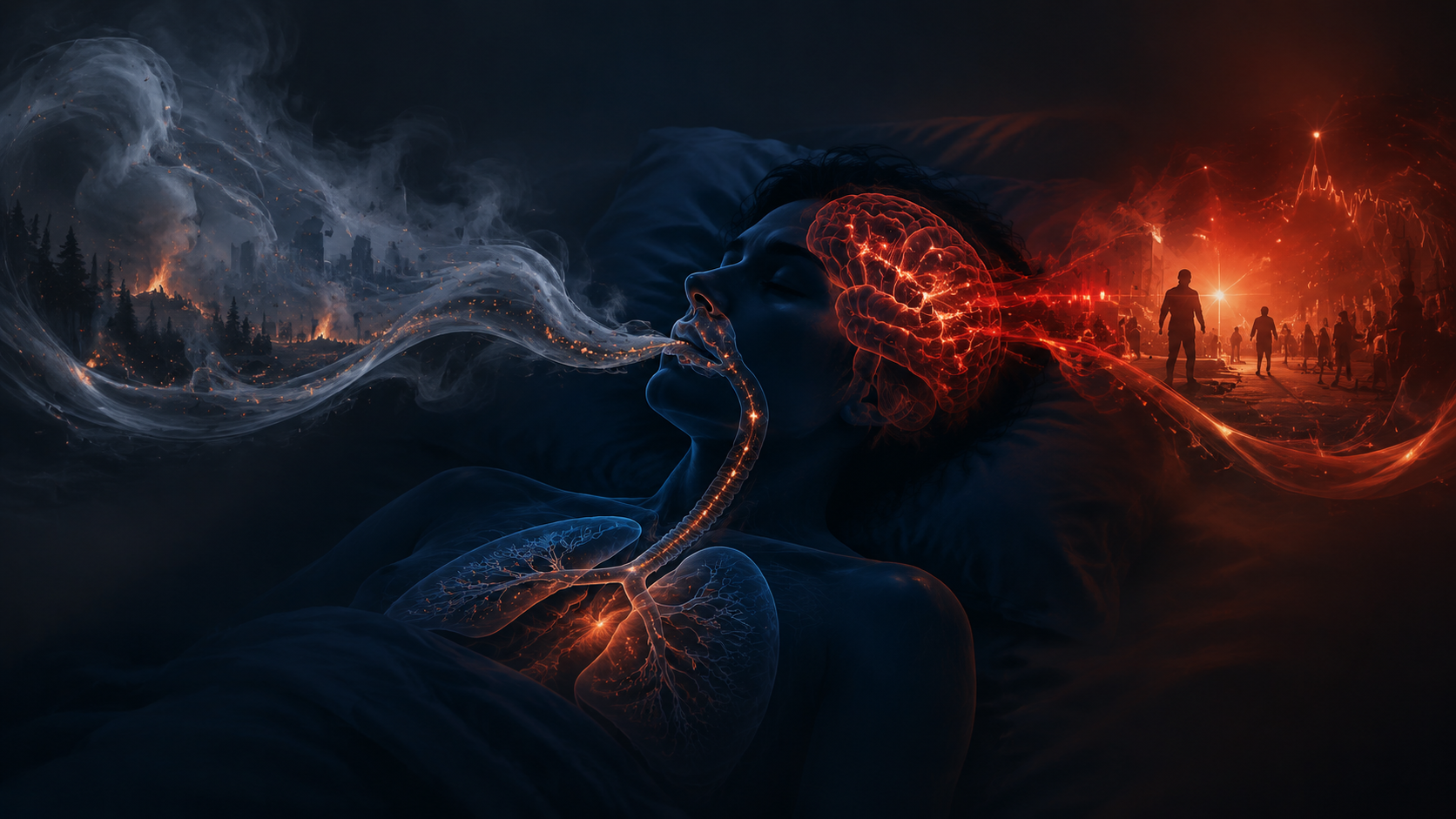
The Smoke Pathway Starts Before You Fall Asleep
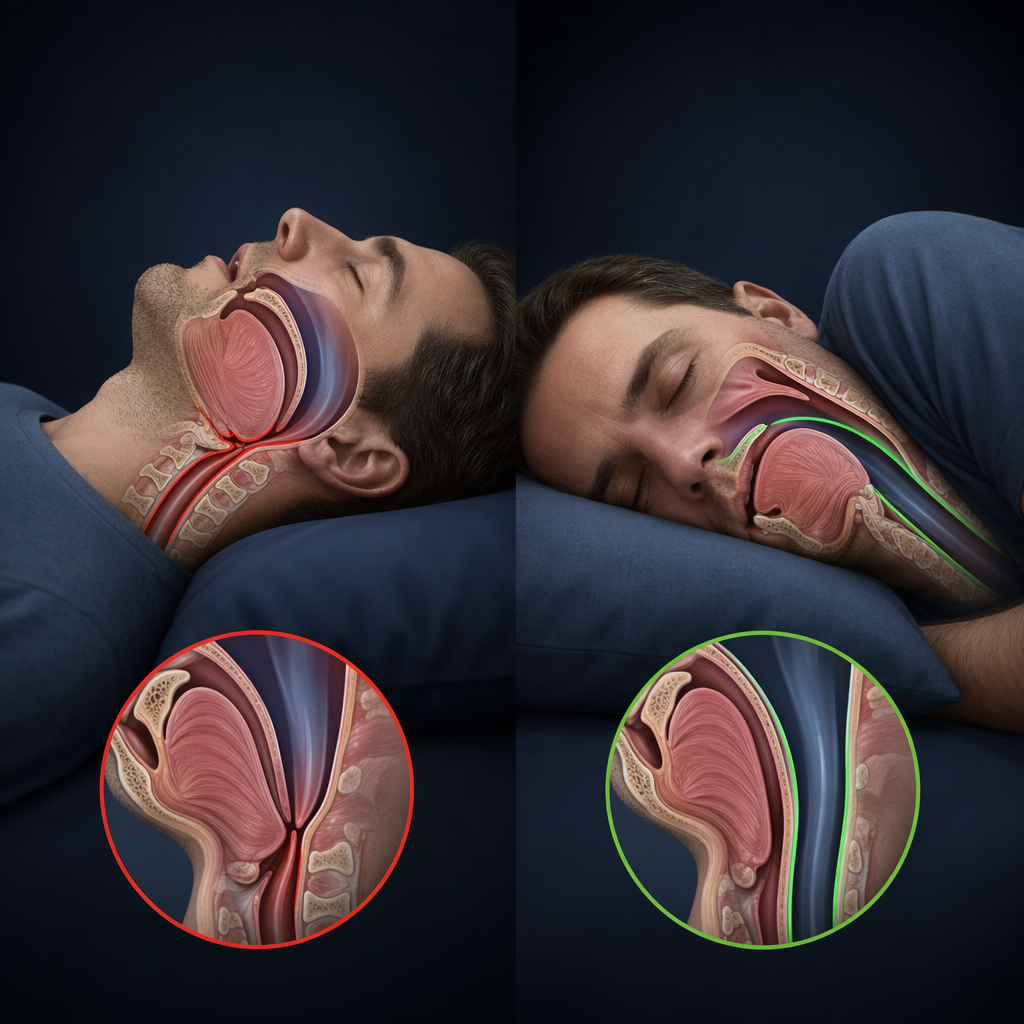
Wildfire smoke is not just an unpleasant smell in the room. Fine particulate matter, including PM2.5, can travel deep into the respiratory tract. Smaller particles and ultrafine particles can irritate airway tissue, promote nasal and sinus inflammation, and make the upper airway more prone to narrowing. At night, when muscle tone naturally falls and breathing is already more vulnerable, that irritation can show up as snoring, mouth breathing, coughing, more frequent awakenings, or the feeling that sleep is lighter than usual.
The strongest objective sleep evidence in the research brief does not come from a wildfire-only study, which matters. In the Multi-Ethnic Study of Atherosclerosis, 1,974 participants completed full polysomnography, and higher annual exposure to NO2 and PM2.5 was associated with increased odds of having an apnea-hypopnea index of at least 15, a threshold often used for clinically significant sleep apnea. The study also reported roughly 0.41 more apnea-hypopnea events per hour per unit increase in air pollution exposure.[1]
That finding gives the airway pathway weight because it used objective sleep testing rather than asking people how they slept. But it should not be stretched beyond what it studied. MESA examined ambient air pollution generally, not wildfire-specific smoke. Wildfire PM may differ in composition and toxicity, and the experience of living under smoke also includes alerts, closures, displacement risk, and fear. The study supports biological plausibility; it does not prove that every bad wildfire night is sleep apnea.
Other population-level evidence points in the same general direction. A UK Biobank analysis reported PM2.5 as an independent risk factor for sleep disorders and sleep duration changes.[2] Again, this is not the same as a person-by-person account of wildfire nights. It does, however, make it harder to dismiss smoke-related sleep disruption as merely annoyance or mood.
For someone already prone to sleep-disordered breathing, the added burden can be especially noticeable. A slightly swollen nasal passage can push breathing through the mouth. Mouth breathing can dry the throat. A congested airway can increase breathing effort. More breathing effort can lead to micro-awakenings that are too brief to remember clearly but long enough to make the next morning feel as if sleep never fully settled.
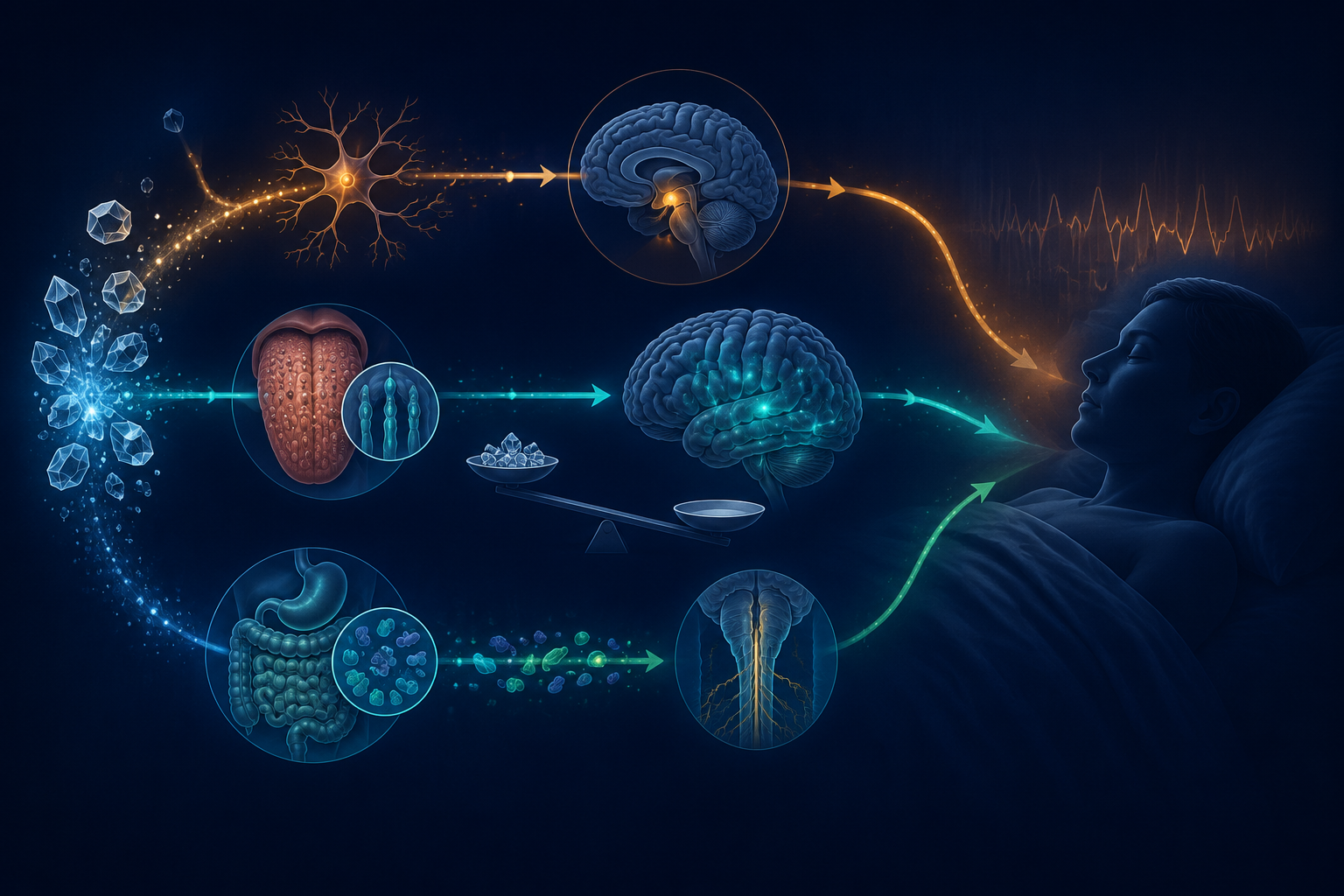
There is also a possible brain-facing pathway. Fine particles may affect the central nervous system, including through routes such as the cribriform plate, with potential effects on regions involved in sleep regulation. That mechanism is still harder to translate into ordinary household experience than the airway route. The more grounded conclusion is that smoke can plausibly disturb sleep both by making breathing less stable and by affecting inflammatory and neurologic systems that help regulate sleep.
Smoke Exposure Is Not the Same Thing as Wildfire Exposure
This distinction is easy to lose. Smoke exposure means the body is dealing with polluted air. Wildfire exposure can include smoke, but also the threat of evacuation, visible ash, sirens, power shutoffs, property loss, separation from community, blocked routines, and the knowledge that conditions may change overnight. Two people can inhale similar air and carry very different levels of threat.
A 2022 scoping review reported that more than 37% of adults in smoke-affected regions described disrupted sleep directly attributable to wildfire smoke.[3] That number is useful because it captures the everyday middle ground: not only the people whose homes burned, but also people living under smoke who found that their nights changed. It does not tell us exactly which part was airway irritation, which part was anxiety, and which part was routine disruption. It tells us the symptom is common enough to take seriously.
Qualitative wildfire studies help explain why the border between body and context gets blurry. Residents in the Northwest Territories described a record wildfire season as a “lost summer,” a phrase that carries more than inconvenience: closed windows, restricted movement, reduced outdoor activity, and the sense that ordinary seasonal life had been taken over by smoke.[4] In another study focused on smoke events, people described recurring negative thoughts triggered by the smell of smoke, isolation from community, and the inability to exercise outdoors as part of the pathway into poorer well-being and sleep.[5]
This is why the person who cleaned the vents, taped the window gap, and ran the purifier can still be awake at 2 a.m. The room may be safer than it was, and the brain may still be responding to the sensory evidence of danger: the odor that leaks in when a door opens, the orange light outside, the silence after outdoor plans disappear, the phone placed too close because an alert might matter.
The Hyperarousal Pathway Does Not Require Losing a Home
The psychological pathway is sometimes flattened into “stress,” which is too vague to be useful. During wildfire events, the sleep problem is often closer to hyperarousal: the brain and body remain prepared for threat. Heart rate, attention, muscle tension, and alertness stay too high for sleep to deepen easily. The person may feel exhausted and wired at the same time.
The wildfire sleep literature is still small, but the numbers that do exist are stark. A systematic review published in 2021 found that insomnia prevalence among wildfire survivors ranged from 63% to 72.5%, compared with an approximately 30% general adult baseline. Nightmares affected 33.3% to 46.5% of survivors, and the review reported a PTSD-linked difference: nightmares affected 46.5% of those with PTSD versus 12.3% of those without PTSD.[6]
Those figures should be held carefully. The review included only five studies, and much of the evidence was based on self-reported sleep. Wildfire survivors are also not the same group as everyone living downwind of smoke. Still, the review matters because it separates a familiar complaint from a casual explanation. Insomnia and nightmares are not fringe reactions after wildfire exposure; in the available survivor studies, they appear repeatedly and at high levels.[6]
The review also reported a dose-responsive proximity-exposure gradient, meaning sleep disturbance was not randomly distributed across everyone who heard about a fire. Greater exposure or proximity was associated with more sleep disruption.[6] That does not make proximity the only determinant. Smoke can travel far, prior trauma can sharpen threat perception, and vulnerable people may be affected even when maps say they are outside the most obvious danger zone.
Fear of imminent death, evacuation memories, and direct danger are powerful drivers of this pathway, but they are not the only ones. Smoke smell can become a cue. So can a red-flag warning, a helicopter overhead, an emergency app tone, or the social isolation that comes when outdoor gathering disappears. The brain learns patterns. If last year’s smoke meant danger, disruption, or loss, this year’s smoke may arrive with a body memory before any conscious reasoning catches up.
Why the Two Pathways Compound Each Other
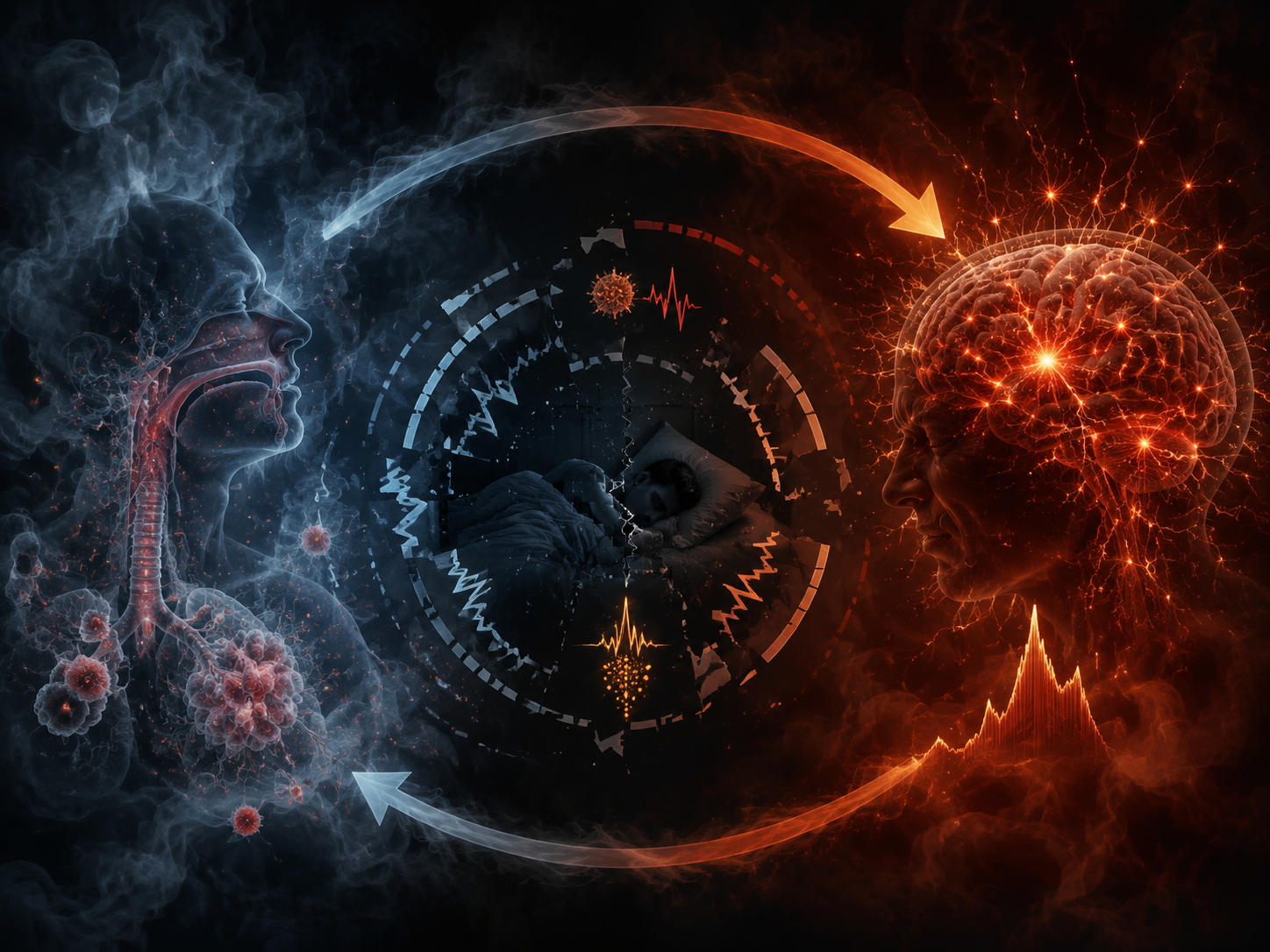
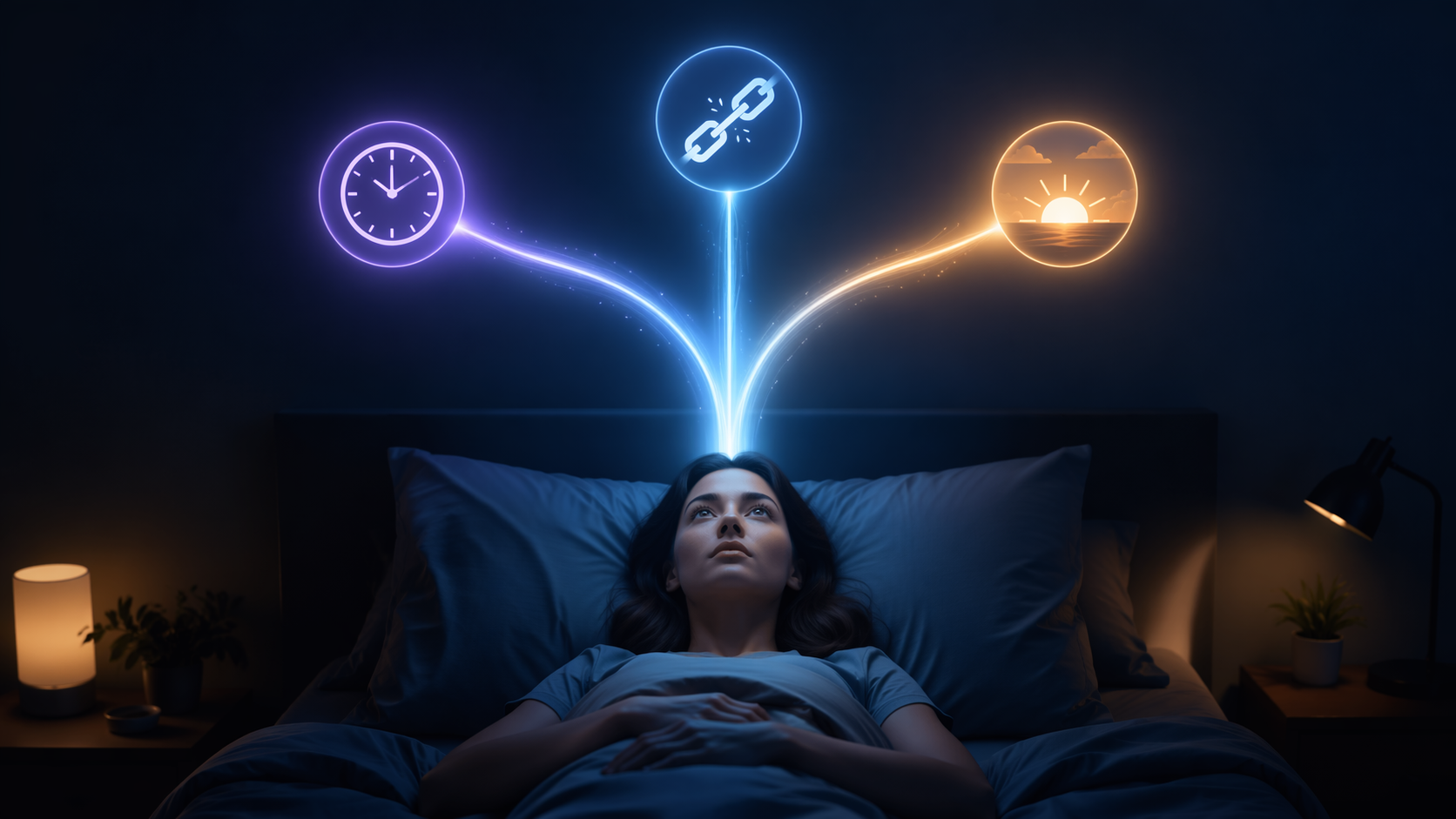
The difficult part is not that smoke and fear both disturb sleep. It is that each can make the other harder to recover from. A night of congested, fragmented breathing leaves the nervous system less buffered the next day. Poor sleep can raise cortisol and systemic inflammation. Higher inflammation and stress reactivity can make threat cues feel louder. More threat scanning then creates more awakenings, more checking, and less chance for sleep to become consolidated.
The loop can start from either side. A person may first notice the physical route: a scratchy throat, chest tightness, dry mouth, or more snoring. After several poor nights, the bed itself becomes associated with monitoring symptoms. Another person may begin with the psychological route: an alert, a memory of evacuation, a fear that the wind will shift. After lying awake, shallow breathing and muscle tension make the body feel more threatened, which confirms the alarm.
This interaction is one reason single-cause explanations feel so unsatisfying. If someone says the problem is only indoor air, the racing mind is left untreated. If someone says it is only anxiety, the inflamed airway is ignored. During fire season, the body does not sort symptoms into neat departments. Breathing, inflammation, vigilance, dreams, and awakenings can move together.
The ACT bushfire study adds another reminder that sleep disruption sits inside broader physical and mental health effects after bushfire events.[7] That does not prove one clean chain from smoke to insomnia or from trauma to nightmares in every person. It does support the more practical view: sleep is one of the places where respiratory burden, psychological threat, daily routine loss, and community disruption meet.
| Pathway | What pushes sleep off course | How it may feel at night |
|---|---|---|
| Airway inflammation | PM2.5 and ultrafine particles irritate nasal, sinus, throat, and lower airway tissue; breathing may become less stable during sleep. | Dry throat, congestion, coughing, mouth breathing, snoring, more awakenings, lighter sleep. |
| Trauma-hyperarousal | Threat cues such as smoke smell, alerts, evacuation memory, isolation, and fear keep the nervous system vigilant. | Racing thoughts, alert checking, trouble falling asleep, early waking, nightmares, feeling wired despite exhaustion. |
| Compounding loop | Fragmented sleep raises stress and inflammatory load; stress and inflammation make breathing and threat regulation more fragile. | Several bad nights in a row, stronger symptom monitoring, less restorative sleep, slower recovery. |
Who May Be More Vulnerable
The research brief does not support a simple ranking of who will sleep badly in smoke. It does suggest several forms of vulnerability. People with existing snoring, asthma-like symptoms, chronic sinus problems, or suspected sleep apnea may feel the airway pathway more strongly. People with prior disaster exposure, evacuation memory, direct fire exposure, or PTSD symptoms may feel the hyperarousal pathway more strongly.
A 2024 study of wildfire-exposed populations reported differences in anxiety, insomnia, and trauma-related outcomes, with women and older adults facing disproportionately higher post-wildfire insomnia risk.[8] That kind of finding should not be used to tell an individual what they must feel. It is more useful as a warning against treating wildfire sleep disruption as one uniform experience.
There is also a quieter vulnerability in people who are “not directly affected” in the way public attention usually recognizes. They may not qualify for the language of disaster loss, but their routines have still narrowed. They cannot open windows. They cannot exercise outside. They may avoid neighbors, keep children indoors, or sleep lightly because they are waiting for conditions to change. The absence of evacuation does not mean the absence of exposure.
What the Evidence Can and Cannot Say Yet
The clearest conclusion is not that wildfire smoke causes the same sleep disorder in everyone. The evidence is messier than that. Wildfire-sleep research is still relatively small, many studies are cross-sectional, and many rely on self-reported sleep rather than polysomnography. It is difficult to isolate smoke from evacuation, property loss, personal danger, heat, noise, power outages, and the wider disruption of a fire season.
Geography also matters. Much of the available research comes from the United States, Canada, and Australia, so it may not generalize cleanly to every region, housing type, climate, or emergency-response system. Repeated fire-season exposure over many years is especially hard to study well, even though that is exactly the pattern many people are now living through.
Still, the existing evidence is enough to reject the laziest explanation. Bad sleep during wildfire events is not necessarily “just stress,” and it is not necessarily “just smoke.” It can be a respiratory problem, a threat-regulation problem, or both at once.
Where Protection Has to Split
A useful response starts by asking which door is open. If the main signs are congestion, coughing, throat dryness, worsened snoring, or waking short of breath, the smoke side needs attention. The broader indoor-air pathway is covered in how indoor air quality affects sleep quality, and the alert-specific side of repeated monitoring is explored in how air quality alerts worsen sleep problems.
If the main signs are dread at bedtime, compulsive alert checking, nightmares, early-morning waking, or feeling unable to stop listening for danger, the hyperarousal side needs equal respect. General insomnia triage can start with identifying your insomnia pattern, while disaster-related insomnia has overlap with the CBT-I pathway discussed in how CBT-I breaks the anxiety cycle after an earthquake.
For smoke-season practical protection, a broader overview such as why wildfire smoke disrupts your sleep or a more protocol-oriented Code Purple guide may be more useful than trying to turn the mechanism into a checklist. The mechanism still matters because it keeps the response honest: filtering air helps the airway pathway, but it may not quiet learned threat; calming exercises may reduce arousal, but they do not remove particles from the room.
The most humane model is also the most accurate one. During wildfire season, sleep can be disrupted by what you breathe and by what your body believes it may need to survive. If both are active, both deserve protection.
References
- The association of ambient air pollution with sleep apnea: the Multi-Ethnic Study of Atherosclerosis. PMC. 2019.
- Effects of atmospheric particulate matter pollution on sleep disorders and sleep duration. PubMed.
- Wildfire Smoke Exposure and Human Health: Significant Gaps in Research for a Growing Public Health Issue. PMC. 2022.
- Lived experience of a record wildfire season in the Northwest Territories. PubMed.
- What can we do when the smoke rolls in?. PMC.
- A Systematic Review of the Impact of Wildfires on Sleep Disturbances. PMC. 2021.
- The 2019/2020 Australian Capital Territory Bushfire and Smoke Event: Experiences of People Living with Asthma. PMC. 2020.
- Differences in Anxiety, Insomnia, and Trauma Symptoms in Wildfire-Exposed Populations. MDPI. 2024.

Comments
Join the discussion with an anonymous comment.