
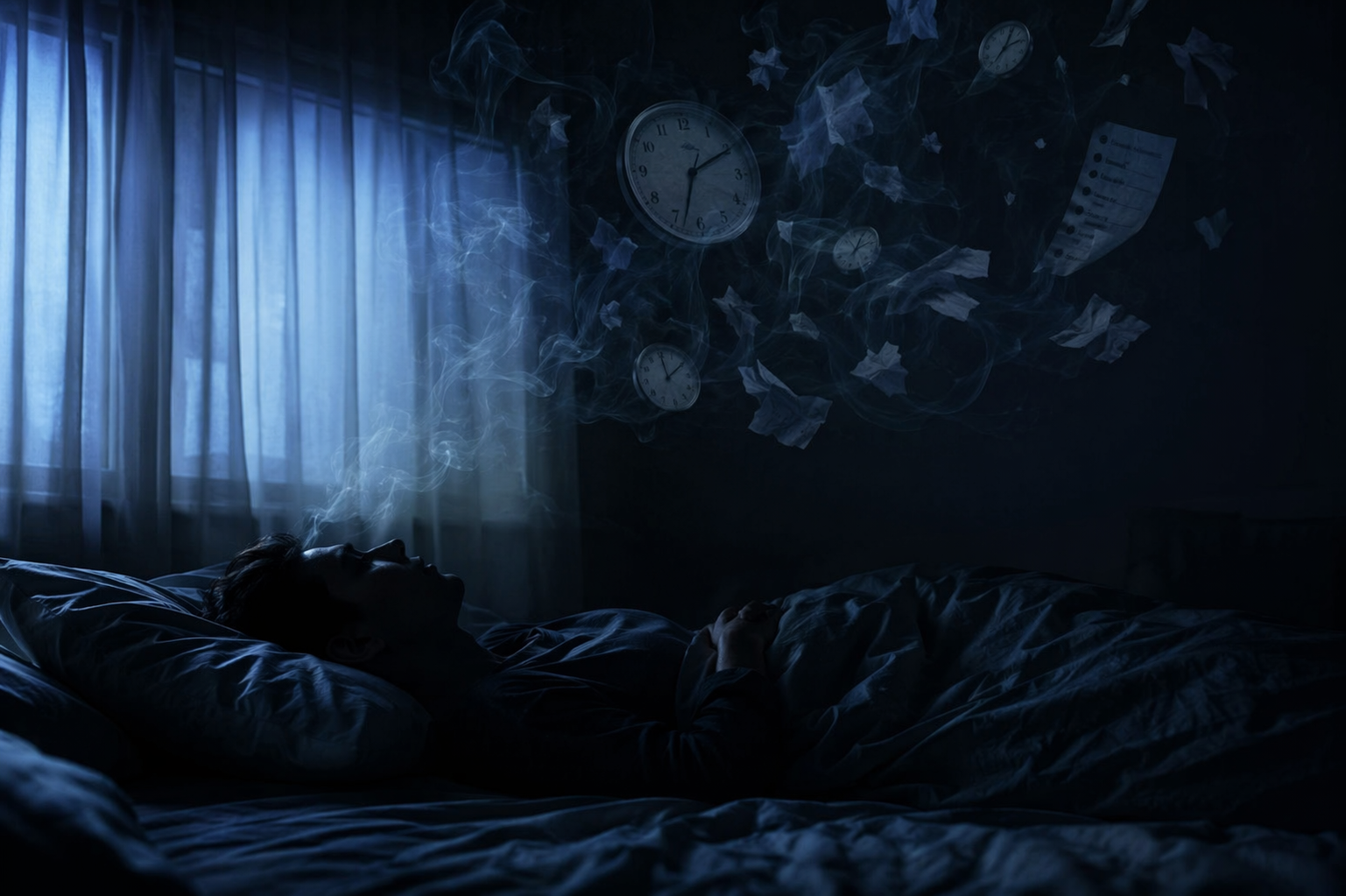
If you regularly fall asleep at 2 a.m. but still get enough hours, the uncomfortable question is not whether you have bad discipline. It is whether the timing itself carries a mental health cost. A large UK Biobank analysis led by Stanford sleep researcher Jamie Zeitzer makes that question harder to dismiss: in roughly 75,000 adults, very late sleep timing was associated with higher rates of depression and anxiety even among people whose natural chronotype was “night owl.”[1]
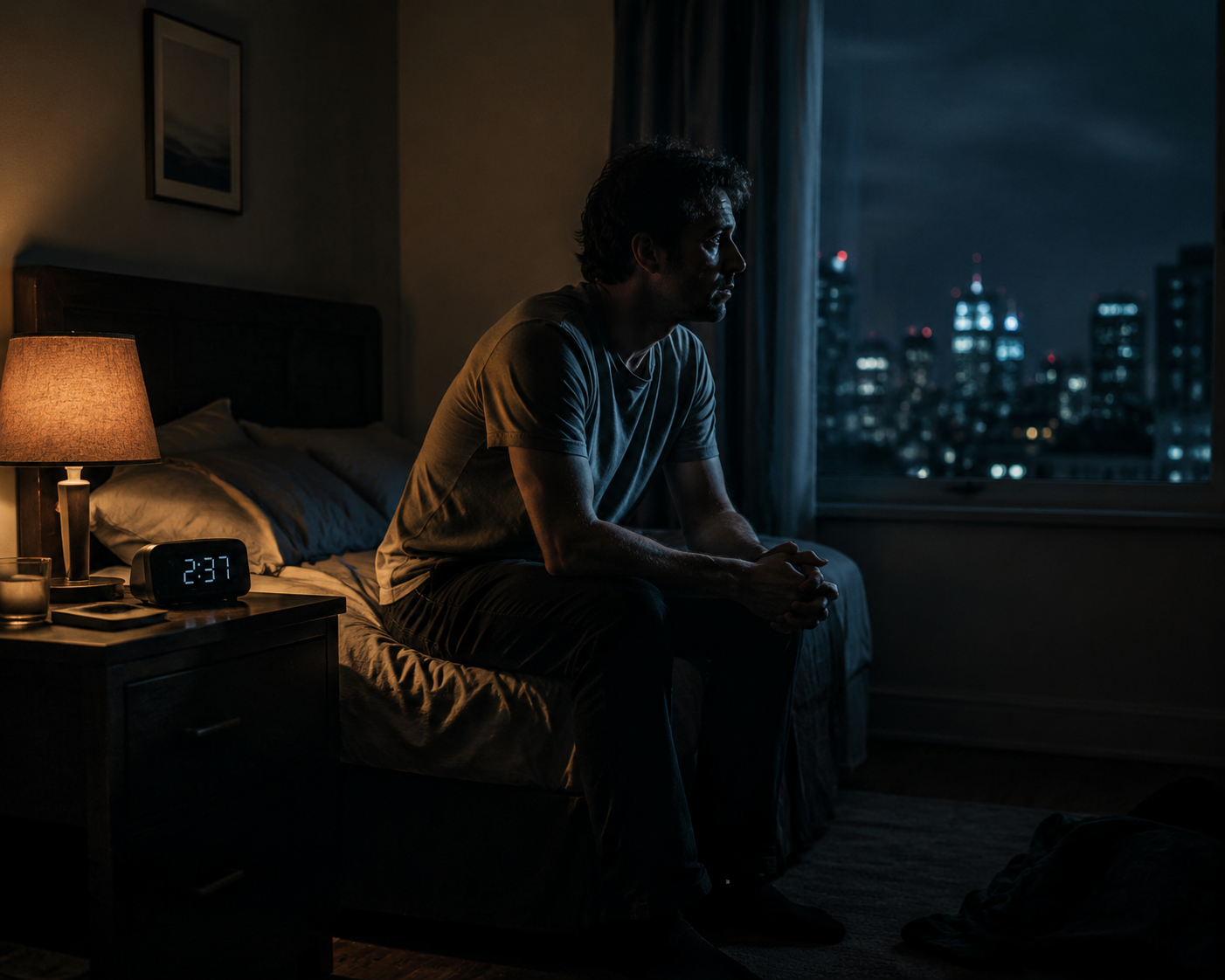
That result matters because it complicates both easy stories. It does not support the moralizing version, where late sleepers are simply choosing poorly. Chronotype is real; some people are naturally earlier or later than others. But it also does not support the comforting version, where matching your natural owl tendency automatically makes a very late bedtime harmless. The mental health sleep connection appears to involve more than total sleep duration.
The caution is just as important as the finding. The Zeitzer study was observational, so it cannot prove that going to bed late causes depression or anxiety. Mood symptoms can push bedtime later. Anxiety can keep someone scrolling, working, worrying, or avoiding the next day. Depression can flatten daytime structure and make night feel like the only quiet part of life. The study shows a meaningful association; it does not settle the direction of the arrow.
What “Late” Means When Chronotype Is Real
Sleep timing gets muddled because several different things are often treated as one habit. Sleep duration is how long you sleep. Sleep timing is when that sleep occurs. Chronotype is your biological tendency toward earlier or later sleep and alertness. Circadian alignment is how well your sleep, light exposure, work demands, meals, and social obligations line up with your internal clock. Cumulative wake time is how long your brain has been awake before you ask it to regulate emotion, judge risk, and make decisions.
A person can do well on sleep duration and still be poorly aligned. Someone might sleep from 2:30 a.m. to 10:30 a.m. on free days but need to be emotionally available, cognitively sharp, or socially functional in a world that starts much earlier. Another person might be a true night owl and still spend the last stretch of the day awake after many hours of accumulated stress. Those are different problems, and they do not respond to the same advice.
Chronotype is also not a personality label. Columbia Psychiatry describes chronotype as shaped partly by genetics, with people distributed across a lark-to-owl spectrum rather than sorted neatly into two camps.[2] Age matters too. Teenagers commonly shift later during puberty; Stanford’s reporting describes an approximately 2-hour delay in melatonin onset, which can collide with early school schedules.[1] When an adolescent cannot fall asleep at an adult-approved hour, the biology deserves to be considered before the character judgment arrives.
For adults whose sleep timing is persistently shifted late and difficult to move, the question may be less “Why won’t I try harder?” and more “Is this delayed sleep phase?” A condition-level explanation is different from a preference; readers who recognize that pattern may want a more specific guide to delayed sleep phase syndrome in adults.
Why the Zeitzer Finding Is So Unsettling
Before this kind of result, many night owls had a reasonable working theory: the problem was not lateness itself, but being forced to live against their clock. If an owl could sleep late enough, get adequate hours, and avoid early-morning obligations, maybe the risk would fade. The Stanford/UK Biobank result challenges that assumption because late timing remained associated with worse mental health outcomes even when it fit the person’s owl chronotype.[1]
The practical implication is not that every night owl must become a morning person. It is that “this is natural for me” may not be the whole safety test. A very late schedule can still place the most emotionally fragile part of wakefulness in the least supported part of the day: fewer people awake, fewer obligations that keep behavior structured, more private rumination, more frictionless access to screens or substances, and less immediate social correction when thoughts become distorted.
This is where sloppy sleep advice does harm. If a clinician, partner, parent, or employer hears “late bedtime is linked with depression and anxiety” and translates it into “just stop being lazy,” they have missed the point. The study points toward timing as a risk signal. It does not erase biology, shift work, caregiving, housing noise, trauma, medication effects, mood disorders, or the fact that insomnia itself can become self-reinforcing.
It also sits inside a broader public-health context. In a 2024 American Academy of Sleep Medicine survey, 74% of Americans reported disrupted sleep due to stress, 68% due to anxiety, and 55% due to depression.[3] Those figures do not prove that bedtime timing drives mood problems. They do show why people are asking sharper questions than “How many hours did you get?”
The “Mind After Midnight” Is a Chain, Not a Spell
Zeitzer has described a “mind after midnight” framework for why late wakefulness might carry risk. The idea is not that midnight has mystical power. It is that after about 16 hours awake, the systems that help regulate emotion and behavior may be operating under worse conditions: prefrontal control over threat and emotion circuits weakens, social guardrails thin out, and the stress of the day has had more time to accumulate.[1]
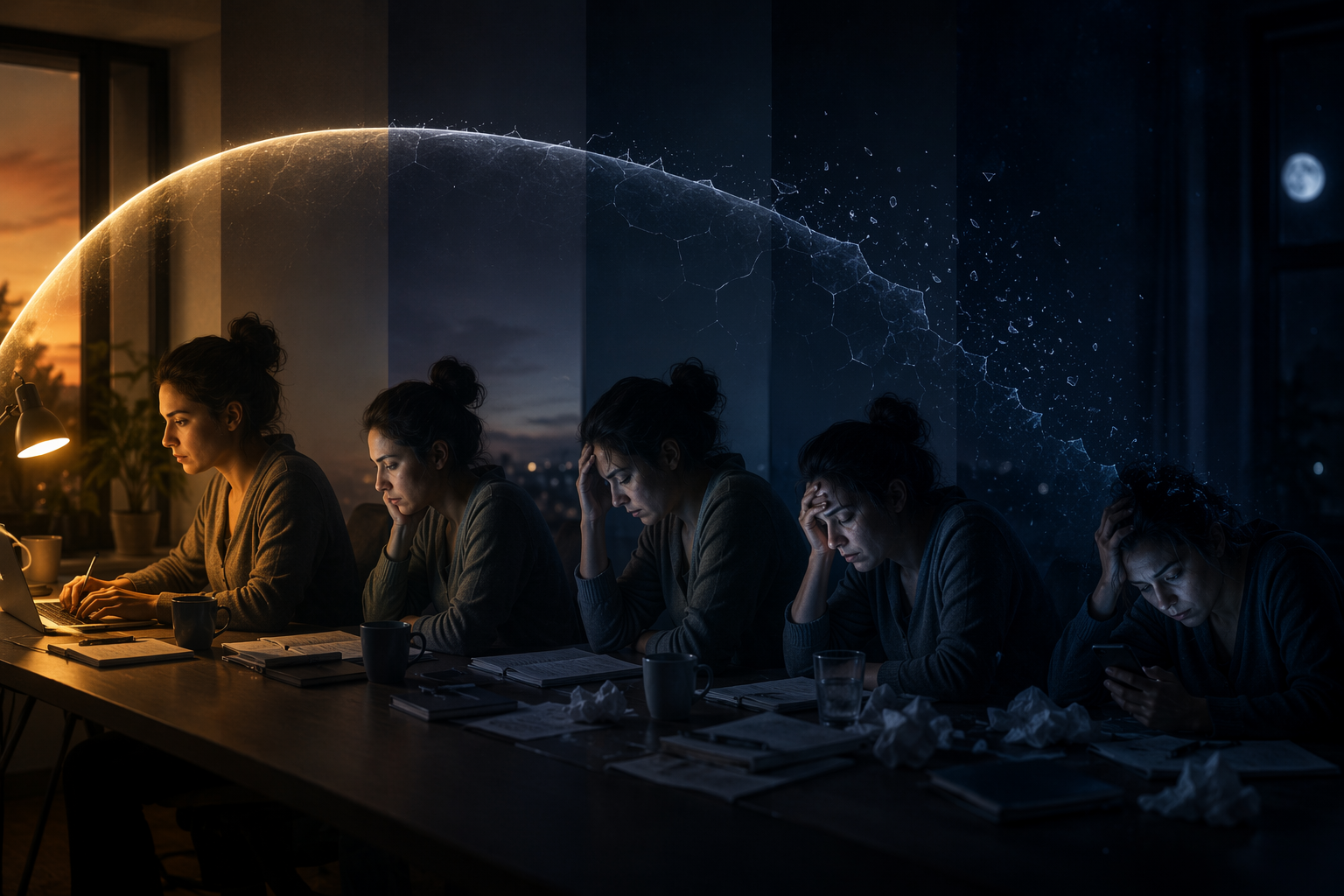
The prefrontal cortex is part of how people pause, reappraise, inhibit impulses, and choose a response that still makes sense tomorrow. When someone has been awake for a long time, that regulatory job gets harder. The amygdala and related emotional systems do not need to become “abnormal” for late-night thinking to darken; they only need less top-down help at the same moment the person is tired, alone, and saturated with the day’s unresolved material.
Social context changes too. At 3 p.m., a person’s choices are often constrained by work, school, errands, daylight, other people, and the need to keep functioning. At 2 a.m., fewer of those rails are present. A worried thought can become an hour of searching. A conflict can become a draft message that should not be sent. A low mood can meet an environment with fewer interruptions and more privacy. For someone already vulnerable to depression, anxiety, impulsivity, or substance use, that combination may matter.
This framework is plausible, but it is still a framework. It does not prove that a late bedtime caused a person’s anxiety. It does not mean everyone awake after midnight is in danger. It helps explain why very late wakefulness could be more than a neutral preference, especially when it occurs repeatedly and after long days.
Teenagers Show Why Timing Advice Can Be Biologically Unfair
Teen sleep is a useful example because it makes the conflict visible. During puberty, melatonin timing shifts later by roughly 2 hours, even as many school schedules still demand early wake times.[1] A teenager who cannot fall asleep at 9:30 p.m. may be responding to a delayed circadian signal, not making a simple choice to be difficult.
Stanford’s reporting also notes that up to 80% of teens are sleep-deprived and that teen depression rates have risen since 2020.[1] Those facts should not be flattened into “late bedtime causes teen depression.” The more careful conclusion is that adolescent biology, early social schedules, short sleep, and mood vulnerability can stack in the same direction. When the body clock shifts later but the alarm does not, the teen pays with sleep opportunity.
That same pattern appears in adult form when a night owl tries to live inside a morning schedule. The problem is not only bedtime; it is the mismatch between internal timing and external demand. If the person then tries to recover by sleeping very late on free days, their clock can drift even later, making the next forced early wake-up feel worse.
Shift Workers Are Not Failed Morning People
Any honest discussion of bedtime and mental health has to make room for people who cannot simply choose a conventional night. Stanford’s reporting cites Bureau of Labor Statistics data indicating that 16% of the U.S. employed population works nonstandard schedules, including 6% on evening shifts and 4% on overnight shifts.[1] For these workers, “go to bed earlier” may be not just unhelpful but structurally impossible.
Shift work is also associated with elevated rates of depression and anxiety in meta-analytic evidence, according to the same Stanford overview.[1] Here again, association is not a clean single-cause story. Night work can alter light exposure, meal timing, social contact, family routines, exercise, safety, and sleep duration. A nurse leaving a hospital at sunrise, a warehouse worker trying to sleep through neighborhood noise, and an emergency responder rotating between schedules are not facing one identical sleep problem.
This is why ordinary sleep hygiene can fail night workers. Advice built around morning sunlight, evening dimness, and a quiet nighttime bedroom assumes the person sleeps at night and works by day. If that assumption is wrong, the advice may push their circadian system in the wrong direction. A more relevant starting point is condition-specific guidance on why standard sleep hygiene fails night shift workers or, when symptoms are persistent and impairing, a stepped approach to shift work sleep disorder treatment.
If You Cannot Change the Clock, Align What You Can
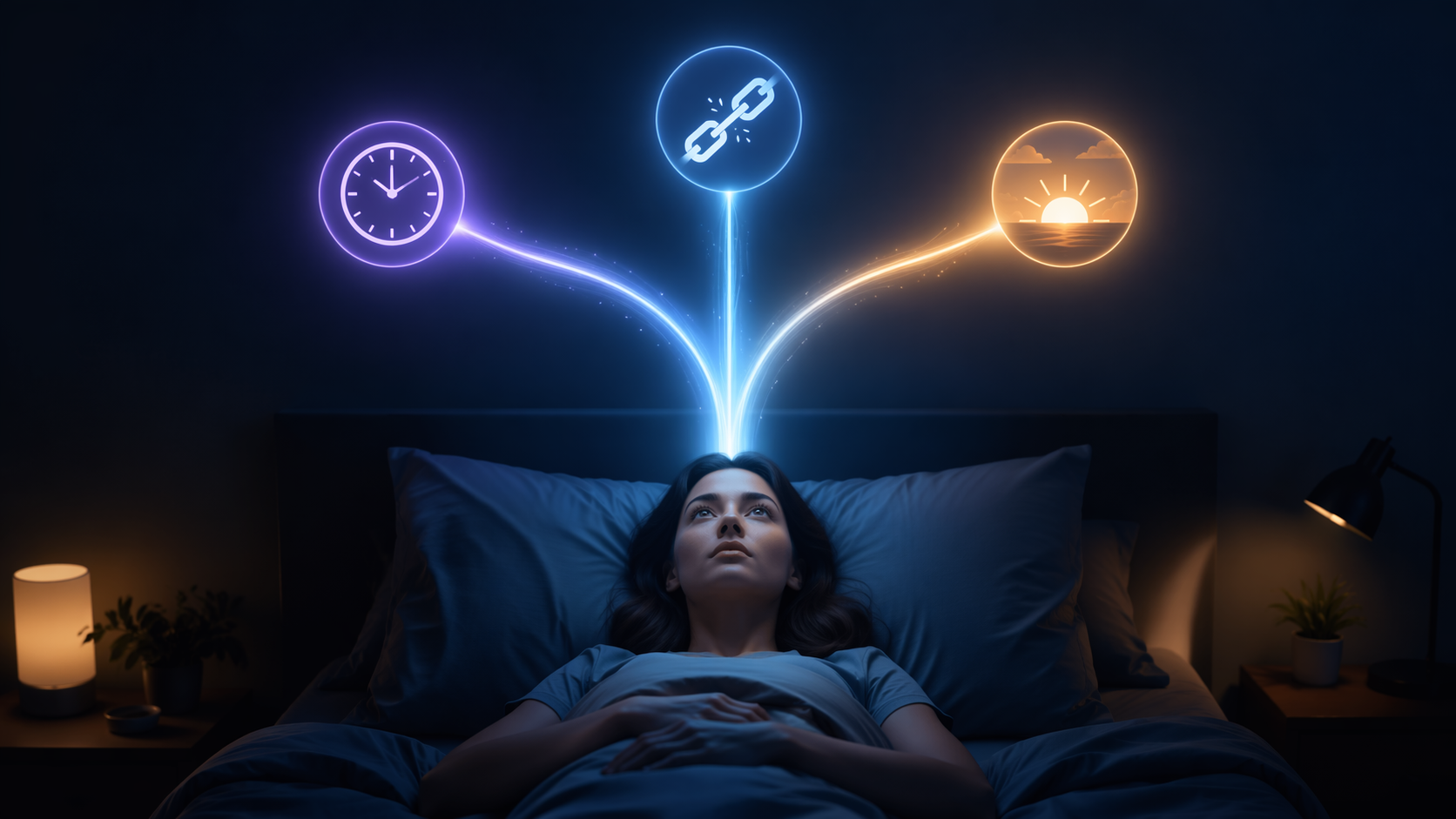
The responsible response to the evidence is not forced larkhood. It is to treat late timing as a risk signal and ask what part of the circadian environment is adjustable. For some people, that may mean gradually moving sleep earlier. For others, especially shift workers and people with delayed sleep phase, the more realistic goal is consistency, protected sleep opportunity, and better-timed light.
| Problem | More useful target |
|---|---|
| A very late but stable sleep window | Look for ways to reduce extreme lateness without cutting sleep short. |
| A rotating or overnight work schedule | Control light exposure and protect daytime sleep rather than following daytime-worker advice. |
| Delayed sleep phase pattern | Use circadian timing tools instead of treating the issue as ordinary insomnia. |
| Late-night mood spirals | Move vulnerable activities earlier and reduce unstructured awake time after long days. |
Consistency is not glamorous, but it matters because the circadian system learns from repetition. A sleep window that moves several hours between workdays and free days can create a recurring jet-lag effect. The first target is often not an ideal bedtime; it is a wake time and sleep opportunity that do not swing wildly unless the work schedule forces them to.
Light timing is the stronger lever. Bright light tells the brain when to be alert; darkness helps permit the biological night. For a day worker trying to move earlier, morning light and dimmer late-evening light usually make sense. For a night-shift worker, the timing may need to be reversed or carefully managed so that daylight on the commute home does not tell the brain to wake up just before planned sleep. This is one reason shift workers often need a different playbook, such as rethinking sleep hygiene for shift work, rather than another generic bedtime checklist.
Melatonin belongs in this discussion, but not as a knockout pill. Its clearest role is as a timing signal. Taken at the wrong time, it may do little or even shift the clock in an unwanted direction. People considering it for delayed sleep phase, jet lag, or shift-related timing problems should think in terms of circadian timing, not sedation; a more specific explanation is available in when melatonin actually works for insomnia and in guidance on matching melatonin to the sleep problem.
The late-night behavior layer deserves attention too. If the “mind after midnight” framework is right, then reducing harm may mean moving high-risk decisions out of that window. Do conflict-heavy messaging earlier. Put financial decisions, alcohol, emotionally loaded searches, and work emails behind some friction. Make the last hour less socially isolated where possible. These are not cures for depression or anxiety, but they can reduce the number of important choices made when regulation is likely to be weaker.
So, Does Bedtime Affect Mental Health?
The best current answer is yes, timing appears to matter, and not only because late sleepers get fewer hours. The strongest cited finding here is observational: very late sleep timing was linked with higher depression and anxiety risk even among natural owls.[1] That should be enough to take timing seriously, but not enough to blame individuals or pretend every schedule can be moved into a conventional night.
For someone with a flexible schedule, the evidence raises a fair question: is a very late bedtime helping, or quietly worsening mood vulnerability? For someone with delayed sleep phase, the answer should start with circadian biology rather than shame. For someone on nights or rotating shifts, it means protecting sleep and managing light with the seriousness usually reserved for diet, medication, or workload. Bedtime can be a mental health risk signal without becoming a moral verdict.
References
- How sleep affects mental health (and vice versa): What the science says, Stanford Medicine, 2025.
- How Sleep Deprivation Impacts Mental Health, Columbia University Psychiatry.
- Stress, anxiety and depression survey shows mental health conditions disrupt a majority of Americans’ sleep, American Academy of Sleep Medicine.
Comments
Join the discussion with an anonymous comment.