
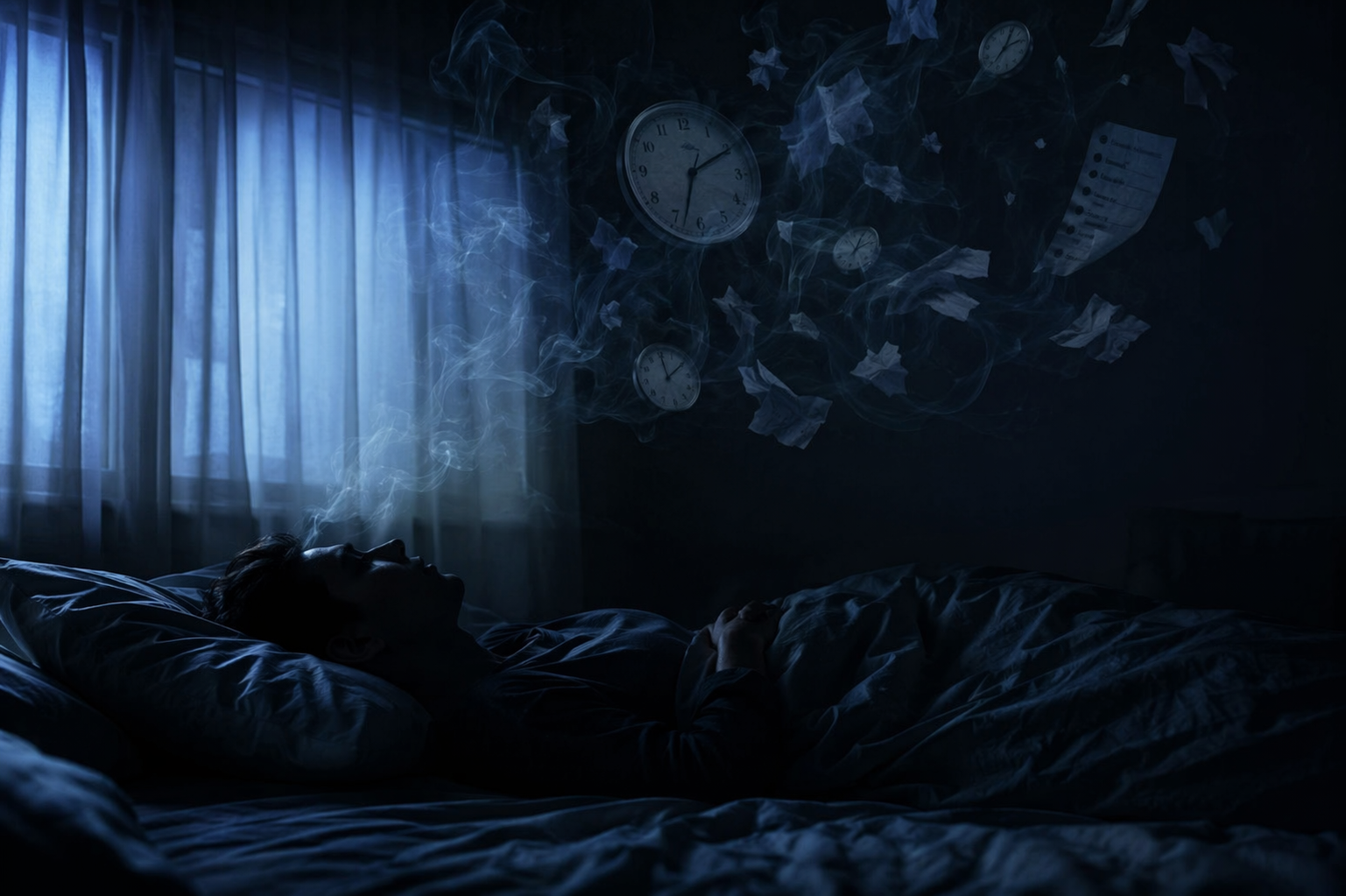
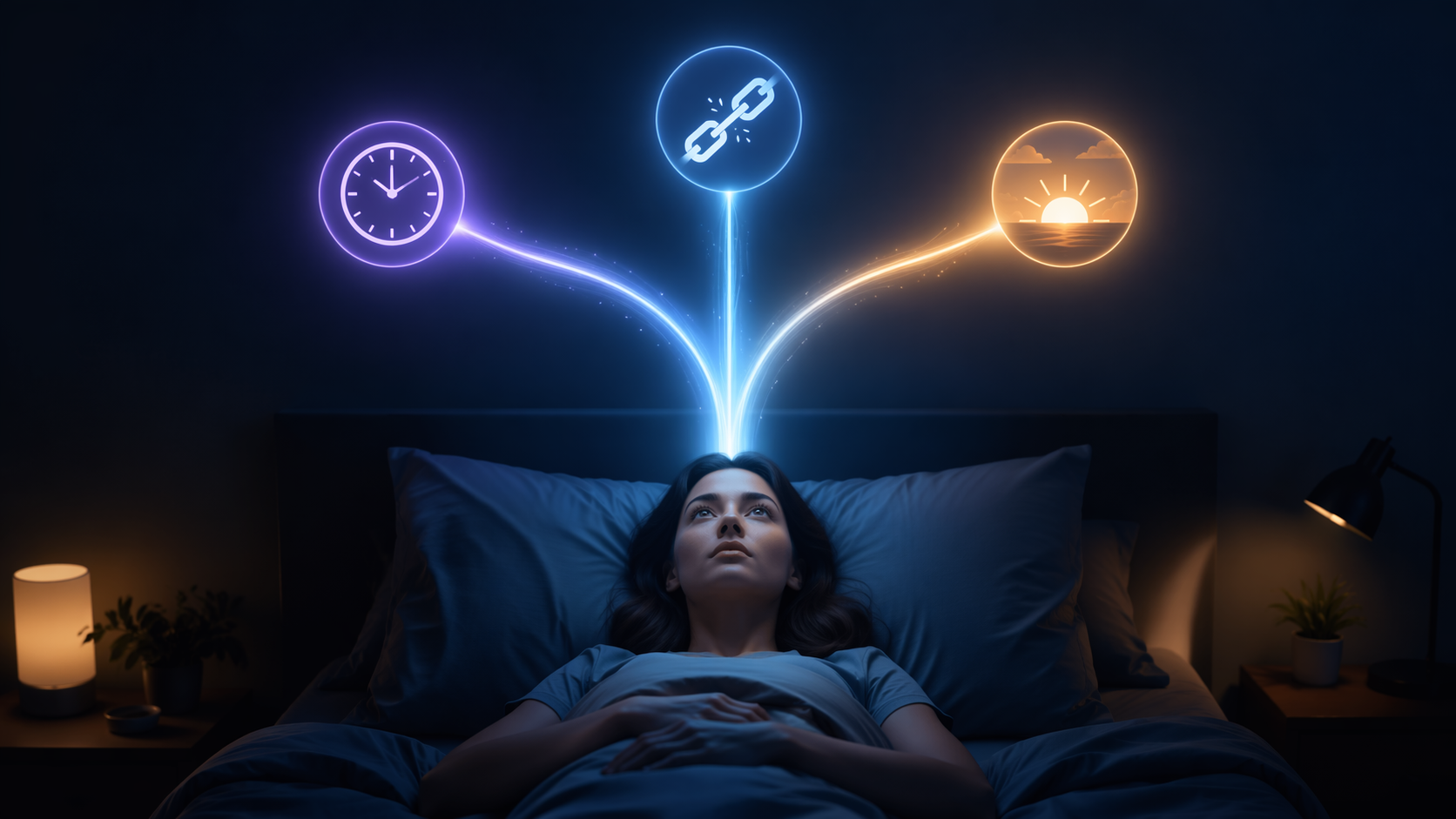
The odd thing about storm sleep is that two people can lie under the same roof and have opposite nights. One hears rain and distant thunder as a steady blanket of sound. The other wakes at 2:17 a.m. with a racing heart, a white flash in the room, or breathing data that looks worse than usual. Both are real. A thunderstorm disrupts sleep quality when one or more of its separate inputs pushes the sleeping brain or body out of stable sleep: sound, light, air-pressure change, and threat monitoring.
That is why the usual one-line advice — wear earplugs — is sometimes helpful and sometimes maddeningly incomplete. If the problem is a thunderclap startle, sound control belongs near the top of the list. If the problem is lightning in a dark-adapted room, earplugs will not touch it. If the problem shows up in obstructive apnea events during low-pressure weather, the conversation moves toward PAP data and clinical awareness. If the problem begins while the radar is still green and yellow miles away, the sleeper is no longer solving a noise problem; they are solving anticipatory arousal.
For the broader paradox — why storms calm some sleepers and unsettle others — see why storms keep some people awake and help others sleep. For a hands-on plan, the companion guide on how to sleep through a thunderstorm is the practical route. Here, the job is to sort the mechanisms so the fix matches the thing that is actually waking you.
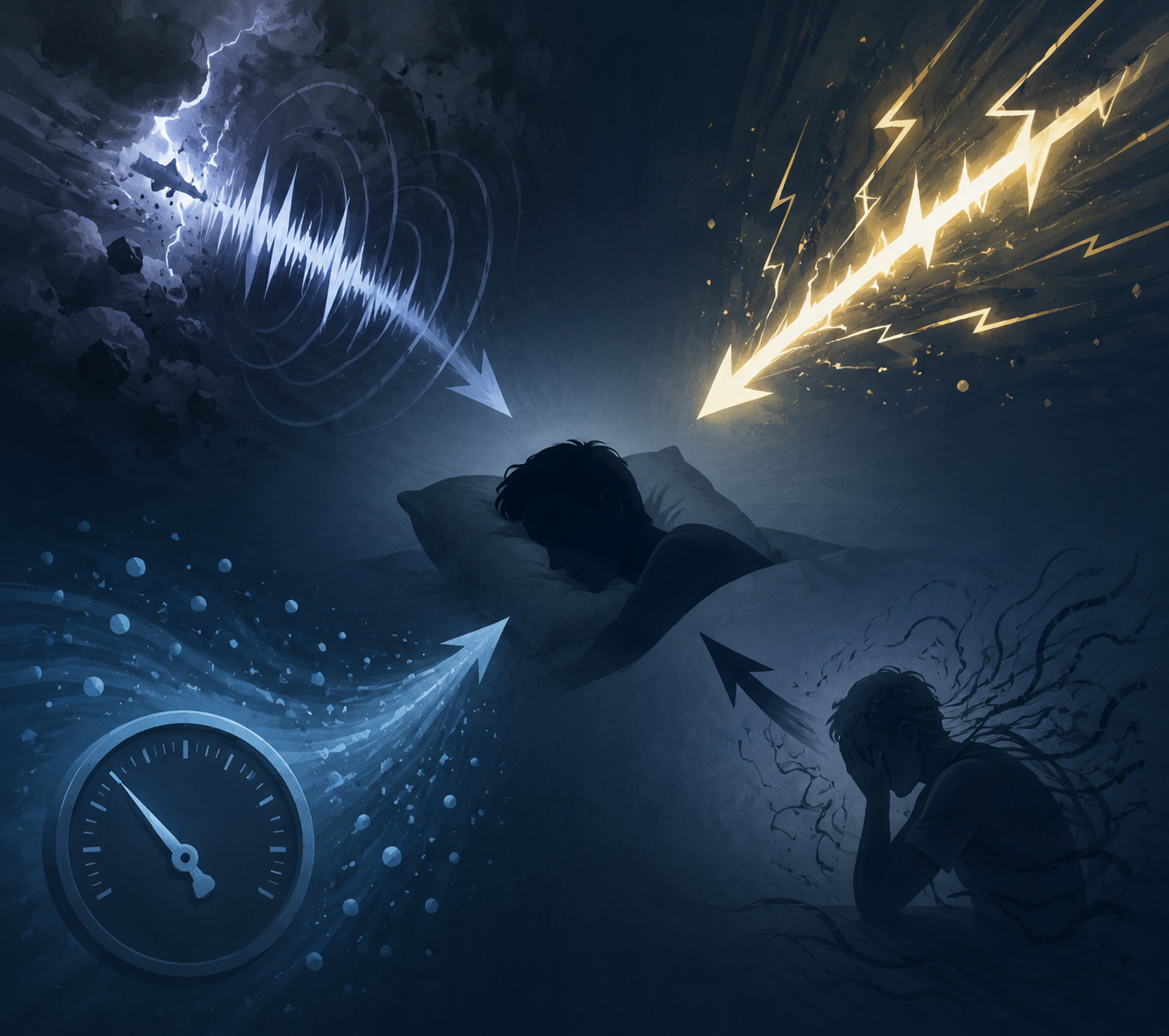
The Four Ways a Thunderstorm Gets Into Sleep
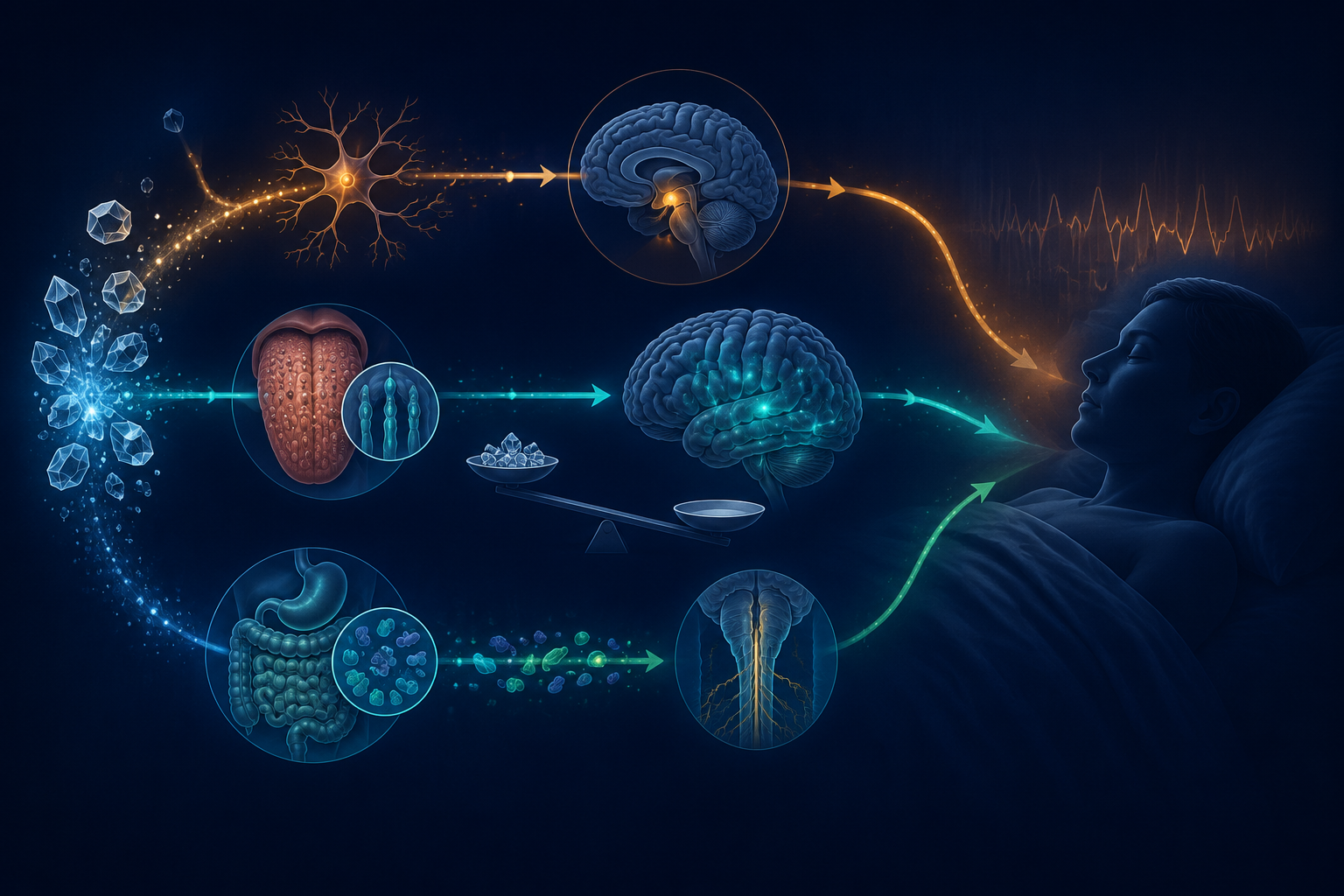
Use the table as the map. It is not a diagnosis, and one storm can trigger more than one row in the same person on the same night.
| Storm pathway | What it feels like | What is likely happening | Best first countermeasure | Important caveat |
|---|---|---|---|---|
| Thunder noise | You wake sharply at a crack, boom, or house-rattling rumble. | A sudden sound triggers cortical arousal or a startle response, fragmenting sleep even if you fall back asleep quickly. | Use steady sound masking, ear protection, and bedroom placement away from exposed windows. | White noise evidence is mixed; use it as a tool, not a guaranteed treatment. |
| Lightning flashes | You wake to the room lighting up, or you feel half-awake after repeated flashes. | High-contrast light pulses can interrupt the sleeping brain’s dark environment and trigger brief arousals. | Use blackout curtains, close gaps around window coverings, and consider a very dim nightlight to reduce contrast. | This is not only about brightness; contrast and repetition matter. |
| Barometric pressure drop | Sleep feels worse before or during the storm, especially if you have obstructive sleep apnea or pressure-sensitive symptoms. | Lower ambient pressure may worsen obstructive breathing vulnerability in some sleep-disordered-breathing patients. | Check PAP data patterns, confirm device settings with a clinician when relevant, and avoid assuming pressure is the cause in everyone. | The strongest study is specific to obstructive events in a severe clinic cohort, not a universal storm-sleep rule. |
| Anxiety and hyperarousal | You cannot settle before the storm, keep checking radar, or wake already braced for danger. | Threat monitoring competes with sleep onset and can keep the nervous system in a more vigilant state. | Prepare earlier, use reliable warning sources, set a clear safety threshold, and practice CBT-informed calming techniques. | Severe-weather warnings are a safety problem first, not a sleep-optimization problem. |
Thunder Can Fragment Sleep Without Lasting All Night
Noise does not need to continue for hours to damage a night. A single abrupt sound can pull the cortex into a lighter state, and repeated booms can keep sleep from settling into a stable pattern. Sleep Foundation describes environmental noise as a common sleep disruptor and notes that noise can cause awakenings, shifts between sleep stages, and changes in heart rate even when a person does not remember waking fully.[1]
Thunder is especially efficient at this because it is not a smooth sound. Rain can become a masking background; thunder arrives as a sudden change. The sleeping brain is not passively recording the room. It is still sorting sensory input for possible threat. A distant, low rumble may blend into rain. A close crack can behave more like an alarm.
The practical move is to reduce contrast in the soundscape. A fan, air purifier, or steady pink-noise track may help because it narrows the gap between quiet room and sudden thunder. Earplugs or noise-reducing earbuds can help when the sound itself is the dominant trigger. But the evidence for white noise as a sleep aid is not uniformly strong, so it is better to treat masking as a targeted experiment than as a cure-all. The on-site review of sleeping with a fan on walks through that evidence problem in more detail.
If sound is the main pathway, the clue is timing: you wake at the boom, not ten minutes before it. You may fall asleep easily before the storm and wake only when the thunder is close. That pattern points toward sound control, window distance, and masking before it points toward anxiety work or PAP troubleshooting. For more on how abrupt environmental noise disturbs sleep, the same physiology appears in other settings, including data-center noise and sleep disruption.
Lightning Is a Light Problem, Not Just a Weather Problem
Lightning wakes some people in a different way. The room is dark, the pupils are dark-adapted, and then the ceiling turns blue-white for a fraction of a second. The sleeper may not sit up fully. They may simply drift into lighter sleep, notice the next rumble, and remember the night as restless.
Light at night matters because the circadian system is tuned to darkness during the sleep period. Sleep Foundation notes that light exposure influences circadian timing and melatonin, the hormone that helps signal biological night.[1] A lightning flash is not the same exposure as sitting under a bright lamp for an hour, so it would be too strong to claim that every flash meaningfully suppresses melatonin. The cleaner explanation is more immediate: repeated, high-contrast flashes can produce micro-arousals and make the room feel unsafe or unstable.
That changes the fix. Blackout curtains help, but only if they control the edges where light leaks in. A sleep mask can be useful for people who tolerate it. A very dim nightlight sounds counterintuitive, but it can reduce the shock of contrast for some sleepers: the room is no longer pitch-black one second and lit by lightning the next. The nightlight should be dim and warm-toned, not bright enough to become its own sleep disruptor.
The Barometric-Pressure Story Is Real Enough to Respect, and Too Narrow to Generalize
Barometric pressure is the storm mechanism most likely to be overstated because it feels mysterious. People notice headaches, joint pain, sinus pressure, or worse sleep around weather changes, and it is tempting to roll all of that into one atmospheric explanation. The sleep-breathing evidence is more interesting precisely because it is narrower.
In a 2010 Journal of Clinical Sleep Medicine study, Doherty and colleagues reviewed 537 diagnostic polysomnography studies from the University of Washington Sleep Institute in Seattle, at about 200 feet elevation. The patients were not a general community sample; they had severe sleep-disordered breathing on average, with a mean apnea-hypopnea index of 39.6. The key finding was specific: the obstructive apnea index was higher in the lowest barometric-pressure quartile, 23.9 events per hour, than in the highest quartile, 17.1 events per hour, with p<0.01. The study also reported an approximately linear trend of 0.3 additional obstructive events per hour for each 1 mB drop in pressure.[2]
The pattern matters. Central apnea index and overall apnea-hypopnea index did not show the same significant association.[2] That makes the result less like a broad claim that “storms ruin sleep” and more like a clue about obstructive airway mechanics in vulnerable sleepers. In obstructive apnea, the airway collapses or narrows despite continued breathing effort. If lower ambient pressure changes the pressure relationships around the upper airway, it could plausibly make obstruction more likely in some people. The study does not prove that this happens to every person during every storm, and it does not tell us what a home sleeper without sleep apnea would show on an actigraphy watch.
Harvard Health’s discussion of thunderstorms and health placed sleep apnea patients in a broader risk context, noting that storms may increase cardiovascular strain in people with sleep apnea.[3] That does not mean ordinary thunderstorm sleep loss automatically becomes a cardiac event. It does mean that, for someone with known obstructive sleep apnea, storm nights deserve more respect than a generic “just use earplugs” answer.
The limitations are not footnotes; they are the boundary of the claim. This was a retrospective, single-lab study in Seattle, in a referred cohort with severe sleep-disordered breathing. Baseline pressure, altitude, weather patterns, referral bias, and the severity of the patients all matter. It is reasonable to say that low barometric pressure may worsen obstructive events in some sleep apnea patients. It is not reasonable to say that barometric pressure is the main reason thunderstorms disrupt sleep quality for everyone.
For CPAP and bilevel users, the practical question is pattern recognition. Did your device-reported obstructive events rise on storm nights or low-pressure nights? Did leaks change? Did you sleep in a different position because the storm kept you tense? Many modern PAP devices compensate for altitude, but settings, mask fit, congestion, and body position can still complicate the picture. If the pattern repeats, bring the data to a sleep clinician rather than adjusting pressure on your own. The deeper physiology is covered in why storms keep you awake.
Anxiety Can Start the Sleep Disruption Before the First Thunderclap
Storm anxiety changes the clock. Sound and lightning usually disturb sleep when the storm arrives. Anticipatory anxiety can begin while the air is still quiet. The person checks the radar, listens for wind, wonders whether the warning will wake them, and tries to fall asleep while also staying ready. Those are competing jobs.
Cleveland Clinic describes astraphobia as a specific fear of thunder and lightning and notes that specific phobias affect about 8% of U.S. adults over a 12-month period.[4] That figure is not the percentage of people whose sleep is disrupted by thunderstorms; it is broader than that. Still, it gives the experience a clinical frame. For some sleepers, the storm is not merely irritating. It is a feared event, and the body prepares accordingly.
Hyperarousal is the sleep-relevant piece. When the brain is monitoring for threat, sleep onset becomes harder. The sleeper may keep scanning for cues: Was that thunder closer? Did the wind shift? Is the alert tone on? Cortisol and sympathetic activation are often discussed as part of this stress physiology, but the practical observation is simpler: the nervous system is trying to keep one ear open.
The National Weather Service’s storm-anxiety guidance emphasizes preparation in advance and multiple reliable warning sources.[5] That recommendation is not just civic common sense; it is sleep hygiene for the anxious brain. A clear plan reduces the need to keep deciding. Know where you would go if a warning escalates. Know which alerts are allowed to wake you. Know which source you trust. Then stop asking the half-asleep brain to be the meteorologist.
CBT-informed calming techniques fit best after the safety plan is set, not instead of it. Slow breathing, progressive muscle relaxation, grounding exercises, and a prewritten storm routine can help the body downshift. A weighted blanket may comfort some people, but it is not a substitute for severe-weather awareness. For storm-specific anxiety tools, including tornado-watch nights, see calming storm anxiety before sleep.
Cloudy Days Can Also Nudge the Night
There is one quieter pre-storm pathway: light exposure during the day. Heavy cloud cover can reduce bright outdoor light, and bright daytime light is one of the signals that helps anchor circadian timing. A commercial sleep-site discussion of barometric pressure and sleep raises this practical point, though it should be treated as context rather than clinical proof.[6]
This is not the main explanation for a sudden 2 a.m. awakening during thunder. It is more likely to matter for people whose sleep timing is already fragile: late sleepers, shift workers, people spending stormy days indoors, or anyone whose evening sleepiness becomes oddly timed after a gray day. The low-risk countermeasure is ordinary and unglamorous: get morning or midday bright light when weather allows, keep evening light dim, and avoid turning storm prep into a late-night screen session.
How to Tell Which Pathway Is Dominant
The fastest way to troubleshoot is to stop labeling the whole night “bad sleep” and write down what happened first. The first disturbance usually points to the best first intervention.
- If you wake exactly at thunderclaps, start with sound masking, ear protection, and moving the bed away from the most exposed window.
- If flashes wake you or make the room feel unstable, prioritize blackout curtains, a sleep mask, light-gap control, or a very dim warm nightlight.
- If PAP data show more obstructive events during low-pressure weather, track the pattern and discuss it with your sleep clinician rather than changing treatment settings alone.
- If you are awake before the storm arrives, build the plan earlier: trusted alerts, a defined shelter threshold, and a calming routine that begins before bedtime.
- If all four happen together, layer the fixes instead of searching for the one true cause.
A layered bedroom setup can be simple: curtains for light, steady background sound for thunder contrast, charged alert devices outside the bed when safe, and a written plan for what warning level changes the night. The guide to sleeping during a thunderstorm turns that into a more practical checklist.
Tropical storms and long-duration systems add extra overlap: hours of wind noise, pressure changes, power concerns, and alert fatigue. That is a different sleep environment than a short summer thunderstorm, and it is covered separately in sleeping through tropical storm noise, light, and anxiety.
When the Right Answer Is Not to Sleep Through It
Most ordinary thunderstorms are manageable sleep problems. A National Weather Service severe thunderstorm warning is different. At that point, the priority is not optimizing sleep architecture; it is making sure you can receive alerts, move to shelter if needed, and avoid sleeping through a dangerous escalation.
If you are deciding whether it is safe to sleep, use a weather-safety framework first and a sleep-hygiene framework second. The boundary is laid out in when it is safe to sleep through a severe thunderstorm. Once safety is settled, the storm-sleep question becomes much clearer: which pathway is waking you, and which countermeasure actually matches it?
References
- How Noise Can Affect Your Sleep Satisfaction, Sleep Foundation
- Do Weather-Related Ambient Atmospheric-Pressure Changes Influence Sleep Disordered Breathing?, Journal of Clinical Sleep Medicine, 2010
- Thunderstorms and Your Health, Harvard Health, 2010
- Astraphobia (Fear of Thunder and Lightning), Cleveland Clinic
- Storm Stress and Anxiety, National Weather Service
- Barometric Pressure and Sleep, Amerisleep

Comments
Join the discussion with an anonymous comment.